These AI Glasses Let You Pick ChatGPT or Gemini. So Why Can’t More Wearables Do the Same?
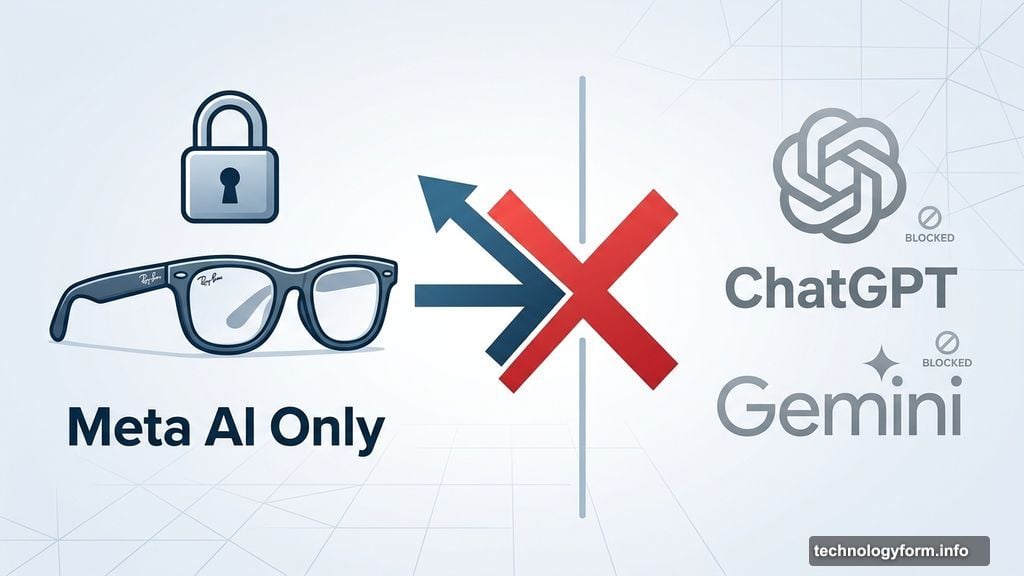
Meta’s Ray-Ban smart glasses are everywhere right now. But they lock you into one AI and one AI only: Meta’s own.
That’s a real problem. And a Chinese hardware company called Rokid just showed everyone how it should work instead.
Meta Ray-Bans Have an AI Problem
Meta’s glasses look great. They’ve become the most popular AI glasses on the market. But if you’re hoping to use ChatGPT or Gemini with them, you’re out of luck.
Meta funnels every user into Meta AI exclusively. No exceptions, no workarounds. Plus, Meta’s privacy policies around the built-in camera have left a lot of people feeling uncomfortable.
So the glasses already face trust issues. Then you add the locked-in AI situation on top of that. The result feels more like a Meta product than a truly open AI wearable.
Rokid’s Multi-Model Smart Glasses Flip the Script
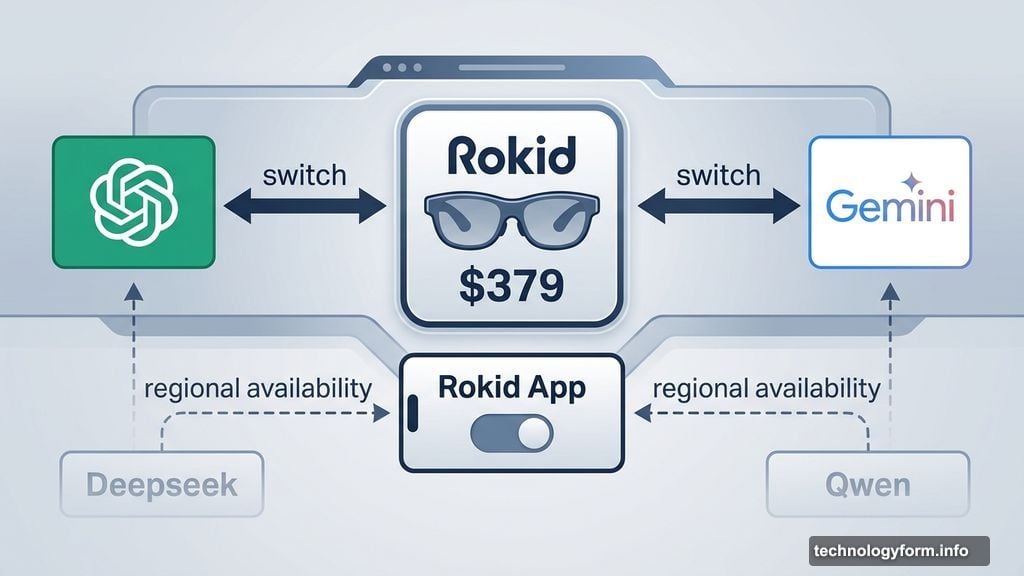
Rokid sells a pair of AI glasses for $379 (recently on sale for $279) that look almost identical to Meta’s Ray-Bans. Same camera, speakers, and microphones. No built-in display.
But here’s the key difference. Through Rokid’s phone app, you can switch the onboard AI between ChatGPT and Gemini. In other regions, the glasses also support Deepseek and Qwen. That kind of multi-model flexibility is exactly what AI wearables need to stay relevant.
Think about how you use your phone. You probably hop between Google Search, ChatGPT, and maybe Perplexity depending on the task. Your AI glasses should work the same way.
ChatGPT vs. Gemini: Do They Actually Sound Different?
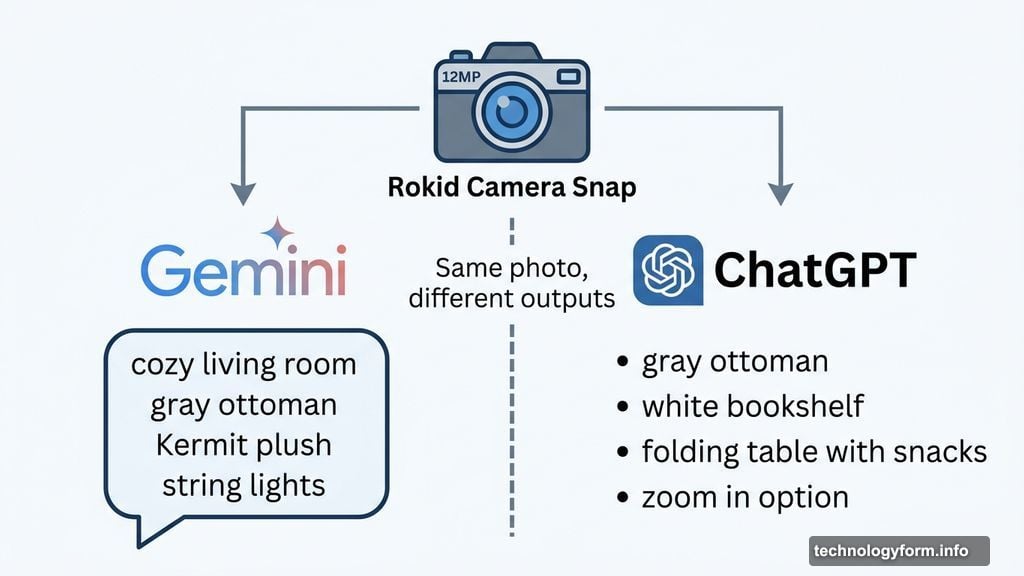
To test the difference, CNET’s Scott Stein pointed the glasses at his living room and asked each AI what it saw. The 12-megapixel camera snapped a photo, and each model gave its take.
Gemini described the room as “a cozy living room area” and painted a warm, atmospheric picture. It noted the gray ottoman covered in electronics, a white bookshelf with a Kermit the Frog plush, a white brick fireplace with string lights, and a tall black tower fan nearby.
ChatGPT went bullet-point and clinical. It listed the same objects but framed them as diagnostic observations. It spotted a small folding table with snacks and a drink that Gemini missed entirely. Then it offered to zoom in on any specific item.
So yes, the models sound different. Gemini felt more conversational and warm. ChatGPT felt more like a structured report. Neither is wrong. They’re just different tools.
The Big Catch: No Personal Account Access
Here’s where the excitement needs to cool down a little.
Switching between ChatGPT and Gemini on Rokid’s glasses doesn’t mean logging into your actual accounts. Your saved conversations, personal data, and AI history don’t carry over. Every session starts completely fresh with a generic, impersonal AI.
It works similarly to how Apple Intelligence taps into ChatGPT. The model is there, but your personal context isn’t. So the AI has no idea who you are, what you’ve worked on, or what you care about.
That’s a meaningful limitation. The glasses support multiple AI models, but they can’t yet make those AI models truly yours.
Google and Apple Are Closing the Gap
The bigger picture here is that personalized AI glasses are coming fast.
Google’s upcoming Gemini-powered glasses aim to change the game. They’ll tap into your actual Google account, including tools like NotebookLM, so your existing work and data should carry right over. That means the glasses could feel like a natural extension of your phone rather than a standalone gadget.
Apple is also rumored to have its own glasses arriving soon. Based on what we know about Siri’s evolving Gemini AI partnership, Apple looks set to take a similar personalized approach.
Meta, meanwhile, has no phone operating system to build on. Even its own Meta AI doesn’t seem deeply aware of what you’re doing across Instagram, Facebook, Threads, or WhatsApp. That makes Meta’s on-glasses AI feel oddly disconnected from the rest of your digital life.
The Wearable AI Integration Problem Nobody Is Solving
Rokid isn’t the only glasses brand wrestling with this issue. Even Realities’ G2 glasses technically access OpenAI, but they have the same limitation. You can’t log into your existing OpenAI account. The glasses just build their own separate AI relationship through a companion app.
OpenAI and Anthropic don’t yet have a clean, direct path for integrating their software into wearable hardware. That’s a gap both companies need to close if AI glasses are going to mean anything beyond a novelty.
Smart glasses are one of the fastest-growing tech categories right now. But the hardware keeps outpacing the software ecosystem behind it.
A Half Step Forward Worth Noticing
Rokid’s AI glasses aren’t perfect. The multi-model support is genuinely useful, but the lack of personal account access limits how meaningful the AI actually feels day to day.
Still, the direction is right. Wearable AI shouldn’t be a walled garden where one company controls which AI you can use on your own face. Multi-model support is the minimum bar every AI glasses maker should be hitting.
What comes next is the harder part. Google’s personalized Gemini glasses, Apple’s rumored wearable plans, and pressure on OpenAI and Anthropic to build proper wearable integrations all point toward a smarter future for AI eyewear.
For now, Rokid offers a meaningful alternative if you want camera-enabled smart glasses without Meta’s brand and privacy baggage. Just know you’re getting AI flexibility without AI depth. Switching models is a start. Switching into your actual AI life is what the industry still needs to figure out.