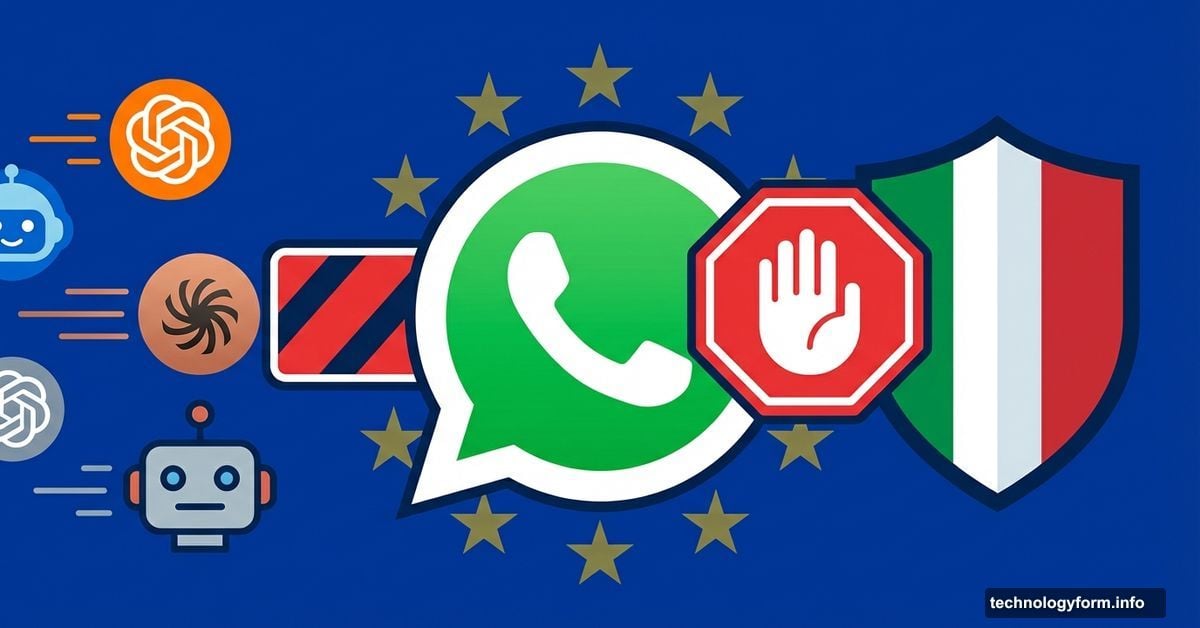
Meta Blocked AI Chatbots on WhatsApp. Italy Just Said No
Meta tried to lock competitors out of WhatsApp. Italian regulators hit the brakes.
Italy’s Competition Authority ordered Meta to suspend its ban on third-party AI chatbots using WhatsApp’s business tools. The ruling came down Wednesday after investigators found Meta might be abusing its market dominance to push its own Meta AI chatbot.
This isn’t just bureaucratic theater. The decision affects whether you’ll keep seeing ChatGPT, Claude, or Perplexity bots on WhatsApp come January.
Why Meta Made the Change
Meta changed its business API policy in October with a clear target. The company blocked general-purpose chatbots from third parties while keeping its own Meta AI front and center.
Their reasoning? The API wasn’t designed as a chatbot distribution platform. Plus, people can access AI assistants through other apps. Sounds reasonable until you consider WhatsApp has over 2 billion users.
But here’s the catch. The ban only hits AI chatbots like ChatGPT or Claude. Business customer service bots get a free pass. So a retailer running automated support can keep operating. Yet an AI assistant helping with homework or creative writing gets blocked.
That distinction matters. It means Meta specifically targeted services competing with its own AI features.
Italy Smells Market Abuse
The Italian Competition Authority didn’t buy Meta’s explanation. Their statement pulled no punches.
“Meta’s conduct appears to constitute an abuse, since it may limit production, market access, or technical developments in the AI Chatbot services market, to the detriment of consumers,” the AGCM wrote.
Moreover, they warned Meta’s policy could cause “serious and irreparable harm to competition” while their investigation continues. That’s regulatory speak for “we think you’re breaking the rules badly enough to stop you now, not later.”
The Authority had already been investigating Meta. But they broadened the probe in November after the October policy change dropped. Now they’re moving fast to prevent market damage.
Brussels Piles On
Italy isn’t alone. The European Commission launched its own investigation this month into the same policy.
Brussels raised concerns that Meta might “prevent third-party AI providers from offering their services through WhatsApp in the European Economic Area.” That’s the EU plus Iceland, Liechtenstein, and Norway for those keeping score.
So Meta now faces two major European regulatory actions over one policy change. Both authorities suspect the company is leveraging its WhatsApp dominance to squash AI competition.
The timing stings for Meta. The policy was set to take effect in January. Instead, they’re stuck in regulatory limbo with suspension orders and formal investigations.

What Happens to Third-Party Bots
Companies like OpenAI, Perplexity, and Poke built integrations letting users access their AI assistants through WhatsApp. Those tools would disappear under Meta’s new rules.
For users, that means losing convenient access to preferred AI assistants. Many people already use WhatsApp as their primary messaging app. Adding ChatGPT or Claude there made sense. Now Meta wants to force a choice between apps.
For AI companies, it’s worse. WhatsApp represents massive distribution potential. Getting blocked from 2 billion users hurts growth prospects. Plus, it hands Meta an unfair advantage promoting its own AI features.
The suspension order keeps those integrations alive for now. But the underlying investigation could drag on for months or years. European competition cases rarely resolve quickly.
Meta Stayed Quiet
Meta didn’t respond to requests for comment on the Italian order. That silence speaks volumes.
The company could argue its case publicly. They could explain why limiting chatbot access benefits users. Instead, they’re keeping their heads down while regulators circle.
Maybe Meta hopes this blows over. Or maybe their legal team advised against commenting during active investigations. Either way, silence won’t make the problem disappear.

The company faces a choice. Fight the orders and risk harsher penalties. Or comply and watch competitors maintain their WhatsApp integrations.
The Bigger Pattern
This case fits Meta’s broader strategy around AI. The company invested billions developing its AI capabilities. Now it wants returns on that investment.
But using WhatsApp’s market position to block competitors crosses lines regulators take seriously. Europe especially has gotten aggressive about big tech anticompetitive behavior.
Meta already paid billions in European fines for other violations. Adding another case to that list won’t improve relations with regulators. Yet the company keeps pushing policies that invite scrutiny.
The WhatsApp chatbot ban looked like easy money. Block competitors, promote Meta AI, capture more AI market share. Except regulators saw through it immediately.
Now Meta faces investigations, suspension orders, and potentially massive fines. All to keep ChatGPT off WhatsApp. That math doesn’t add up.
Italy’s order won’t be the last word here. The European Commission investigation continues. Other countries might follow Italy’s lead. And Meta will probably appeal every adverse decision.
But for now, third-party AI chatbots get to stay on WhatsApp. Score one for competition.