Spotify Got Pirated. All 256 Million Tracks Disappeared
Someone just scraped Spotify’s entire music library. Not some tracks. Not popular albums. Everything.
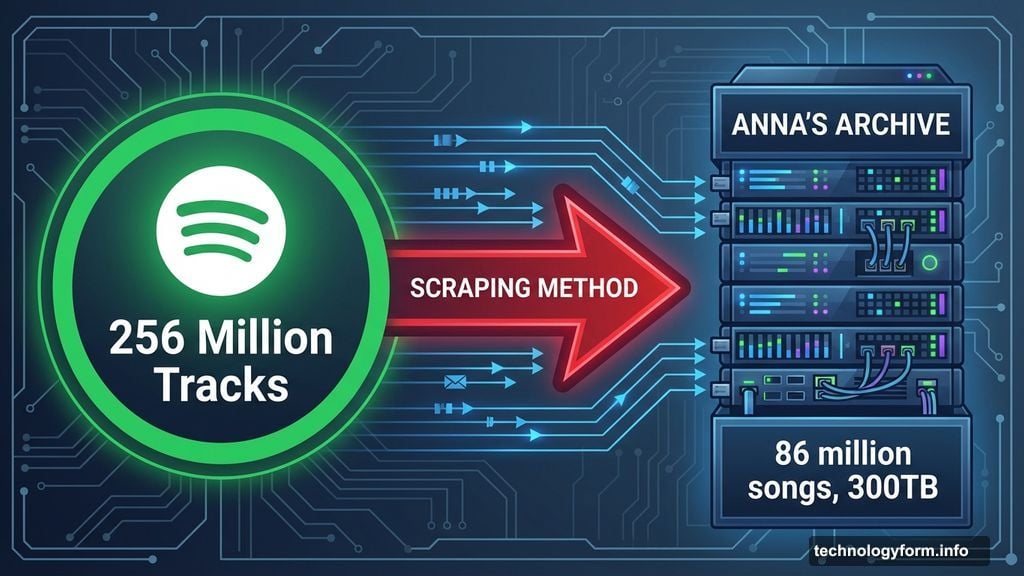
Anna’s Archive, the notorious shadow library collective, grabbed metadata for 256 million tracks. That includes 86 million actual songs totaling nearly 300TB of data. Plus, they’re planning to release it all for free download.
This represents the largest music piracy operation in recent memory. And Spotify only just found out.
The Scale Is Staggering
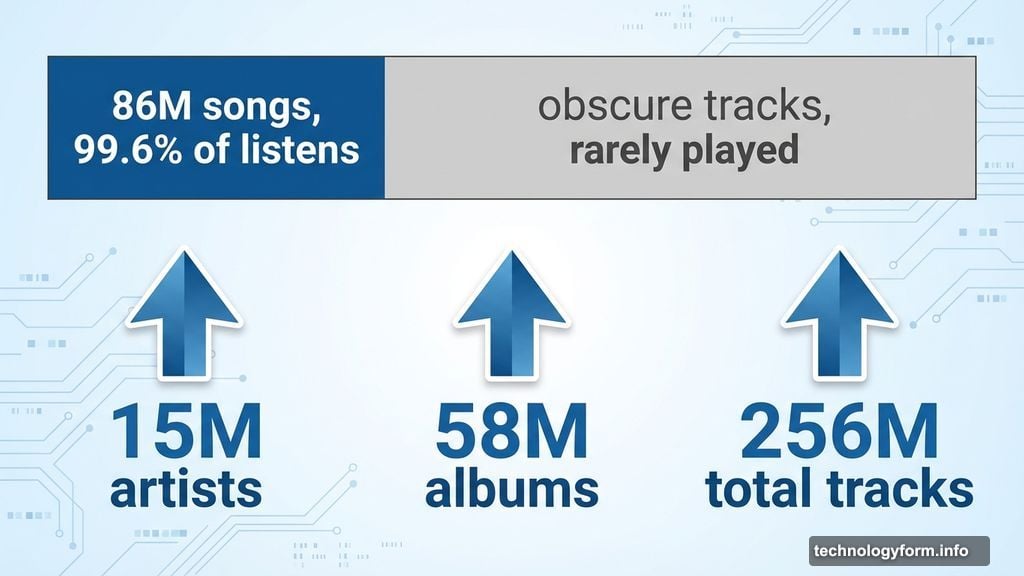
The numbers tell the story. Anna’s Archive now holds files from over 15 million artists spanning 58 million albums. That’s essentially Spotify’s complete catalog sitting on pirate servers.
Here’s what makes this different from typical music piracy. The group didn’t just grab hit songs or popular artists. They systematically captured everything, including obscure tracks that rarely get played.
In fact, those 86 million songs represent 99.6 percent of all Spotify listens. Yet that’s only 37 percent of the total track count. So millions more obscure songs are still being archived as we speak.
The group discovered a scraping method that worked at massive scale. They exploited it quietly until building a collection that dwarfs anything previously seen in music piracy.
Why Text Pirates Went After Music
Anna’s Archive traditionally focuses on books and academic papers. Text files offer high information density in small file sizes. Music files are much larger and harder to store.
But the group says their mission is preserving “humanity’s knowledge and culture” without distinguishing between formats. So music became the next logical target.
They argue current music collections have problems. Physical archives focus too heavily on popular artists. Digital collections from audiophiles prioritize massive file sizes for perfect fidelity. Neither approach captures the breadth of what actually exists.
Moreover, they claim this scrape created the largest publicly available music metadata database ever assembled. That metadata alone has research value beyond just the audio files.
Still, none of this justifies blatant copyright violation. The group knows exactly what they’re doing. They’re just betting preservation matters more than following IP laws.
Spotify Scrambled to Respond
The streaming giant moved fast once the breach became public. “Spotify has identified and disabled the nefarious user accounts that engaged in unlawful scraping,” a spokesperson told Engadget.
They added new safeguards specifically targeting these types of attacks. Plus, they’re actively monitoring for suspicious behavior now. But the damage is done. Those files already exist on external servers.
Spotify emphasized their commitment to protecting artists’ rights. “Since day one, we have stood with the artist community against piracy,” the statement continued. They’re working with industry partners to defend creators.
But here’s the reality. Once files hit the internet in this volume, they spread everywhere. Shutting down one source doesn’t eliminate copies that already circulated.
The company faces tough questions about how this happened. Their security clearly had holes large enough to leak their entire catalog. That’s not a small oversight.
The Files Are Coming Soon
Anna’s Archive plans to release music files in stages based on popularity. The most-played tracks will drop first. Obscure material follows later.
Anyone with sufficient disk space can download everything. That’s the group’s explicit goal. They want this collection distributed as widely as possible.
Of course, downloading or sharing these files violates copyright law in virtually every country. Users who grab this content risk legal consequences. But enforcement against individual downloaders rarely happens at scale.
The real legal targets are the people running Anna’s Archive servers. Yet the group operates using techniques that make takedowns difficult. They’ve survived multiple attempts to shut down their operations.
So these files will likely remain available somewhere online indefinitely. That’s how internet piracy works once files achieve critical mass distribution.
What This Means for Streaming
This breach exposes vulnerabilities in the streaming model. Services like Spotify don’t sell permanent copies. They rent access through subscriptions. That requires constant online verification.
But if someone scrapes the entire catalog, that verification becomes pointless. Users can download everything once and keep it forever. The subscription model breaks down.
Streaming services have always faced piracy risks. But this scale changes the equation. It’s one thing to have individual albums leak. It’s another to lose your entire library in one operation.
Plus, this probably won’t be the last time. If Anna’s Archive found a scraping method that worked, others will discover similar techniques. Spotify patched this specific vulnerability. But new ones likely exist.
The music industry spent decades fighting piracy. They thought streaming finally solved the problem by making legal access easier than piracy. This breach suggests maybe they celebrated too early.
Spotify needs to seriously upgrade security. Because if pirate groups can systematically grab everything this easily, the streaming business model faces existential risk. And that affects every artist who depends on streaming revenue to survive.