
Microsoft Scrambles to Save GitHub From AI Coding Rivals
GitHub isn’t where developers hang out anymore. Microsoft knows it. Now they’re rushing to fix the problem before it’s too late.
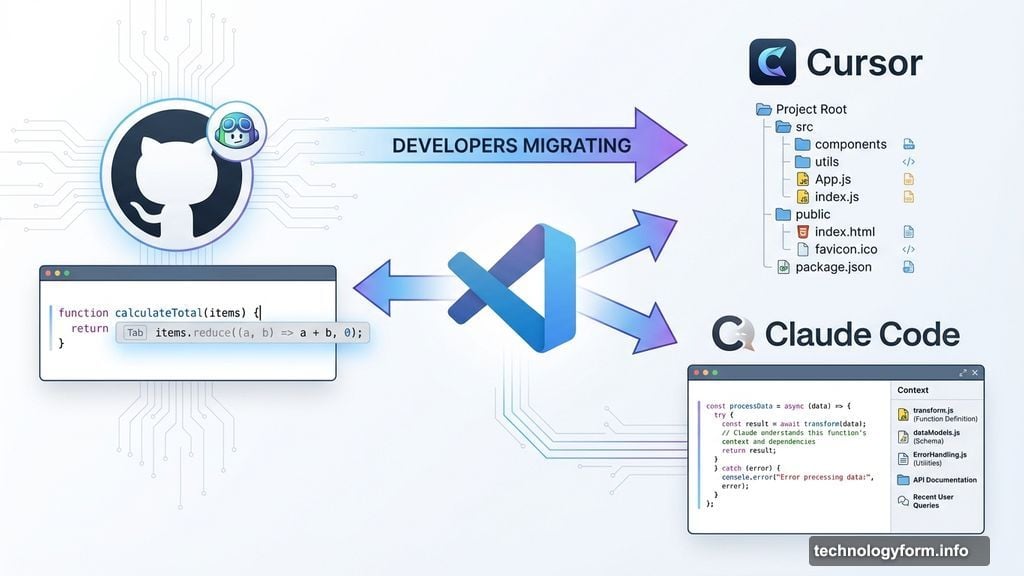
The software giant just reshuffled entire teams to boost GitHub’s AI capabilities. Why? Newer tools like Cursor and Anthropic’s Claude Code are eating GitHub’s lunch. Developers are jumping ship for AI coding assistants that actually understand what they’re trying to build.
Plus, Microsoft needs GitHub to evolve fast. The platform that pioneered code storage now risks becoming irrelevant in the AI-first development world.
The Cursor Problem Microsoft Can’t Ignore
GitHub Copilot had a massive head start. It was one of the first AI coding assistants anyone cared about. But that advantage is evaporating.
Cursor launched with a different philosophy. Instead of just autocompleting code, it understands entire projects. Developers can describe what they want in plain English. The AI generates working code across multiple files. It even refactors existing codebases intelligently.
Moreover, Anthropic’s Claude Code brought another threat. Claude’s superior context window lets it grasp larger codebases. That means better suggestions and fewer hallucinations. Developers noticed the quality difference immediately.
Internal audio from a late 2024 Microsoft meeting reveals the concern. Jay Parikh, who leads Microsoft’s CoreAI group, said bluntly: “GitHub is just not the place anymore where developers are storing code.”
That’s a brutal admission. GitHub built its empire as the central hub for code. Now its own parent company admits developers are moving elsewhere.
Microsoft’s Agent Factory Vision
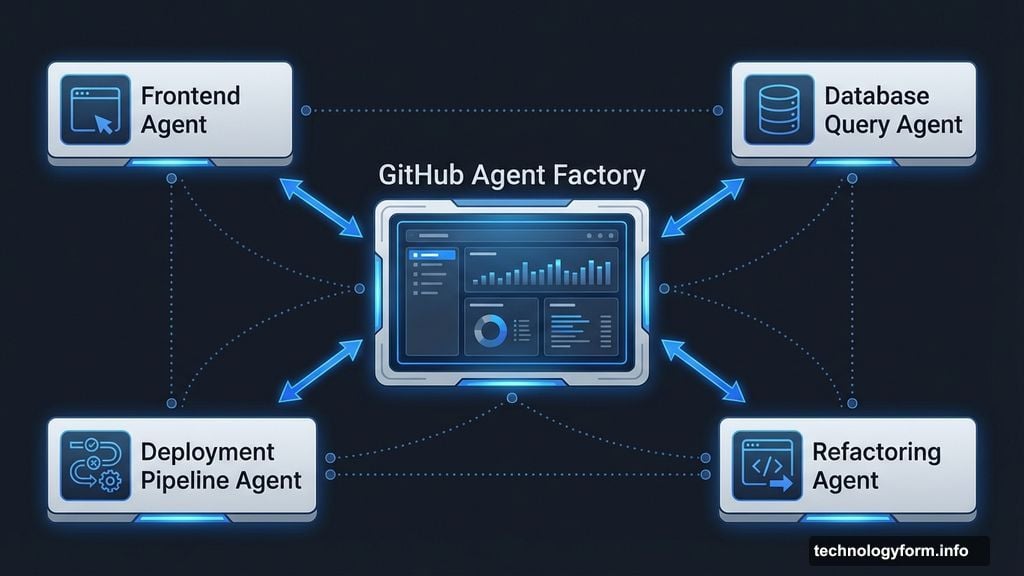
Parikh wants GitHub to become more than a coding assistant. He’s pushing for what he calls an “agent factory.”
What does that mean? Instead of one AI helper, developers would orchestrate multiple specialized AI agents. One agent handles frontend code. Another optimizes database queries. A third manages deployment pipelines. GitHub would become the control center.
That vision requires massive changes. GitHub’s current architecture can’t support multiple autonomous agents working simultaneously. So Microsoft is moving engineers from its core AI team directly into GitHub. The goal is rebuilding GitHub’s foundation to support agent-based workflows.
But here’s the challenge. Competitors aren’t waiting around. Cursor already lets developers chain AI operations together. Claude Code integrates with existing workflows seamlessly. GitHub needs to catch up and then leapfrog both.
The company formed its CoreAI Platform and Tools group in January 2025. That combined Microsoft’s developer division, AI platform team, and GitHub under one umbrella. Still, coordination remained messy. Teams worked on duplicate projects. Sales efforts overlapped awkwardly.
Four Critical Infrastructure Upgrades
Microsoft identified specific technical debt holding GitHub back. Parikh outlined four priority areas in the internal meeting.
First, GitHub Actions needs serious work. This tool automates building, testing, and deploying code. But it’s slower and clunkier than modern alternatives. Developers complain about configuration complexity and limited flexibility. Meanwhile, competitors offer simpler automation that just works.
Second, analytics and insights are basically broken. Teams can’t easily see how their code performs. Which features slow down the app? Where do bugs cluster? Basic questions lack good answers. So developers use third-party tools instead of GitHub’s built-in analytics.
Third, security remains a weak point. GitHub scans for vulnerabilities. But it generates too many false positives. Real threats get buried in noise. Plus, newer AI coding tools include security checks that catch issues GitHub misses.
Fourth, data residency requirements block international expansion. Many countries require storing citizen data locally. GitHub’s architecture makes that expensive and complicated. That hands market share to regional competitors who handle local data storage better.
None of these are new problems. They’re years-old technical debt. But AI competition forced Microsoft to finally prioritize fixes. The company is moving resources and people to tackle all four areas simultaneously.
The Real Battle: Where Developers Actually Work
Microsoft faces a deeper strategic problem. Developers don’t want to work inside one app anymore.
Modern developers use multiple tools simultaneously. They switch between IDEs, terminals, browsers, and communication apps constantly. GitHub Copilot only works inside select code editors. That feels limiting.
So Microsoft’s new strategy focuses on making GitHub’s AI tools work everywhere. Developers should access AI assistance regardless of which app they’re using. That requires building APIs and integrations instead of forcing everyone into GitHub’s ecosystem.
But that’s risky. If GitHub becomes just a back-end service, why would developers stick with it? Other companies could build better front-ends on top of the same AI models. GitHub risks becoming commodity infrastructure.
Cursor already demonstrates this threat. It provides a superior developer experience while potentially using similar underlying AI technology. If the interface matters more than the engine, GitHub’s moat disappears.
What Happens If GitHub Falls Behind
Microsoft paid $7.5 billion for GitHub in 2018. That seemed expensive then. Now it looks like a bargain if GitHub maintains its position. But what if it doesn’t?
Losing developer mindshare hurts multiple ways. Developers who abandon GitHub for AI coding tools might also reconsider other Microsoft products. Why use Azure if you’re not in the Microsoft ecosystem? Why choose VS Code over alternatives?
Moreover, Microsoft’s AI strategy depends on GitHub data. Millions of repositories train Copilot and future models. If developers stop pushing code to GitHub, that training data dries up. Microsoft would need to find new sources or accept inferior AI models.
The company clearly understands the stakes. Moving Jay Parikh to lead this effort signals how seriously Microsoft takes the threat. Parikh built Facebook’s infrastructure team. He knows how to scale platforms under pressure.
But urgency doesn’t guarantee success. GitHub needs to ship improved features fast while simultaneously rebuilding core infrastructure. That’s incredibly hard. Most companies fail at doing both.
The Agent Wars Just Started
AI coding assistants are just the opening battle. The real war is about AI agents that handle entire workflows autonomously.
Imagine telling an AI: “Build a customer dashboard with real-time analytics.” The agent doesn’t just generate code. It designs the database schema, writes backend APIs, creates the frontend, sets up authentication, and deploys everything to production. No human coding required.
That future isn’t far off. Early versions already exist. But making them reliable enough for production use requires solving hard problems. How do agents test their own code? How do they handle edge cases? How do they debug when things break?
Microsoft wants GitHub positioned as the platform where all this happens. Developers would manage fleets of AI agents through GitHub’s interface. Each agent specializes in different tasks but coordinates through a central system.
That’s ambitious. But so is the competition. Anthropic, OpenAI, and Google are all racing toward similar visions. Whoever builds the best agent orchestration platform could dominate the next era of software development.
GitHub has advantages. Its massive user base and code repository data are valuable. Its integration with Microsoft’s Azure cloud provides infrastructure leverage. Its brand recognition among developers matters.
But advantages only help if you execute. Right now, Microsoft is frantically reorganizing to make that execution possible. Whether the reshuffling works or just creates more confusion remains to be seen.
The stakes are enormous. Lose this fight, and Microsoft’s entire developer tools strategy crumbles. Win it, and GitHub becomes the foundation of AI-powered development for the next decade.
Time will tell which future arrives. But Microsoft clearly isn’t taking any chances. The team shuffles, resource shifts, and aggressive roadmap changes all point to a company that sees existential risk and is fighting back hard.