Your Smart Toilet Now Tracks Your Pee. CES 2026 Got Weird
CES 2026 just wrapped, and health tech companies went absolutely wild.
Forget smartwatches and fitness trackers. This year brought devices that analyze your face to predict aging, stick sensors in your toilet bowl, and literally watch you eat dinner. Plus, some of these gadgets might actually improve your health—once you get past the creep factor.
Here’s what stood out from the show floor.
Mirrors That Tell You How Fast You’re Aging
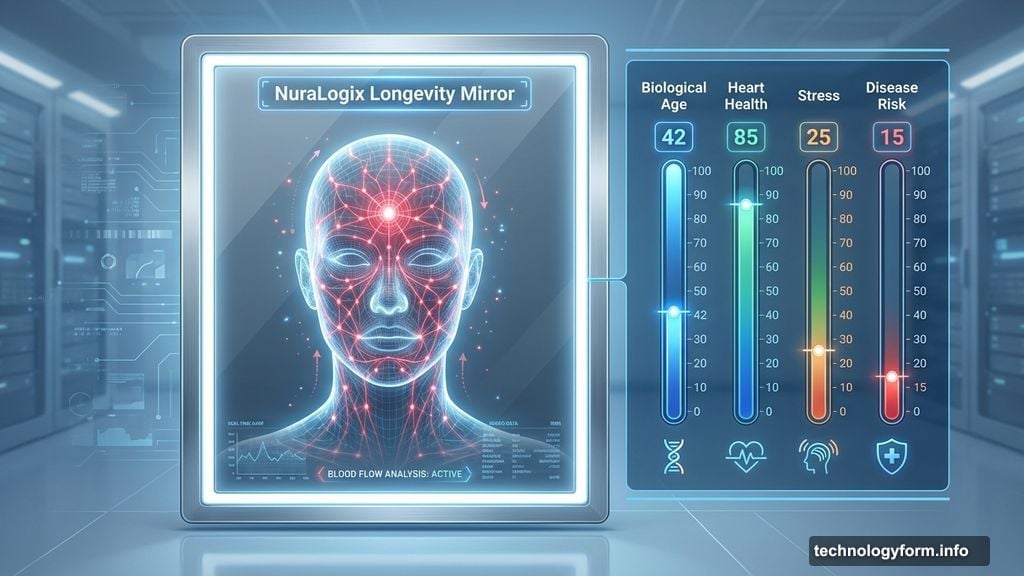
NuraLogix unveiled the Longevity Mirror at CES 2026. Take a selfie, and it scores your biological age along with heart health, stress levels, and cardiovascular disease risk.
The technology works by analyzing blood-flow patterns in your face. Then it spits out scores from zero to 100 across multiple health categories. The mirror supports up to six user profiles, so your entire family can check their biological age before breakfast.
But the Longevity Mirror wasn’t alone. Withings launched the Body Scan 2 smart scale, which measures over 60 biomarkers. It tracks heart health, cellular function, and warns you about potential problems before they escalate.
Meanwhile, L’Oréal jumped into the longevity game with skincare tech. Their new LED Face Mask promises firmer skin with fewer wrinkles. They also showed off the Light Straight Plus Multi-Styler, which uses infrared light to reduce hair damage while styling.
The message from manufacturers is clear: Know your biological age. Then buy products to reduce it.
Food Tracking Gets Creepier and More Useful
Apps like Yuka and MyFitnessPal already let you scan barcodes and log meals. Now hardware wants in on the action.
Garmin added nutrition tracking to its Connect Plus app. Abbott created the Libre Assist feature, which uses AI to predict how meals affect glucose levels in people with diabetes. Both tools aim to close the gap between what you eat and how your body responds.
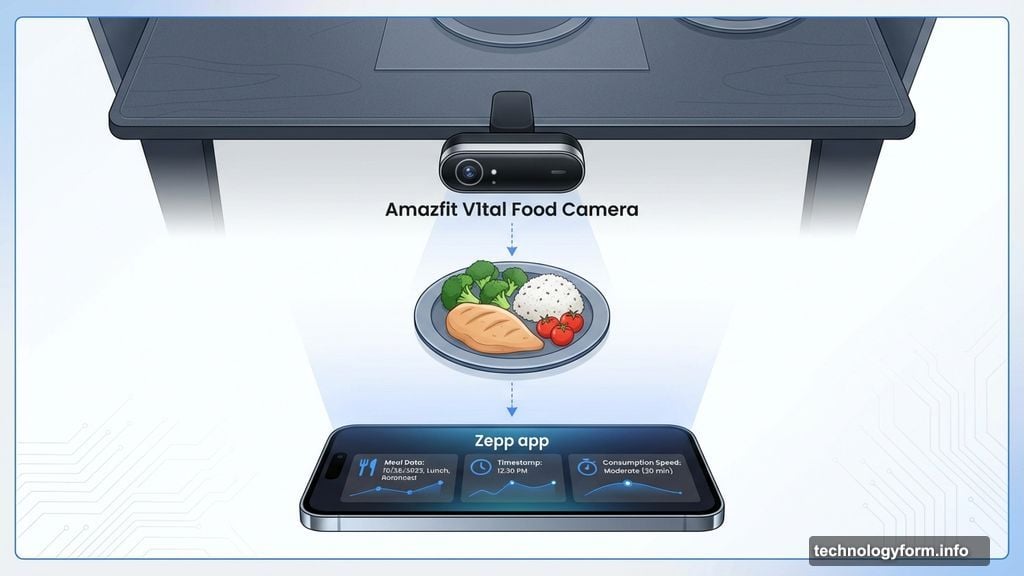
Then things got strange. Amazfit previewed the V1tal Food Camera, which sits on your dining table and watches everything you consume. It captures what you eat, when you eat it, and how quickly you finish. All that data uploads directly to Amazfit’s Zepp app.
For people with food allergies, the Allergen Alert mini lab offers genuine utility. This pocket-sized device tests food samples for gluten or dairy in minutes. Professional chefs are currently trialing it. The company plans to expand allergen detection in future versions.
These tools promise better health insights. But they also mean constant surveillance of one of life’s most basic activities: eating.
Wearables Ditch Screens and Subscriptions
Traditional fitness trackers come with screens, apps, and often monthly subscription fees. The Whoop band eliminated the screen but kept the app requirement and annual subscription. Oura Ring follows a similar model.
The Luna Band takes a different approach. No screen. No hidden subscription. No app scrolling required.
Instead, the Luna Band uses voice interaction powered by an AI engine called LifeOS. Ask questions about your health metrics, and it answers through your earbuds or smartphone. The device still tracks heart rate, sleep quality, and activity levels with built-in sensors. But you provide context by talking to it rather than tapping through menus.
It syncs with Apple Health and Google Fit if you want the data elsewhere. But it doesn’t force you to check an app seventeen times per day.
Sleep tech company Stareep went even further with their SmartSleep ecosystem. The system combines a smart mattress and adjustable base that respond automatically to your sleep data. It makes sound adjustments, changes position, and modifies the sleep environment without requiring any input from you.
Both products recognize a growing problem: screen fatigue. Between laptops, phones, tablets, smartwatches, and fitness trackers, people are drowning in displays competing for attention.
Women’s Health Finally Gets Real Attention
Medical research has historically ignored women’s bodies. CES 2026 suggested that might be changing.
OhmBody launched a neurostimulation device designed to reduce menstrual cramp pain. The earpiece-style device engages the trigeminal and vagus nerves, which influence the menstrual cycle. It works non-invasively, attaching to the ear rather than requiring medication or invasive procedures.
Vivoo introduced the FlowPad, a menstrual pad with built-in health testing. The test strip at the bottom analyzes period blood for ovarian health markers, fertility indicators, and hormone levels. Results upload to the Vivoo app. This could prove especially valuable for people navigating perimenopause or menopause.
Speaking of menopause, the Peri wearable tackles symptom tracking. It sticks to your torso and detects night sweats, hot flashes, and anxiety episodes automatically. No more manual symptom logging. The device captures what’s happening and feeds the data to AI analytics in the companion app.
These products acknowledge that half the population experiences menstruation, hormonal changes, and menopause. That seems obvious. But it took the tech industry decades to build products specifically addressing those realities.
Smart Toilets Are Officially a Thing Now
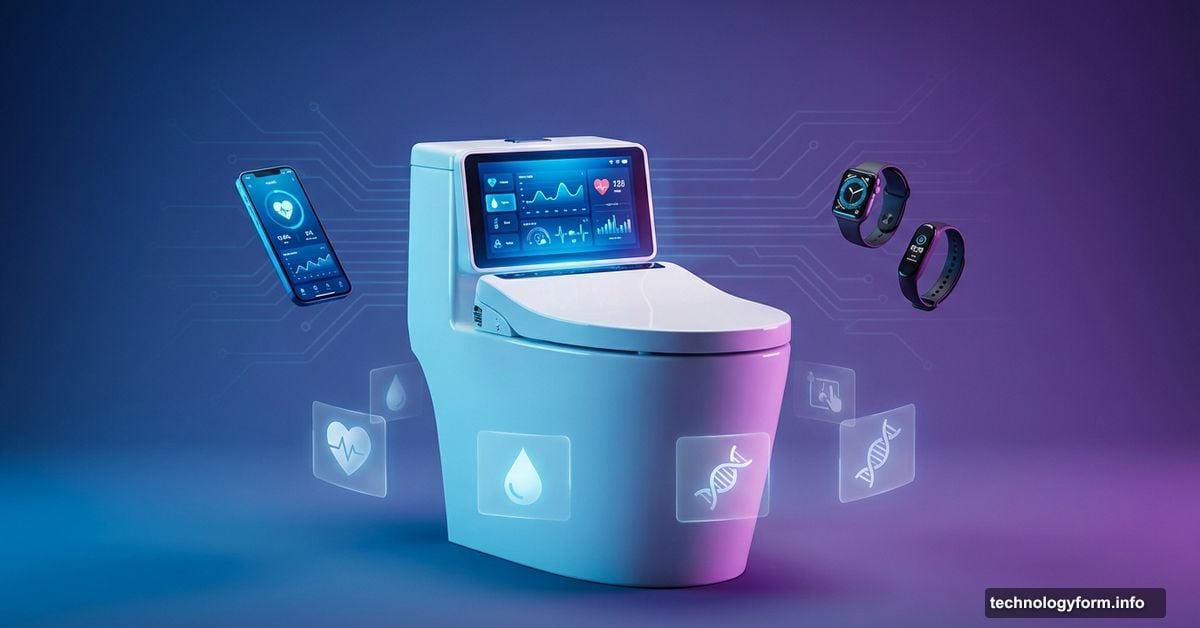
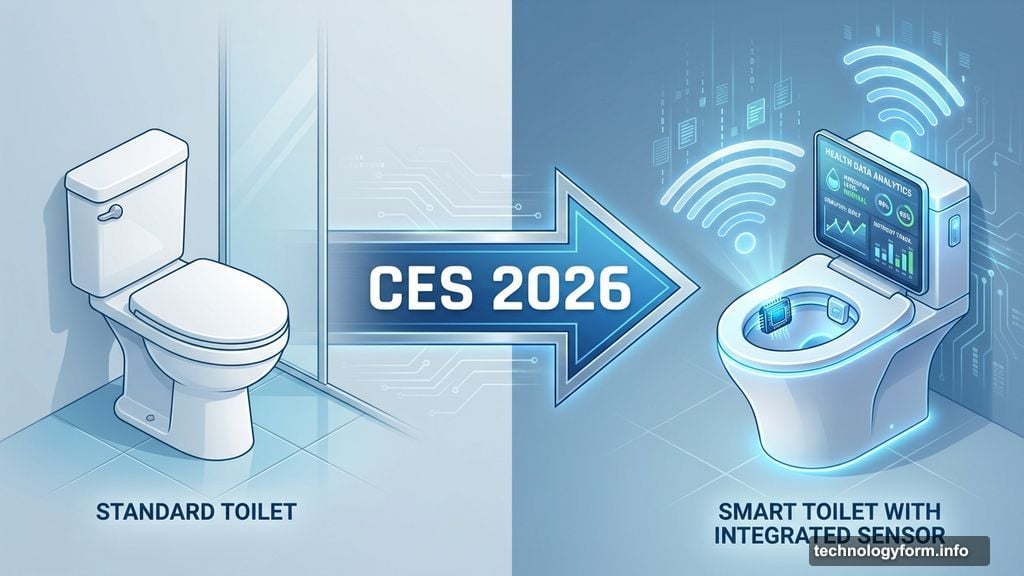
Kohler and Throne previously released toilet cameras that analyze bowel movements and urine. CES 2026 doubled down on bathroom tech.
The Vivoo Smart Toilet isn’t actually a toilet. It’s a suction device that attaches to your existing toilet bowl. Each time you urinate, it collects a small sample to test hydration levels. The device handles up to 1,000 tests before replacement. Results appear in the Vivoo app.
Compare that to Withings’ U-Scan Nutrio, which only manages 20+ tests per cartridge. Vivoo’s longevity makes it more practical for daily use.
Vovo went all-in with an actual smart toilet. Built-in urine sensors analyze samples automatically. Results display on a wall-mounted monitor in your bathroom. The toilet also includes a “Jindo the dog” feature for elderly users. If the toilet goes unused for 8 to 10 hours, it alerts registered family members to check on the person.
These devices raise obvious questions. How much bathroom surveillance is reasonable? Who else sees this data? What happens if the toilet gets hacked?
But they also provide health insights that might catch problems early. Dehydration, urinary tract infections, kidney issues—all potentially detectable through simple urine analysis.
The Real Question Nobody’s Asking
Health tech now wants access to every moment of your life. It tracks your wrist, watches your meals, monitors your sleep, analyzes your bathroom habits, and predicts your aging process.
Some of these innovations genuinely help people. Devices that detect food allergens protect lives. Tools that ease menstrual cramps reduce unnecessary suffering. Toilets that alert families about elderly relatives prevent medical emergencies.
But other products feel like solutions searching for problems. Do you really need a camera watching you eat? Does your toilet require an AI-powered analytics dashboard? Will knowing your biological age improve your health, or just create anxiety?
Here’s what worries me most: These devices might convince people they don’t need doctors. Get a concerning result from your smart toilet? The temptation will be to adjust your diet and keep monitoring rather than scheduling an appointment with an actual medical professional.
Tech companies want recurring revenue from health data. Doctors want to diagnose and treat conditions based on comprehensive examinations. Those incentives don’t always align.
The gadgets shown at CES 2026 won’t all succeed. Most will probably fade into obscurity within a year. But the ones that stick around will fundamentally change how we monitor health, for better or worse.
Choose your health tech carefully. Prioritize devices that genuinely improve your wellbeing over those that simply generate more data to scroll through. And remember: Technology should support your doctor, not replace them.