AI Companies Are Pirating Content. Your Work Might Be Next
Copyright used to feel abstract. Something lawyers worried about. But generative AI changed that overnight.
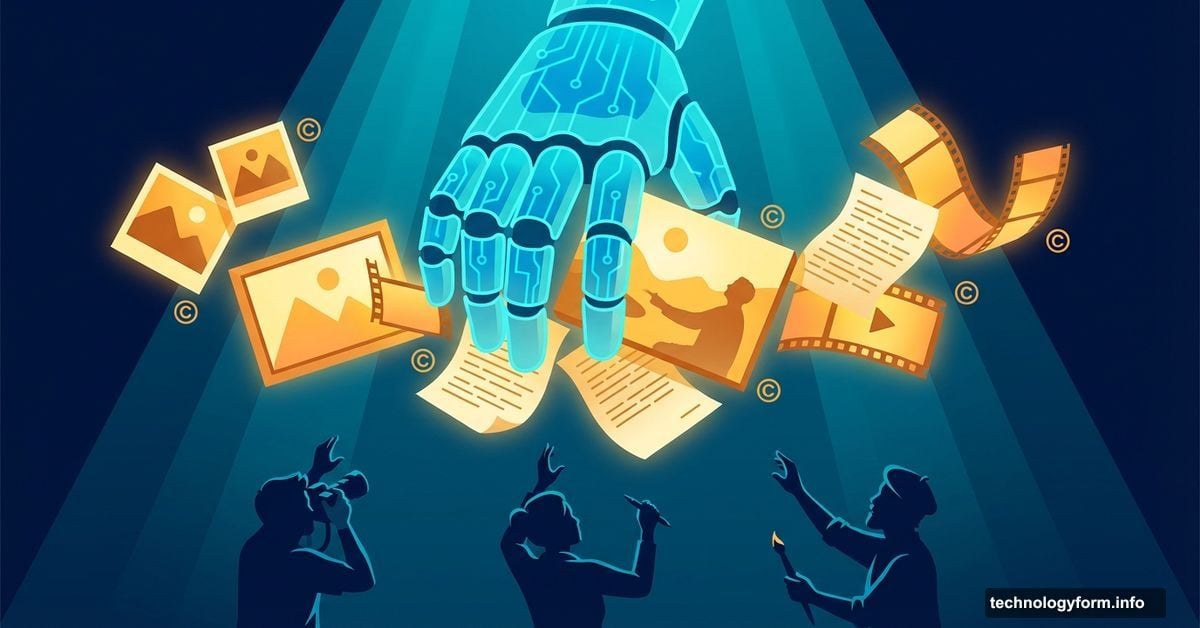
Now every photo you post, every blog entry you write, and every video you create could end up training the next ChatGPT. And you might never know about it. Worse, you probably won’t get paid.
The fight over AI and copyright isn’t just about big publishers or famous artists anymore. It affects everyone who creates anything online. That includes you.
We’re All Copyright Owners Now
Here’s something most people don’t realize. The moment you snap a photo with your phone, you own the copyright. Write a tweet? You’re a copyright holder. Post a recipe on your blog? Protected by law.
Copyright protection kicks in automatically when you create “original works of authorship fixed in any tangible medium.” That legal language covers basically everything. Books, art, music, videos, computer code, blog posts, choreography, architectural designs. All of it.
Plus, you don’t need to register anything or add a copyright symbol. The US Copyright Act of 1976 gives you those rights immediately. So that vacation photo you posted last week? You own it.
But AI companies might be using it anyway.
Tech Giants Are Training AI on Your Content
AI models need massive amounts of human-created content to work. ChatGPT didn’t learn to write by magic. It studied billions of web pages, books, articles, and conversations. Image generators like Midjourney analyzed millions of photos and paintings. Video tools scraped YouTube footage and movies.
The problem? Most AI companies won’t say exactly what content they used. They’ve stayed deliberately vague about their training data sources. So creators started noticing something disturbing.
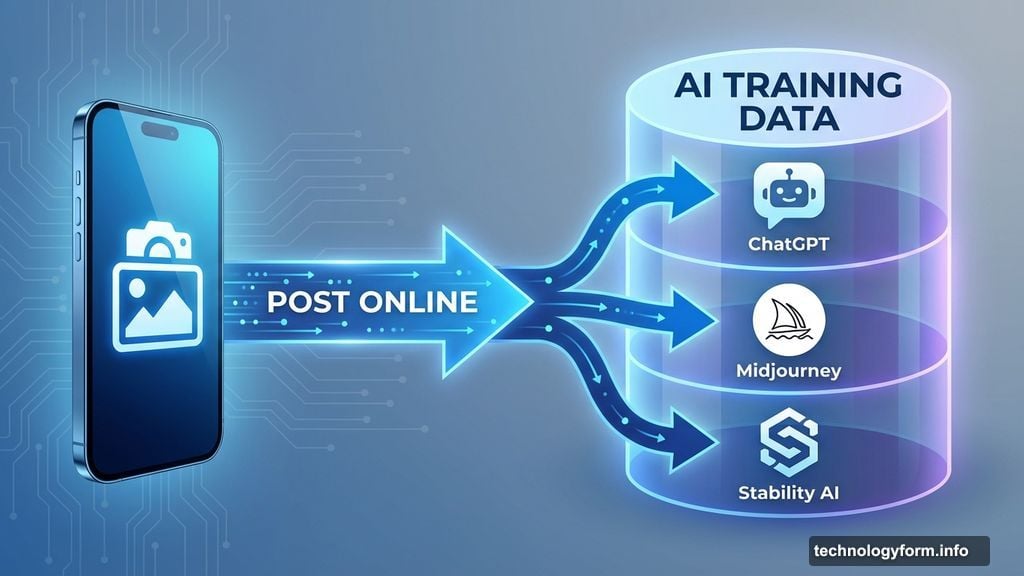
Their work appeared in AI outputs. Authors found their writing style mimicked. Artists discovered their signature techniques replicated. Photographers saw their compositions recreated with suspicious accuracy.
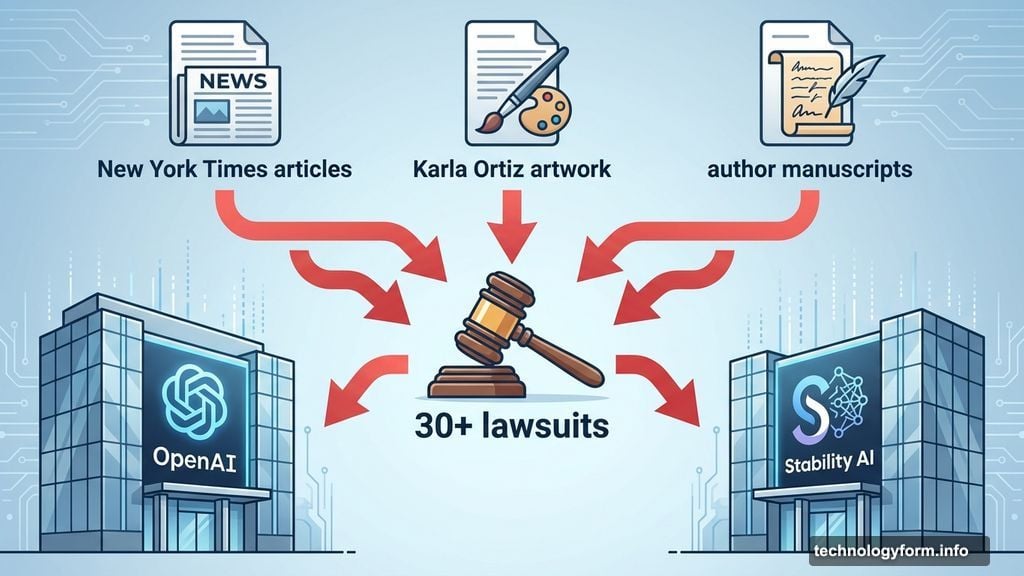
That sparked over 30 lawsuits. The New York Times sued OpenAI for allegedly copying articles verbatim. Concept artist Karla Ortiz led a class-action case against Stability AI. Authors, musicians, and visual artists all filed similar complaints.
The basic allegation? AI companies used copyrighted material without permission or payment. And under existing copyright law, that’s infringement.
The Fair Use Loophole Tech Companies Want
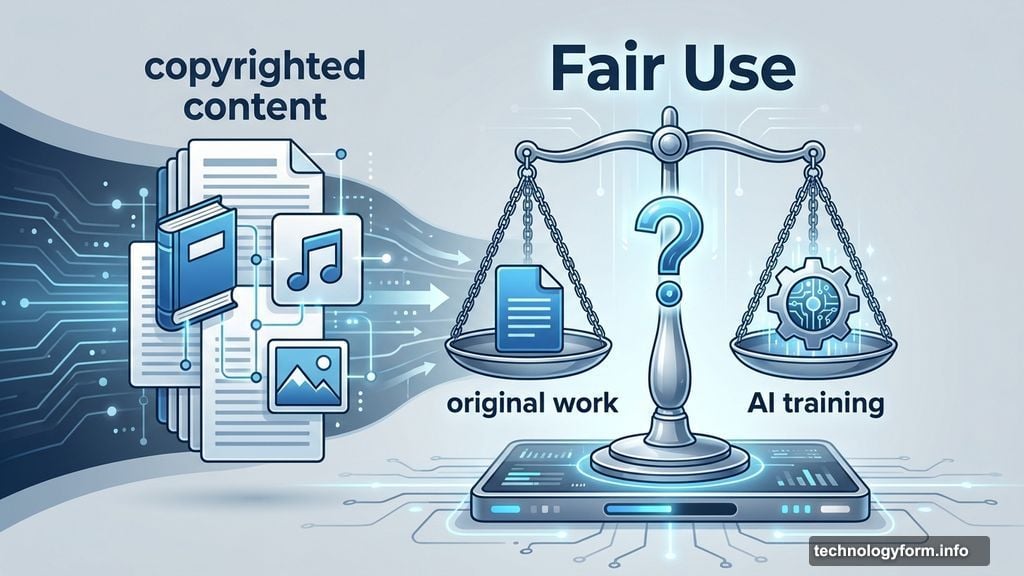
AI companies aren’t denying they used copyrighted content. Instead, they’re arguing it should be legal under “fair use.”
Fair use lets people use copyrighted material without permission in specific situations. Teachers can quote textbooks for lessons. Journalists can reference copyrighted work in news stories. Critics can show clips from movies in reviews.
Four factors determine whether something qualifies as fair use. The purpose of the use matters. So does the nature of the copyrighted work, how much you use, and whether your use competes with the original.
Tech companies claim AI training qualifies as fair use. Google said blocking this use would stifle innovation. OpenAI went further and called it a national security issue.
But here’s where it gets messy. Christian Mammen, an intellectual property lawyer, points out that every fair use factor becomes complicated with AI. Does fair use apply when companies copy entire works into training data? Or only when AI generates output that might contain traces of copyrighted material?
Nobody knows yet. The courts will decide.
Meanwhile, two major cases already sided with AI companies. Anthropic won its lawsuit over using copyrighted books. The judge called the use “exceedingly transformative.” Meta won a similar case two days later.
But Anthropic still agreed to pay $1.5 billion in settlements to affected authors. So even winning fair use cases costs billions.
Your AI-Generated Content Probably Isn’t Protected
Flip the situation around. Say you use ChatGPT to write a story or Midjourney to create art. Can you copyright that output?
The US Copyright Office says no. If AI generates something entirely on its own, it doesn’t qualify for copyright protection. Only human-created works get that legal protection.
However, AI-assisted work sits in a gray area. Use AI to edit photos? Add objects to images? Remove backgrounds? You can still get copyright protection for those works. But you must disclose how you used AI in your registration.
The Copyright Office’s public records show exactly how people used AI in copyrighted works. Some used AI to generate rough drafts, then heavily edited them. Others used AI for specific technical tasks like color correction or audio enhancement.
In rare cases, entirely AI-generated work can receive protection. But you need to prove your creative input or manipulation of AI elements rises to the level of human authorship. One company managed this by demonstrating extensive prompt engineering and selective curation of outputs.
Most casual AI users won’t meet that bar.
The Real Stakes Go Beyond Money
Over 400 writers, actors, and directors signed an open letter in March opposing fair use exceptions for AI companies. They wrote: “Google and OpenAI are arguing for a special government exemption so they can freely exploit America’s creative and knowledge industries, despite their substantial revenues and available funds.”
The letter highlights something deeper than licensing fees or attribution. This fight raises fundamental questions about creative work’s value.
Mammen explains two ways to view intellectual property laws. First, as protection that encourages human flourishing by rewarding creators. Second, as economic policy that recognizes creative work’s market value.
For most of US history, those approaches aligned. But AI forces us to choose.
“Do these laws exist primarily as an issue of industrial economic policy, or do they exist as part of a humanistic approach that values and encourages human flourishing by rewarding human creators?” Mammen asks. “That is one of the questions being forced by these debates.”
If courts prioritize innovation and economic growth, creators lose leverage. AI companies can use copyrighted material freely, training ever-more-capable systems on human creativity without compensation.
If courts prioritize creators’ rights, AI development slows. Companies must negotiate licensing deals with millions of copyright holders. That costs time and money. But it also ensures creators maintain control over their work.
What Happens Next Affects Everyone
The outcome matters whether you’re a professional creator or just someone who posts online. Because AI companies aren’t done collecting training data. They need fresh content constantly to improve their models.
Your Instagram photos could train the next image generator. Your blog posts might teach future chatbots. Your YouTube videos could improve AI video tools. And right now, most platforms’ terms of service don’t prevent that.
Licensing deals offer one solution. The Financial Times and Axel Springer brands signed multimillion-dollar agreements with AI companies. But individual creators lack that negotiating power. You can’t personally strike a licensing deal with OpenAI.
So for now, we’re in a holding pattern. Courts are slowly working through lawsuits. The Copyright Office issued guidance but punted on the biggest questions. Congress hasn’t passed new legislation.
Meanwhile, AI development races forward. Companies are betting they can train models now and sort out legal issues later. That strategy only works if courts grant them fair use protection retroactively.
Otherwise, they’ve built billion-dollar businesses on potentially illegal foundations. And everyone who creates content online remains collateral damage in a fight over who profits from human creativity.
The stakes couldn’t be higher. This isn’t just about copyright law. It’s about whether human creators maintain any control over their work in an AI-powered future.