Google’s AI Lets You Build Video Game Worlds With Just Text. Here’s the Catch
Google just opened its experimental Genie 3 tool to paying subscribers. You type a prompt. It generates a playable 3D world. You can explore it in real time.
Sounds wild, right? But this isn’t a polished product. It’s a research prototype with real limitations. Still, it offers a glimpse into how AI might change game development and creative tools. Let’s break down what Genie 3 actually does and whether it’s worth the subscription cost.
What Genie 3 Actually Creates
Think of Genie 3 as a very rough video game generator. You describe a world through text prompts or upload reference images. The AI builds a 3D environment you can navigate.
Google calls this “world building.” In practice, you’re getting interactive spaces that respond to your movements. Walk forward, and the AI generates what’s ahead. Turn around, and it fills in the environment behind you.
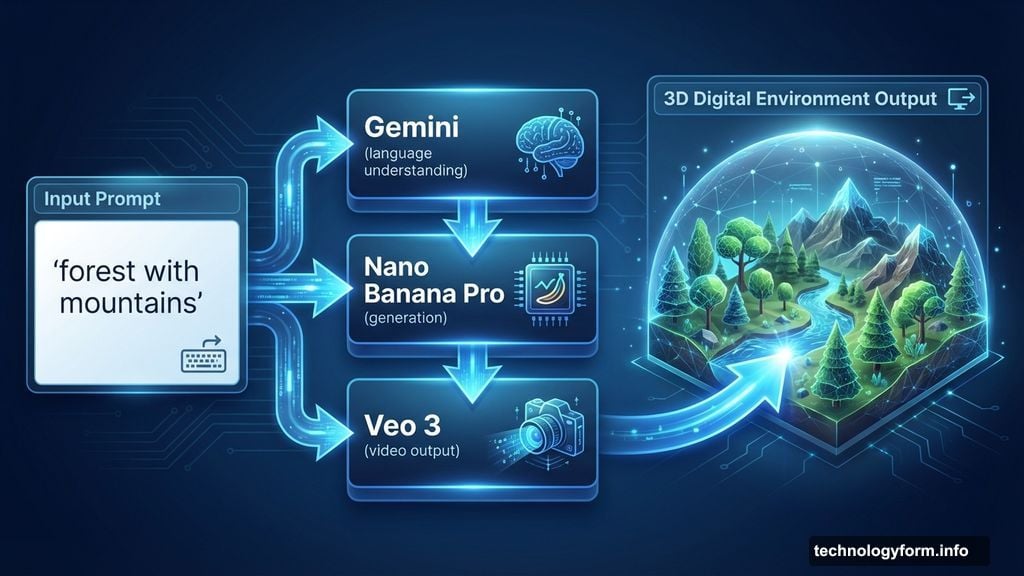
The tech runs on three of Google’s AI systems. Gemini handles language understanding. Nano Banana Pro powers the generation. Veo 3 manages video output. Together, they create worlds that update as you explore them.
But here’s the reality. These worlds don’t look photorealistic. They’re experimental. Think early tech demos, not finished games.
Three Ways to Use Genie 3
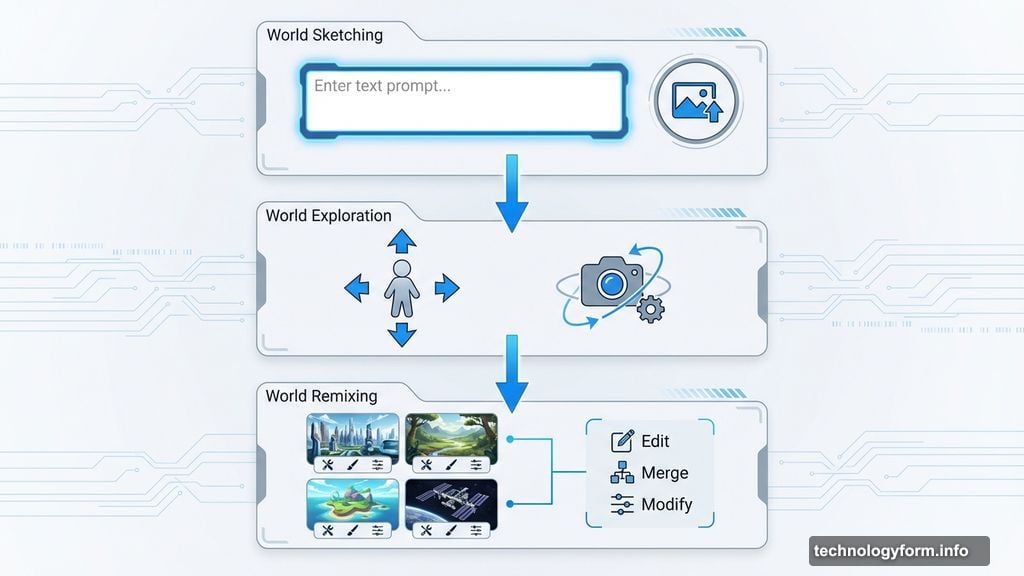
Google breaks the tool into three core functions. Each has specific capabilities and constraints.
World sketching starts everything. You write text prompts describing what you want. Upload images for reference if you need them. Then you pick how your character moves through the space.
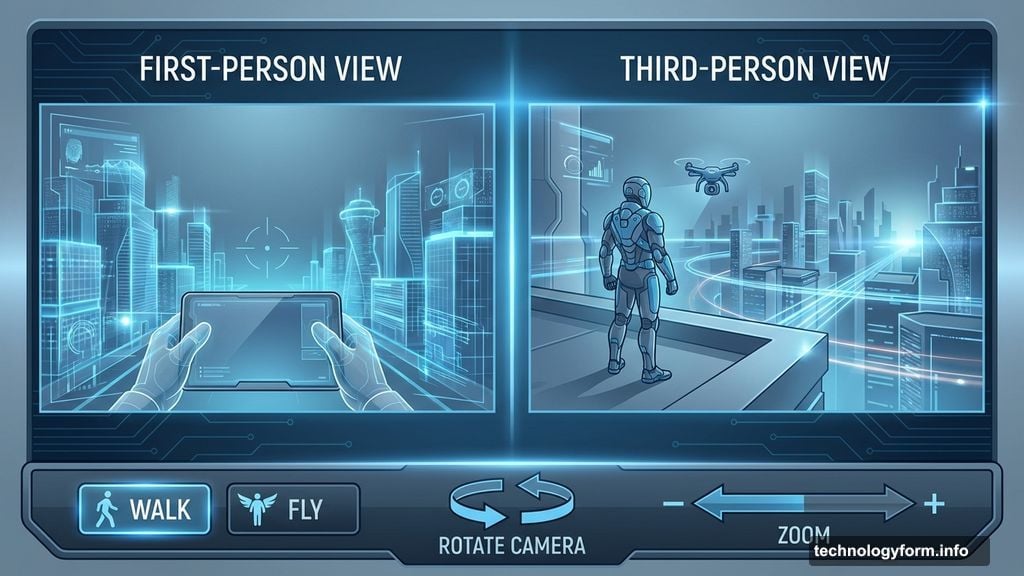
Want to fly? You can. Prefer walking? That works too. You also choose perspective. First-person view puts you in the character’s eyes. Third-person view shows your character moving through the world.
World exploration happens in real time. As you move your character, Genie 3 generates the path ahead. The AI predicts what should appear based on your actions.
You control the camera angle and view. Rotate it. Zoom in or out. The world adapts to your perspective. However, generation speed varies depending on character type and world complexity.
World remixing lets you build on existing creations. Google provides a gallery of pre-made worlds. You can start with someone else’s prompt and modify it.
Add new elements. Change the environment. Remix the character. Then download videos of your explorations. These clips capture your journey through the AI-generated space.
Real Limitations You’ll Hit Fast
Genie 3 carries significant constraints. Google doesn’t hide them. These limitations affect every aspect of the experience.
Generation quality varies wildly. Some worlds look coherent. Others appear broken or distorted. The AI doesn’t always interpret prompts accurately. What you describe isn’t always what you get.
Character control feels inconsistent. Some characters respond smoothly to inputs. Others lag or move unpredictably. Control latency varies by character type and world complexity.
Worlds only last 60 seconds. That’s the hard limit. You can’t explore indefinitely. After one minute, the generation stops. For a tool promising “exploration,” that’s incredibly restrictive.
Visual fidelity isn’t there yet. These worlds don’t look like modern games. They’re rough approximations. Textures blur. Objects glitch. Physics behave strangely. This is experimental AI, not a game engine.
Plus, availability is limited. You need a Google AI Ultra subscription. Even then, it’s only open to users 18 and older in certain territories. Google says more regions will get access “in due course,” but no timeline exists.
Who Gets Access and How Much It Costs
Right now, Genie 3 is locked behind Google’s AI Ultra tier. That’s the highest subscription level for Google’s AI services. The tool previously lived in the Trusted Testers program, but now it’s expanding to paying customers.
Google hasn’t disclosed exact pricing for AI Ultra in all markets. However, this tier typically runs around $20-30 per month depending on your region. That’s a significant cost for an experimental feature with serious limitations.
If you’re not an AI Ultra subscriber, you’re locked out completely. Google says it will “expand to more territories” eventually. But there’s no specific roadmap. For most people, Genie 3 remains inaccessible for now.
The age restriction adds another barrier. You must be 18 or older to try Genie 3. Google likely implemented this due to the unpredictable nature of AI-generated content and potential safety concerns.
What This Means for Game Development
Genie 3 hints at a future where creating game worlds becomes dramatically easier. Instead of spending months modeling environments, developers could generate starting points with text prompts.
But we’re not there yet. Current limitations make Genie 3 impractical for professional development. The 60-second generation cap alone kills most use cases. You can’t build a real game on that foundation.
Still, the underlying technology matters. Google is training AI to understand spatial relationships, movement, and world consistency. Those skills will improve. Today’s rough prototype could become tomorrow’s powerful tool.
Other companies are chasing similar goals. Unity and Unreal Engine already experiment with AI-assisted development. But nobody’s cracked real-time, text-to-playable-world generation at production quality. Genie 3 shows progress, but it’s early progress.
Should You Try It?
Only if you’re already paying for AI Ultra and enjoy experimenting with bleeding-edge tech. The limitations are severe. You’ll spend more time fighting constraints than creating coherent worlds.
For game developers, Genie 3 offers little practical value right now. The generation quality isn’t professional. The time limits prevent serious exploration. And the unpredictable output makes planning impossible.
But for AI enthusiasts or creative experimenters, it’s fascinating. You get to play with technology that might reshape game development in five or ten years. You’re just doing it while it’s still extremely rough.
If you’re considering an AI Ultra subscription solely for Genie 3, I’d wait. The tool needs significant improvement before it justifies that cost. Google will likely expand access and enhance capabilities over time. Early adopters pay a premium for an unfinished experience.
The real question is whether Google will keep investing in Genie 3. Many Google experiments die quietly. Others evolve into major products. Only time will tell which path Genie 3 follows.