AI Weather Predictions Are Just as Useless as Groundhog Day Forecasts
Punxsatawney Phil saw his shadow this year. Six more weeks of winter, apparently. His track record? Wrong more often than he’s right.
So naturally, I wondered if AI could do any better. Spoiler alert: It can’t. But watching chatbots roleplay as weather-predicting rodents reveals something important about how we trust artificial intelligence.
ChatGPT Hedges Its Bets Like a Pro
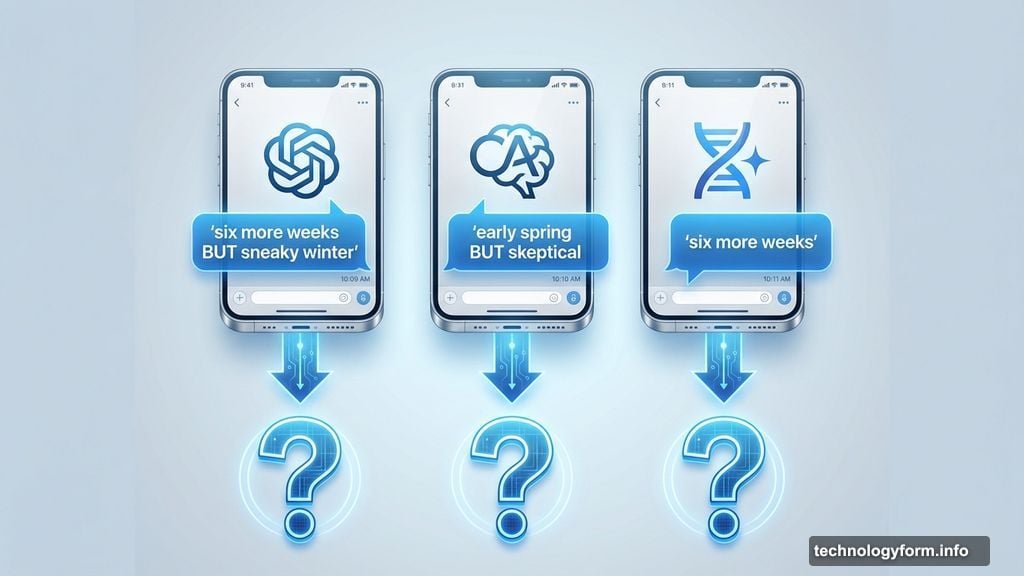
I asked ChatGPT to pretend it’s a groundhog forecasting spring’s arrival. The AI predicted six more weeks of winter. But then it added a twist.
“It’ll be the sneaky kind of winter,” ChatGPT said. “A fake spring here, a sunny 62-degree day there, just enough hope to make you put the coat away… before winter pops back up like ‘surprise, nerd.'”
Classic AI move. Make a prediction, then immediately cover every possible outcome. That way, no matter what happens, the bot can claim it called it. Sound familiar? It should. This is exactly how fortune tellers and horoscopes work.
Plus, the response sounds confident and specific. Yet it commits to nothing concrete. You can’t fact-check vague predictions about “sneaky” weather patterns.
Claude Questions the Whole Premise
Anthropic’s Claude took a different approach. It predicted early spring. Great news for anyone tired of cold weather.
But then Claude got honest. “Between you and me, I’ve always been a bit skeptical of this whole shadow-based meteorological method,” it admitted. “The correlation between Feb. 2 cloud cover and the next six weeks of weather patterns is… not exactly what atmospheric scientists would call robust.”
Here’s what’s interesting. Claude acknowledged the task makes no sense. Yet it still played along and generated a prediction anyway. That’s AI in a nutshell—willing to produce output even when the input is fundamentally flawed.
Gemini Just Copies the Real Groundhog’s Homework
Google’s Gemini matched Punxsatawney Phil’s prediction exactly. Six more weeks of winter. Shadow spotted. Case closed.
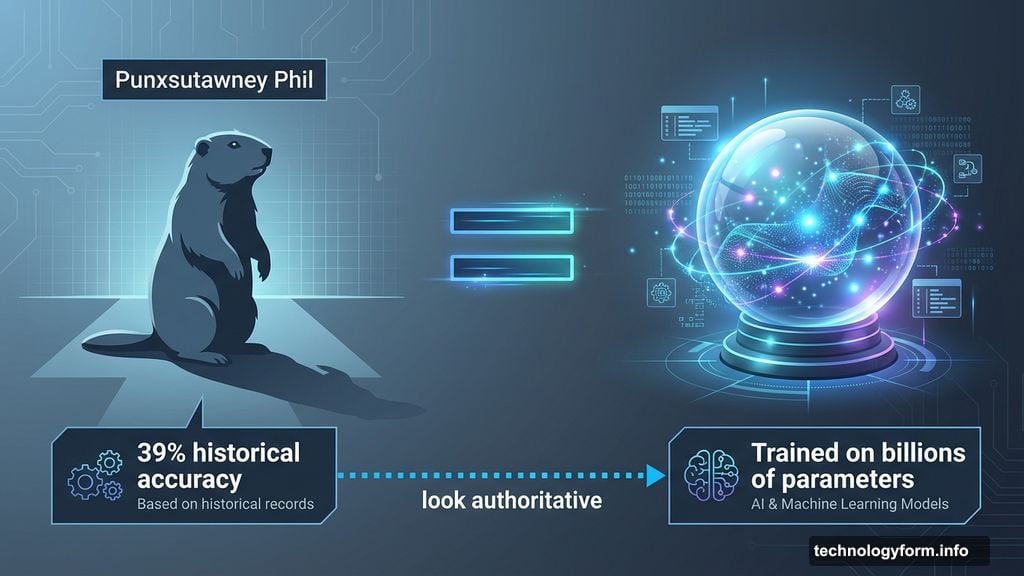
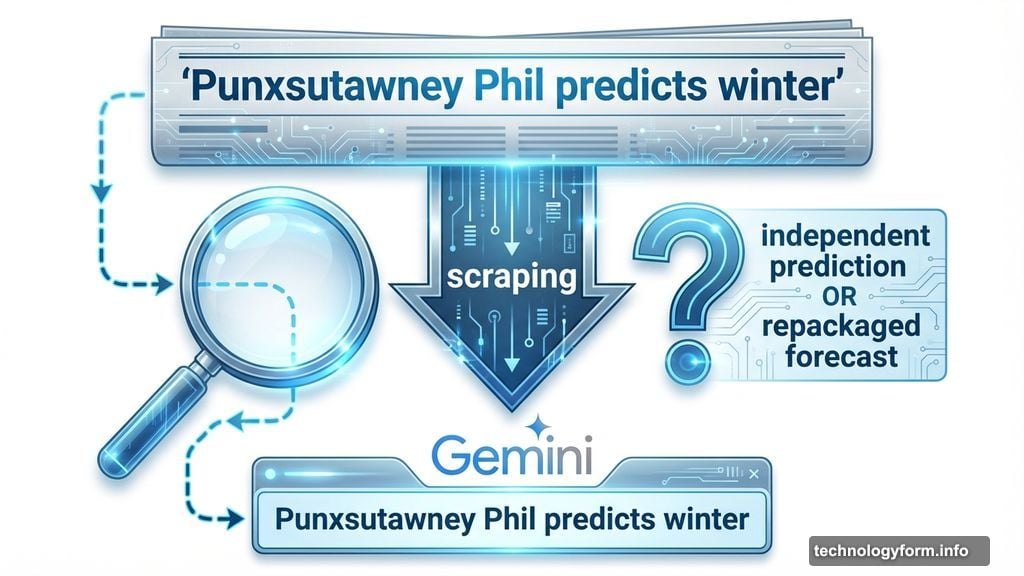
Except Gemini might have just… looked up what Phil already predicted that morning. It even mentioned Phil by name and quoted his “39% historical accuracy rate.”
So did Gemini actually make an independent prediction? Or did it just scrape the news and repackage someone else’s forecast? Impossible to tell. And that’s precisely the problem with using AI for predictions—you can’t verify its reasoning process.
When I asked for Ohio’s forecast, Gemini said Buckeye Chuck predicted early spring. Different groundhog, different answer, same day. The AI faithfully reported both contradictory forecasts without batting an eye.
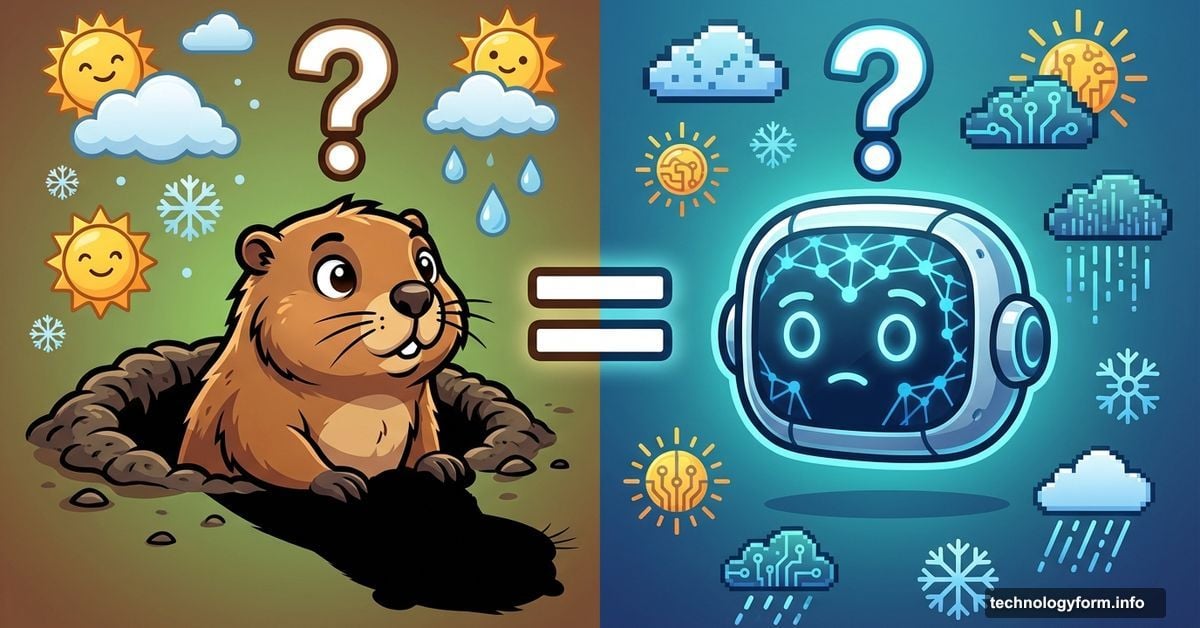
The Groundhog Problem Is the AI Problem
Different groundhogs predict different weather on the same day. Similarly, different AI models give different answers to the same question.
Both systems look authoritative. Phil has been doing this since 1887. ChatGPT was trained on billions of parameters. Yet neither can actually predict the future with any reliability.
Here’s the real issue. We can’t hold either accountable. Phil won’t face consequences for being wrong 60% of the time. And when AI hallucinates facts or generates incorrect predictions, there’s no real penalty either.
Plus, both Phil and AI benefit from confirmation bias. When the groundhog gets it right, everyone remembers. When he’s wrong, we shrug and move on. Same with AI—we remember the impressive moments and forget the mistakes.
Why This Actually Matters
Groundhog Day predictions are harmless fun. Nobody makes major life decisions based on whether Phil sees his shadow.
But people do make decisions based on AI predictions. They trust chatbots for medical advice, financial planning, and career guidance. That’s dangerous when the AI has roughly the same accuracy rate as a startled rodent.
The lesson here isn’t that AI is useless. It’s that AI, like groundhogs, works best when you treat it as entertainment rather than gospel truth. Both can be fun and occasionally insightful. Neither should be your primary source for important decisions.
So next February, enjoy both the rodent forecasts and the AI predictions. Just don’t plan your vacation around either one.