Waymo’s AI Simulates Tornadoes and Elephants to Prep for Real Roads
Waymo just turned simulation testing up to eleven. The Alphabet-owned robotaxi company now uses Google’s Genie 3 AI to create hyper-realistic virtual worlds where its self-driving cars face scenarios you’d never expect.
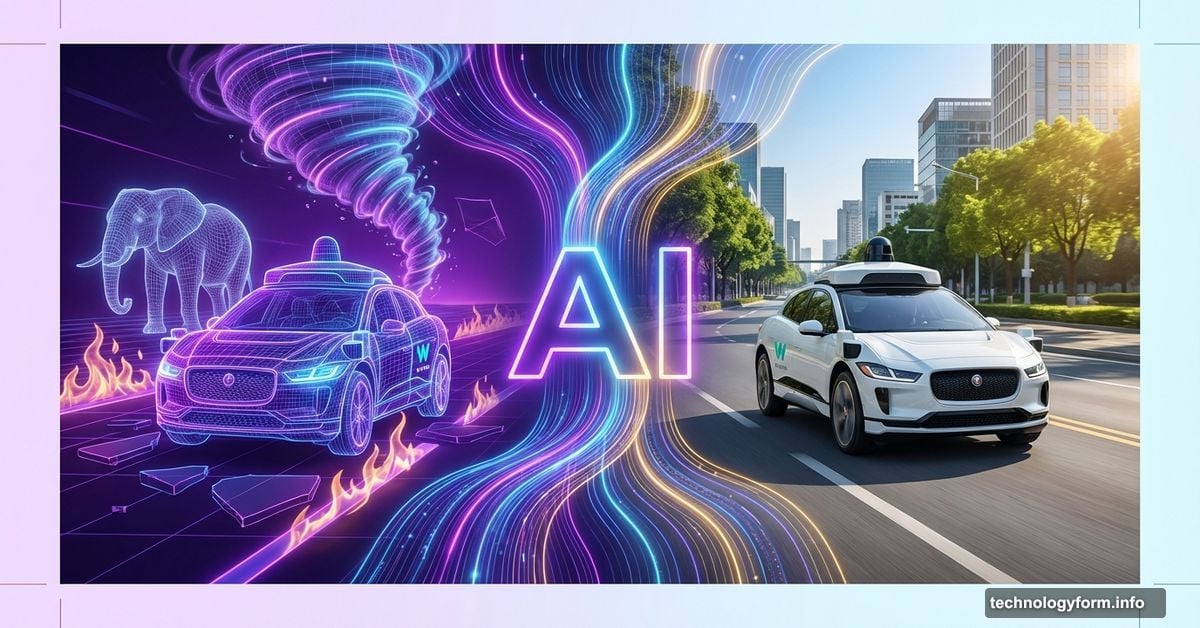
Tornadoes on highways. Elephants blocking streets. Neighborhoods engulfed in flames. These aren’t random chaos tests. They’re strategic simulations designed to prepare autonomous vehicles for the rarest, most dangerous situations they might encounter.
And here’s the fascinating part: Waymo can generate these scenarios instantly using AI, testing millions of virtual miles without putting a single real vehicle at risk.
Why Simulation Matters for Self-Driving Cars
Autonomous vehicle companies face a massive challenge. How do you train cars to handle situations that almost never happen?
You can’t wait for a real tornado to test your vehicle’s response. That’s dangerous, expensive, and impractical. Instead, you simulate.
Simulation lets AV developers create virtually any scenario. Then they run their vehicles through millions of test miles in virtual environments. Each test trains the AI to recognize and respond to new situations without risking actual passengers or pedestrians.
But older simulation methods had limits. Creating realistic virtual environments took time and resources. Plus, many simulations lacked the visual fidelity needed to properly test camera-based sensor systems.
That’s where Waymo’s new approach changes everything.
Google’s Genie 3 Creates Interactive Driving Worlds
Waymo built its World Model using Genie 3, Google DeepMind’s latest AI system that generates interactive 3D environments from simple text or image prompts.
Think of it like a video game engine, except specifically designed for autonomous driving scenarios. Developers type in a description like “snow-covered Golden Gate Bridge” or “flooded suburban street with floating furniture.” Then Genie 3 generates a photorealistic, interactive environment where Waymo can test its robotaxis.
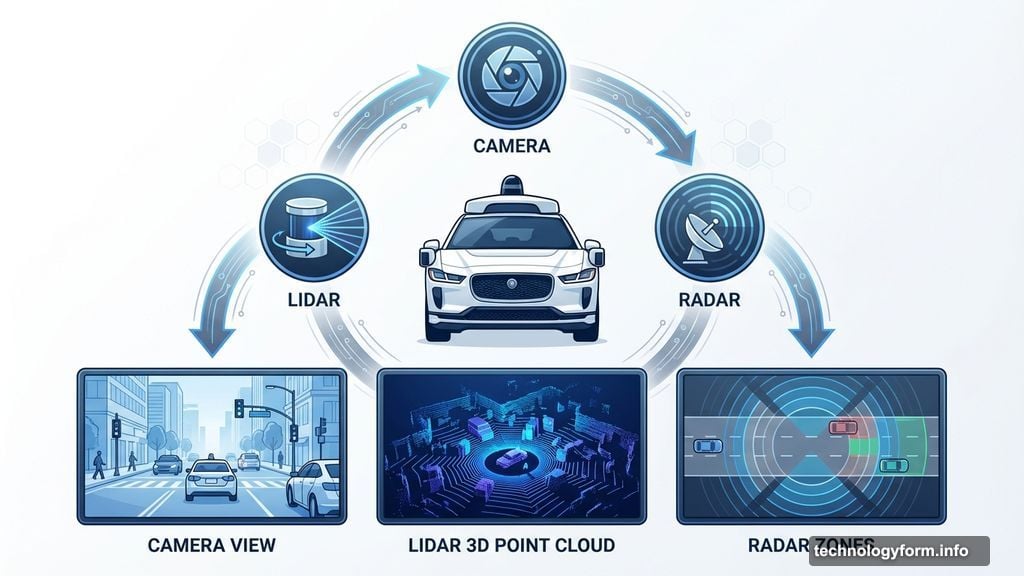
The key word is interactive. These aren’t static images or pre-recorded videos. Waymo’s virtual vehicles can drive through these worlds while their lidar sensors create 3D renderings of everything around them, just like they would on real roads.
Moreover, the system handles multiple sensor types simultaneously. That means it simulates what cameras, lidar, and radar would all see in each scenario. This multi-modal approach ensures more comprehensive testing than previous methods.
Three Control Mechanisms Enable Flexible Testing
Waymo’s World Model uses three unique mechanisms that make it especially powerful for AV testing.
First, driving action control lets developers simulate “what if” scenarios. What if the vehicle had turned left instead of right? What if it had braked earlier? The system can instantly generate these counterfactual situations without rebuilding entire environments.
Second, scene layout control enables customization of road infrastructure. Developers can add traffic signals, change lane configurations, or modify how other vehicles behave. This flexibility means testing specific scenarios that might be rare but critical.
Third, language control provides the most flexible adjustment tool. Developers can instantly change time of day, weather conditions, or lighting situations using simple text commands. Testing low-light performance? Just type “nighttime with heavy rain.” The system adjusts accordingly.
This language control proves especially valuable for edge cases involving sensor challenges. Heavy glare, fog, or darkness can make it harder for cameras and sensors to see clearly. So Waymo can now test these conditions systematically without waiting for specific weather or time-of-day circumstances.
Real Dashcam Footage Becomes Virtual Test Tracks
Here’s where things get really interesting. Waymo’s World Model can take actual dashcam footage from real drives and transform it into interactive virtual environments.
Why does this matter? Because it combines real-world complexity with simulation flexibility. Developers can capture a particularly challenging real-world scenario, then test thousands of variations of how their vehicles might respond.
For instance, say a Waymo vehicle encountered an unusual traffic pattern in Phoenix. Engineers can capture that footage, convert it to a simulation, then test how the vehicle performs with slight variations. What if another car had merged differently? What if lighting conditions had been worse?
This approach provides “the highest degree of realism and factuality” according to Waymo. Yet it maintains the safety benefits of virtual testing.
Plus, the system can generate longer simulated scenes at 4X playback speed without sacrificing image quality. That means testing scenarios that play out over several minutes without requiring massive computing resources or waiting hours for results.
Edge Cases: The Strange Situations AVs Must Handle
So what exactly is Waymo testing in these virtual worlds?
Beyond tornadoes and elephants, the company simulates numerous rare but potentially dangerous scenarios. These include flooded roads with floating debris, neighborhoods during wildfires, snow-covered bridges, and various wildlife encounters.
Each represents an “edge case” — situations that occur rarely but require specific responses from autonomous vehicles. Traditional testing methods might never encounter these scenarios during development. But they absolutely happen in the real world.
Take the elephant example. Yes, it sounds absurd for most U.S. roads. But circuses travel. Exotic animal sanctuaries exist near highways. Transport trucks occasionally have incidents. An autonomous vehicle needs to recognize “large obstacle blocking road” whether that obstacle is a fallen tree, construction equipment, or an escaped elephant.
Similarly, tornadoes form near highways. Wildfires spread to residential areas. Floods happen suddenly. Each scenario requires the vehicle to detect danger, assess severity, and make appropriate decisions — ideally before putting passengers at risk.
By simulating these situations, Waymo can train its vehicles to handle them proactively rather than reactively. The vehicles learn recognition patterns and response strategies without anyone getting hurt in the process.
Waymo’s Growing Reliance on Google AI
This isn’t Waymo’s first time leveraging Google’s artificial intelligence resources for autonomous driving improvements.
Previously, Waymo developed EMMA (End-to-End Multimodal Model for Autonomous Driving) using Google’s Gemini AI. That system helps coordinate multiple inputs from cameras, lidar, and radar into unified decision-making.
The company is also reportedly developing a Gemini-based in-car voice assistant for passengers. And Google’s DeepMind has provided solutions that reduce false positives in Waymo’s sensor data — situations where sensors incorrectly identify hazards that don’t actually exist.

This deeper integration makes sense given Alphabet owns both companies. Yet it represents a significant competitive advantage. Waymo has access to some of the world’s most advanced AI systems specifically for improving autonomous driving.
Other AV companies don’t have Google’s AI resources. They’re building world models using different approaches or licensing technology from third parties. That gap could matter significantly as the technology advances.
Virtual Miles vs Real Miles: The Testing Balance
Simulation offers massive advantages. Waymo can test millions of virtual miles faster and cheaper than real-world testing. Edge cases that might take years to encounter naturally can be simulated instantly.
But simulation has limits. Virtual environments, however realistic, never perfectly match reality. Physics simulations approximate real-world behavior but include simplifications. Weather patterns follow models rather than actual chaos.
Moreover, sensors behave differently in simulations versus physical environments. Lidar doesn’t encounter real dirt, insects, or weather interference in virtual worlds. Cameras don’t face actual glare or lens distortions.
So most AV companies, including Waymo, use simulation as one tool among many. They still log millions of real-world miles. They still test in actual traffic with real pedestrians and unpredictable human drivers.
Simulation accelerates development and enables testing scenarios that would be dangerous or impossible to recreate safely. But it complements rather than replaces real-world validation.
Waymo currently operates commercial robotaxi services in several U.S. cities, logging real miles daily. Those operations generate data that feeds back into simulation models, creating a continuous improvement loop.
The Simulation Arms Race
Waymo isn’t alone in prioritizing simulation. Every major autonomous vehicle developer uses virtual testing extensively.
Tesla famously uses its fleet of customer vehicles to collect real-world data, then simulates scenarios based on that information. Cruise (GM’s AV division) developed its own simulation platforms before pausing operations. Aurora, Zoox, and other AV companies all invest heavily in virtual testing capabilities.
What makes Waymo’s approach notable is the sophistication of its AI-generated environments. Previous simulation methods often used game engines or pre-built scenarios. Generating realistic, interactive environments from simple prompts represents a significant leap.
This capability could accelerate development timelines significantly. Instead of teams spending weeks building specific test scenarios, engineers can generate them in minutes. That means testing more edge cases faster, potentially leading to safer, more capable autonomous vehicles.
Yet simulation quality varies significantly. Some systems generate obviously artificial environments that don’t properly test sensor systems. Others lack the detail needed to simulate complex scenarios accurately.
Waymo’s partnership with Google DeepMind gives it access to cutting-edge AI that most competitors can’t match. That advantage could prove decisive as the industry moves toward broader commercial deployment.
What This Means for Autonomous Vehicle Safety
Better simulation should translate to safer autonomous vehicles. By testing more edge cases more thoroughly, developers can identify and fix problems before they occur in real traffic.
But simulation quality matters enormously. Poor simulations might miss critical real-world factors. Or they might create false confidence in systems that haven’t been properly tested.
Regulators increasingly scrutinize AV safety claims. Simulation testing helps, but it’s not enough by itself. Companies need real-world validation, transparent safety reporting, and continuous improvement based on actual operational data.
Waymo’s approach of combining advanced AI simulation with millions of real-world operational miles represents current best practice. Neither alone suffices. Together, they create a more comprehensive safety validation process.
Still, questions remain about edge case frequency and severity. Just because Waymo can simulate a tornado doesn’t mean its vehicles need extensive tornado-specific training. The probability matters. So does the appropriate response — which might simply be “pull over and wait.”
The real value comes from testing sensor recognition under unusual conditions. Can the vehicle identify unexpected obstacles regardless of what they are? Does it respond appropriately to dangers it hasn’t specifically trained for?
These are the capabilities that ultimately determine autonomous vehicle safety. Simulation helps develop them. But proving them requires real-world operation.
Waymo’s World Model represents impressive technology. Whether it translates to meaningfully safer robotaxis depends on execution, validation, and continued development. The company’s track record suggests they understand this balance. But the proof ultimately comes from real streets, not virtual ones.