The Supreme Court Just Settled the AI Copyright Debate. Artists Won.
The US Supreme Court made a quiet but massive call this week. It declined to hear a case that would have determined whether AI-generated art deserves copyright protection.
The ruling wasn’t dramatic. The justices simply said no thanks to reviewing the case. But the impact is enormous. AI-generated artwork now officially cannot receive copyright protection in the United States, and that decision isn’t changing anytime soon.
Stephen Thaler’s Long Legal Battle Finally Ends
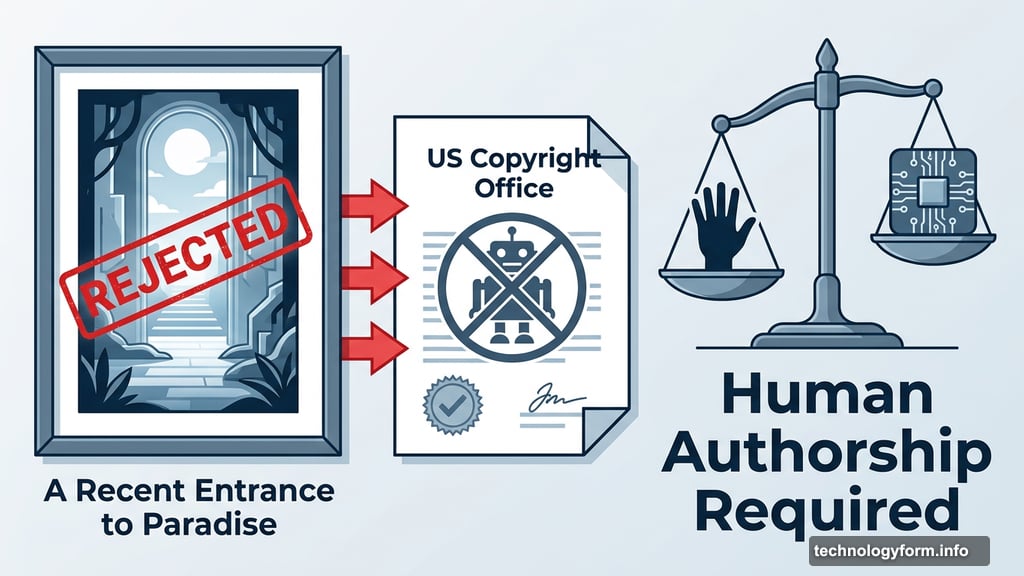
The story starts back in 2019 with a Missouri computer scientist named Stephen Thaler. He tried to copyright an AI-generated image called A Recent Entrance to Paradise, listing the algorithm he built as the creator.
The US Copyright Office rejected his request immediately. Then Thaler pushed back. The Copyright Office reviewed the case again in 2022 and reached the same conclusion. The image lacked “human authorship,” so it didn’t qualify for protection.
Thaler kept fighting. US District Court Judge Beryl A. Howell ruled in 2023 that “human authorship is a bedrock requirement of copyright.” That ruling held firm again in 2025, when a federal appeals court in Washington, DC upheld it. So Thaler took his last shot and asked the Supreme Court to step in.
The Supreme Court said no.
What “Human Authorship” Actually Means Here
Thaler argued that the court’s position created what he called a “chilling effect” on anyone using AI creatively. That’s worth thinking about for a second.
But the courts have been consistent. Copyright law, as it stands, protects creative works made by humans. An algorithm producing an image, however impressive the result, doesn’t satisfy that requirement.
Last year, the Copyright Office went even further. They issued guidance stating that AI-generated artwork based on text prompts isn’t protected by copyright. So even if you type a detailed, clever prompt and the AI produces something stunning, you can’t copyright the output.
This isn’t just a technicality. It’s a foundational question about creativity, ownership, and what it means to make something.
AI Can’t Patent Inventions Either
The copyright ruling isn’t the only wall Thaler has hit. The US federal circuit court also determined that AI systems can’t patent inventions, since patent law similarly requires a human inventor.
The US Patent Office reinforced this in 2024 with updated guidance. AI systems can’t be listed as inventors on a patent. However, humans who use AI tools to develop inventions can still apply for patents themselves. So there’s a meaningful distinction between using AI as a tool versus letting AI be the credited creator.
The UK Supreme Court reached a nearly identical conclusion in a parallel case Thaler brought across the Atlantic. The pattern is clear across multiple legal systems.
So Where Does This Leave AI Artists?
Here’s the practical reality. If you use AI tools to assist your creative work, you likely still hold copyright over the final piece, depending on how much human creative input you contributed. The line gets blurry fast, though.
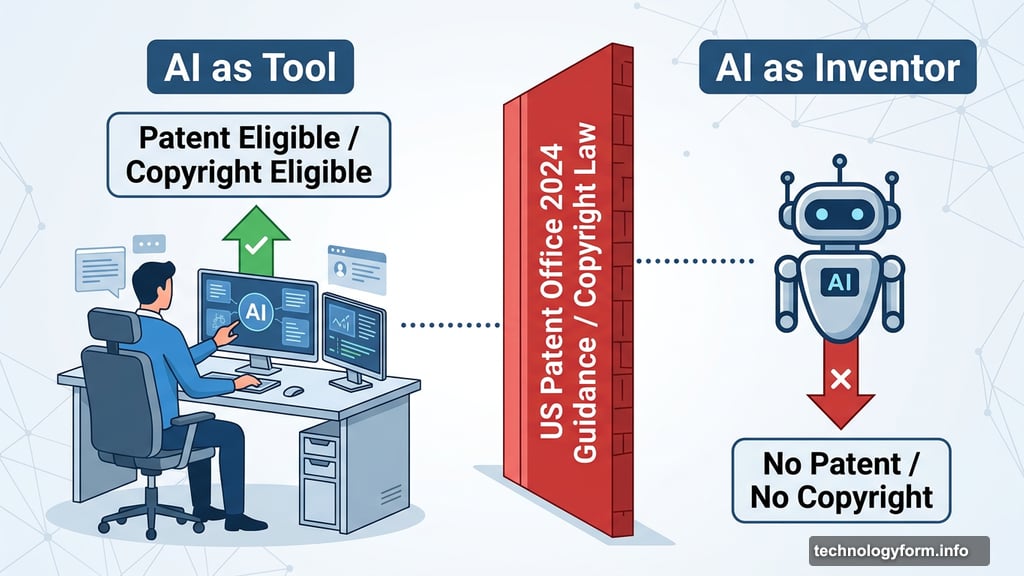
Prompt-only AI art, where a person types instructions and the AI does all the creative work, sits firmly outside copyright protection. But hybrid workflows where a human artist significantly shapes, edits, and builds on AI output may still qualify. The Copyright Office is still working through the nuances there.
For artists who create by hand, traditionally or digitally, this ruling offers some relief. AI-generated images won’t enjoy the same legal protections as human-made work. That matters when it comes to licensing, reproduction rights, and commercial use.
For developers building AI image tools, the implications are different. The outputs their systems generate are essentially in the public domain from a copyright standpoint. Anyone can use them freely.
This debate is far from fully settled when it comes to real-world creative industries, fair compensation, and how AI fits into art markets. But legally, at least in the US, the core question has an answer now.
The courts spoke. Human authorship still counts for something.