ChatGPT Now Makes Math and Science Click With Interactive Visuals
Struggling to wrap your head around the Pythagorean theorem? Or maybe Coulomb’s law feels like a foreign language? OpenAI just made ChatGPT a whole lot better at explaining exactly these kinds of concepts.
Starting today, ChatGPT generates dynamic, interactive visuals when you ask about select math and science topics. And honestly, it’s the kind of feature that could genuinely change how students approach tricky subjects.
Dynamic Visuals That Actually Respond to You
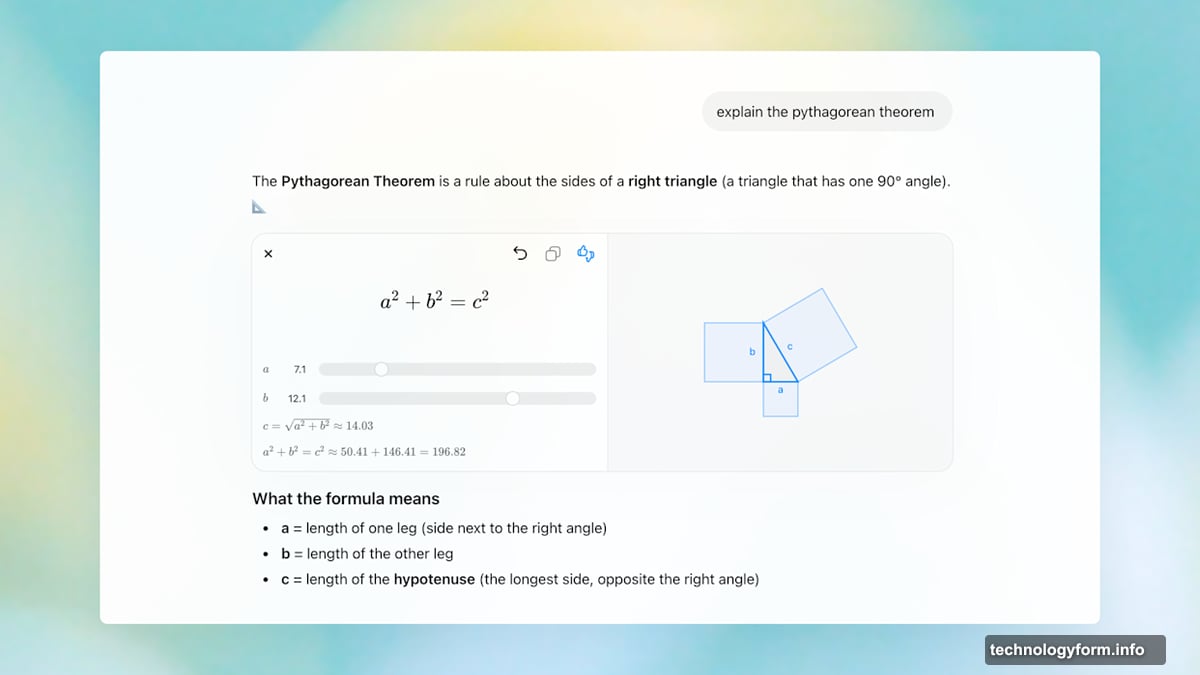
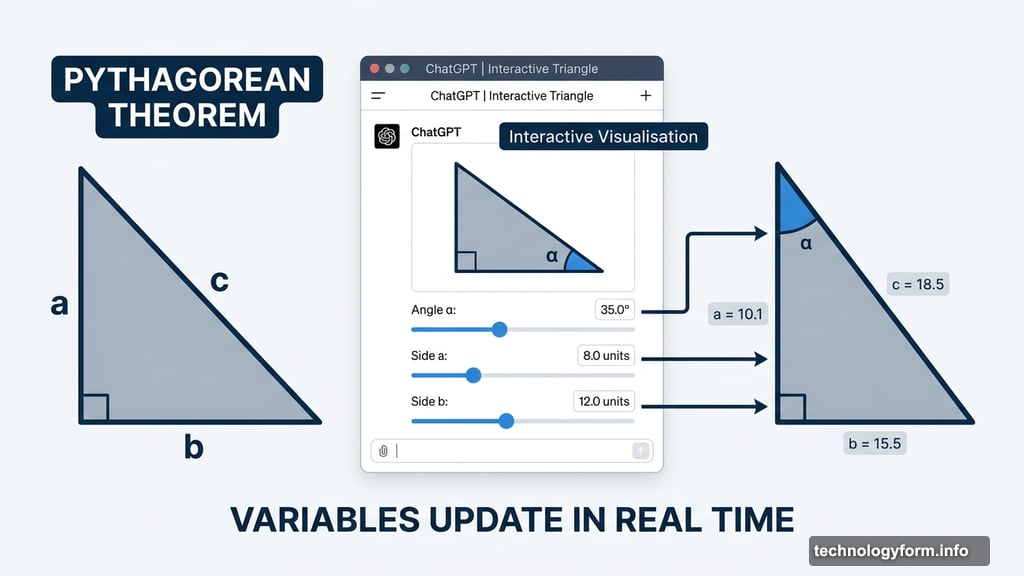
Here’s what makes this different from a regular explanation. When ChatGPT responds with one of these interactive visuals, you can tweak the variables and equations yourself. Change a number, and the solution updates in real time right in front of you.
Think of it like having a whiteboard that thinks. Instead of reading a static explanation, you can poke at the problem yourself. Adjust the angle in a geometry equation. Shift a charge value in a physics formula. Watch what happens.
That hands-on quality is exactly what makes hard concepts stick. And for anyone who ever stared blankly at a textbook diagram, this is genuinely exciting.
Over 70 Concepts Covered at Launch
OpenAI is launching support for more than 70 math and science concepts right out of the gate. Topics include the Pythagorean theorem, Coulomb’s law, lens equations, and Ohm’s law, among others.
But this is clearly just the starting point. OpenAI explicitly says more topics are coming, with plans to expand interactive learning across additional subjects over time.
Plus, the feature is available to every ChatGPT user, regardless of whether you pay for a subscription. Free users get full access. That’s a surprisingly generous move, and it signals that OpenAI sees this as something fundamental rather than a premium perk.
Built for Students, But Useful for Everyone
OpenAI singles out high school and college students as the people most likely to benefit here. That makes total sense. These are the folks grinding through physics homework at 11pm and trying to understand why triangles work the way they do before an exam.
But honestly, curious adults, self-learners, and anyone brushing up on forgotten subjects will find real value here too.
How This Fits Into ChatGPT’s Study Tools
This isn’t OpenAI’s first move into education-focused features. Last summer, the company released Study Mode, which was designed specifically for students using ChatGPT to complete coursework. Instead of handing over a direct answer, Study Mode nudges you toward figuring things out yourself.
These two features work nicely together. Study Mode keeps you thinking. Interactive visuals help you see and understand what you’re thinking about. So together, they push toward genuine learning rather than just answer-harvesting.
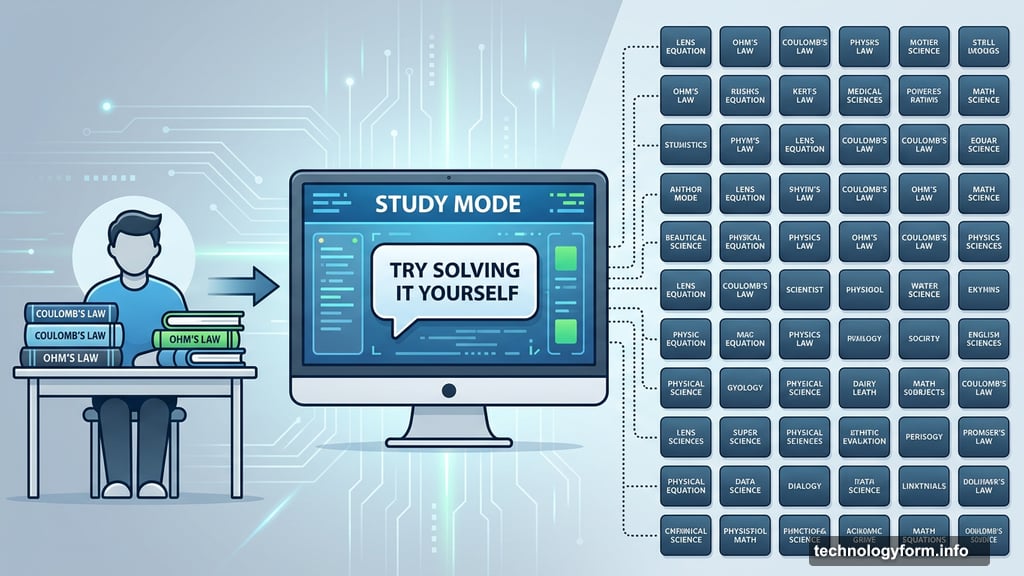
OpenAI acknowledged the flood of students using AI chatbots for schoolwork and responded with tools that actually support understanding. That’s a more thoughtful approach than simply refusing to help.
What This Means for Learning With AI
For a long time, AI explanations lived entirely in text. Words on a screen describing concepts that really benefit from a visual, dynamic representation. That gap always felt like a missed opportunity.
Interactive visuals close that gap in a meaningful way. Math and science are disciplines where seeing the relationship between variables matters enormously. A formula on its own tells you the rule. Watching that formula respond to your inputs teaches you the logic behind it.
OpenAI describes today’s launch as just the beginning, and that framing feels right. The foundation is genuinely solid. Expanding it to cover more subjects and more complex topics could make ChatGPT one of the most useful learning tools available.
If you’ve ever wished you had a patient, knowledgeable friend to walk you through a confusing equation, this feature is worth trying today.