Meta and Google Lost a Landmark Social Media Trial. Here’s What That Actually Means.
Two major tech companies just faced juries and lost. The ripple effects could reshape the internet as we know it.
A jury in California found Meta and Google liable for harming a young woman named Kaley through negligent platform design. A separate case in New Mexico landed a verdict against Meta alone. Both companies plan to appeal. But the damage to the “Big Tech can’t be touched” narrative is already done.
To unpack what happened and why it matters, Nilay Patel sat down with Casey Newton, founder of the newsletter Platformer and co-host of the Hard Fork podcast, and Lauren Feiner, senior policy reporter at The Verge who was actually inside that Los Angeles courtroom. What followed was one of the most honest, complicated conversations about social media, free speech, and platform accountability you’ll hear anywhere.
What These Bellwether Trials Were Really About
These cases weren’t about a specific piece of harmful content. That’s what makes them different from almost everything that came before.
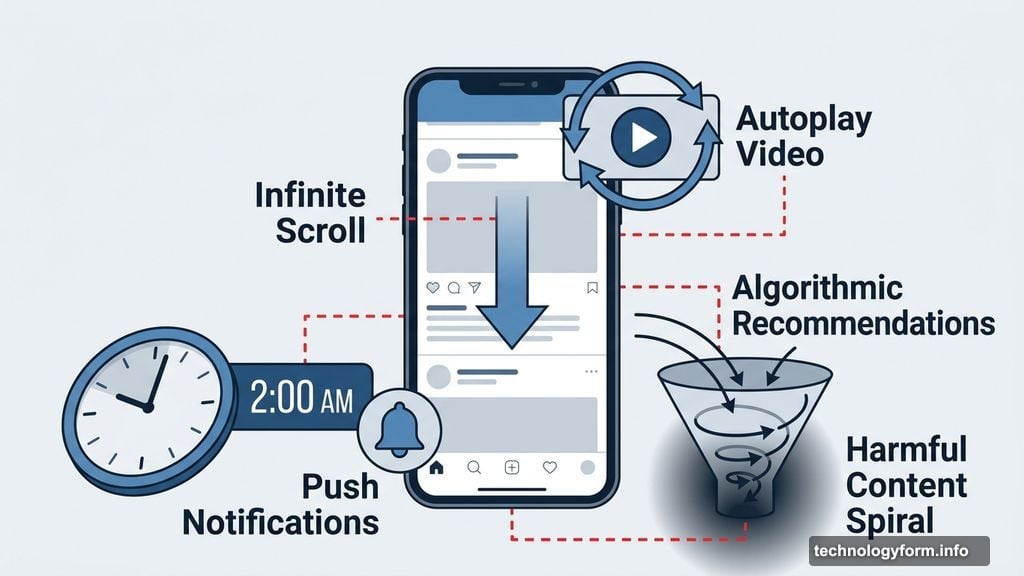
Instead, the plaintiffs focused on platform design. Infinite scroll. Autoplay video. Push notifications arriving at 2 a.m. Algorithmic recommendations that drag users deeper into harmful content spirals. The argument was simple: these features are defective products, the same way a car without seatbelts is a defective product.
Snap and TikTok both settled before the California trial even started. That told Casey Newton everything he needed to know. “That was the moment when I said, okay, they must be really, really scared,” he said on Decoder.
Then Meta and YouTube stayed in. And they lost.
Section 230 Just Got a Lot More Complicated
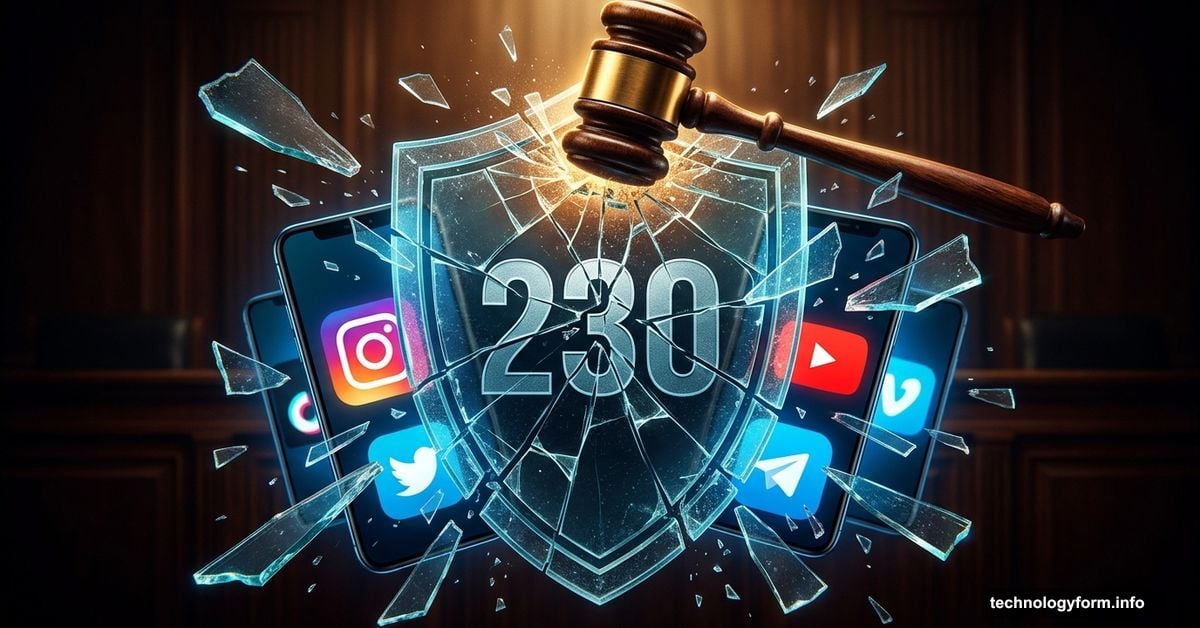
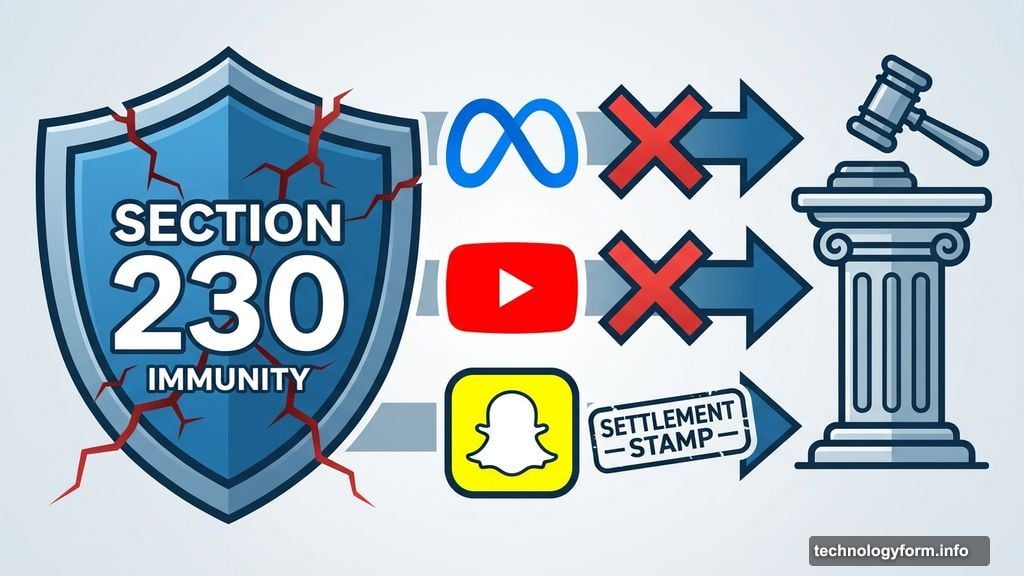
For roughly 20 years, Section 230 of the Communications Decency Act has functioned like a legal force field for tech platforms. The law says companies can’t be held liable for what their users post. Whenever someone sued a platform over harmful content, the case got dismissed before it even started.
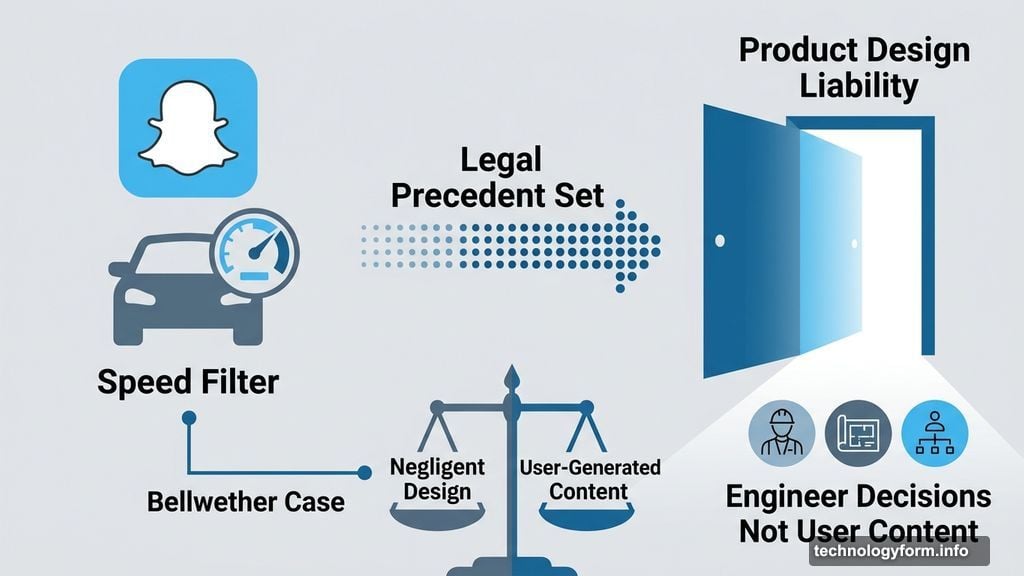
These trials found a way around that shield. And the key was an earlier case involving Snapchat.
Snap used to offer a filter that showed your car’s speed while you were driving. Plaintiffs successfully argued that filter created a dangerous incentive, and that it was Snapchat’s own product decision, not user-generated content. That precedent cracked the door open. Suddenly, lawyers could ask: what other design choices have created dangerous incentives?
Infinite scroll has no specific speaker behind it. Nobody “posted” autoplay video. These are product decisions made by engineers inside tech companies. And juries, it turns out, are ready to call those decisions negligent.
Why Juries Were Always Going to Be a Problem for Big Tech
Here’s something the platforms never quite figured out: almost everyone in America knows someone with a compulsive Instagram or TikTok problem.
Lauren Feiner described watching Mark Zuckerberg on the stand discussing a beauty filter. An employee had reportedly pushed back on including it, worried about how it might affect young girls. That’s the kind of internal document that lands differently in a jury room than it does in a press release.
Casey put it bluntly: “When you sit a jury down and you say, ‘There’s something wrong with Instagram,’ it’s pretty easy to find a lot of people who say, ‘That sounds right to me.'”
The platforms always responded to this by pointing out that statistically, only a small percentage of users report serious harm. But when your user base is measured in billions, even a tiny percentage is tens of millions of people. That math never seemed to register in their PR strategy.
Repealing Section 230 Won’t Fix This. Politicians Know That.
The immediate political response to these verdicts has been predictable. Lawmakers behind bills like the Kids Online Safety Act, or KOSA, immediately pointed to the trials as proof we need new legislation. Some Republicans, including Josh Hawley, renewed their calls to repeal Section 230 entirely.
Neither Nilay, Casey, nor Lauren could actually connect those dots.
Repealing Section 230 wouldn’t make platforms safer. It would make them terrified. Platforms would over-moderate content aggressively to avoid any possible legal liability. The Republican politicians who hate content moderation most would get vastly more of it. Casey called this out directly: “None of them seem to understand that if they do in fact get rid of 230, platforms will over-moderate content because they will be in terror.”
Moreover, as Lauren pointed out, Section 230 is procedural. It stops lawsuits early. But the First Amendment is what actually determines outcomes. Get rid of 230 and you still have the First Amendment waiting behind it. The core tension doesn’t go away.
The Harder Question Nobody Can Quite Answer
So what do you actually do?
The honest answer from all three people on this episode: nobody fully knows.
Casey said he’s increasingly convinced that algorithmic personalization is the most dangerous specific feature. Not infinite scroll in isolation. Not autoplay by itself. But the combination where searching for one diet-related video turns into an immersive ecosystem of eating disorder content, all served by a system that learned exactly what keeps you watching.
“As a society, I think we want to stop that,” he said. “But is that constitutional under the First Amendment? I don’t know.”
The tobacco comparison gets made constantly in discussions like this, but Lauren flagged an important difference. There is no safe cigarette. But some level of social media use appears neutral or even positive for many people. It’s the compulsive, can’t-stop-even-though-I-hate-myself use that causes the documented harm. These aren’t quite the same problem.
What Trust and Safety Looks Like Now
Casey wrote a piece earlier this year asking whether anyone was left to stand up for trust and safety as a discipline inside tech companies. The answer he got back was uncomfortable.
The people who used to be vocal advocates for human rights principles inside platforms largely went quiet. Many were laid off. Others saw what happened to visible advocates, which often included harassment campaigns and credible threats. The ones who stayed got pushed aside as every major platform raced to curry favor with the Trump administration.
“What happened when these people stopped speaking out was they just gave free rein to the oligarchs to run these platforms as they see fit,” Casey said.
Meanwhile, the same executives publicly positioning themselves as free speech champions were privately texting each other about deleting content identifying DOGE employees. The gap between the stated principles and the actual behavior is wide enough to drive a truck through.
The Incentive Problem That Might Be Unsolvable
Here’s the structural issue that keeps reasserting itself in this conversation.
Meta has entire teams of cognitive scientists whose job is to understand the human brain well enough to get you to pick up your phone one more time. That isn’t a moral failing in the traditional sense. It’s a rational response to a business model where attention equals revenue. Casey framed it clearly: “For Meta, addiction looks like success.”
No amount of congressional testimony changes that underlying incentive. No amount of internal good intentions does either. The only things that change corporate incentives at that scale are existential legal liability, meaningful regulation, or competitive pressure from a company that found a better model.
On the regulation front, Nilay floated three ideas he sees as less constitutionally fraught: a federal privacy law, mandatory algorithmic transparency requirements, and required publication of internal research on user harm. He noted, slightly ruefully, that this is basically describing what the European Union has been attempting. Whether it’s working there is still too early to say.
The cases will be appealed. More bellwether trials are already scheduled. Over 1,500 individual cases sit behind the California trial alone. A federal version of these lawsuits kicks off in June.
What these verdicts have already done, regardless of what happens on appeal, is drag a lot of internal documents into public view. Juries got to see what platform employees said to each other about harmful features. Zuckerberg sat in a witness chair and answered questions about beauty filters and the employees who worried about their daughters. That information doesn’t go back in the box.
Whether courts, Congress, or the companies themselves end up driving what comes next remains genuinely uncertain. All three people in this conversation, who between them have covered this industry for decades, said some version of the same thing: they don’t know what the right answer is, and they’re not sure anyone does yet.
That might be the most honest thing said about social media regulation in years.