ChatGPT Can’t Handle These 11 Critical Tasks. Here’s Why You Shouldn’t Trust It
ChatGPT became the go-to answer machine for millions. But that popularity created a dangerous illusion: people started trusting it with questions that demand real expertise.
AI chatbots excel at creative brainstorming and quick explanations. However, they fail spectacularly when accuracy matters most. These systems hallucinate facts, miss crucial context, and can’t distinguish between life-or-death situations and casual queries.
So before you ask ChatGPT something important, remember this: confidence doesn’t equal correctness. Here are 11 scenarios where trusting AI could seriously backfire.
Your Health Isn’t a Guessing Game
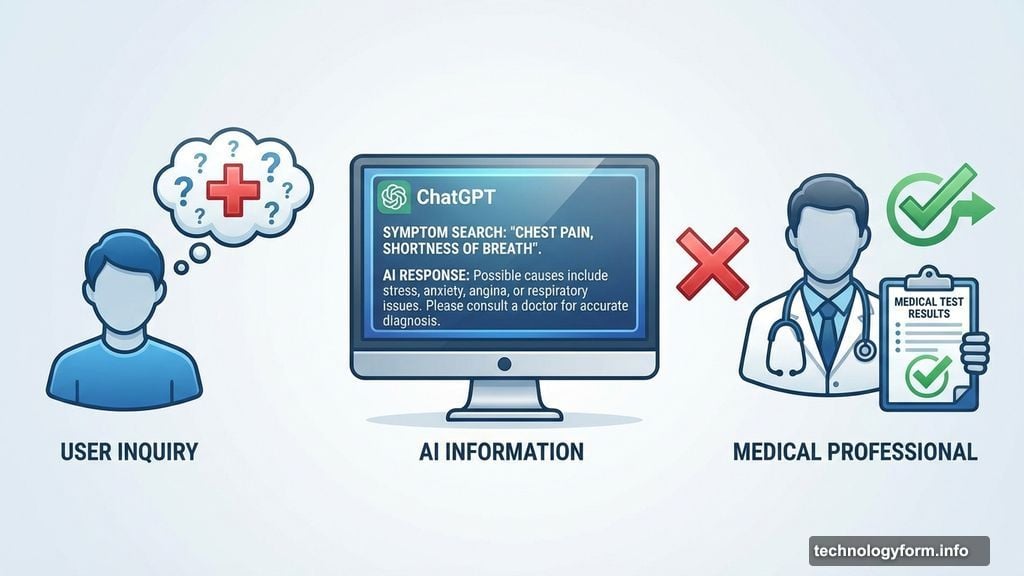
Type your symptoms into ChatGPT and watch it spiral into worst-case scenarios. Got a headache? Could be dehydration. Or maybe a brain tumor. The chatbot can’t tell the difference.
Real doctors order tests, examine you physically, and carry malpractice insurance. ChatGPT does none of that. Plus, medical AI often gets trained on incomplete data that reflects existing healthcare biases.
That said, AI can help you prepare for appointments. Use it to organize symptom timelines or translate confusing medical jargon. Just never let it replace an actual diagnosis from a licensed physician.
Remember: WebMD scared everyone for years. ChatGPT just does it faster and with more authoritative-sounding language.
Mental Health Support Requires Human Connection
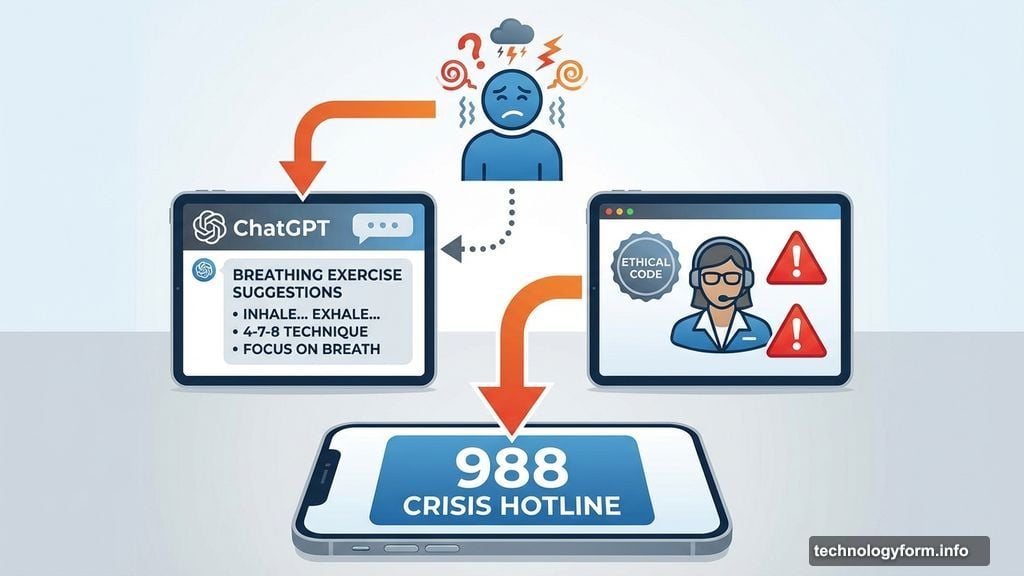
ChatGPT might suggest breathing exercises when you’re anxious. But it can’t call for help when you’re truly in crisis.
Licensed therapists spot red flags in your tone and body language. They work under strict ethical codes designed to protect vulnerable patients. ChatGPT has none of those safeguards.
Moreover, AI therapy carries hidden risks. The chatbot might reinforce harmful thought patterns without realizing it. Or miss warning signs that would immediately alarm a trained professional.
If you need immediate mental health support, dial 988 in the US. Real humans trained in crisis intervention will answer. They can actually help.
Emergencies Don’t Wait for Chatbot Responses
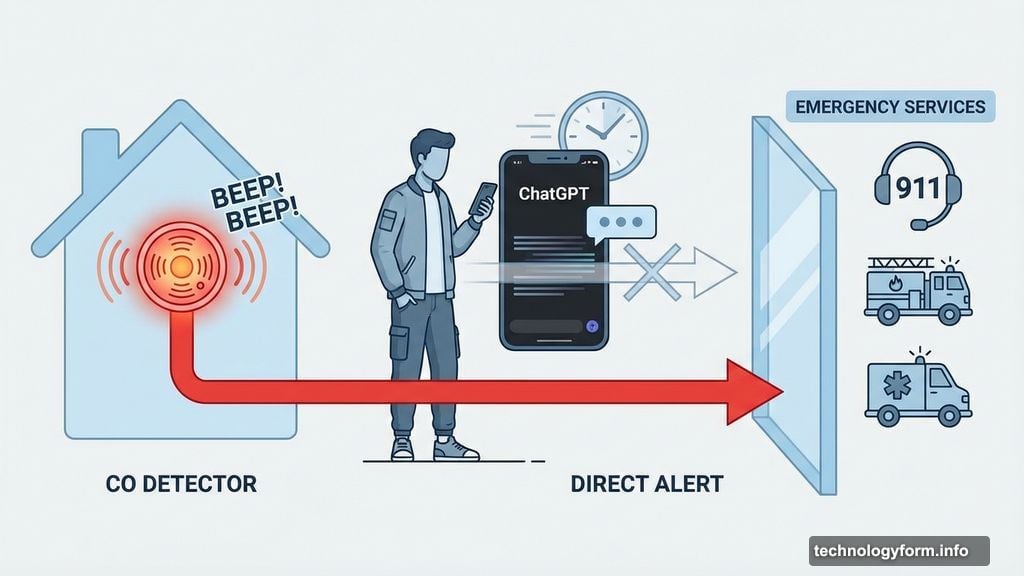
Your carbon monoxide detector starts beeping. Do you open ChatGPT to ask if it’s serious? Absolutely not.
Every second spent typing is a second not evacuating or calling 911. AI can’t smell gas, see smoke, or dispatch emergency services. It only knows what you tell it, and in a crisis, that information is always incomplete.
Use chatbots to understand safety protocols after the fact. Never during actual emergencies when your life could depend on immediate action.
Financial Planning Needs Real Numbers and Real Consequences
ChatGPT can explain what a Roth IRA is. But it doesn’t know your income, debts, tax bracket, or retirement goals.
Plus, tax laws change yearly. ChatGPT’s training data often stops months before the current tax season. That means outdated advice on deductions, brackets, and filing requirements.
One missed deduction could cost you hundreds. One wrong calculation could trigger an IRS audit. CPAs understand these stakes. ChatGPT doesn’t.
Also consider privacy. Anything you paste into ChatGPT probably becomes training data. That includes your Social Security number and bank routing information.
Confidential Data Deserves Better Security
Press embargoes, client contracts, and medical records have one thing in common: they’re protected by law. Pasting them into ChatGPT breaks those protections immediately.
Once text enters that prompt window, you lose control. The data sits on third-party servers outside your nondisclosure agreements. OpenAI employees might review it during quality checks.
ChatGPT isn’t immune to hackers either. Security breaches happen. If you wouldn’t post something in a public Slack channel, don’t put it in a chatbot.
This applies to tax returns, birth certificates, passports, and anything covered by HIPAA, GDPR, or CCPA regulations.
Crime Isn’t a Creative Writing Exercise
Don’t use ChatGPT to plan illegal activities. This should be obvious, but apparently it needs saying.
OpenAI built safety filters into ChatGPT, but determined users can trick them. The company logs conversations and cooperates with law enforcement when required.
Besides the legal risk, imagine explaining to a judge that “the AI told me to do it.” That defense hasn’t worked out well for anyone.
Academic Integrity Still Matters
Turnitin and similar detection software improve every semester. Professors can spot “ChatGPT voice” from a mile away now. Those overly polished paragraphs with suspiciously perfect transitions? Dead giveaway.
Consequences escalate fast. Academic suspension. Expulsion. Professional licensing boards rejecting your degree. One lazy shortcut can derail your entire career path.
More importantly, you’re cheating yourself. Education builds skills you’ll need later. AI can’t learn on your behalf, and eventually that gap shows up in job interviews and real-world projects.
Use ChatGPT as a study buddy, not a ghostwriter. Ask it to explain concepts or generate practice problems. Just don’t let it write your papers.
Breaking News Requires Constant Updates
ChatGPT Search launched in 2024 and opened to everyone by February 2025. Now the chatbot can pull fresh web pages, stock quotes, and sports scores on demand.
However, it won’t push updates automatically. Every refresh needs a new prompt. So when breaking news develops rapidly, traditional news sites and live feeds still win.
Official press releases reach you faster than waiting for ChatGPT to scrape them. Push notifications arrive instantly. The chatbot always lags behind, even with Search enabled.
For time-sensitive information, skip the middleman. Go straight to verified sources designed for real-time reporting.
Gambling Predictions Are Pure Luck
Yes, ChatGPT can analyze player statistics and injury reports. But it can’t predict outcomes better than chance.
Worse, it hallucinates data regularly. Wrong win-loss records. Incorrect injury updates. Outdated odds. One user reported hitting a three-way parlay following ChatGPT’s picks, but only because they verified every single claim independently.
Sports betting requires real-time accuracy. ChatGPT can’t deliver that consistently. Any wins come from luck, not AI insight.
Save your money. Or at least double-check everything against verified sources before placing bets.
Legal Documents Need Legal Expertise
ChatGPT excels at explaining basic legal concepts. Want to understand revocable living trusts? Ask away. Need a checklist of estate planning questions? Perfect use case.
But the moment you ask it to draft binding legal text, you’re gambling with consequences. Estate laws vary by state and sometimes by county. Missing a witness signature or notarization requirement can invalidate your entire will.
Courts throw out poorly drafted documents constantly. Fixing those mistakes later costs far more than hiring an attorney upfront.
Let ChatGPT help you prepare questions for your lawyer. Then pay that lawyer to turn those questions into documents that actually hold up in court.
Art Requires Human Creativity
This one’s subjective, but important. AI image generators trained on millions of artworks without permission. They learned by copying human creativity, then got used to replace the artists who created that training data.
Using ChatGPT for brainstorming or editing? Totally fine. Letting it write your headlines or organize ideas? That’s supplementation, not substitution.
But generating “art” with AI and claiming it as your own? That’s different. It exploits the labor of countless artists who never consented to train these systems.
Real art comes from human experience, emotion, and vision. AI can only remix what already exists.
The Core Problem Nobody Talks About
ChatGPT delivers confident answers regardless of accuracy. That confidence tricks people into trusting information they’d normally verify.
The chatbot can’t distinguish between casual questions and life-altering decisions. It treats “recommend a movie” the same as “should I file for bankruptcy?” Both get the same assured tone despite wildly different stakes.
So the burden falls on users to know when accuracy matters. To verify claims before acting on them. To understand that ChatGPT is a tool, not an oracle.
Use it for brainstorming and explanations. Just never trust it with anything that could seriously harm you, your finances, your health, or your legal standing.
The technology will improve. But right now, healthy skepticism keeps you safe.