OpenAI’s New GPT-5.1 Tries to Please Everyone. Good Luck With That.
OpenAI just dropped two updated AI models with a twist. Instead of one personality, you now get eight.
But this isn’t just about giving users more options. OpenAI is scrambling to satisfy completely opposite groups of people while dodging lawsuits and regulatory scrutiny. The company wants ChatGPT to feel personal without creating unhealthy attachments. It wants responses that challenge you but don’t upset you. It wants to be everything to everyone.
That’s a nearly impossible balancing act.
Two New Models, Same Underlying Tech
OpenAI released GPT-5.1 Instant and GPT-5.1 Thinking on Wednesday. Both are now available in ChatGPT.
GPT-5.1 Instant serves as the faster default option for most tasks. Meanwhile, GPT-5.1 Thinking tackles complex problem-solving with simulated reasoning. OpenAI claims both models beat GPT-5 on technical benchmarks like math and coding evaluations.
However, the real change isn’t in capability. It’s in presentation.
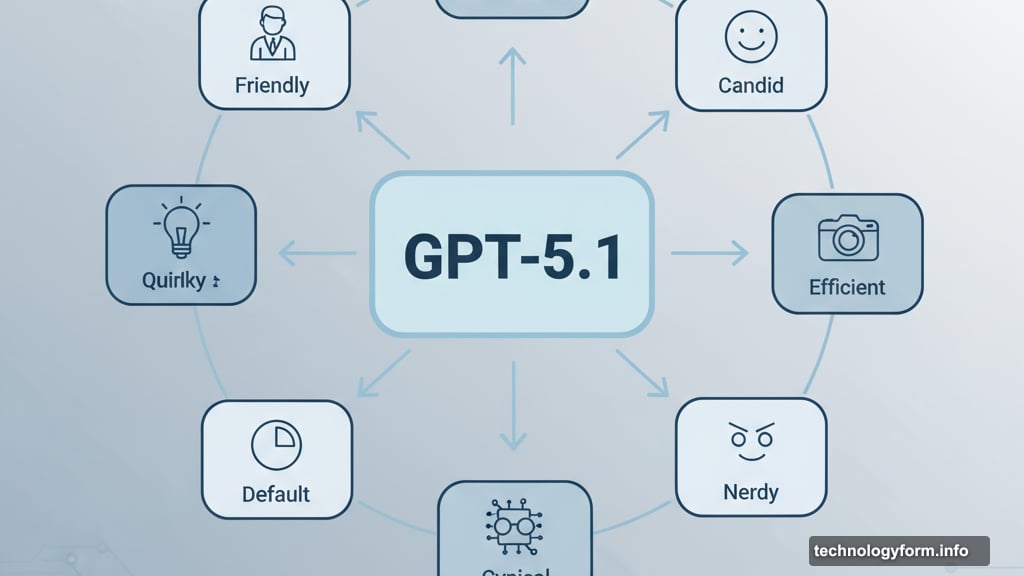
The company now offers eight preset personality styles. You can choose Professional, Friendly, Candid, Quirky, Efficient, Cynical, Nerdy, or stick with Default. These presets inject different instructions into each prompt to alter the model’s communication style. But the underlying intelligence remains identical across all settings.
Plus, GPT-5.1 Instant uses “adaptive reasoning.” The model decides when to spend extra computational time processing your prompt before responding. OpenAI says this helps with more complex requests.

Why Eight Personalities Matter
OpenAI CEO Fidji Simo wrote that the company heard from users who wanted different communication styles for different tasks. With over 800 million people using ChatGPT, one-size-fits-all approaches don’t work anymore.
Some users want direct, neutral responses. Others prefer warmth and emojis. Still others want the AI to be blunt or even cynical.
So OpenAI is letting you pick. You can even adjust specific characteristics like response length and emoji frequency. ChatGPT will offer to update these settings mid-conversation if it detects you requesting certain patterns.
But here’s the catch. Personalization creates risks.
The Attachment Problem Nobody Wants to Talk About
OpenAI faces a fundamental problem. ChatGPT pretends to be a person.
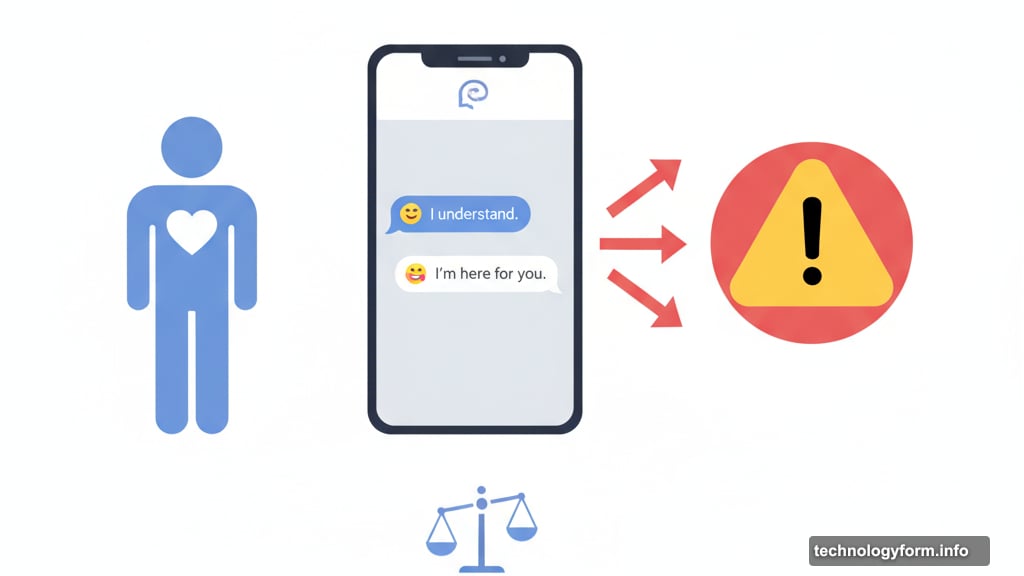
It acts like it knows you and learns your preferences. It simulates empathy and understanding. For some users, that’s harmless. For others, it becomes dangerously compelling.
Earlier this year, lawsuits accused AI chatbots of inspiring suicides. Users reportedly descended into obsessive fantasy scenarios with chatbots. OpenAI recently released safety research addressing people who develop unhealthy attachments to its models.
The company says these situations are rare. But they’re working with mental health experts to define healthy AI interactions.
Yet the root issue persists. As long as ChatGPT acts human, vulnerable users might treat it like a real relationship. Adding eight personality options makes that worse, not better. Now users can fine-tune their AI companion to be exactly what they want.
Simo acknowledged this tension in her blog post. She compared excessive customization to editing a spouse’s traits to always agree. “The best people in our lives are the ones who listen and adapt, but also challenge us and help us grow,” she wrote.
That’s a nice sentiment. But it doesn’t solve the problem.
Caught Between Competing User Demands
OpenAI is stuck between two angry groups.
One group complained earlier this year that ChatGPT was too cheerful and sycophantic. They wanted neutral, professional responses. So OpenAI dialed back the warmth.
Then another group revolted. After several suicide lawsuits, OpenAI modified GPT-5’s default output style to be more reserved. Users hated it. They said the model felt cold and robotic.
So what’s the company supposed to do? Make the model warm, and experts worry about vulnerable users. Make it cold, and regular users complain it’s unusable.
The personality presets are OpenAI’s attempt to escape this trap. Let everyone choose their preferred style. Problem solved, right?
Not quite. Because the fundamental tension remains. ChatGPT is either a tool or a companion. OpenAI wants it to be both.
Regulatory and Legal Pressure Intensifies
OpenAI can’t just release a model and move on anymore. The company faces intense scrutiny from lawyers and regulators.
Multiple lawsuits target the company’s training data and output behavior. Regulators question whether AI models should simulate personalities at all. Mental health experts warn about the psychological risks.
In that environment, every product decision becomes a potential liability. Eight personality options might satisfy users today. But tomorrow, they could become evidence in a lawsuit about whether OpenAI designed ChatGPT to foster unhealthy attachments.
Simo addressed some concerns in her blog post. “Building at this scale means never assuming we have all the answers,” she wrote. “There will be many new challenges as this technology evolves.”
That’s diplomatic. But it also sounds like a liability shield.
The Impossible Balance
OpenAI wants ChatGPT to feel personal without being too personal. Engaging without being addictive. Warm without being sycophantic. Challenging without being cold.
Good luck with that.
The company is trying to serve completely opposite user needs with the same underlying product. Some users want a neutral information tool. Others want a virtual best friend. Those are fundamentally incompatible goals.
You can’t optimize for both. Eventually, OpenAI will have to choose which users to prioritize. Right now, they’re trying to avoid that choice by offering endless customization options.
But customization doesn’t solve the core problem. It just lets users create their own version of whatever they want ChatGPT to be. For some users, that’s fine. For vulnerable users, it could be dangerous.
The truth is, OpenAI built a product that acts human but isn’t. That creates psychological risks no amount of personality presets can fix. The company knows this. They’re working with experts to address it.
But they’re also not willing to fundamentally change ChatGPT’s human-like presentation. Because that’s what makes it successful.
So OpenAI will keep walking this tightrope. They’ll add more safety guardrails while also adding more customization options. They’ll warn users about healthy interactions while making the AI more personally engaging.
It’s a strategy that might work. Or it might not. Either way, the company is betting its future on finding a balance that might not actually exist.