Proxy Servers Explained: What They Do, When They Help, and When to Skip Them
Proxy servers have been around since the early 1990s, and back then, their job was pretty simple. They cached popular web pages so users could load them faster. That’s it.
Fast forward to today, and proxy servers do a whole lot more. Businesses use them for web scraping, market research, content filtering, and network performance. But they’re not the right tool for every job. Let’s walk through what proxy servers actually do, where they shine, and where you’re better off using something else.
How a Proxy Server Actually Works
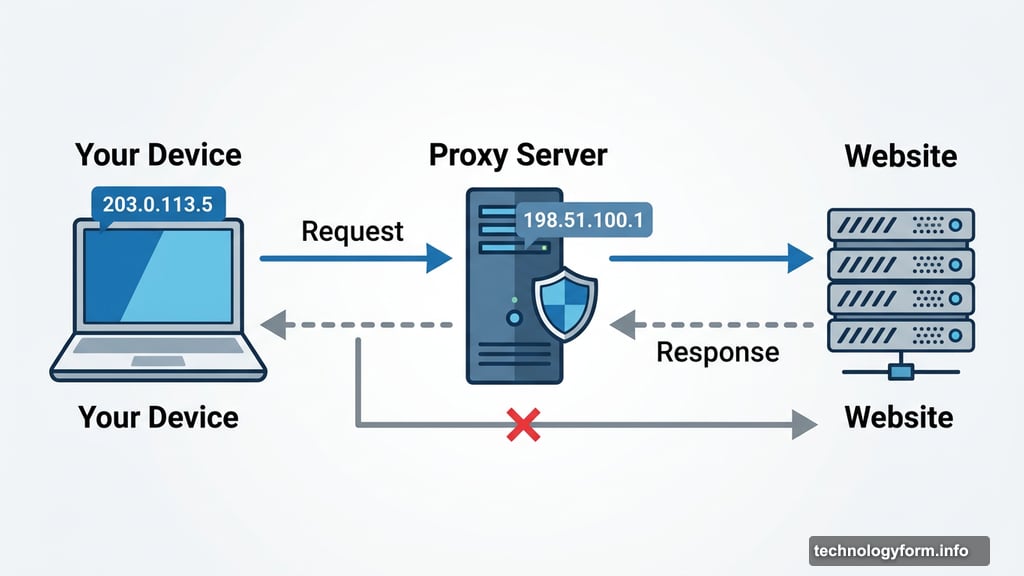
Think of a proxy server like a middleman. When you visit a website, your request normally goes straight from your device to that site’s server. With a proxy, it takes a detour first.
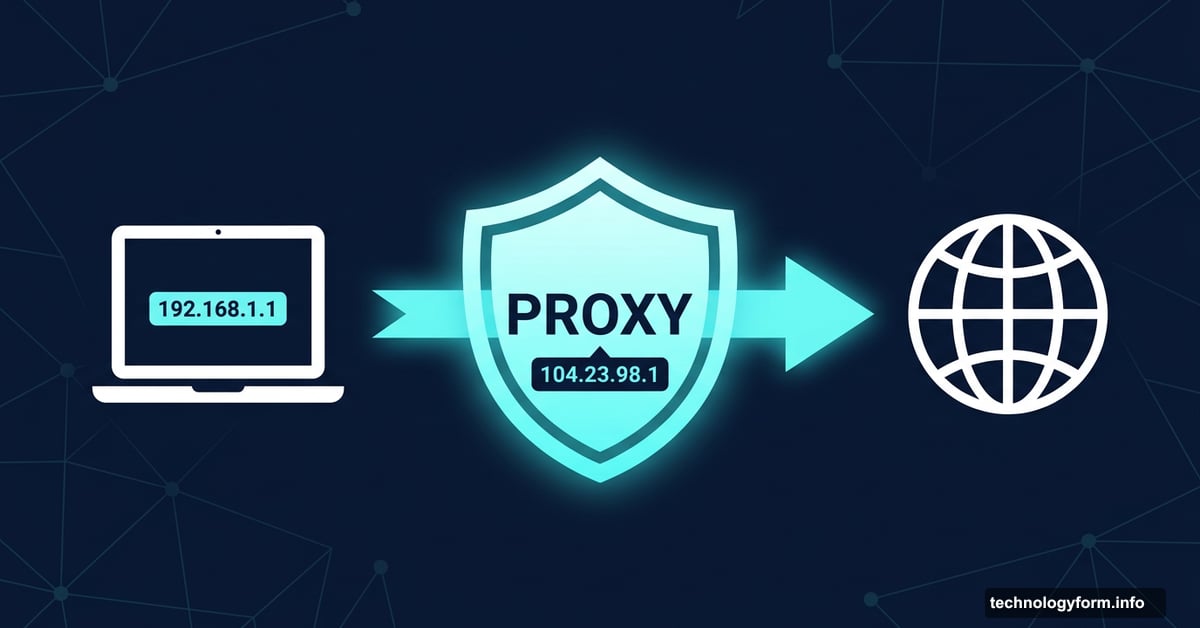
Your request hits the proxy server. The proxy then forwards it to the website on your behalf. The website sends its response back to the proxy, and the proxy sends it along to you.
Here’s the key part: the website never sees your real IP address. It sees the proxy server’s address instead. As Erik Avakian, technical counselor at Info-Tech Research Group and former chief information security officer for the Commonwealth of Pennsylvania, puts it: “It’s an intermediary. It’s coming from somewhere else, so the person’s source IP is protected.”
From your end, browsing through a proxy feels almost identical to normal browsing. The difference is that your traffic is making an extra stop along the way, which can slow things down.
Web Scraping: The Biggest Reason Businesses Use Proxies
Web scraping is by far the most popular use case for proxy servers. When a company wants to gather large amounts of data from websites, those requests usually all come from the same IP address. And websites notice.
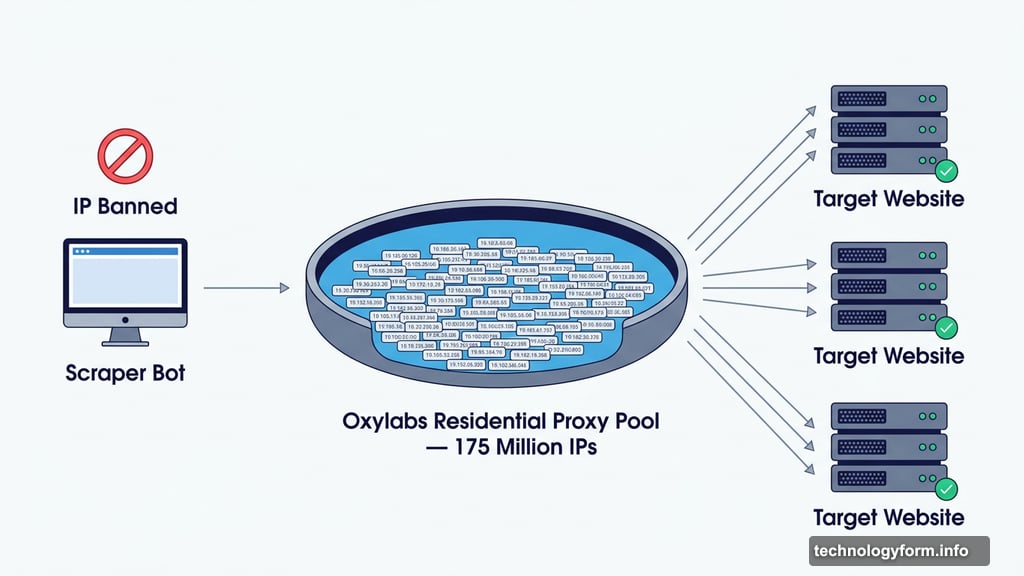
Most sites have anti-bot mechanisms that detect high-volume requests from a single source and block them. Proxy servers solve this by spreading requests across millions of different IP addresses, making them look like regular users.
In testing, Oxylabs had the largest residential proxy pool available, with more than 175 million IP addresses worldwide. That kind of scale lets businesses collect data without triggering rate limits or IP bans. You can also target specific geographic regions, which matters a lot for market research.
Content Filtering and Network Control
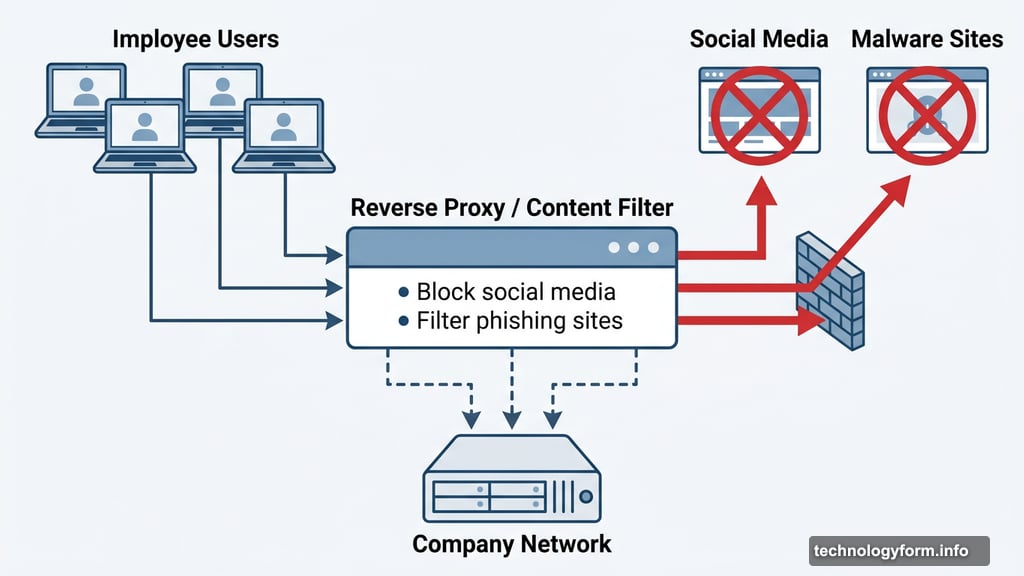
Businesses also use proxy servers to control what traffic enters and leaves their networks. A company might block access to social media during work hours or filter out websites known to host malware and phishing attacks.
This works through what’s called a reverse proxy, which filters incoming requests rather than outgoing ones. Instead of protecting a single device, it protects an entire server or network.
Individuals can use similar content filtering features at home to restrict which websites are accessible on their network. It’s a useful parenting tool or just a way to cut down on distractions.
Geo-Targeting for Market Research
If your business needs localized data, proxy servers are hard to beat. For example, auto insurance rates vary by location. With a proxy server, you can collect pricing data from dozens of markets without physically being in any of them.
When reviewing Decodo’s proxy service, the geographic range stood out. In the US alone, you could select specific ZIP codes to route requests through. That level of granularity is genuinely useful for competitive research.
Performance and Load Balancing Benefits
Proxy servers can also improve network performance, mainly through two mechanisms. First, they cache frequently accessed content locally so multiple users can retrieve it faster. Second, they support load balancing, which spreads incoming traffic across multiple backend servers instead of routing everything through one.
Load balancing also adds resilience. If one server goes down, traffic keeps flowing through the others. For businesses running websites or internal applications, that kind of redundancy matters.
That said, for individual users running a traditional forward proxy, performance gains aren’t guaranteed. During testing for CNET, many proxy servers returned download speeds below 5Mbps with high latency. Using a proxy can be up to 50 times slower than the average US internet connection. That’s acceptable for automated tasks like scraping, but painful for anything involving streaming or gaming.
Proxy Servers vs VPNs: Know the Difference
Here’s something worth understanding clearly. Proxy servers don’t encrypt your traffic. They route it through a different IP address, but the data itself travels unprotected.
VPNs do both. They reroute your traffic AND encrypt it. That extra layer of protection matters if privacy is your main goal.
VPNs are also much simpler to set up. Connecting to a proxy requires digging into your device’s network settings and working with configuration files or setup scripts. A VPN is just an app. Download it, pick a server, connect.
For individuals looking to protect their privacy or access geo-restricted content, a VPN is almost always the better choice. CNET testing found that the fastest VPNs kept speed loss to around 25% or less, which is a much better trade-off than what most proxies offer.
Proxy servers win when you need massive IP pools for large-scale data collection. VPNs typically don’t offer that kind of scale.
When Free Proxy Servers Aren’t Worth It
Free proxy server lists exist all over the internet. Skip them.
They’re slow, unstable, and usually blocked by most major websites because so many people share the same IP addresses. For web scraping specifically, they’re essentially useless. You’ll hit blocks almost immediately.
More importantly, free proxy providers often don’t explain how they source their IP addresses. That’s a serious red flag. A trustworthy proxy company should be transparent about how it acquires IPs, whether users consent to their addresses being used, and how those users are compensated.
In January of this year, Google took legal action against one proxy network with millions of IPs, claiming it “was leveraged by a wide array of bad actors.” That’s the kind of risk you run with opaque providers.
The Legal Gray Zone Around Web Scraping
Using a proxy server isn’t illegal in most cases. But some activities you might use one for could violate a website’s terms of service.
Web scraping has landed companies in court before. Reddit filed a lawsuit against AI search developer Perplexity over scraping practices. Quinn Emanuel, a law firm that has written on the topic, notes that “web scrapers and those who host or rely on scraped personal data also should be aware of all applicable privacy regulations governing their activity and seek legal advice.”
If you’re uncertain whether your scraping activity crosses a line, talk to an attorney before you start.
A Quick Guide to Proxy Types
Shopping for proxy servers can feel overwhelming because there are so many variations. Here’s a straightforward breakdown:
Residential proxies use real IP addresses issued by internet service providers, so they look like genuine users to websites. They’re trusted and hard to block, making them the most popular choice for scraping.
Mobile proxies use devices connected to wireless carriers. They’re the most expensive option but work well against sophisticated anti-bot systems, like those on social media platforms.
Datacenter proxies run on servers owned by web hosting companies. They’re cheap but easy to detect and block.
ISP proxies (sometimes called static residential proxies) are a hybrid. They’re owned by ISPs but hosted in data centers rather than on real users’ devices.
You’ll also choose between shared and dedicated IPs. Shared proxies cost less but come with risks. If another user on the same IP gets it blocked somewhere, you’re affected too. Dedicated proxies are yours alone, and worth the extra cost for serious use cases.
The Tor Option for Free Anonymity
If you want privacy without paying for anything, Tor is worth considering. It routes your traffic through three randomly selected volunteer-run servers before reaching its destination, which makes it very difficult to trace.
The downside is speed. Tor is significantly slower than both VPNs and proxy servers because of those three hops. HD streaming isn’t realistic, and online gaming is out of the question.
Still, for basic browsing with strong anonymity requirements and no budget, Tor gets the job done.
Choosing the Right Tool
Proxy servers are genuinely powerful tools for the right use cases. Businesses doing large-scale data collection, competitive research, or content filtering get real value from them. The residential proxy pools from services like Oxylabs, with success rates around 93.28% against popular scraping targets according to Proxyway’s 2025 Proxy Market Research, are impressive.
But for individuals, the equation looks different. Proxies don’t encrypt your traffic, require technical setup, and often deliver sluggish speeds. A good VPN handles privacy, geo-restrictions, and ease of use better than any proxy will.
Know what you need before you buy. If it’s large-scale data collection, proxies are hard to beat. If it’s personal privacy on a daily basis, get a VPN instead.