Spotting Deepfakes Just Got Harder. Here’s How to Fight Back
AI-generated videos are everywhere now. And they’re getting scary good at fooling us.
Remember when fake content was obvious? Badly Photoshopped celebrity pics. Grainy edited videos. Those days are gone. Today’s AI tools create deepfakes so convincing that even experts get tricked.
OpenAI’s Sora raised the stakes. Then came Sora 2, a TikTok-style feed where nothing is real. Everything you see is AI-generated. It’s a deepfake fever dream that’s teaching millions how easy creating fake content has become.
So how do you spot what’s real anymore? Let’s break down the warning signs before you accidentally share that fake disaster video.
The Sora Watermark Exists But Don’t Trust It
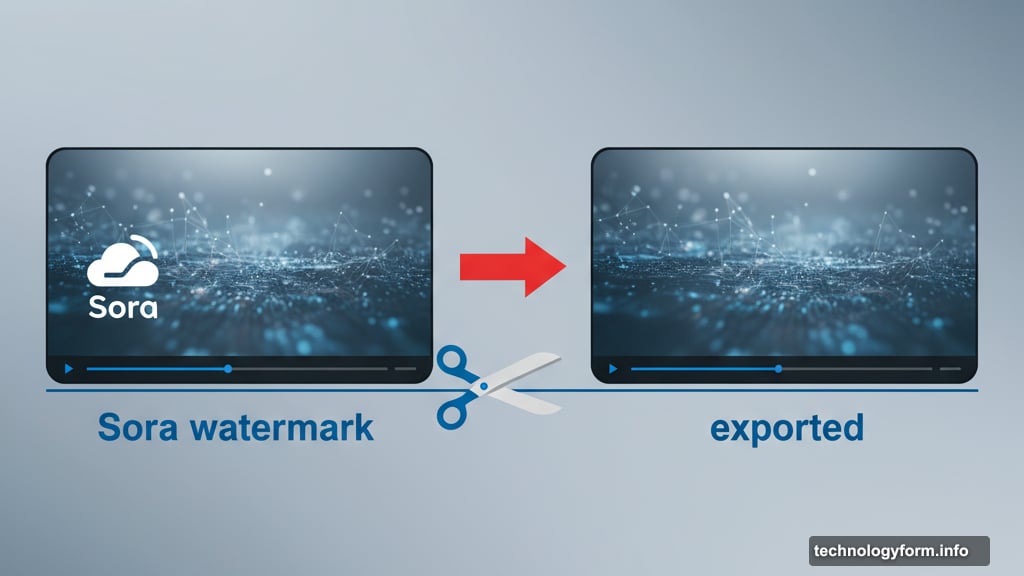
Every Sora video includes a white cloud logo that bounces around the screen. Think TikTok’s watermark but for AI content.
Watermarks help. They’re a visual flag that screams “this is fake.” Google’s Gemini does something similar by automatically marking AI images.
But here’s the problem. Watermarks are easy to remove.
Static watermarks? Just crop them out. Moving watermarks like Sora’s? Plenty of apps exist specifically to strip them away. Plus, once someone runs a video through any editing software and re-exports it, that watermark often disappears.
OpenAI CEO Sam Altman acknowledged this limitation. His take? Society needs to adapt to a world where anyone can fake anything. That’s simultaneously true and terrifying.
Check the Metadata Before You Share
Metadata sounds technical. It’s actually straightforward and powerful.
Every photo and video contains hidden information about how it was created. Camera type. Location. Date and time. For AI content, this data often includes creation details that reveal its synthetic origins.
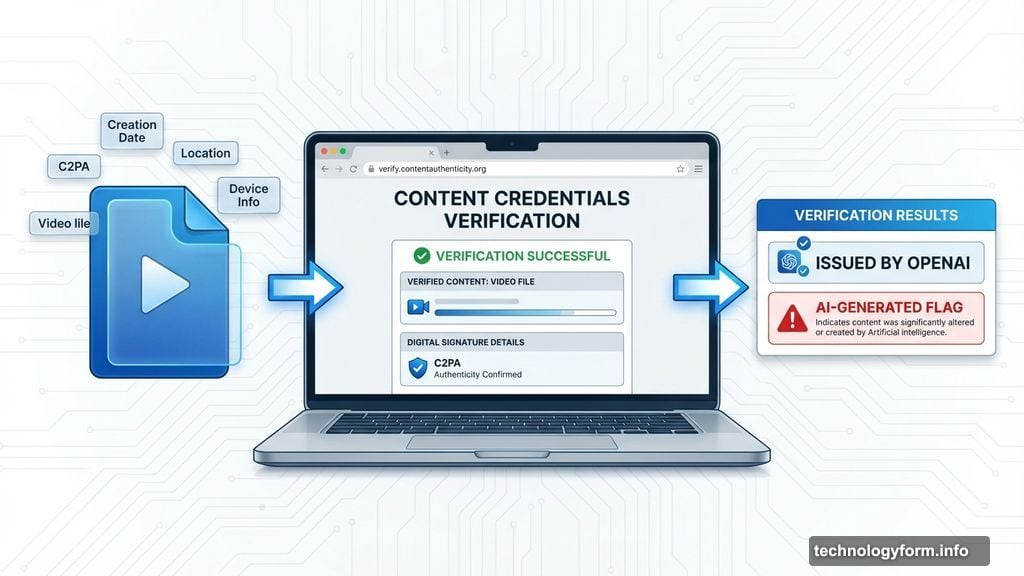
OpenAI joined the Coalition for Content Provenance and Authenticity. That means Sora videos contain C2PA metadata flagging their AI origins. You can verify this yourself in about 30 seconds.
Here’s the process:
Navigate to verify.contentauthenticity.org. Upload the suspicious video. Click open. Check the right panel for content details.
Sora videos will show “issued by OpenAI” plus the AI-generated flag. The tool displays creation date and time too.
But metadata checking has limits. Videos created with Midjourney don’t get flagged in my testing. And if someone runs a Sora video through third-party software before reposting, the metadata often gets stripped away.
Still, metadata verification catches more fakes than any other single method. It takes seconds and works on most AI-generated content.
Social Platforms Try to Help But Fail Often
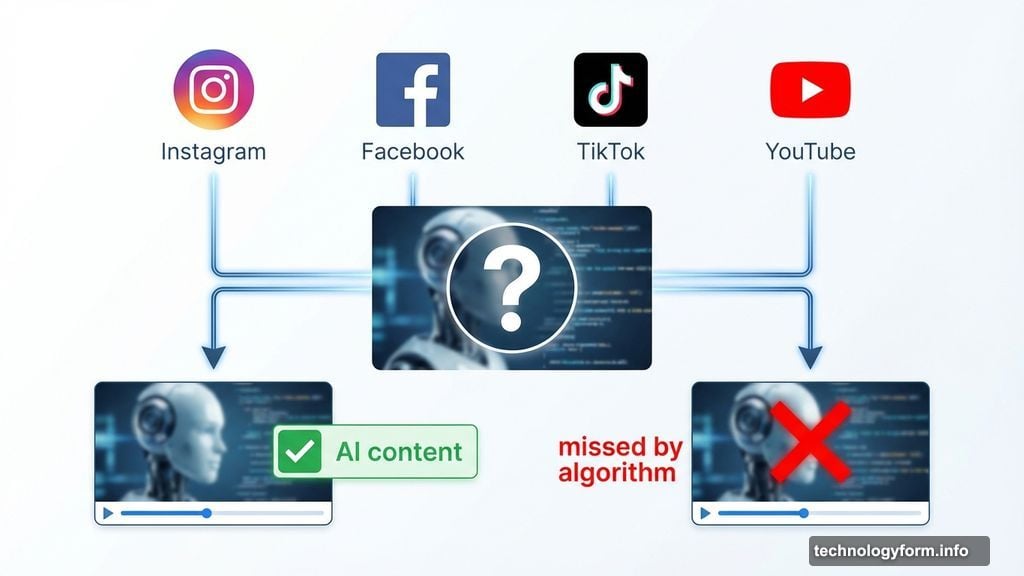
Meta’s systems flag AI content on Instagram and Facebook. TikTok and YouTube have similar policies. You’ll see labels on posts their algorithms identify as synthetic.
These systems miss constantly. I’ve seen obvious AI videos slip through unlabeled. Meanwhile, real content sometimes gets flagged incorrectly.
The only reliable method? Creator disclosure. Many platforms now let users label their own AI content. A simple “created with AI” in the caption helps everyone understand what they’re watching.
This responsibility falls on all of us. You know Sora content is fake while scrolling the app. But once you share it elsewhere, you need to disclose its origins. Otherwise, you’re part of the misinformation problem.
The Physics Still Give It Away
AI video generators struggle with physical reality. Watch for these tells:
Gravity works weird. Objects float when they should fall. Water flows upward. Shadows point the wrong direction.
Motion looks unnatural. People walk with strange gaits. Hands disappear or morph into extra fingers. Faces don’t move quite right when talking.
Text gets mangled. Signs contain gibberish. Readable text suddenly changes between frames. Letters blur or distort impossibly.
Background consistency fails. Objects vanish between cuts. Architecture shifts. Details that should stay constant change randomly.
These artifacts are getting rarer as AI improves. But they still appear frequently enough to serve as warning signs. You just need to watch more carefully than you’re used to.
Your Gut Instinct Beats Any Tool
No single method catches every deepfake. Watermarks get removed. Metadata gets stripped. Platform labels miss fakes. Even physics tells become less obvious as AI advances.
Your best defense? Skepticism.
Don’t automatically believe everything you scroll past. If something feels off, it probably is. Take an extra second to inspect suspicious content before sharing.
Check for the telltale signs. Weird hands. Impossible physics. Mangled text. Objects that vanish. Unnatural motion. These artifacts still appear in most AI videos.
And don’t feel bad when you get fooled occasionally. Even deepfake experts get tricked sometimes. The technology is that good now.
The real danger isn’t getting fooled yourself. It’s mindlessly sharing fake content without thinking about consequences. Public figures face particular risk from deepfakes. But misinformation hurts everyone when it spreads unchecked.
The Uncomfortable Truth About Our Fake Future
We’re not going back to a world where fake content was obvious. That ship sailed.
AI video generation is only getting better. Sora represents just the beginning. More tools are coming. They’ll be faster, cheaper and more convincing than what exists today.
Tech companies won’t solve this problem for us. Their tools to detect AI-generated content lag behind their tools to create it. Watermarks and metadata help but fail constantly.
Society needs to adapt. That means developing new habits around digital content consumption. Verify before you share. Disclose when you create. Question what seems too perfect or shocking.
Stay vigilant. Inspect content more closely. Follow your instincts. And remember that in 2025, seeing is no longer believing.