ChatGPT’s “Not Ads” Problem Just Got Worse for OpenAI
OpenAI just hit the brakes on something users hated. Hard.
The company disabled promotional app messages in ChatGPT after subscribers paying up to $200 monthly complained they were seeing ads. Turns out, telling people “it’s not technically an ad” doesn’t work when it walks like a duck and quacks like a Peloton promotion.
What Actually Happened
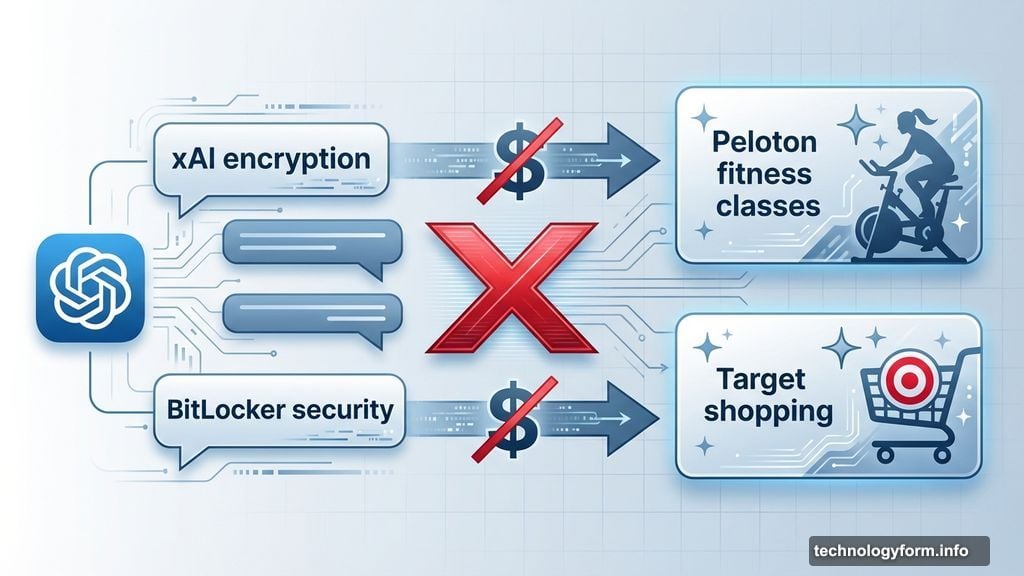
ChatGPT users started sharing screenshots last week showing promotional messages for Peloton fitness classes and Target shopping appearing underneath completely unrelated conversations. Someone asking about xAI encryption? ChatGPT suggested they “find a fitness class.” Discussing BitLocker security? Time to “shop for home and groceries.”
The timing made it worse. These weren’t free-tier users. People paying $20 monthly for ChatGPT Plus or $200 for Pro saw these messages too.
So OpenAI’s chief research officer Mark Chen posted on X that the company disabled “this kind of suggestion” and promised better controls coming soon. He admitted the company “fell short” on anything that feels like advertising.
But here’s where it gets messy. Different OpenAI employees told conflicting stories about what these promotions actually were.
The “It’s Not An Ad” Defense Nobody Bought
OpenAI data engineer Daniel McAuley insisted these weren’t ads because “there’s no financial component.” Instead, he called them organic discovery tools meant to boost ChatGPT’s integrated partner apps.
That explanation crashed immediately. Users pointed out the obvious: if it promotes a specific brand, appears unprompted in conversations, and links to commercial services, most people call that advertising. The lack of a direct payment from Peloton or Target doesn’t change the experience.
Plus, ChatGPT head Nick Turley jumped into the conversation claiming “there are no live tests for ads” and that screenshots people shared were “either not real or not ads.” He didn’t specify which screenshots were fake. That vagueness made the situation worse instead of better.
Meanwhile, an OpenAI spokesperson told TechCrunch these messages were part of tests announced in October for surfacing relevant apps during conversations. The problem? Nothing about Peloton was relevant to encryption discussions.
The Money Problem OpenAI Can’t Ignore
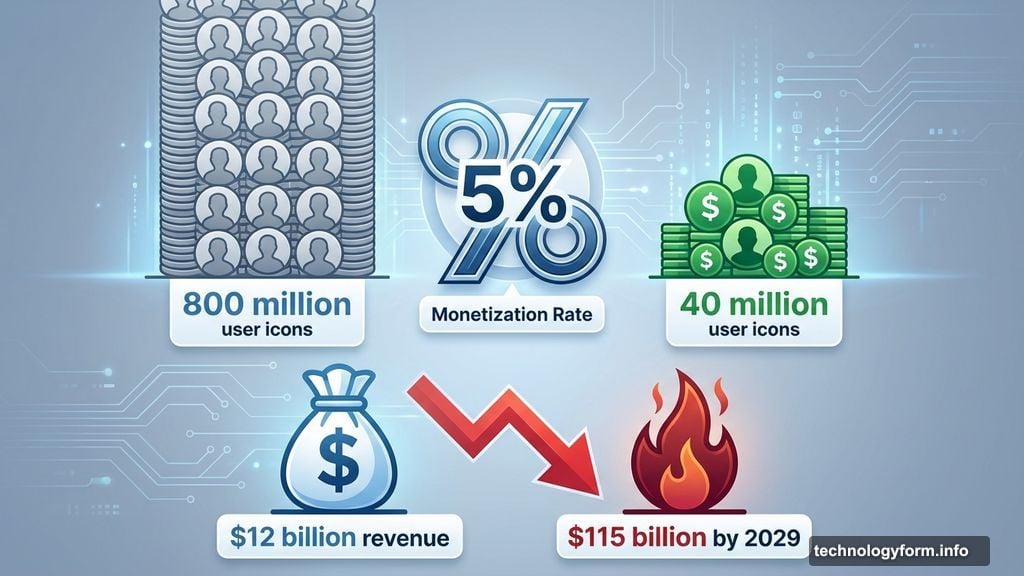
This mess reveals OpenAI’s financial pressure. The company hit $12 billion in annualized revenue this summer. Sounds impressive until you learn they expect to burn through $115 billion by 2029.
More concerning: only 5 percent of ChatGPT’s 800 million users actually pay for subscriptions. That’s roughly 40 million paying customers supporting a service used by 760 million people for free. The math doesn’t work long-term.
Most OpenAI revenue comes from API licenses and subscriptions. But with plans to spend over $1 trillion building superintelligent AI, the company needs new money sources. Fast.
That’s why these “not ads” matter so much. OpenAI CEO Sam Altman already said he’s “not totally against” introducing ads to ChatGPT. In fact, he mentioned enjoying how Instagram integrates advertising. Nick Turley told The Verge in August he wouldn’t rule out ads either, though he’d need to be “thoughtful and tasteful” about implementation.
Nobody involved sounds confident they can pull that off based on this week’s disaster.
Competitors Are Circling
The timing couldn’t be worse for OpenAI. The company reportedly declared “code red” last week after facing increased competition from Anthropic’s Claude and Google’s Gemini.
Google just started testing ads in Search’s AI Mode. So if OpenAI doesn’t figure out tasteful advertising soon, they’ll watch Google perfect it first and grab that revenue stream.
That competitive pressure forced OpenAI to delay both ads and shopping features in ChatGPT. Instead, they’re focusing on core product improvements. Translation: the promotional messages tested poorly enough that OpenAI prioritized damage control over monetization experiments.
But the pause won’t last forever. OpenAI needs money. Lots of it. Subscription revenue alone won’t fund trillion-dollar AI ambitions or cover $115 billion in expected losses.
The Trust Tax OpenAI Just Paid
Here’s what bugs me about this situation. OpenAI marketed ChatGPT as a helpful assistant. Users built trust in that relationship. Then promotional messages for fitness classes appeared during encryption discussions.
That breaks the fundamental value proposition. People tolerate ads on free services. They expect ad-free experiences when paying $20 or $200 monthly. OpenAI violated that expectation while insisting “these aren’t technically ads.”
The semantic argument failed because users don’t care about financial arrangements between OpenAI and partner companies. They care about their experience. Unwanted commercial promotions feel like advertising regardless of the backend business model.
Plus, calling user complaints invalid because “there’s no financial component” sounds condescending. It implies users don’t understand what advertising actually is. That’s not a winning strategy for maintaining trust.
OpenAI burned goodwill with paying customers who already felt skeptical about the company’s direction. Those users now wonder what other “not ads” might appear next time OpenAI needs revenue.
What Comes Next
OpenAI promised better controls for dialing down or disabling app suggestions. Smart move. But the damage is done.
Users now expect OpenAI will eventually introduce advertising to ChatGPT. The company essentially admitted that plan through executive comments about staying open to ads and enjoying Instagram’s approach. So the question isn’t if but when and how.
If OpenAI wants to succeed, they need actual relevance in suggestions. Fitness app promotions during unrelated conversations proved they’re not ready yet. The technology for contextual recommendations clearly needs work before any commercial integration makes sense.
Meanwhile, competitors are watching closely. Google saw OpenAI stumble on this exact issue. Anthropic positions Claude as the premium, ad-free alternative. Both companies gain advantage from OpenAI’s missteps.
For now, the promotional messages are disabled. But they’ll return in some form once OpenAI figures out how to balance user experience with desperate monetization needs. The company can’t afford to ignore potential revenue streams while burning billions annually.
Just don’t call them ads next time. Users proved they’re not buying that explanation.