I Tried Making an AI Valentine’s Card. It Was a Digital Nightmare
Valentine’s Day snuck up on me this year. Again.
No time to hit the store. No desire to grab another generic Hallmark card. So I tested whether AI could rescue my last-minute gift situation. Spoiler alert: it barely survived the attempt.
Digital card sites exist everywhere. But I wanted to see what artificial intelligence could actually create. Would it deliver something personal? Or just spit out corporate clip art with hearts?
Photoroom Promised Easy Custom Cards
I found Photoroom, an AI tool that claims to generate personalized Valentine’s cards in seconds. The site offers a free plan plus premium tiers at $90 yearly.
Sounds simple enough. Create account, pick template, customize design. Done in minutes, right?
Wrong. So wrong.
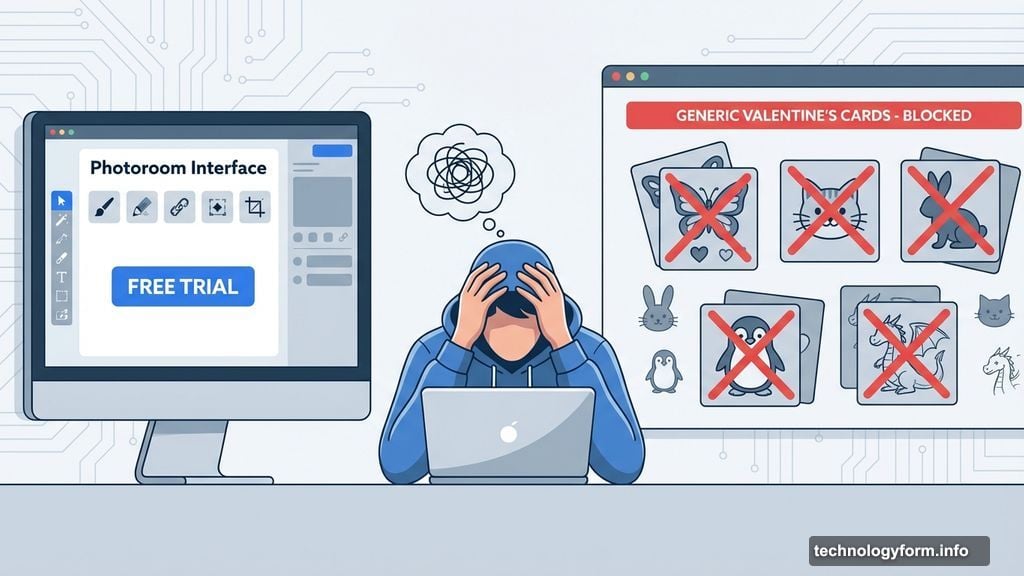
To access the AI tools function, I signed up for the free one-week Pro trial. The interface looked clean. Professional. Ready to make magic happen.
Then I actually started using it.
The Pre-Made Templates Felt Painfully Generic
Photoroom offers pre-generated prompts like “you make my heart smile” and “you complete me.” Think every Valentine’s cliché you’ve ever read.
I picked one anyway. Just to test the design capabilities.
The result? High school art class vibes. Butterflies everywhere. Random birds. Then cats, rabbits, penguins, and dragons appeared for reasons I still don’t understand.
My template category was set to “Naïve Cuteness.” Whatever that means. The designs screamed “AI-generated” in the worst possible way.
Fighting With AI Over Simple Design Changes
I tried tweaking the design through prompts. Replace the heart with an infinity symbol, I asked. Keep the text placement the same.
The AI either added the symbol and moved everything around, or removed the heart entirely. Never both requests at once.
After several rounds, I got something acceptable. Sort of. Then I asked for bigger font.
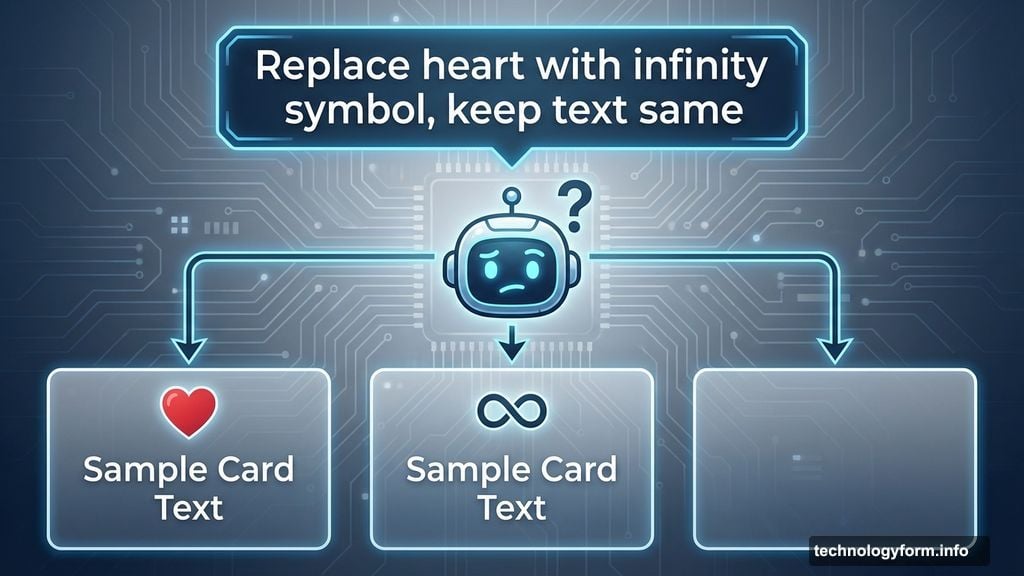
The AI completely ignored me. It generated the exact same image. Then started adding random words that made zero sense.
I wanted to throw my laptop out the window.
Starting Over With a Personal Touch
Forget generic templates. I decided to create something actually personal.
My prompt: “Create an image of two women, one with curly brown hair and the other with blonde hair, holding their baby while walking the streets of New York City.”
The first result looked decent. Progress! I requested text changes, and miraculously, the AI listened this time.
After way too many iterations, I had a final version. Better than Hallmark, sure. But getting there took forever and tested my patience repeatedly.
The Real Cost of AI-Generated Romance
Photoroom didn’t make me fall in love with AI card creation. Yes, it’s more personal than store-bought options. And yes, it’s free.
But here’s what bugs me about the whole experience. My wife once wrote me a poem using one line from each of my favorite songs. She took time, thought about what mattered to me, and created something genuinely special.
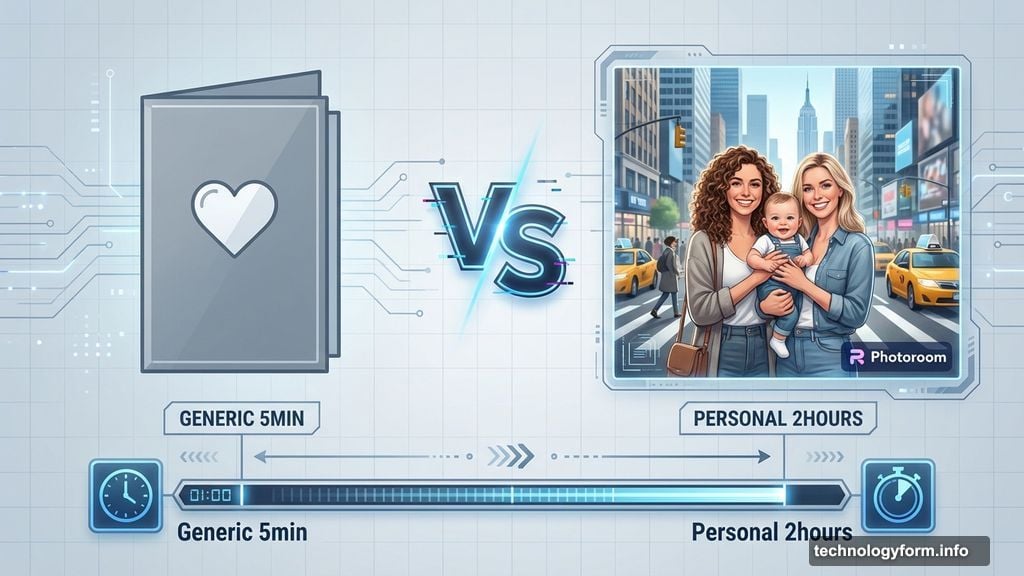
No AI tool comes close to that level of care. The technology can generate images. It can combine elements. It can even produce something reasonably attractive.
What it can’t do? Capture actual emotion. Understand inside jokes. Remember shared moments that make relationships meaningful.
When Human Effort Beats Artificial Intelligence
The card I made will probably make my wife laugh. She’ll appreciate the effort, even if the process frustrated me.
But it doesn’t replace genuine thoughtfulness. It’s a backup plan for poor planning, not a replacement for caring.
Plus, the time I spent fighting with AI prompts could’ve been spent driving to the drugstore. Or writing something by hand. Both options would’ve felt more authentic.
Technology solves many problems. But matters of the heart? Humans have got that mastered already. We don’t need algorithms deciding how to express love, gratitude, or affection.
Sometimes the old ways work better. A handwritten note. A poem. Even a hastily scribbled card bought at the last minute carries more weight than perfectly generated pixels.
Because the imperfection proves you tried. And trying matters more than perfection ever will.