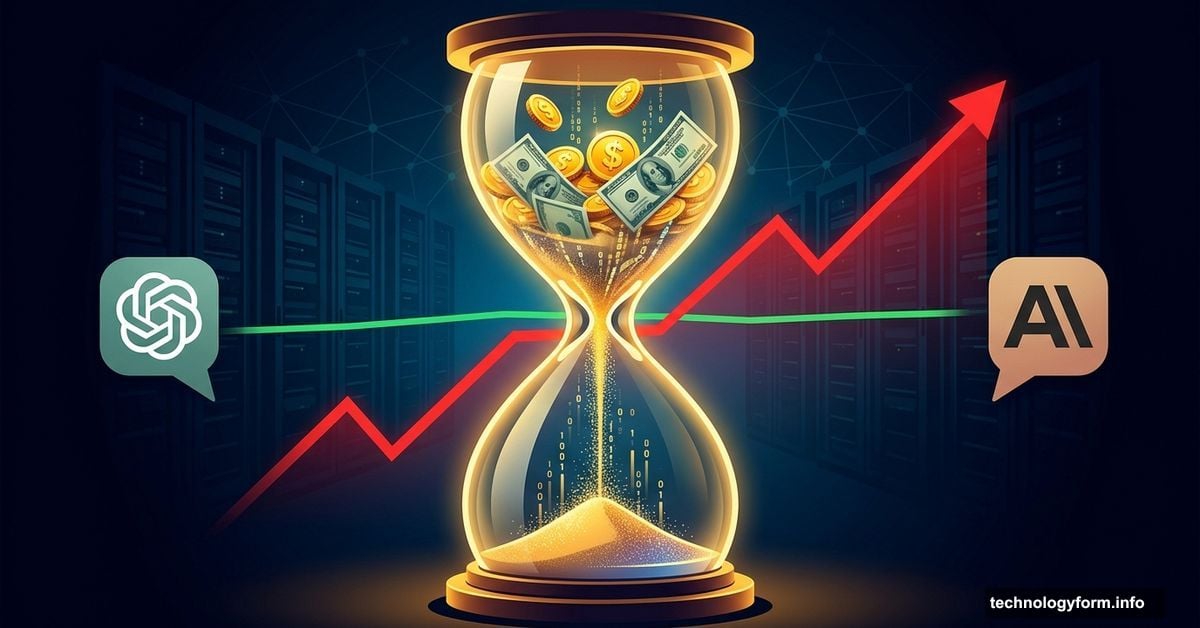
OpenAI and Anthropic Are Running Out of Time to Turn a Profit
The AI industry’s biggest players are burning through cash faster than anyone expected. And 2026 might be the year that finally breaks some of them.
That’s the central tension explored in a recent episode of The Verge’s Decoder podcast, where editor-in-chief Nilay Patel sat down with senior AI reporter Hayden Field. Together they mapped out what’s quickly becoming an existential question for OpenAI and Anthropic: can these companies become genuinely profitable businesses before the money runs out?
The short answer? Nobody knows. But the pressure has never been more intense.
The AI Monetization Cliff Nobody Wants to Talk About
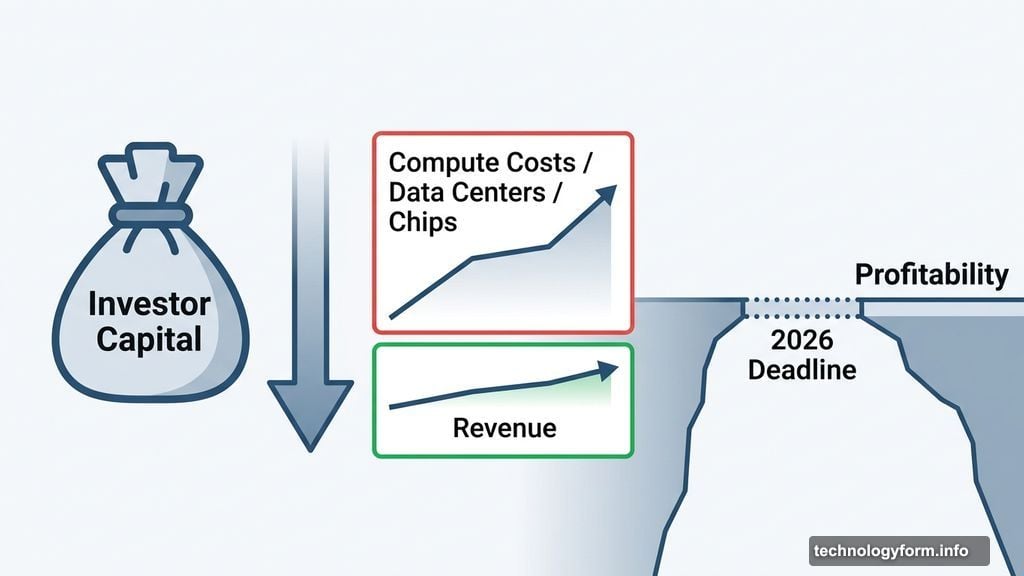
Here’s the basic problem. OpenAI and Anthropic were built on hundreds of billions in investor capital. That money funded data centers, chips, and the infrastructure needed to train and run massive AI models. But capital investment isn’t revenue. And at some point, the math has to work.
Patel has asked this question to dozens of CEOs on Decoder. Most of them give the same answer: some AI companies will fail spectacularly, some will succeed, and the market forces involved are simply too large to reverse. The build-out is happening whether anyone likes it or not.
So far, revenue hasn’t kept pace with spending. And the companies’ own growth projections, leaked to the Wall Street Journal just this week, paint a picture of mind-boggling scale. We’re talking hundreds of billions in revenue and profitability by the end of the decade. Bold numbers. But getting there requires everything to go right.
AI Agents Are Eating Compute Budgets Alive
The catalyst forcing these hard decisions is AI agents. Products like Claude Code, Cowork, OpenClaw, and OpenAI’s Codex have changed how customers use AI. And not in a cheap way.
Agents are genuinely valuable. They can handle complex, multi-step tasks with minimal human input. But they burn through computational tokens at a rate far beyond what these companies anticipated. Every agent session costs more to run than a simple chat interaction. And as more users adopt agentic workflows, the compute bills spiral upward fast.
This isn’t a minor operational wrinkle. It’s forcing both Anthropic and OpenAI to make hard choices about which products they support, which customers they prioritize, and how much they’re willing to lose chasing their next milestone.
Sora Got Killed. A Billion-Dollar Disney Deal Went With It.
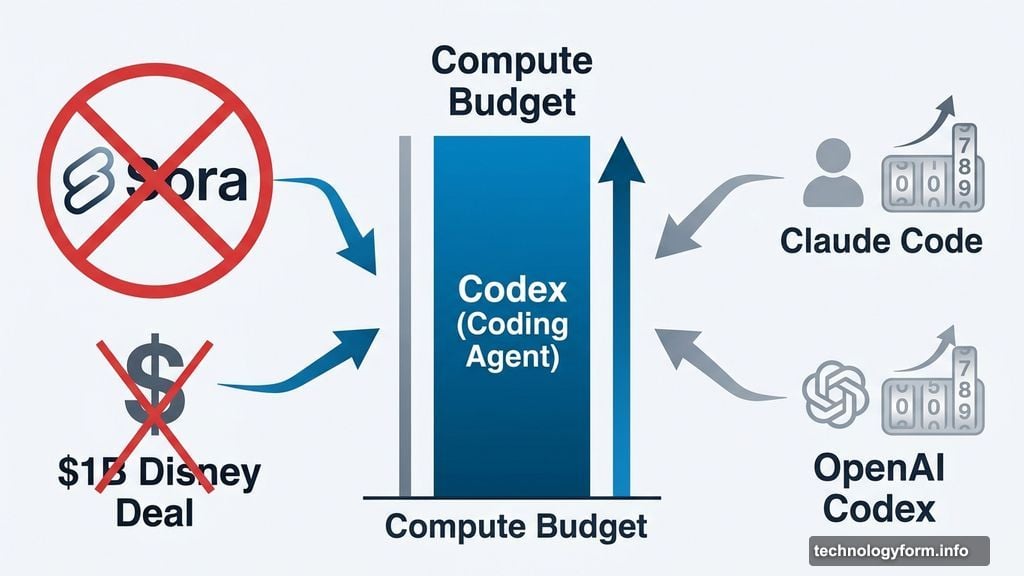
The most dramatic example came last month when OpenAI abruptly shut down Sora, its video-generation app. That decision also scrapped a $1 billion licensing deal with Disney. For a company that needs to demonstrate profitability, walking away from nine figures in revenue sounds insane.
But the reasoning is cold and logical. Sora costs too much compute to run. OpenAI needs that compute for Codex, its coding-focused agent product. So Sora got cut. A flashy, consumer-facing product with a landmark entertainment deal got sacrificed because it wasn’t the right bet for survival.
That’s not a company making bold creative choices. That’s a company making triage decisions under financial pressure.
Anthropic Quietly Restricted Its Most Loyal Power Users
Anthropic made a similarly sharp move just last week. The company decided to stop allowing Claude users to run the OpenClaw agent framework under a standard subscription plan. Instead, those users got pushed onto pay-as-you-go pricing.
Pay-as-you-go costs substantially more. For casual users, that might not matter much. But for power users who rely on OpenClaw for serious workloads, this is a meaningful price hike that arrived with little warning.
As Field explains on the podcast, this is what the monetization cliff actually looks like in practice. It’s not a dramatic crash. It’s a series of quiet restrictions, pricing changes, and product decisions that gradually shift the burden onto customers. The companies need more revenue per user. So they find ways to extract it.
The Race to IPO Is On
Both Anthropic and OpenAI are barreling toward what could be two of the largest initial public offerings in history. Going public brings fresh capital, sure. But it also brings scrutiny. Institutional investors and public markets don’t have the same patience as venture capitalists who fund moonshots and wait years for returns.
Public companies need to show a credible path to sustained profitability. Not projections. Not growth curves on a slide deck. Actual results.
That pressure changes behavior. It already is changing behavior. The decisions around Sora, around OpenClaw pricing, around which products get resources and which get cut, these all reflect companies starting to think like businesses that need to survive, not just impress.
The leaked Wall Street Journal projections show OpenAI and Anthropic believe their numbers will eventually work. But “eventually” is doing a lot of heavy lifting in that sentence.
What Actually Happens If the Bubble Pops
Patel and Field aren’t predicting doom exactly. But the scenario they outline is worth taking seriously.
If AI companies can’t hit their revenue targets before investor patience runs out, something gives. Maybe funding dries up. Maybe a major player folds. Maybe a larger tech company acquires a distressed AI firm at a discount. The infrastructure buildout that’s been fueling this whole era, data centers, chips, energy contracts, doesn’t just disappear. But the companies sitting on top of it might look very different.
And for everyday users, the impact is real. Products you rely on could get cut. Subscription prices could rise. Features you use heavily might move behind expensive paywalls. The version of AI that felt like a golden age of generous free tiers and ambitious product launches might already be over.
The make-or-break moment that Field describes isn’t hypothetical anymore. It’s happening now, in quarterly budget meetings and product roadmap decisions and pricing changes that show up in your email inbox.
The AI industry bet enormous sums on an enormous vision. Now comes the part where it has to prove that bet was worth making.