Google Search Just Became a Chatbot. Publishers Should Worry
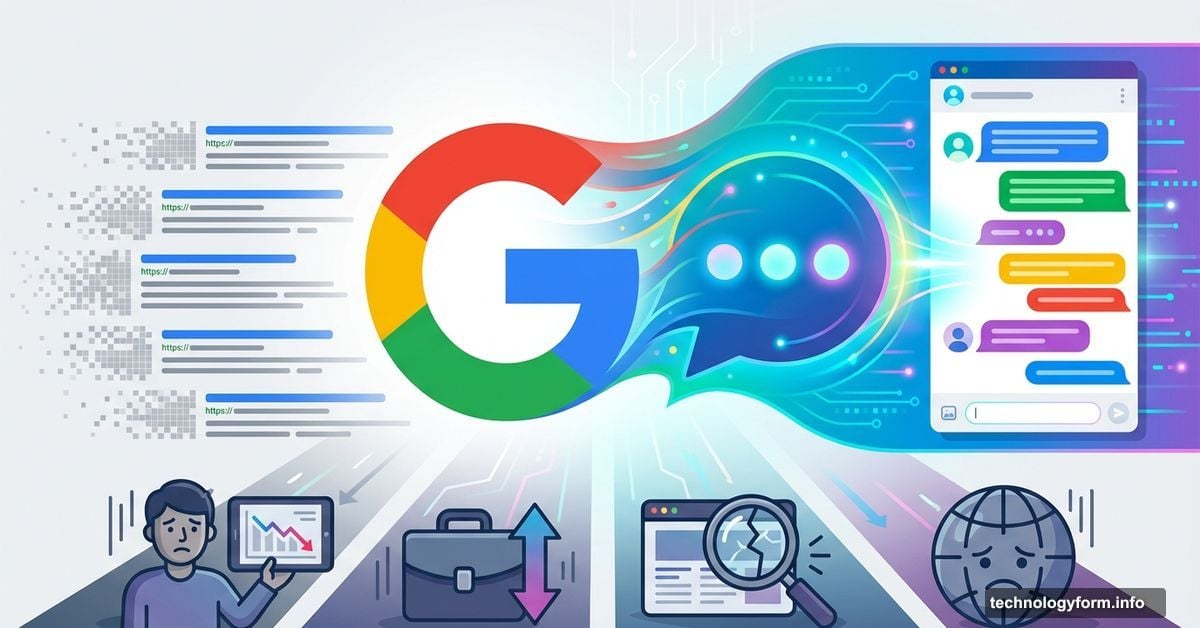
Google killed the keyword era. Starting this week, you can talk to Search like you talk to ChatGPT.
The company rolled out a major update to AI Overviews on Tuesday. Now powered by Gemini 3, these AI summaries come with a chat window for follow-up questions. Plus, Google wants you to ditch strategic keywords entirely and just ask whatever’s on your mind.
Sounds convenient. But this shift pushes traditional search results even further down the page. And publishers who depend on organic traffic? They’re running out of screen real estate fast.
AI Mode Takes Over Your Searches
Google’s new chat window appears directly in AI Overviews. Ask a follow-up question and you’ll land in AI Mode, where artificial intelligence handles the heavy lifting of your search.
AI Mode isn’t new. Google tested it quietly for months. But now it’s rolling out globally on mobile devices. So millions of people will encounter this chatbot-style experience starting today.
Here’s what changed. Previously, AI Overviews sat at the top of search results. You’d see the AI summary, then scroll past it to find actual websites. Now, that overview includes a prompt inviting you to continue the conversation. Click it and you’re having a back-and-forth chat with Google’s AI instead of visiting websites.
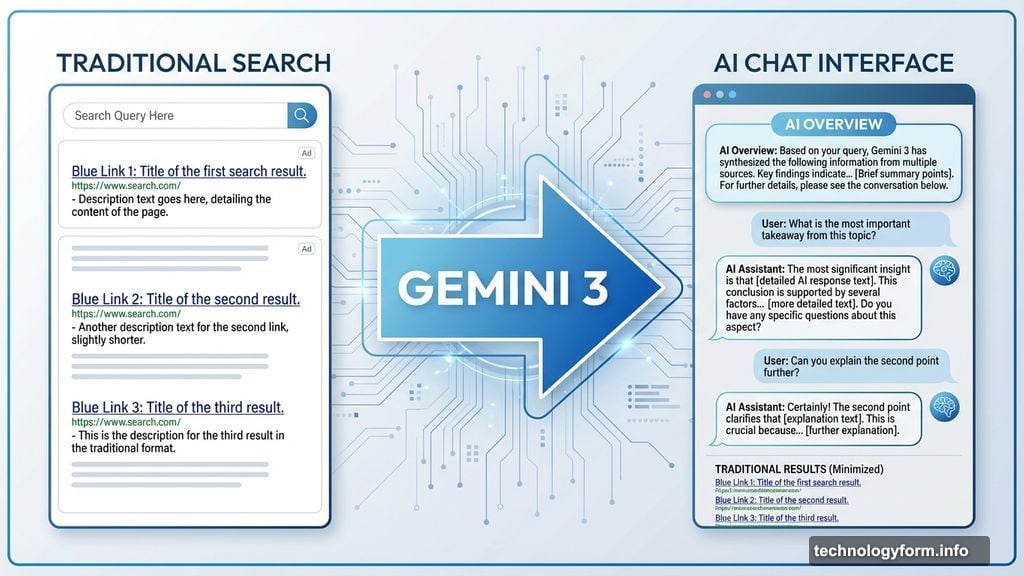
The shift is subtle but massive. Google transformed from a directory of websites into a conversational assistant. Traditional blue links? Still there. But buried deeper than ever before.
Keywords Are Dead, Natural Language Wins
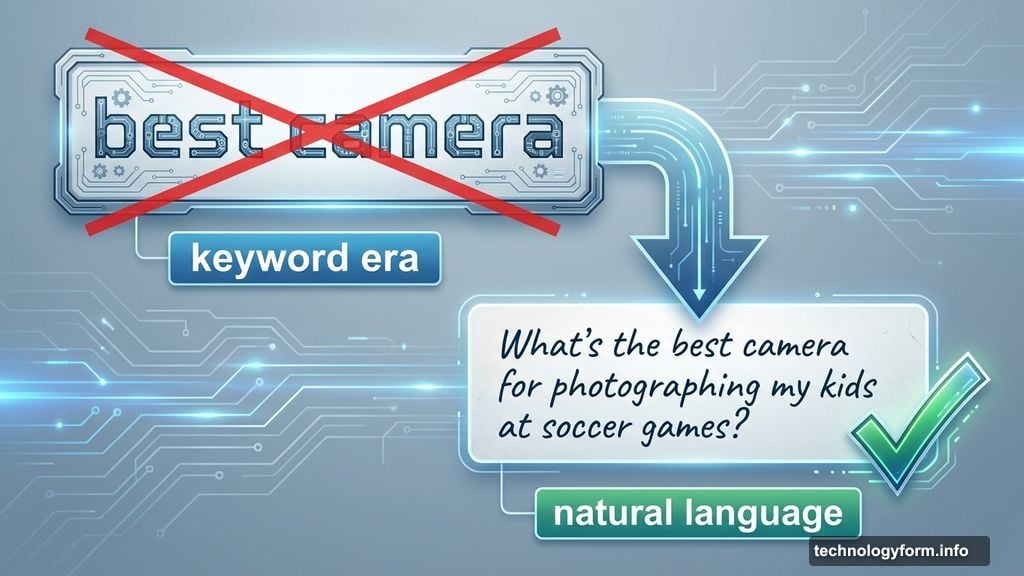
For years, Google trained us to think like machines. Use specific keywords. Drop unnecessary words. Structure queries to trigger the right algorithms.
That era ended this week. Google now encourages longer, conversational searches using natural language. Ask complete questions the way you’d text a friend. The AI understands context and nuance better than keyword matching ever could.
This matches how we already interact with ChatGPT, Claude, and other chatbots. So Google is playing catch-up, teaching its search engine to behave like the AI tools people use daily. The company wants one consistent experience across all its products.
Besides, Gemini 3 powers these new capabilities. Google’s latest language model handles complex queries and maintains context across multiple follow-ups. So you can refine your search through conversation instead of typing new queries from scratch.
Personalized Intelligence Remembers Everything
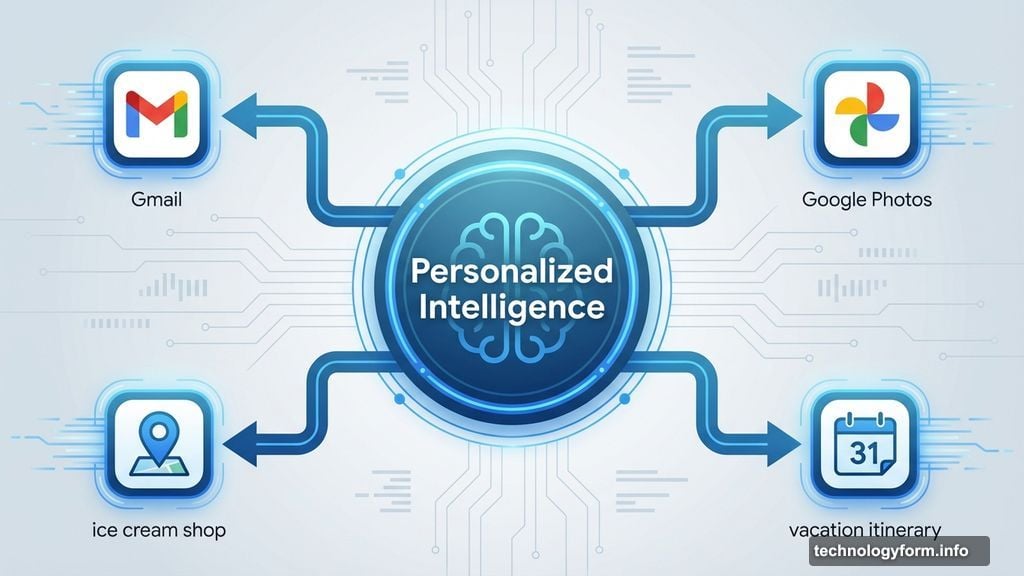
Google isn’t stopping at conversational search. The company introduced personalized intelligence that connects your Google apps to customize AI results.
Link your Google Photos and the AI notices patterns. Take your family for ice cream every vacation? Personalized intelligence spots that habit and suggests ice cream shops in your next AI-planned itinerary. Connect your Gmail and it references your actual emails when answering questions.
This sounds helpful. But it also means Google’s AI knows more about your life than ever before. Every connected app feeds data into the system. The AI learns your preferences, routines, and interests to serve better results.
However, there’s a trade-off. More personalization means more data collection. And once you enable these connections, Google’s AI can access information across your entire digital life. That level of integration makes some people uncomfortable, even if it improves search quality.
Publishers Lose More Traffic
AI Overviews already hurt publishers by showing answers without requiring clicks. Now follow-up prompts redirect users to AI Mode instead of web pages. So the chances of anyone scrolling down to traditional search results dropped even further.
Think about the user journey. Someone searches a question. AI Overview appears with a detailed answer. They want to know more, so they use the follow-up prompt. AI Mode opens and continues the conversation. The user gets everything they need without visiting a single website.
That’s devastating for publishers who built entire businesses on organic search traffic. Google essentially replaced their content with AI-generated summaries. And the new chat interface makes it even easier to avoid clicking external links entirely.
Moreover, there’s no obvious way to disable AI Overviews. Some users created workarounds with custom browser shortcuts. But most people will encounter AI summaries on every search. The era of guaranteed organic impressions is over.
What This Means for How You Search
Google wants Search to feel like Gemini. Ask long questions. Have conversations. Let AI handle complexity instead of crafting perfect queries.
For users, this makes searching easier and faster. You don’t need to think like a search engine anymore. Just type or speak naturally and get conversational responses. The AI understands context from previous questions, so you can refine results through dialogue.
Still, this transformation raises questions. What happens when AI provides wrong information? Traditional search let you evaluate multiple sources and form your own conclusions. AI Mode gives you one answer, generated by a model that sometimes makes mistakes or “hallucinates” facts.
Plus, the shift toward AI-first search changes how we discover information online. Instead of browsing different websites and perspectives, we trust a single AI to summarize everything for us. That’s convenient but limits exposure to diverse sources and viewpoints.
Google’s vision is clear: one fluid experience with AI at the center. Whether that’s better for users, publishers, or the web ecosystem overall remains to be seen. But the transformation is happening now, starting with this week’s mobile rollout and expanding from there.
The search giant is betting everything on AI. And if you use Google Search, you’re along for the ride whether you like it or not.