These AI Glasses Let You Pick ChatGPT or Gemini. So Why Isn’t Every Wearable Doing This?
Most AI glasses lock you into one assistant. Rokid wants to change that — and honestly, it should.
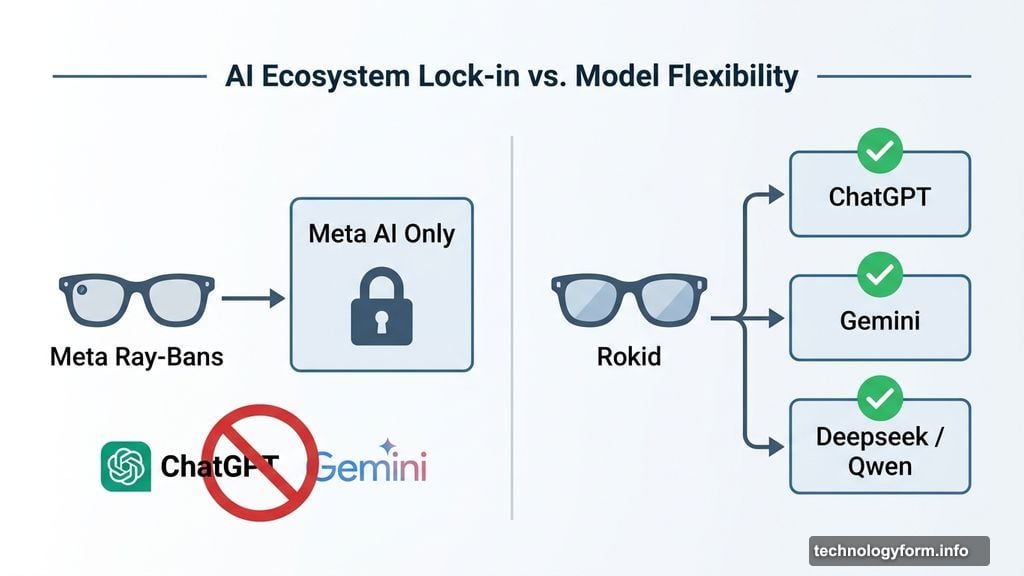
Meta’s Ray-Bans dominate the smart glasses market right now. But they come with a catch you might not expect. Besides the ongoing privacy concerns around their always-ready camera, Meta’s glasses force you into a single AI ecosystem: Meta AI. No ChatGPT. No Gemini. No alternatives. You’re fully committed to Meta’s assistant whether you like it or not.
Rokid, a Chinese hardware manufacturer, took a different approach. And it’s worth paying attention to.
One Pair of Glasses, Two AI Brains
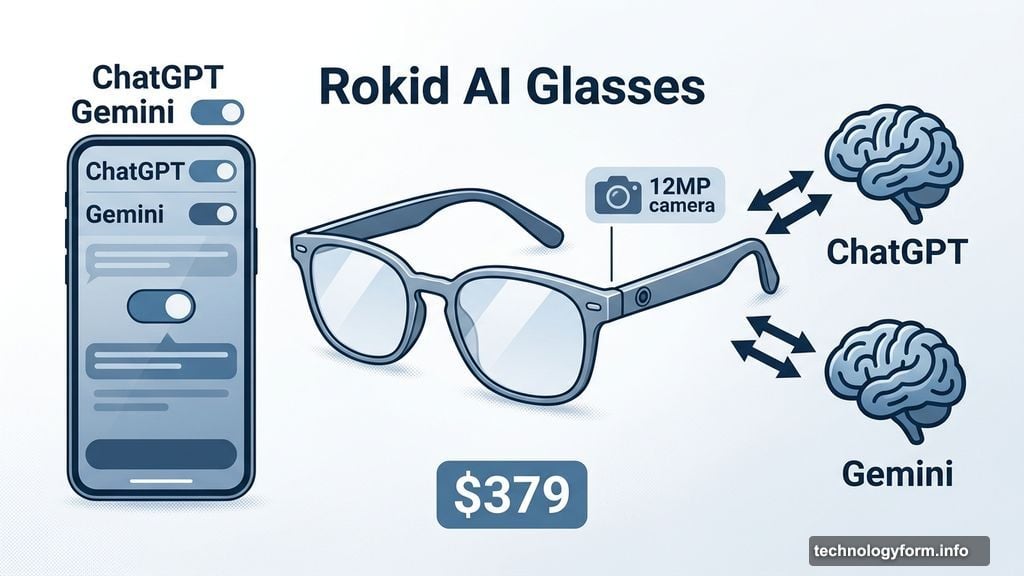
Rokid’s AI glasses look strikingly similar to Meta’s Ray-Bans. Lightweight frames, a 12-megapixel camera, built-in speakers, microphones — the whole package. CNET’s Scott Stein reviewed them at $379 (recently on sale for $279), and the design won’t feel unfamiliar if you’ve seen Meta’s glasses before.
The key difference? You can swap between ChatGPT and Gemini directly inside Rokid’s phone app. In other regions, the glasses also support Deepseek and Qwen. Just toggle your preferred AI model, and the glasses use that service to power responses and analyze photos from the onboard camera.
That’s a genuinely smart approach. Smart glasses are one of tech’s fastest-growing categories right now, yet most of these devices still feel half-baked. Offering real AI model flexibility is a meaningful step toward making wearables more useful than a novelty accessory.
But there’s a catch worth knowing before you get too excited.
Switching Models Doesn’t Mean Switching Accounts
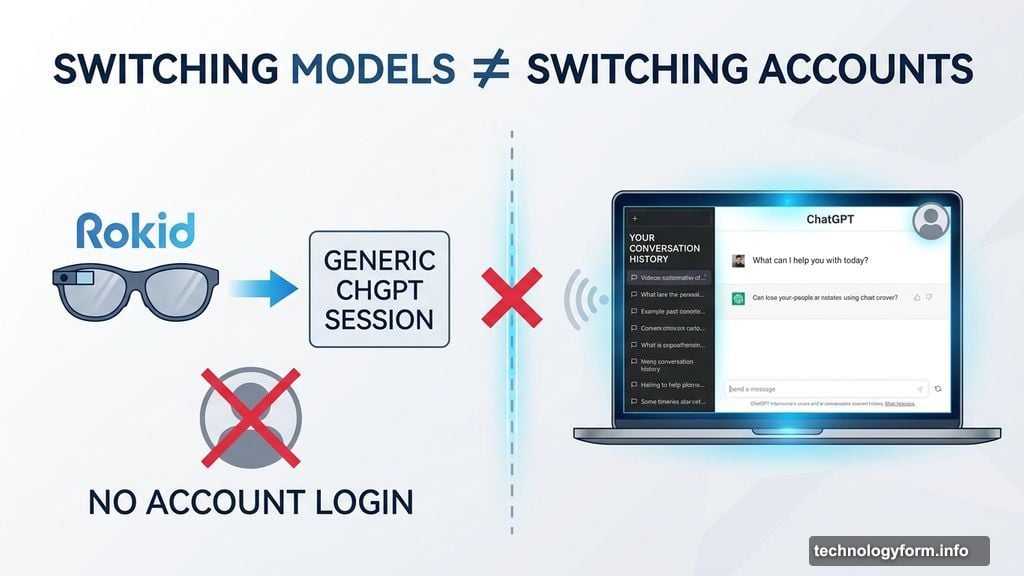
Here’s where Rokid’s multi-model approach hits a wall. You can toggle between ChatGPT and Gemini, but you can’t log into your personal accounts for either service.
That means none of your existing ChatGPT conversation history carries over. Your Gemini context stays on your phone. The glasses start completely fresh with a generic, impersonal version of whichever AI you pick. It’s similar to how Apple Intelligence can tap into ChatGPT without actually connecting to your personal ChatGPT profile and data.
To test the real-world difference between models, Stein asked both AIs to describe his living room using the onboard camera. Gemini leaned holistic and conversational, describing a “cozy, lived-in space” with warm detail. ChatGPT went more diagnostic, listing specific items methodically with offers to go deeper on any of them.
Tonally different. Practically? Not dramatically so. And without personal account data, both AIs had zero idea who they were talking to.
So switching between models is nice. Switching between your actual AI lives? Not yet possible.
AI Wearables Need Deeper Platform Integration
This limitation isn’t unique to Rokid. Even Realities’ G2 glasses technically tap into OpenAI but face the same problem. You can’t log into your existing account, and the experience remains disconnected from everything you’ve built up in that AI relationship.
The bigger issue is that OpenAI and Anthropic haven’t built direct integration paths for wearables yet. The AI software side hasn’t caught up with the hardware ambitions.
That’s about to change, at least for some players. Google’s upcoming Gemini-powered glasses will connect directly to your personal Google account. Your NotebookLM work, your Google app history, your ongoing projects — all of it should carry over and build on itself. The glasses will feel like a natural extension of your phone rather than a separate device with amnesia.
Apple is expected to announce its own glasses potentially this year. Based on what’s already known about Siri’s Gemini partnership, Apple looks to be heading down a similarly personalized path.
Meta, meanwhile, hasn’t cracked this yet. With no phone operating system of its own, and AI services that still don’t meaningfully connect across Instagram, Threads, Facebook, and WhatsApp, Meta’s on-glasses AI experience feels generic. Not necessarily bad, but not particularly smart about who you are.
Where Rokid Actually Fits
If you’re genuinely interested in camera- and audio-enabled smart glasses but want nothing to do with Meta on your face — Rokid is a real alternative. The multi-model flexibility is a legitimate differentiator, even if the implementation is only halfway there.
The glasses are lightweight and functional. The camera works well for quick scene analysis. And the ability to choose your AI flavor, even without account personalization, shows a philosophy that more wearable makers should adopt.
Still, calling it a full solution would be generous. Switching between ChatGPT and Gemini is a good first step. Being able to actually log into those services from your glasses, carrying your history and context with you — that’s where AI wearables need to go next.
Rokid’s pointed the right direction. Now the rest of the industry, including the AI platforms themselves, needs to catch up.