AI Can Handle Tasks. That Doesn’t Mean It Can Replace Your Job
Tech executives love claiming AI will eliminate millions of jobs. Anthropic CEO Dario Amodei predicted AI could wipe out half of entry-level white-collar positions within years. Meta’s Mark Zuckerberg wants AI writing half his company’s code by next year.
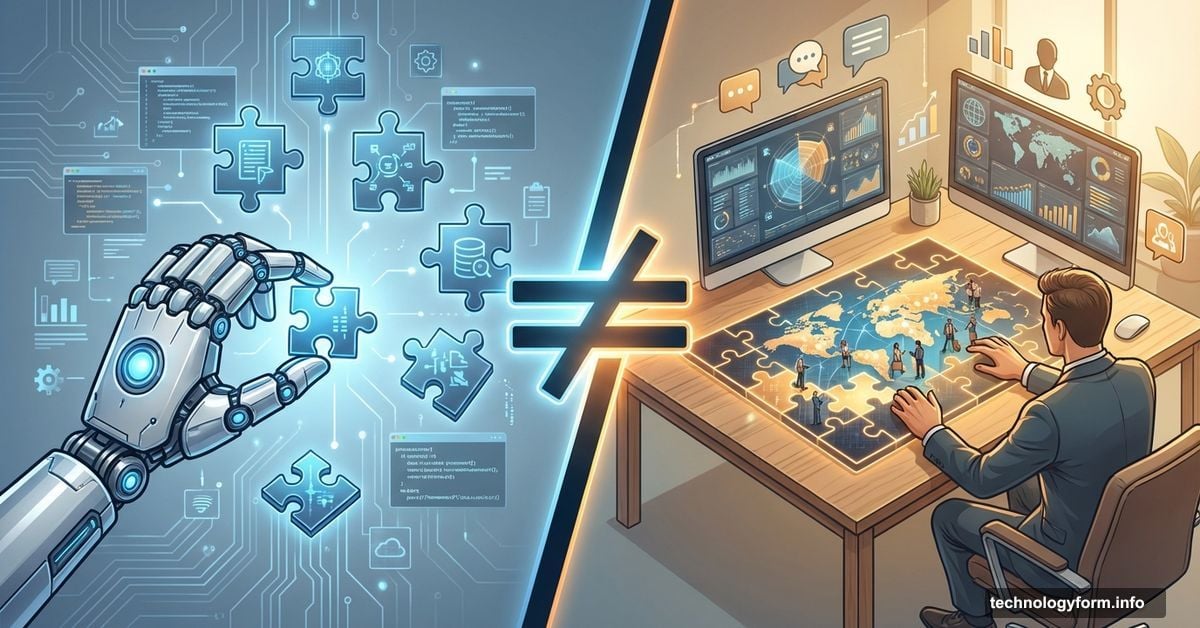
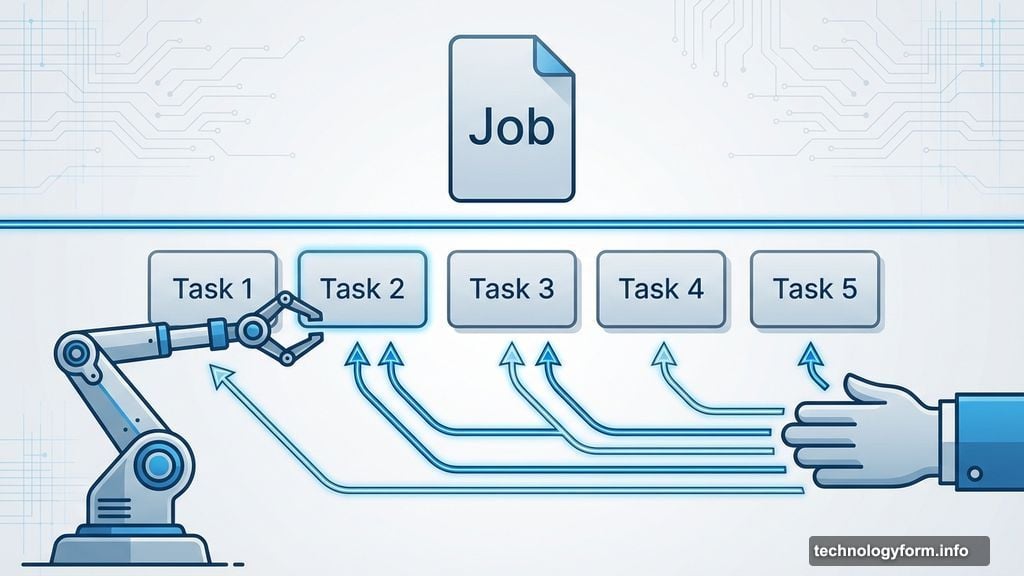
But here’s the thing. Doing individual tasks isn’t the same as doing a job. And that distinction matters more than Silicon Valley wants to admit.
Microsoft’s Report Sparked Unnecessary Panic
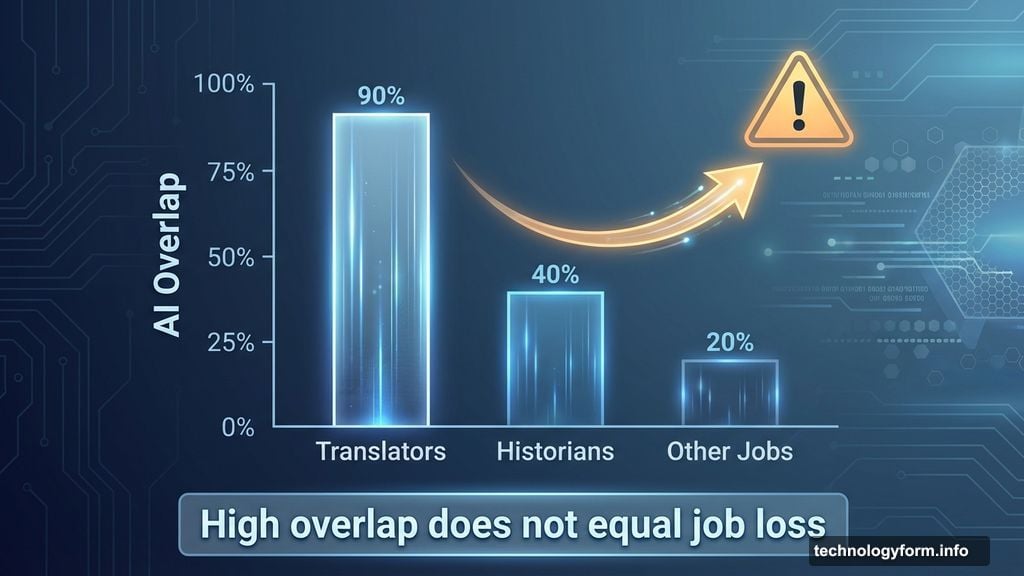
Microsoft researchers released a report in July ranking jobs by how much they overlap with AI capabilities. Translators and historians topped the list. Cue the existential dread.
Yet the researchers themselves warned against jumping to conclusions. They explicitly stated that high overlap doesn’t equal job loss. Why? Because downstream business impacts are “very hard to predict and often counterintuitive.”
Even OpenAI CEO Sam Altman admits this uncertainty. Speaking on a podcast, he pointed out how difficult it is to predict future jobs. After all, nobody imagined “AI company CEO” or “professional podcaster” would be careers just a few years ago.
So let’s examine those supposedly vulnerable jobs. Turns out, they’re safer than the headlines suggest.
Translation Needs More Than Word Swapping
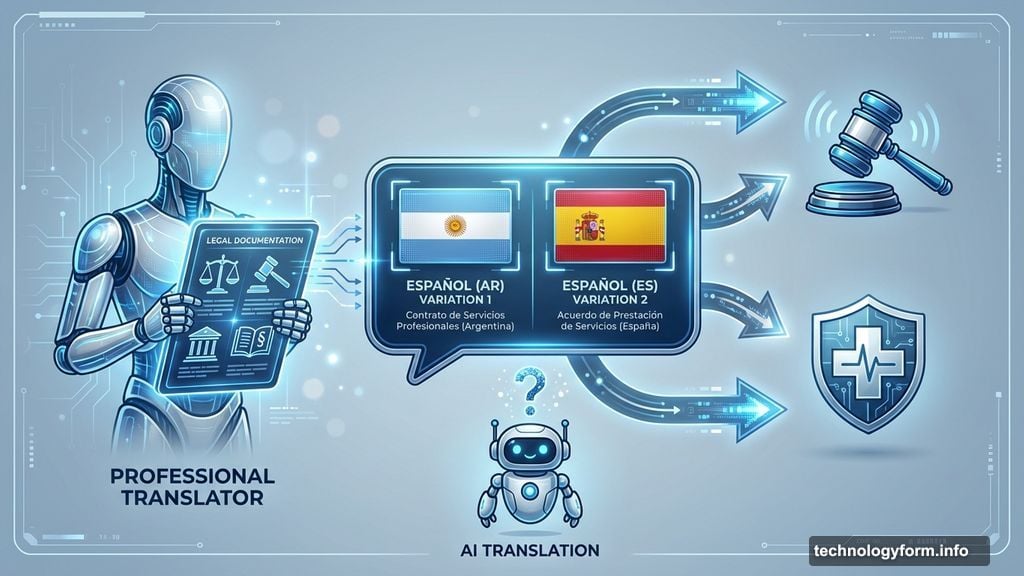
Andy Benzo speaks Argentinian Spanish. Not generic “Spanish.” That matters enormously in her work as a legal translator.
Spanish exists in 20-plus countries, each with distinct variations. Plus countless regional dialects. Benzo doesn’t just convert words between languages. She converts meaning, context, and legal implications.
“You pay us for what we know,” Benzo said. “We say that what we do is accurate.”
Professional translators specialize in specific fields. Medical translators help patients communicate with doctors in life-or-death situations. Financial translators ensure millions of dollars move correctly between parties. Legal translators like Benzo make sure documents hold up in court.
AI translation tools are getting better. Apple’s iOS 26 and Google’s Gemini can interpret conversations in real-time. Impressive for casual chat. Dangerous for professional work.
AI Makes Good Guesses. Professionals Get It Right
Large language models produce educated guesses based on patterns in training data. That’s fundamentally what they do. Sometimes those guesses are excellent. Sometimes they’re catastrophically wrong.
Professional translators understand nuances that vary between languages and cultures. They know when a word means something different in Argentina versus Spain. They adapt to new slang immediately.
“Language evolves all the time,” Benzo explained. “The only one who can perceive the nuances of a language is a human.”
Plus, accountability matters. If AI mistranslates a legal document and someone loses money or freedom, who’s responsible? The software company? The user? Good luck with that lawsuit.
History Demands Creativity and Judgment
Sarah Weicksel studies Civil War-era clothing. Not the kind you see in museums. The everyday garments worn by regular people 160 years ago.
Her research involves digging through archives, examining fabric textures, studying how coat cuts affected posture. She reads diaries looking for mentions of shirts and pants instead of famous battles.
“My research process was very much putting together pieces of a puzzle,” said Weicksel, now executive director of the American Historical Association.
Could AI analyze museum collections or read those diaries? Technically yes. But that misses the point entirely.
Historians Ask New Questions
The core of historical work isn’t summarizing known facts. It’s exercising judgment and creativity to discover new interpretations of the past.
Weicksel approached her research by asking specific questions nobody had asked before. She wanted to understand how clothing reflected economic and political circumstances. How fabric choices revealed class structures. How fashion changed with wartime shortages.
AI can summarize historical events because it learned from historians who did the original work. Ask ChatGPT about the Defenestration of Prague in 1618 and you’ll get a decent summary. But only because historians dug out those facts and wrote them down.
“Great works of history are neither predictable nor obvious,” Weicksel said. “That’s what makes them transformative. That can’t be replaced by a technology trained to reproduce existing patterns.”
Moreover, AI can’t touch and feel 160-year-old fabric. It can’t notice subtle details in clothing construction. It can’t exercise the human judgment required to contextualize discoveries.
Where AI Actually Works
AI excels at automation of routine tasks. That’s not controversial.
Large language models write decent software code. This led to “vibe coding,” where humans conceptualize projects while AI handles most implementation. Customer service chatbots handle straightforward requests, escalating complex ones to humans.
Stanford researchers found employment declines among young workers in automation-sensitive industries. But only in roles where tasks could be fully automated. Meanwhile, jobs where AI augmented human work actually grew.
“While we find employment declines for young workers in occupations where AI primarily automates work, we find employment growth in occupations in which AI use is most augmentative,” they wrote.
Darrell M. West, senior fellow at the Brookings Institution, emphasized this distinction. “There may not be that many whole jobs that get eliminated. There certainly are going to be a lot of tasks that are going to be eliminated.”
Software development has already seen layoffs because coding can be reliably automated. But most jobs involve tasks that resist full automation. The human element remains essential.
Business Leaders Don’t Always Know What AI Can Do
Here’s the real problem. Job losses won’t happen because of what AI can do. They’ll happen because executives think AI can do it.
Many business leaders seem more worried about missing AI opportunities than worried AI won’t deliver. That’s leading to premature decisions.
Klarna claimed in 2024 that its AI assistant could replace 700 customer service agents. Then changed course in 2025, hiring more humans after disappointing results.
MIT researchers found 95% of corporate AI pilots generate no return on investment. Why? Because AI tools don’t learn and grow like human employees. They’re static systems requiring constant maintenance.
An OpenAI report found three out of four workers said AI improved their speed or quality. But average time savings were under an hour per day. Modest gains, not revolutionary transformation.
The Society for Human Resource Management surveyed 20,000 workers and found only 6% of US jobs truly vulnerable to AI elimination. Most jobs have barriers like customer preference, legal requirements, or simple cost-effectiveness.
The Missing Human Element
Corporate leaders might lay off too many people because of AI optimism. Then discover something crucial is missing.
“The human judgment aspect is going to be critical,” West said.
Judgment, creativity, culture, care. These elements make jobs more than collections of tasks. A translator isn’t just a word-conversion machine. A historian isn’t just a fact-retrieval system.
Businesses that understand this will thrive. Those that don’t will struggle like Klarna did. They’ll discover that automation works until it doesn’t. That productivity gains matter less than quality and accuracy.
The hype around AI job displacement ignores fundamental truths about work. Yes, AI will change many jobs. But replacing humans entirely? That requires more than technical capability.
It requires AI to possess something it fundamentally lacks. The ability to care whether it gets things right. The judgment to know when rules don’t apply. The creativity to ask questions nobody thought to ask.
Until AI develops those qualities, jobs requiring human insight remain safe. The threat isn’t AI capability. It’s human decision-makers who don’t understand the difference between doing tasks and doing a job.