AI Can Write Your Code Now. But There’s a Catch
ChatGPT sparked something bigger than anyone predicted. Now AI doesn’t just answer questions—it builds entire apps from scratch.
You type what you want in plain English. The AI generates all the code. No programming degree required. This workflow has a name: vibe coding. And it’s spreading fast enough that Collins Dictionary crowned it Word of the Year.
But before you quit your day job to become an overnight developer, let’s talk about what vibe coding actually delivers versus what it promises.
What Vibe Coding Actually Means
Andrej Karpathy coined the term in early 2025. He’s the AI researcher who helped build Tesla’s self-driving systems and co-founded OpenAI. His definition? You “fully give in to the vibes” and stop worrying about writing code yourself.
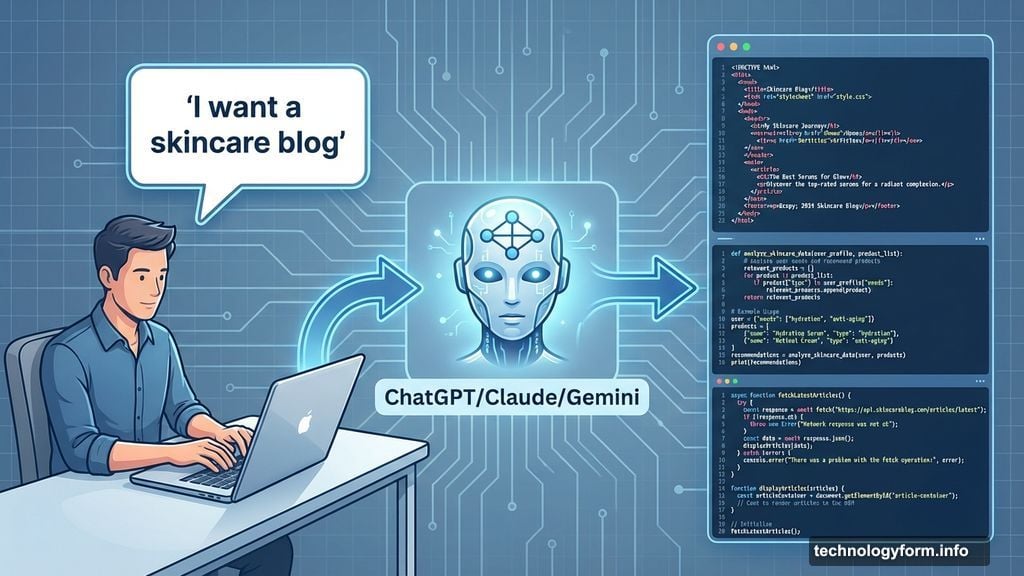
Instead of learning JavaScript or Python, you describe your idea to an AI tool. Say you want a skincare blog with a homepage, article list, and basic editor. The AI generates the framework, logic, and interface. You test it, refine your prompt, and repeat until it works.
Y Combinator’s Winter 2025 batch showed how fast this shift happened. About 25% of startups had codebases built almost entirely by AI. That’s not a fringe experiment anymore—it’s becoming standard practice.
The workflow removes technical barriers. You focus on what you want to build. The AI handles implementation details. At least in theory.
Where Beginners Actually Get Stuck
Vibe coding sounds magical until you try it. The AI spits out code. Great. Now what?
Most beginners don’t automatically know where that code goes or what to do with it. You still need basic computer literacy. You have to copy code into a text editor, save it as the right file type (.html or .py), and run it on your machine.
That’s not intuitive if you’ve never coded before. The AI removes syntax knowledge but not procedural know-how.
Sam Dhar led engineering teams at Adobe and Amazon Alexa. Now he runs AI Platform at Galileo AI. He told CNET that someone always has to evaluate what the AI produces and make decisions about it.
“Only someone who has that knowledge and experience can truly effectively use AI to be able to build things that are production-ready,” Dhar says.
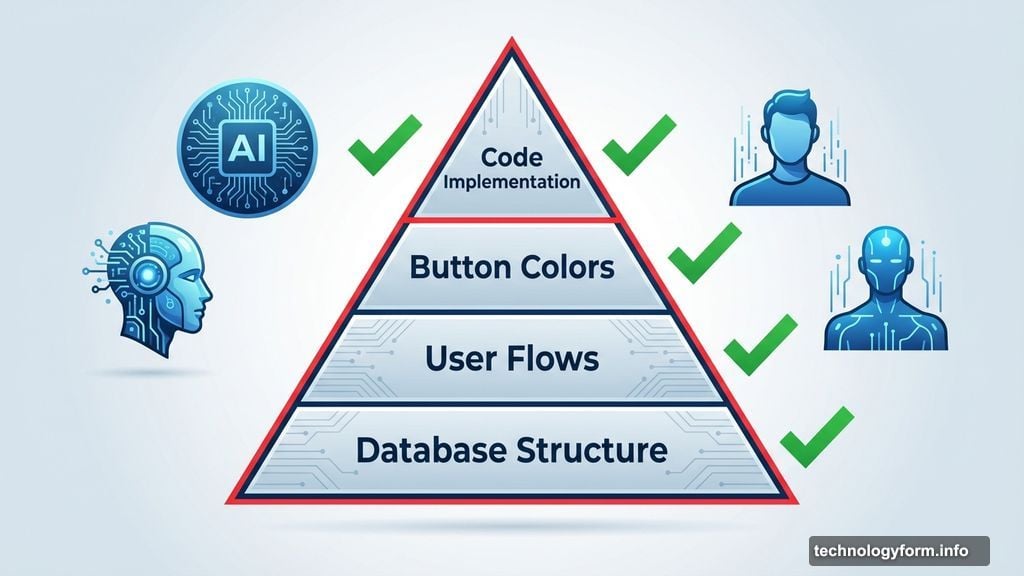
Real software isn’t just code. It’s a pyramid of decisions. Button colors. User flows. Database structures. Scalability planning. You can’t spell out every detail in one giant prompt. Someone still needs to guide those choices.
Tools That Actually Work
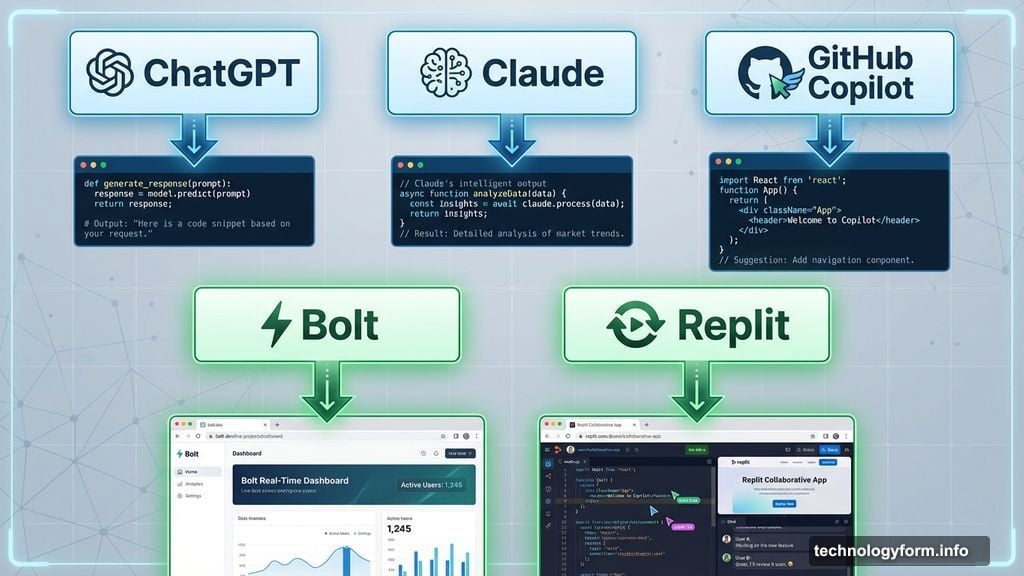
ChatGPT, Claude, Gemini, Grok, Cursor, and GitHub Copilot Workspace all generate code with limited free use. But they dump raw code into a chat window. You’re on your own from there.
Bolt and Replit simplify those steps dramatically. The AI generates the entire project inside their editors. You request changes in plain language. You can publish a working site using their free URL without touching hosting or domains.
Both platforms offer free limited plans. The tradeoff? Lower visibility into how things actually work. If something breaks or behaves oddly, you’re stuck debugging via prompts alone.
I’m a perfectionist. I spent hours tweaking prompts trying to get my X post refiner tool to work properly. It eventually worked in Gemini Canvas but failed as an HTML file. I ran out of free tokens before solving it.
Most platforms provide free public URLs. You don’t need paid hosting unless you want a custom domain. For mobile apps, the easiest path is progressive web apps. Open your site in a phone browser and tap “Add to Home Screen.” Takes 10 seconds, costs nothing, needs no approval.
Getting into actual app stores is different. iOS requires a Mac, Xcode, an Apple Developer account ($99/year), and manual building. Android is simpler—$25 one-time Google fee, no Mac required, and you can build and upload directly from Replit via Expo in a few clicks.
Vibe Coding vs Everything Else
Traditional programming requires understanding every line you write. You control the entire system. You’re also responsible for debugging, performance, and security.
No-code tools like Webflow and Notion let you build through visual interfaces. Great for websites and small internal tools. But you’re limited to whatever structures the platform supports. It’s like assembling IKEA furniture—you work within their design constraints.
Vibe coding focuses on outcomes, not implementation. You describe what you want. The AI generates everything. You can build things you’d never attempt with traditional code—recipe organizers, budget trackers, microblogs, simple games.
Dhar says the real constraint isn’t what AI can generate. It’s what humans can realistically review. He advises keeping vibe-coded projects “small and controlled” so someone with experience can inspect every decision before it ships.
What You Can Actually Build
Developers use vibe coding to generate prototypes and replace repetitive work. Beginners build projects they’d never attempt otherwise.
Common wins include to-do lists, note-taking apps, basic dashboards, and simple utilities. Some people create browser extensions or small games. But even browser extensions require loading them through your browser’s settings—not intuitive for non-technical users.
I tried building an X post refiner. It took several hours of back-and-forth prompting. I finally got it working in Gemini Canvas but not as a standalone HTML file. The AI kept mixing patterns and generating code that technically ran but didn’t match my intentions.
That’s typical. Vibe coding works best for throwaway projects, personal tools, and experiments. Anything more complex exposes its limitations fast.
The Problems Nobody Talks About
Vibe coding relies on large language models. LLMs hallucinate answers, so they also hallucinate code. That’s manageable in a side project. Far more serious in apps handling user data or requiring strict security.
Beginners often can’t spot errors or security issues because they don’t understand the generated logic. The AI sometimes mixes patterns or creates code that’s technically correct but impossible to maintain.
Hidden bugs often show up only after extended use. Your app might look polished on the surface but break in edge cases the AI never considered.
We’re not ready to vibe-code our way into production systems. Anything requiring long-term stability or strong security still needs real engineering, not vibe-coded shortcuts.
Why This Trend Exploded
People who couldn’t code before can now build simple apps. Developers who normally spend hours writing code can save time by describing what they need instead.
Low-code platforms showed what building with less code could look like. Then AI said, “Hold my beer.”
If you can articulate an idea, you can build the first version of it. If you can’t articulate it, AI will even help you write the prompt to generate the code. It becomes the builder, bridging intention and implementation.
Programming has long been considered an elite skill. AI is reshaping that perception just as it’s reshaping many jobs. But skilled developers aren’t obsolete yet. They’re the ones who identify issues and correct them when AI gets things wrong.
“Maybe we might not need as many programmers to do the same amount of work as we used to, but that still requires a lot of skill and experience to be able to evaluate whatever you’re producing,” Dhar says. “AI is never going to be able to replace humans because there has to be accountability.”
Still, it’s far easier now for anyone to take a swing at building something, even without a technical background. That alone represents a massive shift.
The Real Vibe Check
Vibe coding democratizes software creation in meaningful ways. But it doesn’t eliminate the need for technical judgment. It shifts where that judgment happens.
Instead of writing syntax, you’re evaluating outputs. Instead of debugging line by line, you’re refining prompts. Instead of learning languages, you’re learning to communicate intent clearly to an AI.
For personal projects and quick prototypes, vibe coding delivers real value. For anything serious, you still need someone who understands what good code looks like and can spot when the AI goes sideways.
The tools will keep improving. Models will generate better code with fewer errors. But someone always has to make decisions, evaluate trade-offs, and take accountability for what ships.
That part won’t vibe itself away.