ChatGPT Just Grabbed 18% of Search. Google’s Dominance Finally Cracked
For two decades, Google owned search. Nobody came close.
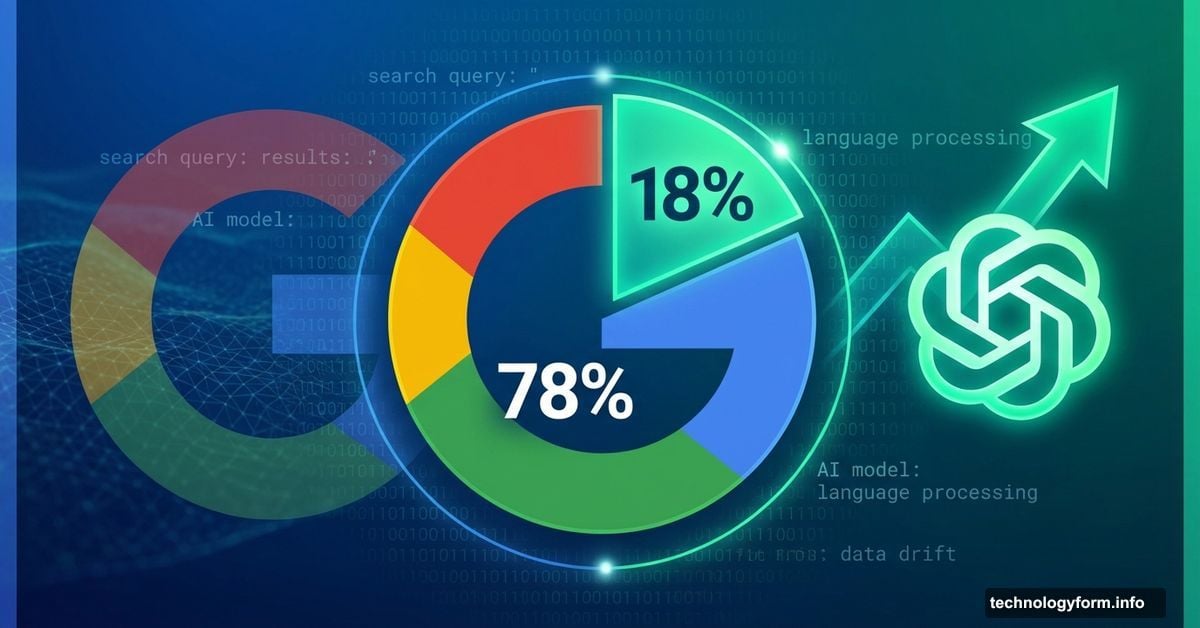
Now that’s changing. ChatGPT Search commands 17-18% of global queries as of January 2026. That’s the first double-digit competitor share since the early 2000s. Plus, this isn’t just a numbers game—it represents a fundamental shift in how people find information online.
Google still leads with 78-80% market share. But the nature of that lead has transformed. Instead of competing over who indexes more websites, the battle now centers on who delivers the most useful, cited answer fastest. The era of “10 blue links” just ended.
Resolution Beats Retrieval Now
ChatGPT Search works differently than traditional search engines. It doesn’t just point you somewhere—it synthesizes information in real-time and gives you the answer directly.
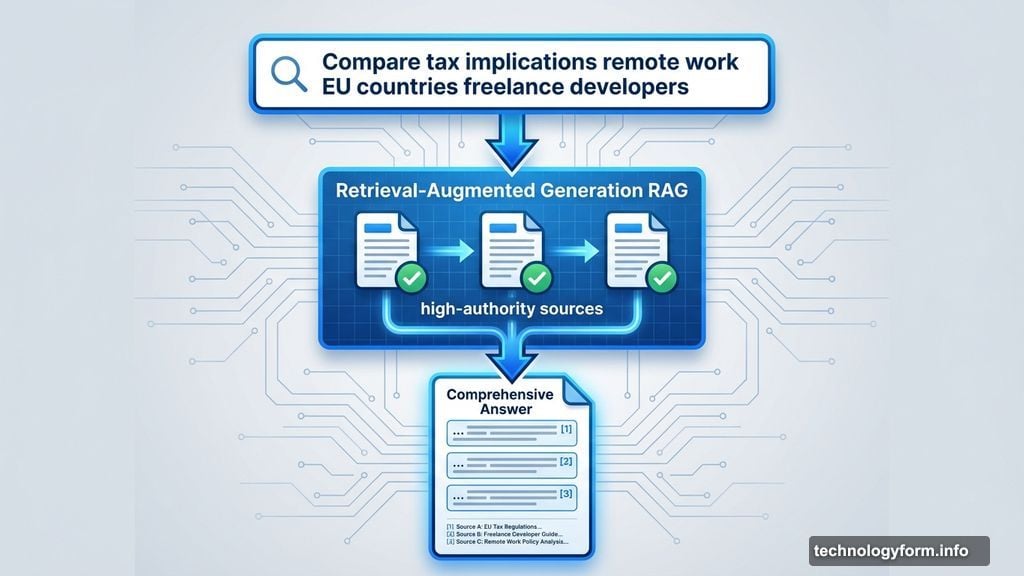
The technical breakthrough lies in its “Citation Engine.” This system performs multi-step verification before showing results. It uses retrieval-augmented generation (RAG) to prioritize high-authority sources. Moreover, every claim includes clickable, inline footnotes for verification.
This approach handles complex queries that would’ve required multiple searches before. For instance, “Compare tax implications of remote work in three EU countries for freelance developers” gets a single, comprehensive response. No clicking through five different sites to piece together the information yourself.
The system’s “Thinking” mode adds another layer. It pauses to verify its reasoning path internally before displaying results. So the accuracy rate improved dramatically compared to earlier AI models prone to hallucinations.
Two Search Engines for Two Different Needs
The market split in an unexpected way. Google dominates transactional and navigational searches—finding local plumbers, buying specific products, that sort of thing. Meanwhile, ChatGPT captured informational and creative queries.
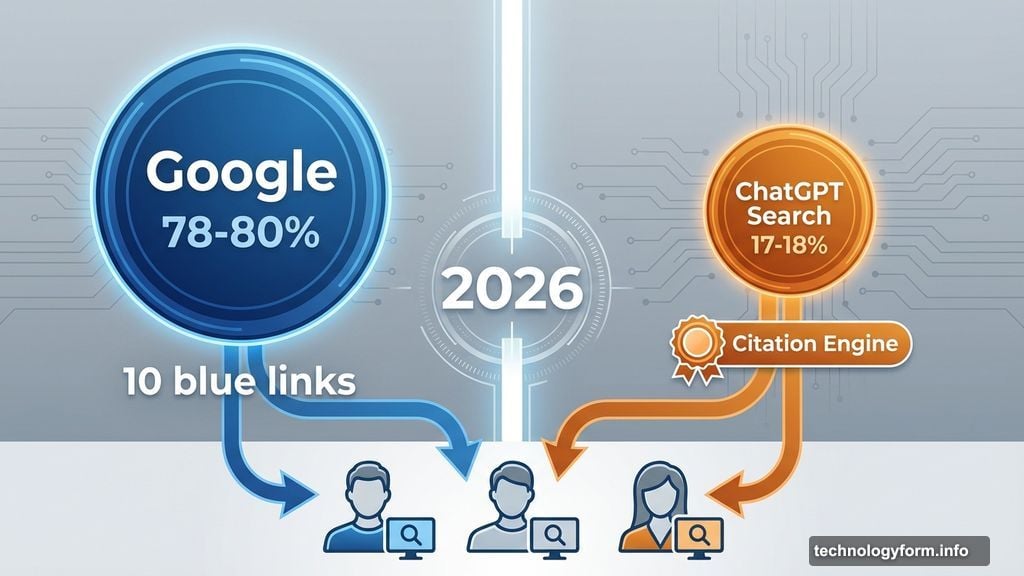
People still “Google” to buy shoes. But they increasingly “ask” ChatGPT to explain concepts, draft documents, or compare complex options. This division creates what analysts call a “duopoly of intent.”
Microsoft benefits enormously from this shift. Through its multi-billion dollar OpenAI investment, it finally has a meaningful search presence again. In fact, this marks the first time in twenty years that a competitor consistently holds double-digit market share.
Google’s response? Aggressive deployment of Gemini 3 into search results. “AI Overviews” now dominate the top of nearly every results page. However, engagement metrics tell a different story.
ChatGPT Search users average 13-minute sessions compared to Google’s 6 minutes. That’s not just searching—people are staying to refine results, draft content, and collaborate with the AI. Traditional search engines never achieved that stickiness.
The Website Traffic Crisis
Here’s what worries publishers most. Over 65% of searches now resolve directly on the search results page via AI synthesis. Users never click through to the actual websites.
This “zero-click” reality threatens the entire web economy built on ad impressions and click-through rates. So a new field emerged: Generative Engine Optimization (GEO). Instead of ranking in a list of links, publishers now compete to become the cited source within AI answers.
OpenAI and Google struck licensing deals with major media companies. But smaller independent creators face a tough situation. Driving traffic gets harder when the AI answers questions without sending people to your site.
The shift resembles the desktop-to-mobile transition of the early 2010s. Yet this change runs deeper. Back then, the medium changed but the destination remained websites. Now the AI increasingly becomes the destination itself.
Search Agents Are Coming Next
The industry is moving toward “Agentic Search” throughout 2026 and into 2027. The AI won’t just find information—it’ll act on it.
Imagine asking your search agent to “book the cheapest three-leg flight to Tokyo next month with these dates flexible by two days.” The AI handles the entire process, comparing options and completing the booking based on a simple conversational prompt.
Privacy concerns loom large here. As search becomes more personalized, it requires more private user data to function effectively. This creates regulatory challenges in the EU and North America where data protection laws keep tightening.
Multi-modal search will become standard too. By late 2026, you’ll likely point AR glasses at a broken engine and ask “show me the tutorial for fixing this specific valve.” The AI pulls real-time data and overlays instructions directly on your view.
Competition between Gemini 3 and GPT-5 will focus on processing multi-modal inputs with the lowest latency and highest accuracy. Whichever system handles image, voice, and text inputs most seamlessly will gain serious advantage.
The Blue Links Era Just Died
ChatGPT’s 17-18% market share represents more than a statistic. It confirms that human behavior fundamentally changed. We moved from “Google it” to “Ask it” as our default information-seeking behavior.
Google’s 80% dominance remains formidable. But the deployment of Gemini 3 shows they’re adapting rather than leading by default. For the first time in decades, Google fights to maintain position instead of expanding from unassailable strength.
The duopoly of intent defines 2026. Google handles the physical and commercial world. ChatGPT dominates the intellectual and creative world. Whether Gemini 3 can bridge this gap or ChatGPT continues eroding Google’s fortress remains the industry’s biggest question.
One thing’s certain though. Those 10 blue links are officially history. The search wars are back, and the stakes just hit a new high.