
Google Might Let Publishers Escape AI Overviews. One UK Agency Forced Their Hand
Google just blinked. After months of scraping publisher content without permission, the company’s now “exploring” an opt-out option for AI Overviews.
What changed? UK regulators threatened intervention. Suddenly, Google’s interested in giving publishers control over their own content. Funny how that works.
Britain’s Watchdog Drew the Line
The UK’s Competition and Markets Authority opened a consultation Wednesday targeting Google’s AI practices. Their proposed package includes letting publishers opt out of AI Overviews entirely.
Why does the CMA care? Google’s dominant search position gives it outsized power over publishers. Plus, those AI summaries at the top of results obliterated click-through rates for news sites and content creators.
Here’s the brutal part. Publishers create the original content. Google scrapes it without permission. Then Google uses that content to generate summaries that keep users from visiting the source sites. So publishers lose traffic, revenue tanks, and their ability to produce quality content evaporates.
Meanwhile, Google still needs that original content to power its AI features. The whole system cannibalizes the sources it depends on.
AI Overviews Killed Publisher Traffic
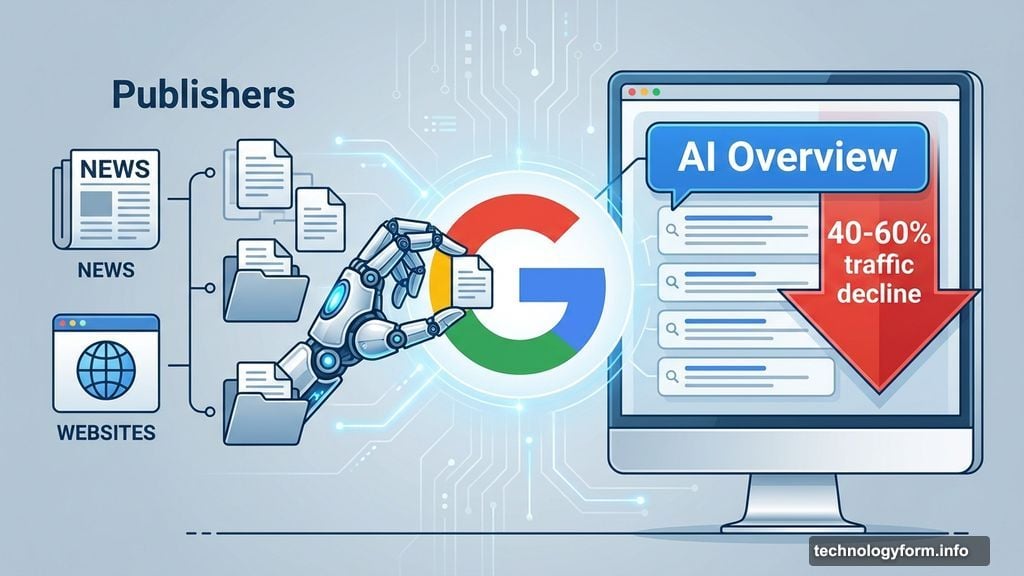
Google launched AI Overviews in summer 2024. Within months, publishers worldwide reported massive drops in click-through traffic.
The math is simple. Users get answers directly from AI summaries. They never click through to source websites. Those lost clicks translate to lost ad revenue and subscriptions.
Many media organizations saw 40-60% traffic declines. Some smaller publishers faced existential threats. Yet until now, websites had zero ability to opt out of Google using their content for Overviews.
That’s what made the CMA’s intervention necessary. Google controlled both the search results and how publisher content gets used. Publishers had no leverage to negotiate better terms.
Google’s Response Sounds Careful
In Thursday’s blog post, Google said it’s “now exploring updates” to let sites opt out of AI Overview features specifically.
Notice the careful language. “Exploring updates.” Not “implementing” or “launching.” Just exploring. Plus, Google didn’t specify whether these controls would extend beyond UK publishers.
The company also warned about maintaining Search “helpfulness” and avoiding a “fragmented or confusing experience.” Translation: Don’t expect easy, comprehensive opt-out tools.
Google wants to protect its AI features while appearing cooperative with regulators. But the company’s track record on publisher relations suggests lukewarm half-measures rather than meaningful change.

The Irony Nobody Mentions
Google claims AI Overviews improve Search helpfulness. Yet those same Overviews frequently provide inaccurate information.
Take CNET as an example. Google’s AI Overview erroneously identified CNET’s parent company as Red Ventures. Actually, Ziff Davis owns CNET. That’s basic factual information Google got wrong while scraping CNET’s own content.
So Google argues against “fragmented and confusing experiences” while its AI actively creates them. The company warns about breaking Search while its inaccurate summaries already mislead users.
Here’s what bugs me. Publishers face traffic collapse from AI Overviews. Meanwhile, those Overviews don’t even deliver reliable information. Users get bad answers. Publishers lose revenue. Only Google wins.
Regulators Move Slowly
The CMA said it would wait a year before announcing consultation results or potential action. That’s a long time in tech.
Google knows this. The company can stall, negotiate, and deploy minimal changes while maintaining most of its current practices. By the time regulators act, Google will have cemented AI Overviews as the default Search experience.

Plus, the CMA’s jurisdiction covers only the UK. Google could implement UK-specific controls while continuing to scrape content freely everywhere else. Publishers in other markets would remain stuck.
That’s why voluntary industry solutions rarely work. Companies respond to regulatory pressure, not publisher complaints. Without enforcement mechanisms, Google faces little incentive to meaningfully change its AI practices.
What Publishers Actually Need
Publishers need clear, simple opt-out controls that work globally. Not “exploration” of potential updates. Not UK-only solutions. Real tools that let websites control how their content gets used.
Those controls should apply to AI Overview generation and AI model training. Both uses directly impact publisher business models. Both deserve explicit consent from content creators.
Moreover, Google should pay publishers for content used in AI features. If that content has value—and clearly it does, since Google needs it—then fair compensation makes sense. Other AI companies negotiate licensing deals. Google should too.
But I’m skeptical Google will voluntarily implement robust publisher protections. The company’s entire Search AI strategy depends on freely scraping content. Meaningful opt-out tools undermine that strategy.
So expect minimal changes designed to appease UK regulators without fundamentally altering Google’s approach. Publishers will likely remain trapped in a system that exploits their content while destroying their traffic.
The CMA consultation represents a rare moment of leverage. Whether it produces lasting change depends entirely on how seriously regulators enforce their proposals. Based on Google’s response, the company’s betting they won’t.