20 Apps Are Harvesting Your Data Right Now. You Probably Use Them Daily
Your phone apps are watching you. Not in a creepy sci-fi way. But they’re collecting massive amounts of your personal information while you scroll, shop, and chat.
Most people have no clue what data these apps grab. Your location. Your contacts. Your photos. Even your health data. Plus, many apps share that information with third parties who use it for advertising or sell it to data brokers.
Let’s break down which apps are the worst offenders and what you can actually do about it.
The Most Invasive Apps on Your Phone
Recent research from Nsoft examined privacy reports in Apple’s App Store. The findings were eye-opening. Companies self-report this data to Apple, so the reality could be even worse.
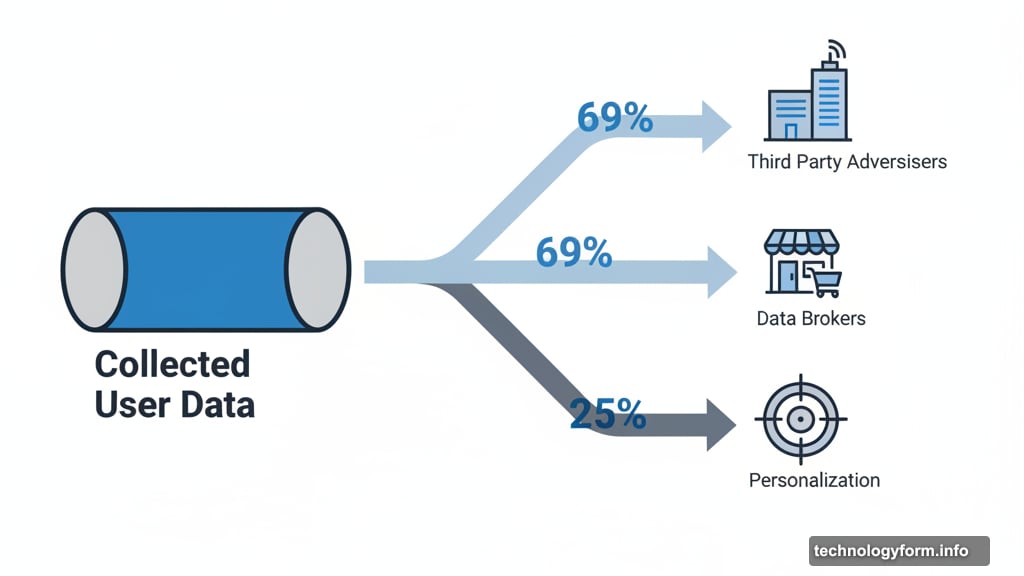
The biggest data collectors include apps you probably use every day. Social media platforms dominate the list. Meta’s apps—Facebook, Instagram, Messenger, and Threads—share nearly 69% of collected data with third parties. That’s the highest percentage among all apps studied.
TikTok, LinkedIn, Snapchat, and X also made the list. These platforms require tons of personal information just to function. Messaging features, friend discovery, and content personalization all depend on harvesting your data.
But social media isn’t the only culprit. Google’s suite of apps appears repeatedly. Gmail, Google Maps, Google Pay, and the main Google app all collect significant amounts of user data. Most share large portions with outside companies.

Amazon and YouTube round out the tech giants on the list. Amazon actually shares relatively little data with third parties (under 6%). However, it uses about a quarter of collected data to personalize your shopping experience. YouTube shares 31% with other companies and uses 34% for advertising purposes.
Games and Learning Apps Are Spying Too
Here’s where things get weird. Candy Crush Saga and Roblox both collect massive amounts of data. Roblox claims it doesn’t share any information with others. Candy Crush Saga reports sharing less than 10% with outside companies.
Even more surprising? Duolingo, the language learning app. It shares 20% of collected data with third parties. The rest goes toward analytics and app functionality. Why does a language app need so much information about you?
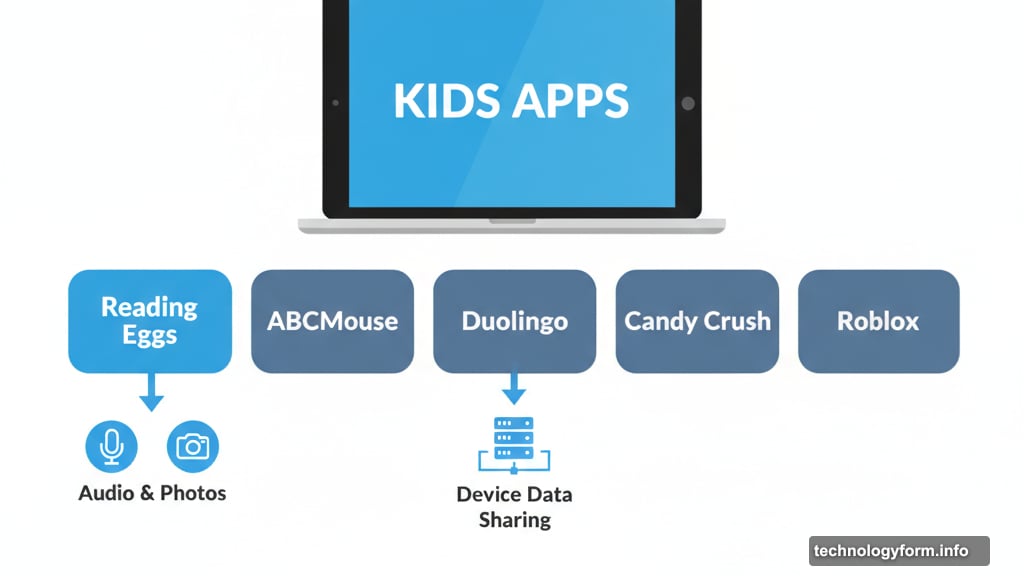
Parents need to pay special attention here. SafetyDetectives analyzed 20 popular kids’ apps earlier this year. The results were alarming. Every single subscription app posed privacy risks. Meanwhile, 70% collected identifying information about children.
Reading Eggs collects audio and photos from kids’ devices. It also uses that data for ads and personalization. ABCMouse shares device data with third parties. Plus, researchers flagged it as difficult to cancel or delete.
More than half of kids’ apps share user data with third parties. So before letting your child download that fun educational game, check the privacy report carefully.
Finance and Delivery Apps Want Everything
PayPal landed at number seven on the invasive apps list. It collects data for “other purposes” at a rate of 66%. What does “other” mean exactly?
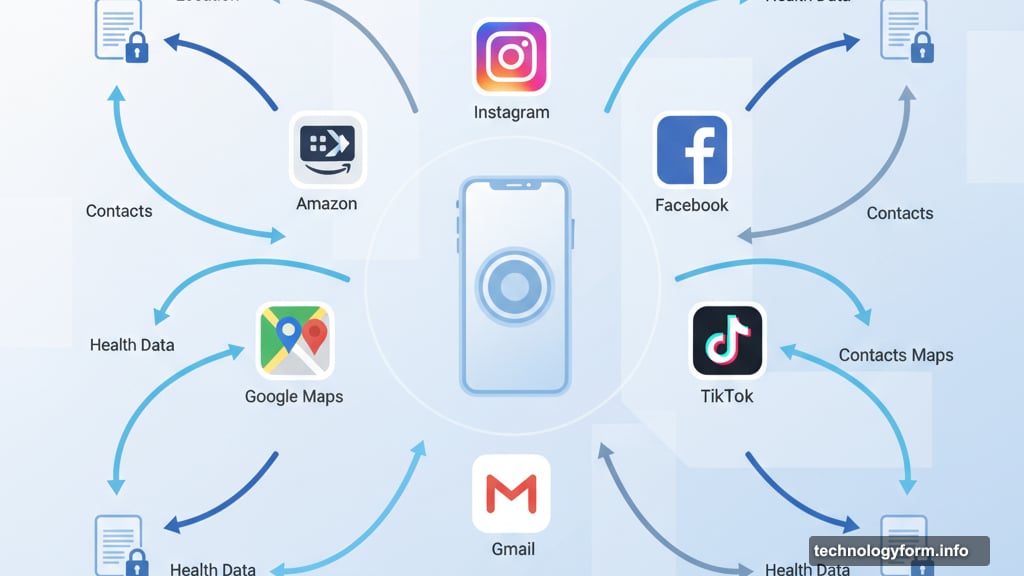
Turns out it includes your browsing history, contact list, device ID, financial information, location, photos, search history, and videos. That’s an enormous amount of personal data for a payment app.
Uber and Uber Eats both made the list too. These apps need your location to function, so some data collection makes sense. However, Lyft collects less specific information than Uber. For example, Lyft uses your general location. Uber tracks your specific location and physical address.
Both ride-sharing apps collect tons of data about your online activities. So here’s a better option: delete the apps and use browser-based versions instead.
Dating apps Bumble and Tinder also appear on the list. These apps require your profile information, messages, photos, and videos. You’re voluntarily sharing private data in exchange for potential matches. Just remember that while you’re looking for love, you’re also feeding a company’s data portfolio.
China-Based Apps Collect the Most
Research from Incogni shows that an app’s country of origin matters. Chinese-owned companies like Alibaba, Temu, and TikTok all collect sensitive user information. This includes addresses and approximate locations.
Alibaba stands out as particularly invasive. It requests access to documents, files, phone numbers, photos, and videos. That’s far more than needed for a shopping app.
This doesn’t mean Western apps are saints. But the data shows clear patterns based on where companies are headquartered. Apps from countries with weaker privacy laws tend to collect more information.
When Data Collection Actually Makes Sense
Sometimes you can’t avoid giving up data. Delivery, map, and weather apps all need your location to work properly. That’s reasonable.
The question becomes: how much data is necessary versus excessive? Google Maps needs your location. It doesn’t need your contact list. A weather app needs your zip code. It doesn’t need access to your photos.
Look at what apps request versus what they actually need. If a calculator app wants your contacts, that’s a red flag. If a flashlight app requires location data, something’s wrong.
Companies should practice data minimization. They should only collect information required for core functionality. Unfortunately, most apps grab everything they can because data equals money.
What You Can Do Right Now
First, delete apps you haven’t used in the past month. There’s no reason to let abandoned apps collect your data in the background. They’re still monitoring your browsing habits, logging messages, and potentially training AI models on your photos.
Second, use browser versions of social media apps instead of standalone apps. The browser gives you more control over permissions. Plus, you can clear cookies and browsing data regularly.
Third, check privacy reports before downloading new apps. Both Apple’s App Store and Google’s Play Store include detailed privacy sections. Open the app store, search for an app, and scroll to the Privacy section. Tap “See Details” for a full breakdown of data collection.
The report shows what kinds of data companies collect and how they’ll use it. If the privacy report seems excessive for what the app does, don’t download it.
Fourth, review permissions on apps you already have. Go into your phone settings and look at what each app can access. Revoke permissions that don’t make sense. A photo editing app needs access to your camera roll. It doesn’t need your microphone.
Fifth, use private browsing modes and VPNs when possible. These tools won’t stop app-level data collection. However, they limit how much companies can track your general internet activity.
The Uncomfortable Truth About Your Data
Companies designed their apps to maximize data collection, not minimize it. Every feature exists to keep you engaged longer and generate more behavioral data. That data gets sold, shared, or used to manipulate your buying decisions.
You agreed to all of this when you clicked “I Accept” on those terms of service agreements. Nobody reads them. Companies know nobody reads them. So they bury invasive data collection practices in legal language.
The power imbalance is real. You can’t fully participate in modern digital life without giving up some data. But you can push back against the most egregious collection. Delete invasive apps. Use browser versions. Check privacy reports before installing anything new.
Your data is valuable. Companies know that. It’s time you start treating it that way too.