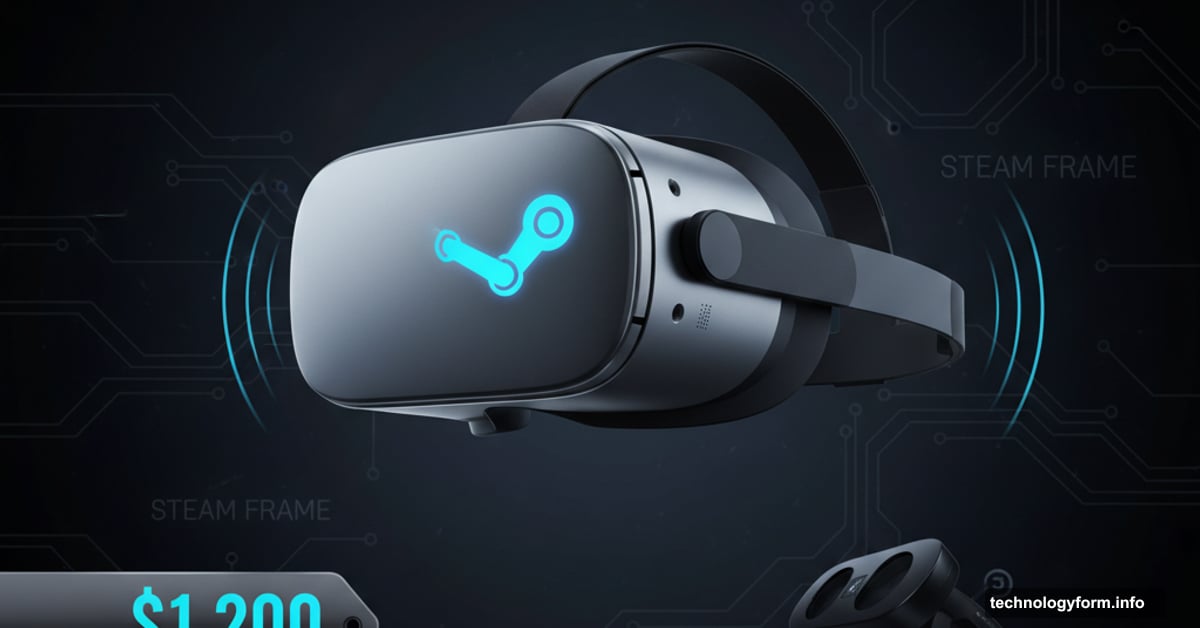
Valve’s Next VR Headset Just Hit Production. What’s Next?
Valve has been radio silent about its next VR headset. But the evidence keeps piling up that something big is coming very soon.
Multiple reports now confirm the mysterious “Steam Frame” entered mass production. That’s industry speak for “this thing is about to ship.” Plus, trademark filings just dropped last month, which Valve typically only does right before launch.
So what exactly is Valve building? Let’s break down everything we know about the Steam Deck maker’s return to virtual reality.
The Steam Frame Actually Exists
First, the basics. Valve filed a trademark for “Steam Frame” in September 2025. That name alone tells us plenty.
The company rarely files trademarks far in advance. Instead, they wait until products are nearly ready to ship. So this filing strongly suggests an imminent announcement.
Moreover, analyst firms tracking VR hardware supply chains report the device entered mass production. That means factories are cranking out units right now. Launch timing typically runs 2-3 months after mass production begins.
Therefore, we could see this headset before 2026. That’s a bold prediction, but multiple independent sources point to a late 2025 release.
It’s Wireless This Time
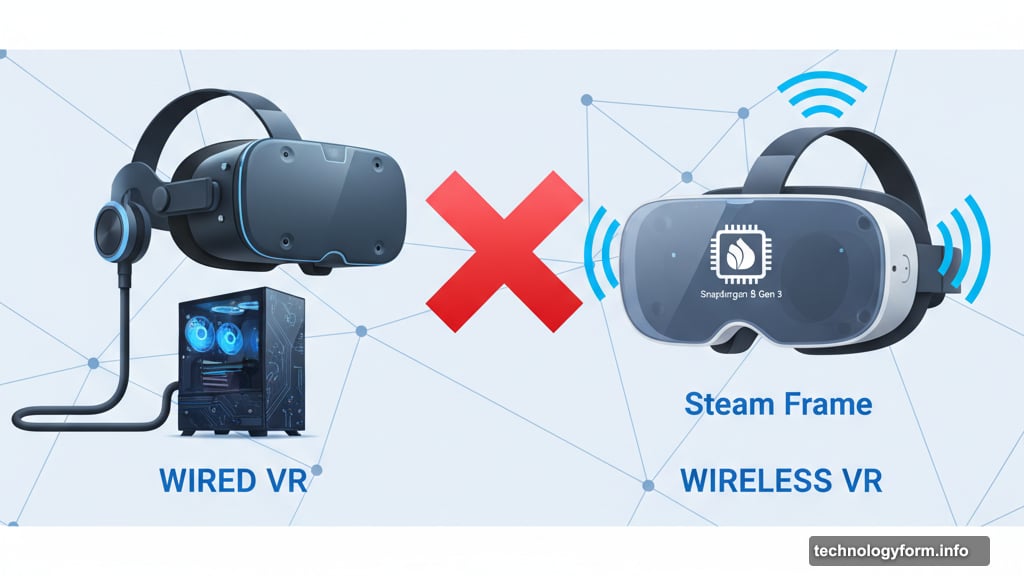
Valve’s original Index headset required cables tethering you to a gaming PC. Powerful but clunky. The Steam Frame takes a different approach.
In an interview with Tested, Valve hardware engineer Yazan Aldehayyat dropped major hints. He explained how lessons from the Steam Deck would apply to future hardware. That means wireless, standalone operation without external computers.
Leaked specs support this claim. According to SadlyItsBradley (a reliable VR leaker), the Steam Frame packs a Snapdragon 8 Gen 3 chipset. You only need that powerful processor if the headset runs independently.
But here’s the kicker. That chipset includes a GPU one generation newer than what powers the Meta Quest 3. So Valve isn’t just going wireless – they’re going wireless with cutting-edge graphics.
The Price Tag Might Hurt
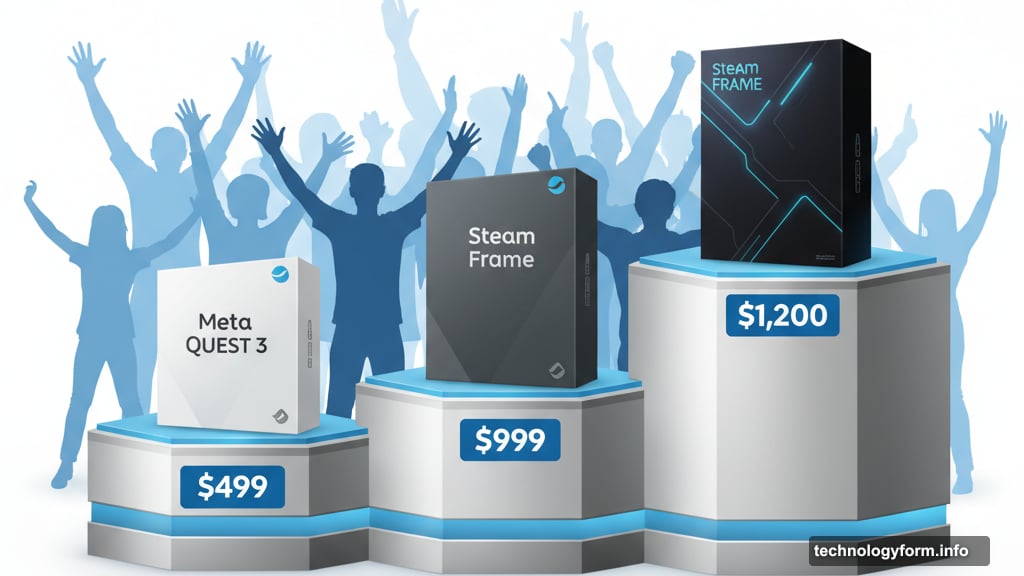
Now for the bad news. Leaks from Gabe Follower suggest a $1,200 price point. That’s around £900 or AU$1,850 depending on your region.
For context, the Meta Quest 3 costs $499. Valve’s headset would cost more than double. Even the premium Meta Quest Pro launched at $999 before massive price cuts.
Why so expensive? A few reasons. First, standalone VR requires powerful chips, batteries, and cooling systems. All that hardware costs money.
Second, Valve likely learned from the Steam Deck that premium pricing works. The Deck launched at $399-$649 and sold extremely well despite competition from cheaper devices.
Finally, Valve isn’t chasing mass market dominance. They’re building for enthusiasts willing to pay for quality. The Index cost $999 at launch and still found its audience.
Better Than Quest 3 Hardware
Let’s talk specs. The Snapdragon 8 Gen 3 represents serious computing power for a standalone headset.
Qualcomm’s XR2 Gen 2 powers the Quest 3. That’s already impressive. But the 8 Gen 3 GPU comes from the next generation. So we’re looking at meaningfully better graphics performance.
Plus, Valve has experience optimizing VR software. The Index delivered amazing performance despite older PC hardware requirements. They know how to squeeze every drop of capability from their silicon.
However, the Meta Quest 3 costs half as much. Is double the graphics performance worth double the price? That depends on your VR priorities.
Steam Deck DNA Runs Deep
Valve explicitly mentioned applying Steam Deck lessons to new hardware. What does that mean for VR?
The Deck succeeded because of three key factors. First, it ran PC games without compromises. Second, the hardware felt premium and well-designed. Third, Valve supported it with constant software updates.
Now apply those principles to VR. A standalone headset that runs full PC VR games would change everything. No more choosing between mobile VR games or tethered PC experiences.
Moreover, Valve’s track record with Steam Deck updates suggests the Frame will get better over time. New features, performance improvements, and expanding game compatibility could all arrive post-launch.
That long-term support justifies premium pricing. You’re buying into a platform that evolves, not just a static device.
The Timing Feels Right
VR hit a weird crossroads in 2025. Meta dominates market share but faces criticism for closed ecosystems. Apple’s Vision Pro impressed technically but costs $3,500.
Meanwhile, Samsung prepares to launch its Android XR headset (codenamed Moohan). Google backs that device with its XR operating system. So competition is intensifying.
Valve could slot perfectly between Meta’s budget approach and Apple’s luxury positioning. Premium but not absurd. Open but curated. Powerful but practical.
Plus, the Steam library gives Valve a massive advantage. Thousands of VR games already exist on Steam. Compatibility with that catalog makes the Frame instantly compelling.
What We Still Don’t Know
Several questions remain unanswered. How does it connect to Steam? Does it require a gaming PC for some titles? What about battery life?
Display specs haven’t leaked either. Resolution, refresh rate, and field of view all matter enormously for VR. Valve’s Index offered 144Hz refresh rates – will the Frame match that?
Controller design also remains mysterious. The Index controllers featured individual finger tracking. Will the Frame include updated versions or go a completely different direction?
Finally, software features need clarification. Does it run SteamOS? Can it play Quest games? How does mixed reality work?
Why This Could Matter
Valve doesn’t release hardware often. The Index launched in 2019. The Steam Deck arrived in 2022. So each new device represents years of careful development.
That approach delivers quality. The Deck proved Valve could build exceptional hardware when they took their time. The Frame should benefit from that same patient engineering.
Moreover, Valve has nothing to prove financially. They’re not chasing quarterly growth targets. Instead, they build products they actually want to use. That philosophy produces better experiences.
So if Valve thinks wireless standalone VR is ready, that’s a strong signal. They waited until technology caught up to their vision.
The VR market needs this. Meta’s Quest lineup offers great value but limited power. Apple’s Vision Pro delivers stunning performance at absurd prices. Something in between would fill a real gap.
Valve’s Steam Frame could be that missing piece. Premium enough to satisfy enthusiasts. Affordable enough to reach beyond early adopters. And backed by gaming’s biggest digital storefront.
We’ll know more when Valve decides to talk. Until then, the evidence keeps mounting that 2025 could be the year Valve returns to VR in a major way.