Trump Bans Anthropic From Federal Agencies After Pentagon AI Standoff
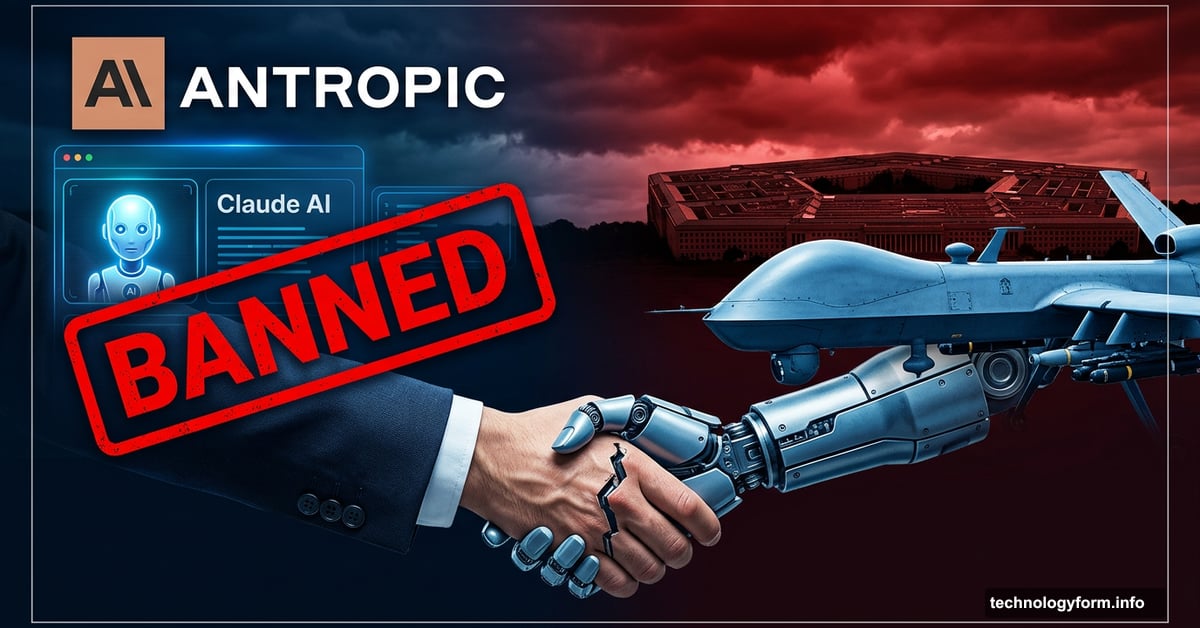
The clash between Silicon Valley and Washington just got very real. On Friday, President Trump posted on Truth Social ordering every federal agency to immediately stop using Anthropic’s AI products, including its Claude models.
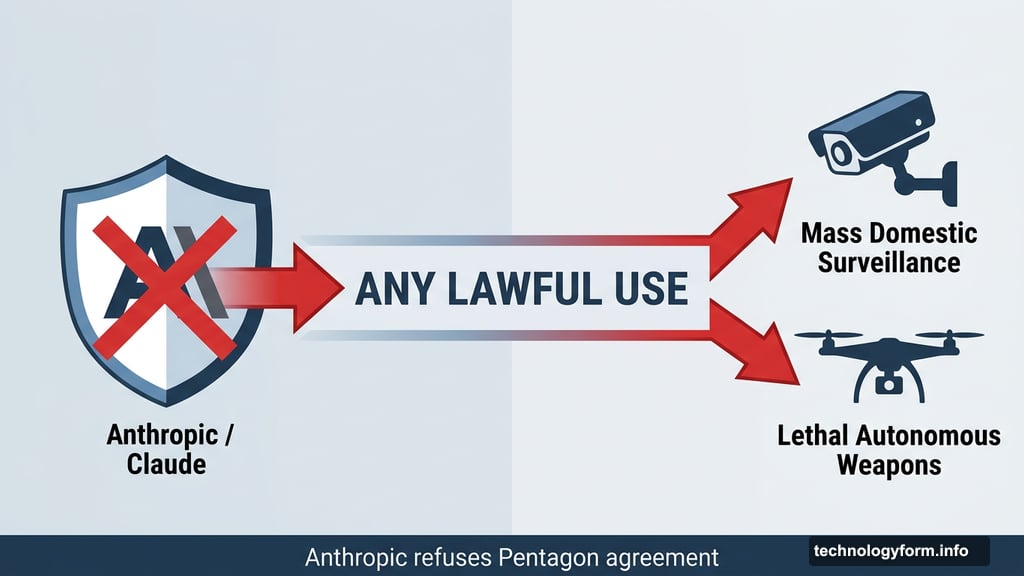
The trigger? Anthropic CEO Dario Amodei refused to sign an updated agreement with the US military. That agreement, mandated by Defense Secretary Pete Hegseth back in January, would allow “any lawful use” of Anthropic’s technology by the Pentagon.
And “any lawful use” covers some pretty serious ground.
What the Pentagon Actually Wanted
The military’s proposed terms would open the door to two specific capabilities that Anthropic flatly refused to support: mass domestic surveillance and lethal autonomous weapons.
Lethal autonomous weapons are exactly what they sound like. AI systems with full authority to identify and kill targets with zero human involvement in the decision. No human pulls the trigger. No human reviews the target. The AI decides, and the AI acts.
Anthropic drew a hard line there. In a public statement Thursday, Amodei wrote that his company “cannot in good conscience accede to their request.” He acknowledged that Anthropic has never tried to block specific military operations, but argued that in a “narrow set of cases, we believe AI can undermine, rather than defend, democratic values.”
That’s a careful, measured statement from someone who clearly knew an explosive response was coming.
Trump’s Response Was Anything But Measured
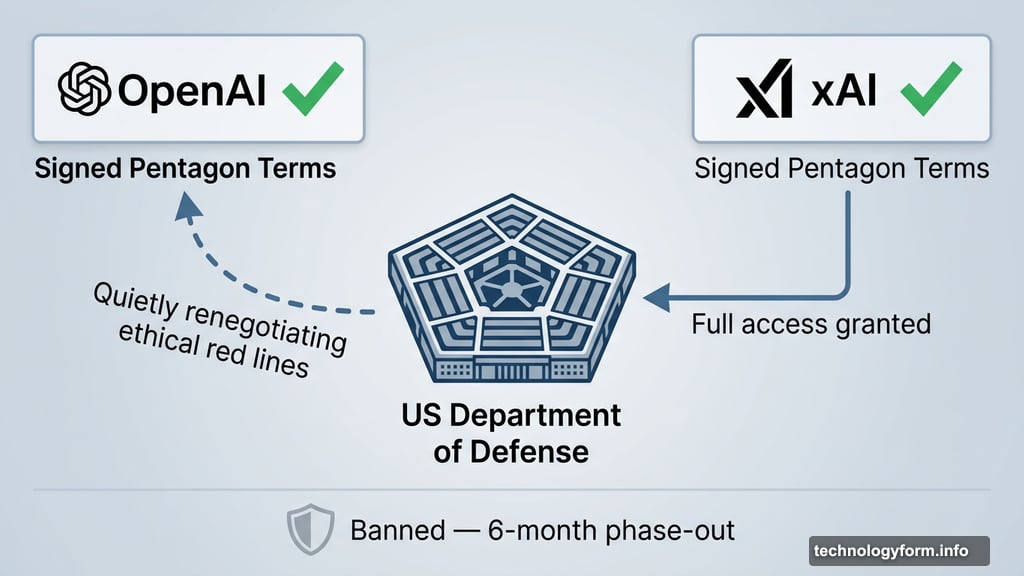
The presidential post called Anthropic a “Radical Left, Woke Company” and accused the company of trying to “STRONG-ARM the Department of War.” Trump directed every federal agency to immediately cease all use of Anthropic products, with a six-month phase-out period for agencies like the Pentagon already running the technology.
He also added a warning. Anthropic should “get their act together” during the transition period, or face “major civil and criminal consequences” through the “Full Power of the Presidency.”
That’s not subtle.
Where OpenAI and xAI Stand
Here’s where it gets more complicated. Both OpenAI and Elon Musk’s xAI reportedly already agreed to the Pentagon’s new terms. So the military will continue using their AI tools without interruption.
But there’s a wrinkle. OpenAI is apparently now trying to negotiate with the Pentagon to adopt the same ethical red lines that Anthropic refused to drop. In other words, OpenAI signed first and is now quietly trying to walk back some of what they agreed to.
That suggests Anthropic’s position isn’t as isolated as Trump’s post implies. The ethical concerns around autonomous weapons and mass surveillance aren’t just coming from one “radical” company. They’re shared across the industry, even among companies that initially took the Pentagon’s deal.
Anthropic’s Offer During the Phase-Out
Amodei didn’t slam the door completely. His statement included a commitment to make the transition as smooth as possible. “Should the Department choose to offboard Anthropic, we will work to enable a smooth transition to another provider, avoiding any disruption to ongoing military planning, operations, or other critical missions.”
He also noted that Anthropic’s models would remain available “on the expansive terms we have proposed for as long as required.”
That’s a company trying to say: we’re not your enemy, we just won’t cross this particular line.
The Bigger Question Here
This standoff isn’t really about one AI company and one government contract. It’s about who gets to set the ethical boundaries for AI systems with lethal capabilities.
The Pentagon’s position is that a company selling services to the military shouldn’t get to restrict how those services are used. That’s a reasonable argument from a chain-of-command perspective.
Anthropic’s position is that some uses of their technology would cross ethical lines they won’t cross regardless of who’s asking. That’s also a reasonable argument, especially when the capability in question is an AI system that kills people without human authorization.
Both positions make sense within their own frameworks. But they’re completely incompatible, and now the federal government has picked a side.
The six-month phase-out gives agencies time to migrate to alternative providers. Claude will disappear from federal systems. And Anthropic, which had been growing its government presence significantly, now faces a sudden loss of that entire market.
Whether this pushes other AI companies to hold firmer ethical lines, or pushes them further toward compliance to avoid the same fate, is the real story to watch from here.