ChatGPT Just Hit 800 Million Weekly Users. Nobody Else Comes Close
ChatGPT crushed every competitor in the AI race. The numbers aren’t even close anymore.
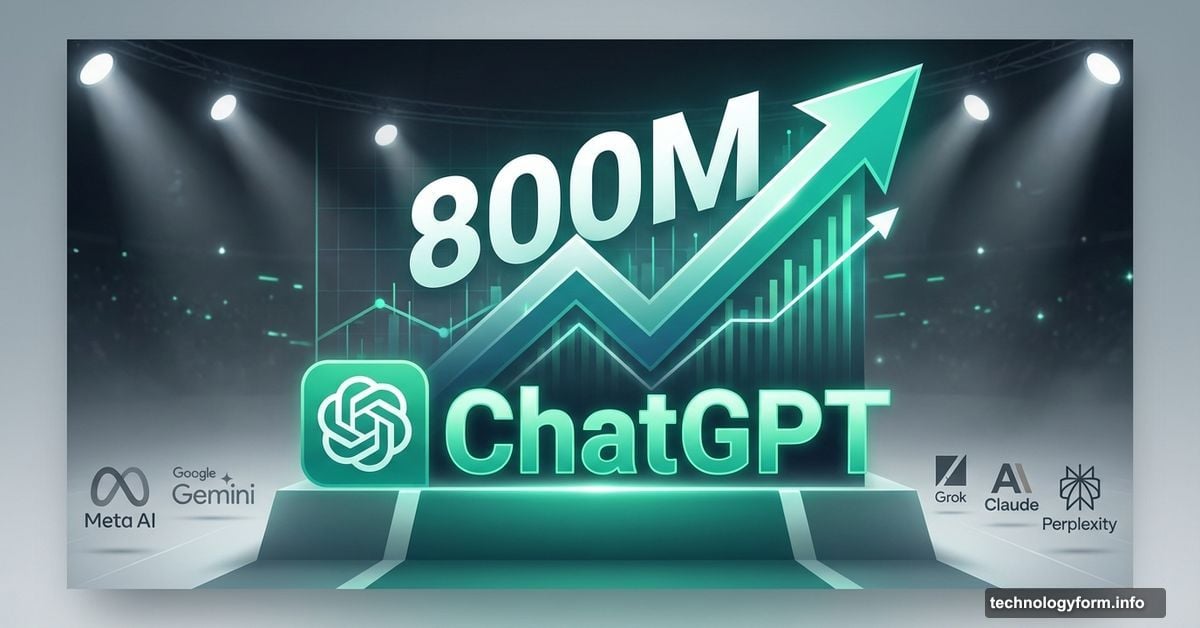
Sam Altman dropped a bombshell at OpenAI’s DevDay conference this week. His AI chatbot now serves 800 million people every single week. That’s not monthly users. That’s weekly.
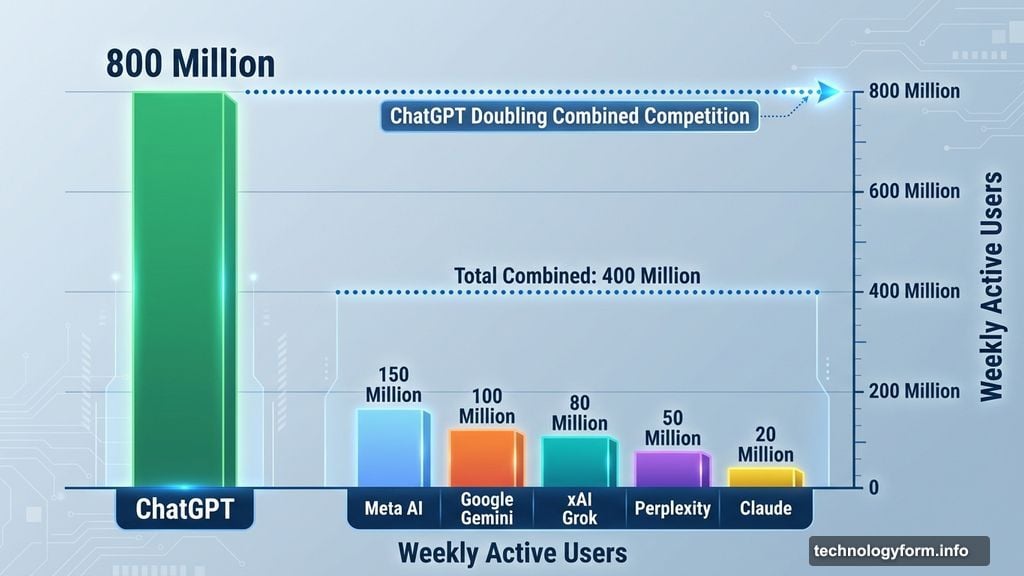
Here’s the crazy part. Add up Meta AI, Google Gemini, xAI’s Grok, Perplexity, and Anthropic’s Claude. All five combined still don’t match ChatGPT’s reach. In fact, ChatGPT has roughly double their total user count.
The Numbers Tell a Brutal Story
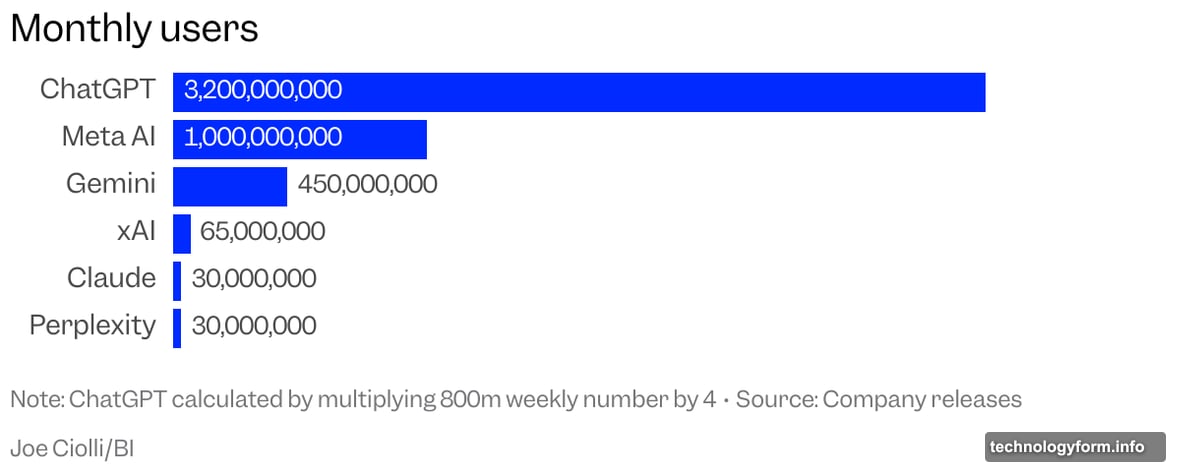
Let’s break down what 800 million weekly users actually means. Multiply that by four weeks, and you get 3.2 billion monthly active users.
Now compare that to the competition. Meta AI, Gemini, Grok, Perplexity, and Claude together reach about 1.575 billion monthly users. Double that figure, and you still fall short of ChatGPT’s reach at 3.15 billion.
The gap is massive. Plus, it keeps growing wider every quarter.
Keep in mind that Meta AI’s numbers include users across Facebook, Instagram, and WhatsApp. So it’s not even a single standalone app competing with ChatGPT. That makes OpenAI’s dominance even more impressive.
Growth That Defies Logic
ChatGPT’s trajectory looks almost unreal when you map it out. The platform more than doubled its user base in just eight months.
Here’s the timeline that should worry every competitor:
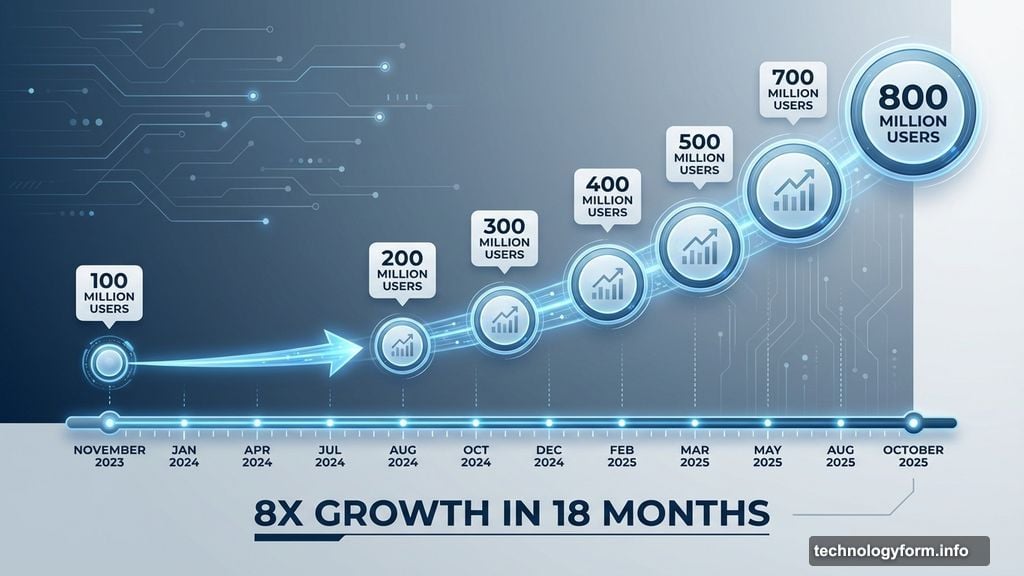
November 2023 marked the first major milestone. Altman announced 100 million weekly active users at OpenAI’s inaugural DevDay. By August 2024, Axios reported the number hit 200 million. Then things accelerated.
December 2024 brought 300 million weekly users. Just two months later in February 2025, Reuters confirmed 400 million. March ended with 500 million users. By August, ChatGPT was targeting 700 million.
Now we’re at 800 million. That’s 8x growth in roughly 18 months.
The Fastest App in History
Remember when ChatGPT launched in late 2022? UBS analysts called it the fastest-growing app in history. It reached 100 million monthly users within weeks of launch.
Most apps take years to hit that milestone. Instagram needed 2.5 years. TikTok took 9 months. ChatGPT did it faster than both.
But here’s what nobody predicted. The growth didn’t slow down after that initial explosion. Instead, it kept accelerating quarter after quarter.
Altman’s comment at DevDay captures the shift perfectly. “AI has gone from something people build and play with to something people build with every day,” he said Monday.
That’s the key insight. ChatGPT moved from novelty to necessity for millions of users. It’s not just tech enthusiasts experimenting anymore. It’s students writing essays, developers debugging code, and marketers drafting campaigns.
What This Means for Competitors
Google, Meta, and Anthropic all poured billions into their AI assistants. Yet none of them cracked even half of ChatGPT’s user base.
Why the gap? OpenAI got there first and set the standard. Users already know how ChatGPT works. Switching costs exist even when competitors offer free alternatives.
Plus, ChatGPT keeps shipping features that matter. Voice mode, image generation, code execution, and now Operator for web tasks. Each update gives existing users reasons to stay and new users reasons to join.
The competition isn’t standing still. Google improved Gemini’s reasoning. Meta pushed AI across billions of social media users. Anthropic built Claude with better safety guardrails.
Still, none of it dented ChatGPT’s momentum. The rich keep getting richer in the AI assistant market.
The Business Model Question
Here’s what’s fascinating. OpenAI doesn’t disclose how many of those 800 million users actually pay for ChatGPT Plus or the new Pro tier.
Free users cost OpenAI money in compute resources. Paid subscribers at $20 or $200 monthly drive revenue. The mix between free and paid determines whether this massive user base translates to sustainable business.
Industry estimates suggest ChatGPT’s paid conversion rate sits between 2-5%. Even at the low end, that’s 16 million paying customers generating $320 million monthly. At the high end, it could be 40 million users and $800 million in monthly revenue.
Those figures would make ChatGPT one of the fastest-growing consumer software products ever. Not just in users, but in actual revenue too.
Where This Goes Next
Altman’s team isn’t slowing down. OpenAI recently launched Operator, a web-browsing assistant that completes tasks for you. They’re rumored to be working on search features that compete directly with Google.
The question isn’t whether ChatGPT will keep growing. It’s whether anything can stop it before it becomes the default AI assistant for a billion people.
Microsoft integration helps. ChatGPT now works inside Office, Windows, and Edge. That puts it in front of enterprise users who might never download a separate app.
Meanwhile, competitors face tough choices. Keep burning cash to compete on features? Pivot to specialized niches? Partner with OpenAI instead of fighting?
The gap between first and second place keeps widening. In tech, that kind of dominance often becomes insurmountable. Network effects kick in. Data advantages compound. Talent flows to the winner.
The Uncomfortable Truth
OpenAI built something competitors can’t easily replicate. Not because the technology is magic. But because 800 million weekly users create a data flywheel that makes ChatGPT better every day.
Every conversation trains the model. Every correction improves responses. Every new feature gets tested at massive scale immediately. That’s an advantage money alone can’t buy.
Google has more money. Meta has more users across their platforms. Anthropic has stronger safety credentials. None of it matters if users keep choosing ChatGPT for their AI tasks.
The AI wars aren’t over. But they’re starting to look less like a battle and more like a coronation. ChatGPT won by showing up first, executing relentlessly, and giving users what they actually wanted.
That’s a hard combination to beat.