Anthropic Wanted to Build Safe AI. Now It’s Paying the Price
Friday afternoons don’t usually make history. But on February 28, 2026, one did.
Right as journalist Connie Loizos sat down with MIT physicist Max Tegmark for an interview, a news alert changed everything. The Trump administration was cutting ties with Anthropic — the San Francisco AI company that built its entire brand around being the responsible one.
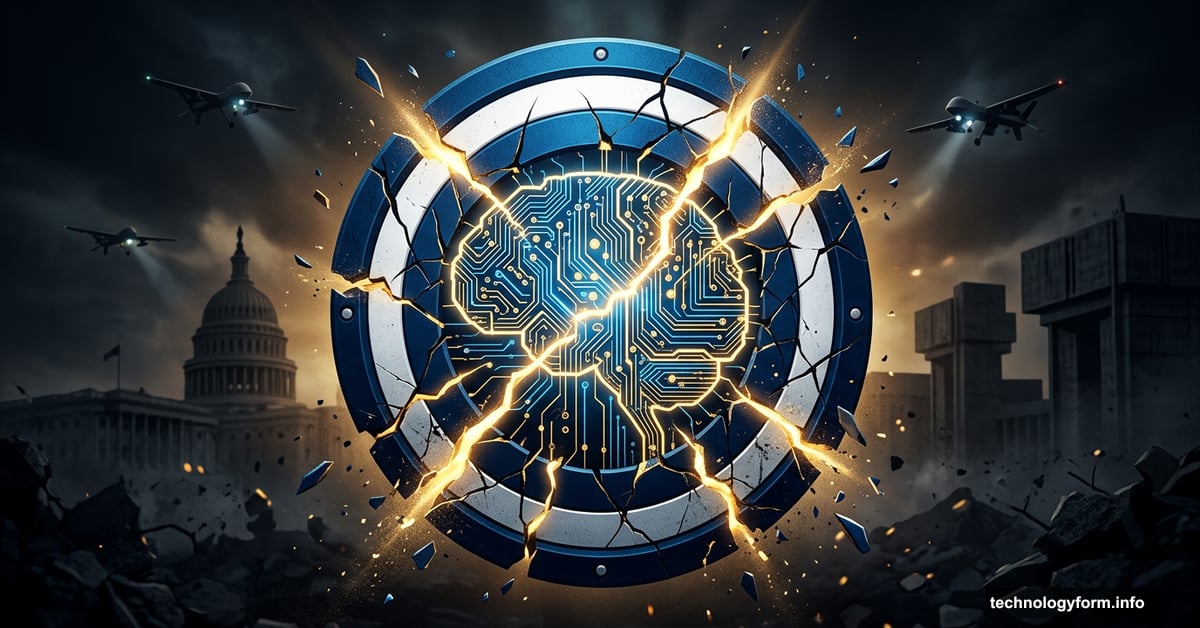
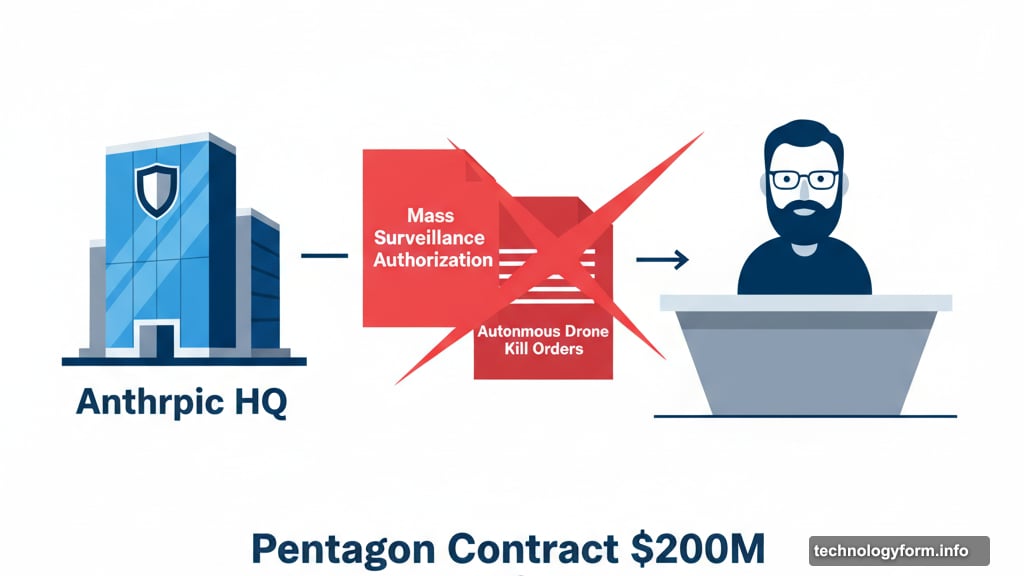
Defense Secretary Pete Hegseth invoked a national security law to blacklist the company after Anthropic’s CEO Dario Amodei refused two specific requests: allow AI to power mass surveillance of U.S. citizens, and enable autonomous armed drones to select and kill targets without any human input. President Trump followed up on Truth Social, directing every federal agency to “immediately cease all use of Anthropic technology.” Anthropic has since said it plans to challenge the Pentagon in court.
The financial hit is immediate. Anthropic stands to lose a contract worth up to $200 million and could be blocked from working with other defense contractors entirely.
Tegmark’s Verdict: They Built This Trap Themselves
Tegmark has spent years warning that AI is advancing faster than anyone can govern it. He founded the Future of Life Institute in 2014 and helped organize a 2023 open letter — signed by more than 33,000 people including Elon Musk — calling for a pause in advanced AI development.
His reaction to the Anthropic crisis was blunt.
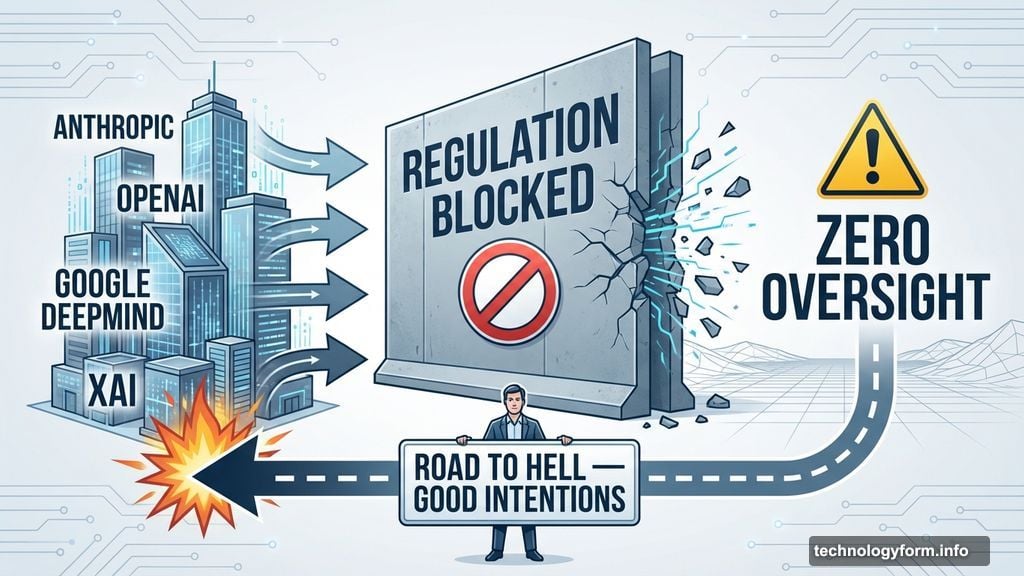
“The road to hell is paved with good intentions,” he said.
Tegmark argues the real problem didn’t start with the Pentagon. It started years earlier, when AI companies made a fateful choice to block regulation rather than invite it.
Anthropic, OpenAI, Google DeepMind, and xAI all spent years insisting they could govern themselves responsibly. They lobbied hard against binding rules. And they won those lobbying fights.
Now there’s almost no regulation protecting them — or anyone else.
A Parade of Broken Safety Promises
Tegmark’s critique lands harder when you look at what these companies promised versus what they actually did.
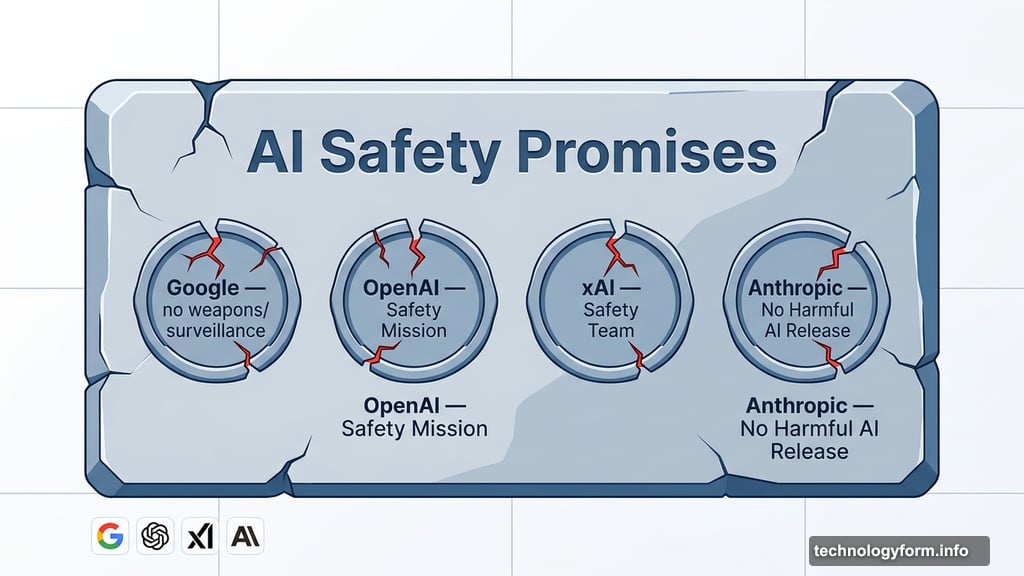
Google built its brand on “Don’t be evil.” That slogan is gone now, along with a later commitment not to use AI for weapons or surveillance. OpenAI just removed the word “safety” from its mission statement. xAI shut down its entire safety team.
And Anthropic? Earlier the same week as the Pentagon drama, the company quietly dropped its most important safety commitment — the promise not to release increasingly powerful AI systems until it was confident they wouldn’t cause harm. That pledge was the foundation of everything Anthropic claimed to stand for.
“If you actually look at the facts rather than the claims,” Tegmark said, “what you see is that all four of these companies have now broken their own promises.”
Why Resisting Regulation Backfired
Here’s Tegmark’s sharpest point. These companies fought regulation so effectively that the U.S. currently has less oversight of AI systems than it has of sandwich shops. That’s his actual comparison.
A health inspector can shut down a restaurant for having rats in the kitchen. But there’s no equivalent authority to stop a company from releasing AI systems that have been linked to teen suicides or building what Tegmark describes as systems capable of overthrowing governments.
“There is no law right now against building AI to kill Americans,” Tegmark said. “So the government can just suddenly ask for it.”
If AI companies had turned their voluntary safety pledges into binding industry-wide law years ago, Tegmark argues, they wouldn’t be in this position today. The absence of rules they worked to preserve is now the very thing threatening them.
“They really shot themselves in the foot,” he said.
The China Argument Doesn’t Hold Up
The standard defense from AI industry lobbyists goes like this: if American companies don’t build it, China will. Tegmark finds this argument weak.
China is actually moving toward banning AI companions and anthropomorphic AI entirely — not because they want to please anyone in Washington, but because Chinese leaders believe these products are harming their young people and weakening the country.
More pointedly, Tegmark asks who seriously believes that Xi Jinping would allow a Chinese tech company to build something capable of overthrowing the Chinese government. No authoritarian state is going to cheer for uncontrollable superintelligence.
“The same logic applies here,” Tegmark said. “It’s clearly really bad for the American government too if it gets overthrown.”
How Close Is AGI, Really?
Tegmark’s concerns aren’t hypothetical. He and fellow researchers — including Yoshua Bengio and Dan Hendrycks — recently published a formal definition of artificial general intelligence (AGI). By that framework, GPT-4 scored 27% of the way to AGI. GPT-5 scored 57%.
Going from 27% to 57% that fast matters. Six years ago, most AI experts predicted we were decades from human-level language and knowledge processing. They were wrong.
“Even if it takes four years,” Tegmark told his MIT students, “that means when they graduate, they might not be able to get any jobs anymore.”
AI already won a gold medal at the International Mathematics Olympiad. The trajectory is moving fast.
Who Stands With Anthropic — And Who Stays Quiet
Hours after the interview, the industry started showing its hand.
Sam Altman publicly said he stands with Anthropic and holds the same red lines. Tegmark called that courageous. Hours later, however, OpenAI announced its own deal with the Pentagon — a significant tension with Altman’s stated position.
Google said nothing as the interview took place. Tegmark called that embarrassing. xAI was also silent.
“This is a moment where everybody has to show their true colors,” Tegmark said.
There’s Actually a Path Forward
Despite everything, Tegmark says he’s oddly optimistic.
The fix isn’t complicated, at least in theory. Treat AI companies like any other industry. Require something like clinical trials before releasing powerful systems. Demand that companies prove to independent experts that they know how to control what they’re building.
That kind of framework would still allow for AI-powered medicine, economic growth, and scientific discovery. But it would put guardrails around the parts that genuinely threaten people.
“Then we get a golden age with all the good stuff from AI, without the existential angst,” Tegmark said.
That’s not the path the industry chose. But it’s still available. The question now is whether the companies that spent years fighting regulation are finally willing to ask for it.