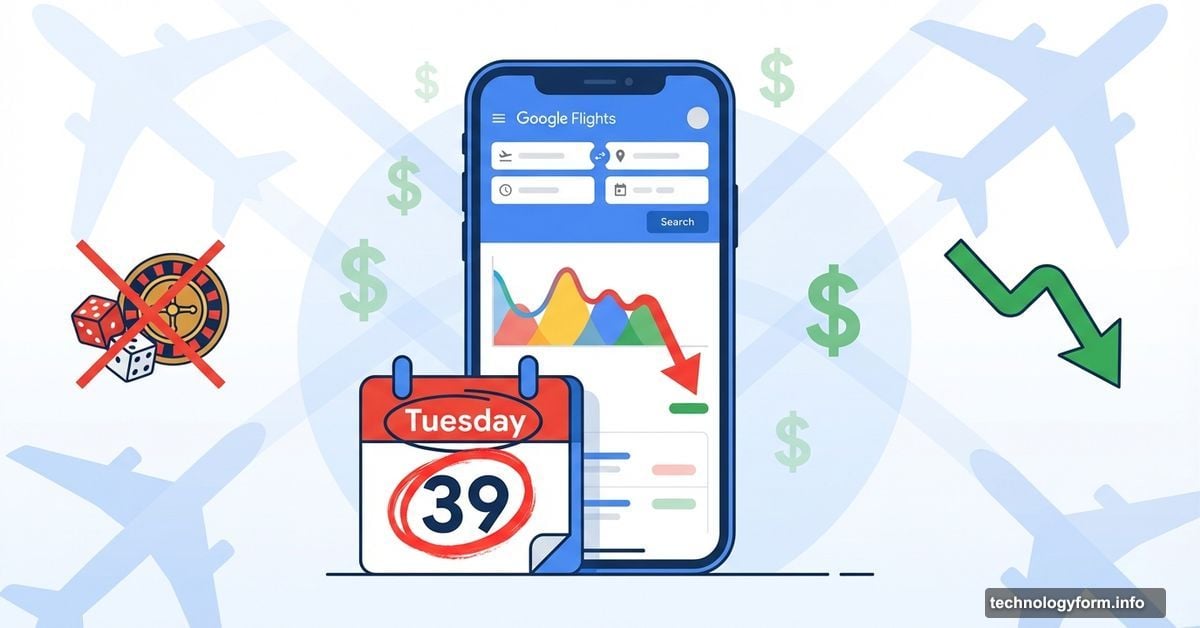
Google Flights Just Killed Your Flight Price Guesswork
Buying plane tickets shouldn’t feel like gambling. Yet most of us refresh flight prices obsessively, second-guessing whether to book now or wait another week.
Google Flights analyzed years of booking data to find the exact patterns. The results reveal precisely when prices drop and when you’re wasting money by waiting. No more playing roulette with your vacation budget.
Tuesday Wins Every Single Time
Flying midweek saves serious cash. Tuesday flights cost about 13% less than weekend departures.
The pattern holds across domestic routes. Monday and Wednesday also deliver solid savings. But Tuesday consistently offers the lowest fares.
Weekend flying costs you extra. Sunday tickets hit peak prices. Friday and Saturday aren’t much better. So if your schedule allows flexibility, those midweek flights are worth the slight inconvenience.
Layovers Cut Costs 22%
Direct flights feel luxurious. They also drain your wallet fast.
Adding one connection drops ticket prices by 22% on average. That’s substantial savings for tolerating a few extra hours in airports.
The math gets interesting for longer trips. A $500 nonstop flight becomes $390 with one layover. On a family vacation for four people, that’s $440 saved—enough to cover several nice meals at your destination.
Booking Day Myths Are Mostly Wrong

You’ve probably heard Tuesday is the magic booking day. The data says otherwise.
Tuesday bookings cost just 1.3% less than Sunday bookings. That’s barely noticeable. The difference amounts to a few dollars on most routes.
So stop obsessing over which day to click “purchase.” Focus instead on how far in advance you book. That timing matters significantly more.
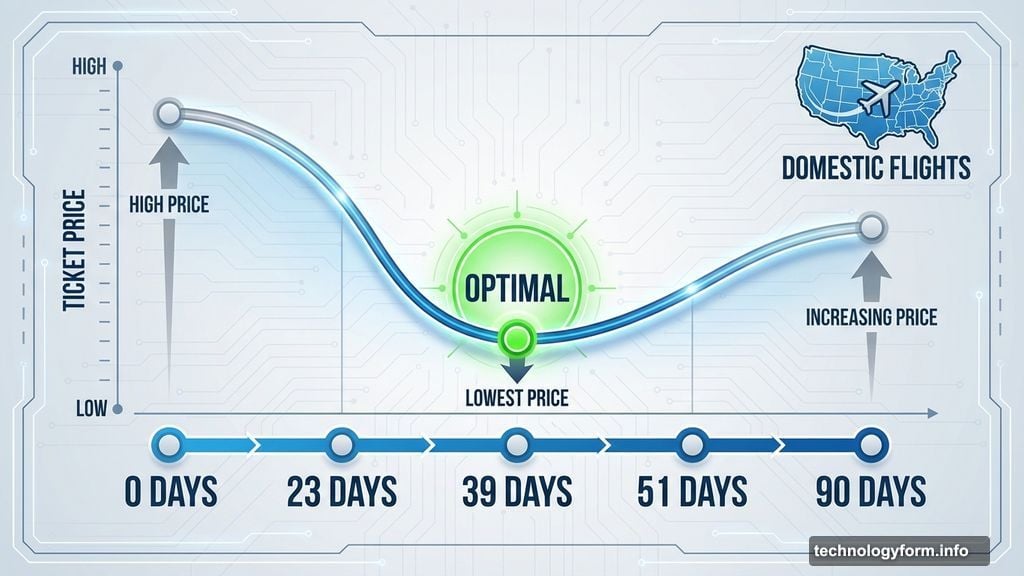
Domestic Sweet Spot: 39 Days Out
Prices follow predictable curves. For US flights, the cheapest window opens 23 to 51 days before departure.
Book exactly 39 days early for optimal savings. Airlines adjust pricing algorithms as departure approaches. Wait too long and you’ll pay premium rates.
This pattern applies year-round. Whether you’re flying for business or pleasure, that 39-day mark consistently delivers lowest fares.
International Flights Need Earlier Booking
Cross-border trips require different strategy. International prices bottom out 49 or more days before departure.
Here’s the catch: prices rarely drop after that point. They typically climb steadily as departure nears. So the earlier you book international flights, the better.
Google’s data shows no meaningful price drops closer to departure date. Unlike domestic routes where last-minute deals occasionally surface, international fares just keep rising.
Holiday Flight Timing Gets Specific

Each holiday season has its own booking window. Miss it and you’ll overpay.
Thanksgiving flights: Book 35 days out (late September or early October). Prices stay reasonable between 24 and 59 days before departure.
Christmas travel: Lock in fares 51 days early (mid-October to mid-November). The 32 to 73 day window offers best rates.
Spring break: Reserve 43 days ahead for March/April trips. The 28 to 61 day range works well.
Summer vacation: Book just 21 days early for July/August flights. The 14 to 43 day window provides cheapest options.
These aren’t rough estimates. They’re based on millions of actual bookings showing when travelers paid least.
Europe Requires Maximum Lead Time
Planning a European vacation? Book as early as humanly possible.
European routes offer lowest prices 48+ days before departure. Unlike domestic flights where waiting sometimes pays off, transatlantic fares only climb as dates approach.
Airlines know Europe trips get planned months ahead. So they price accordingly. That dream Paris vacation costs significantly more if you book last-minute.
Mexico and Caribbean Break the Rules
These destinations buck the international trend. Prices actually follow patterns closer to domestic flights.
Book Caribbean or Mexico trips 50 days out on average. The optimal window runs 26 to 79 days before departure.
Why the difference? These routes get heavy traffic year-round. Airlines adjust pricing more dynamically based on demand. So you gain flexibility unavailable on European routes.
2025 Travel Trends Shift Away from Major Cities
Google’s search data reveals surprising destination changes. Midsize cities dominate Thanksgiving searches.
Columbia, South Carolina and Bozeman, Montana outpaced traditional hubs. Detroit and Omaha also ranked high. Travelers appear tired of crowded airports and tourist traps.
Christmas searches tell different story. Beach destinations crush snowy getaways. Rio de Janeiro, St. Lucia, and Marrakech top the list. Americans increasingly swap winter holidays for tropical escapes.
The Real Value Here
These patterns aren’t predictions. They’re historical facts showing what actually happened across millions of bookings.
You can’t control airline pricing algorithms. But you can stop guessing and start using data. Book domestic flights 39 days out. Reserve international trips even earlier. Fly Tuesday when possible.
Most importantly, stop refreshing prices obsessively. The data already shows when deals appear. Trust the numbers and save yourself the stress.
Your vacation budget will thank you.