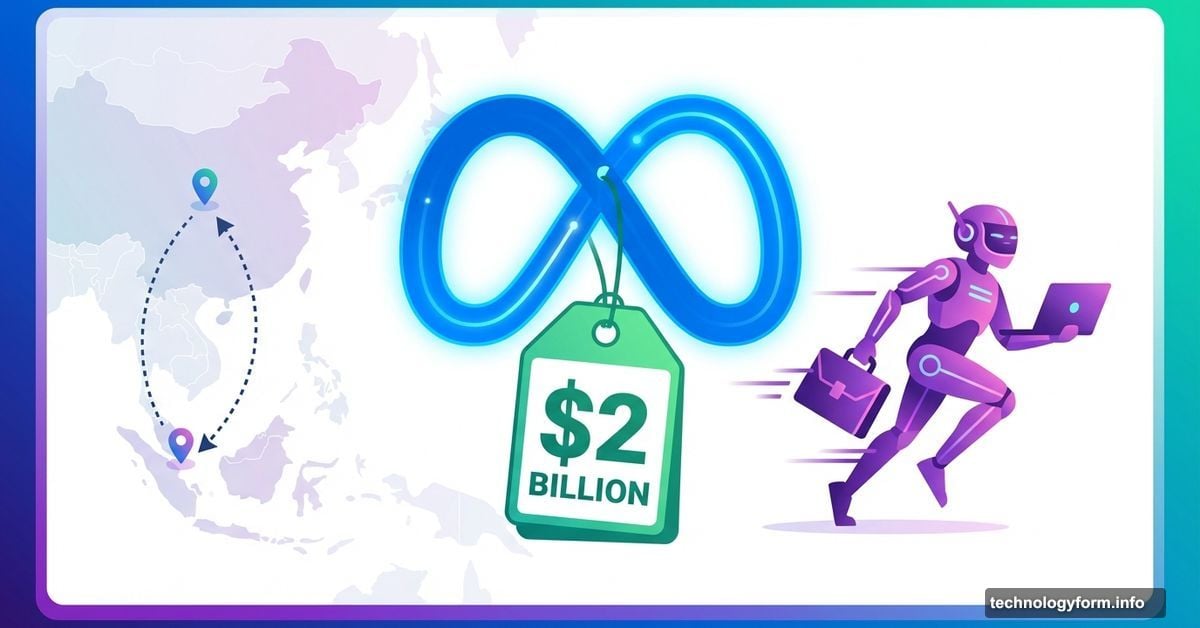
Meta Just Spent $2 Billion on an AI Agent Startup Nobody Saw Coming
Meta dropped over $2 billion on Manus, an AI automation startup that most people haven’t heard of yet. But this deal signals something bigger than just another acquisition.
The purchase represents one of the largest investments in China’s AI ecosystem so far. Plus, it shows Meta’s betting big on AI agents that actually do work rather than just chat. Let’s unpack why this matters and what Manus actually does.
What Manus Actually Does
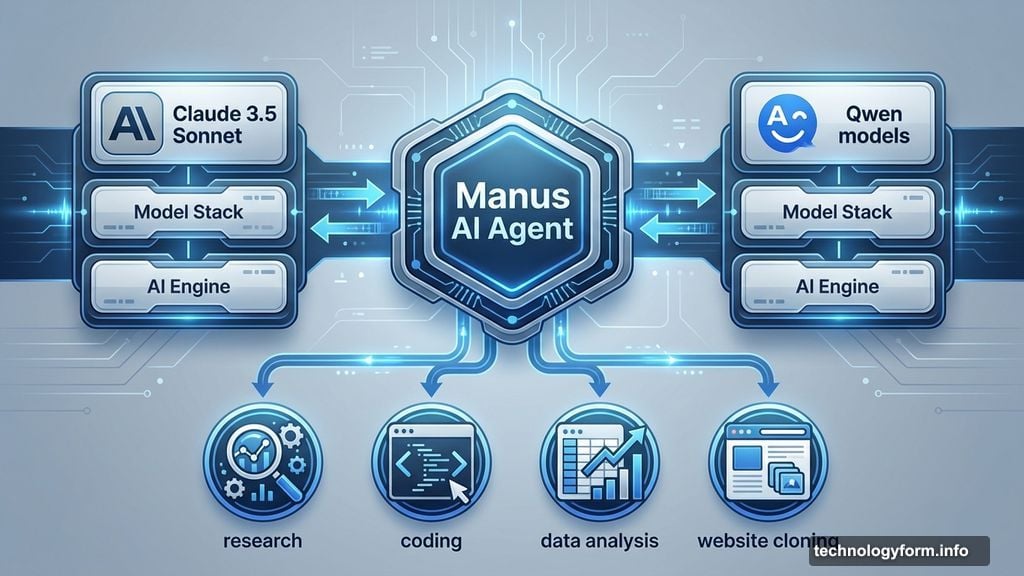
Manus builds AI agents that handle real tasks autonomously. Think market research, coding, data analysis, and even cloning entire websites.
The company launched in March 2025 as “Butterfly Effect.” Instead of just generating ideas or having conversations, Manus agents complete entire workflows. They research topics, write code, analyze sales data, and build websites from scratch.
Here’s what sets it apart. Manus doesn’t rely on a single AI model. Instead, it pulls from multiple third-party systems. That includes Anthropic’s Claude 3.5 Sonnet and several versions of Alibaba’s Qwen models.
So the agents can switch between different AI capabilities depending on the task. Need deep reasoning? Claude handles that. Need fast processing? Qwen steps in. This multi-model approach gives Manus more flexibility than single-model competitors.
The Revenue Numbers Tell a Story
Manus claims over $100 million in annualized revenue just eight months after launch. That’s not typical for a startup this young.
Moreover, the company says millions of users and businesses already rely on it daily. Those numbers caught Meta’s attention. Fast growth plus proven revenue makes any acquisition less risky.
But there’s skepticism too. One critic called Manus “a product devilishly optimized for influencers.” The implication? Maybe the hype exceeds the actual utility. Influencers love showcasing flashy AI tools. That doesn’t always mean those tools solve real problems at scale.
Still, Meta clearly sees enough value to drop $2 billion. That suggests confidence in Manus’s underlying technology, not just its marketing buzz.
The China Connection Changes Everything
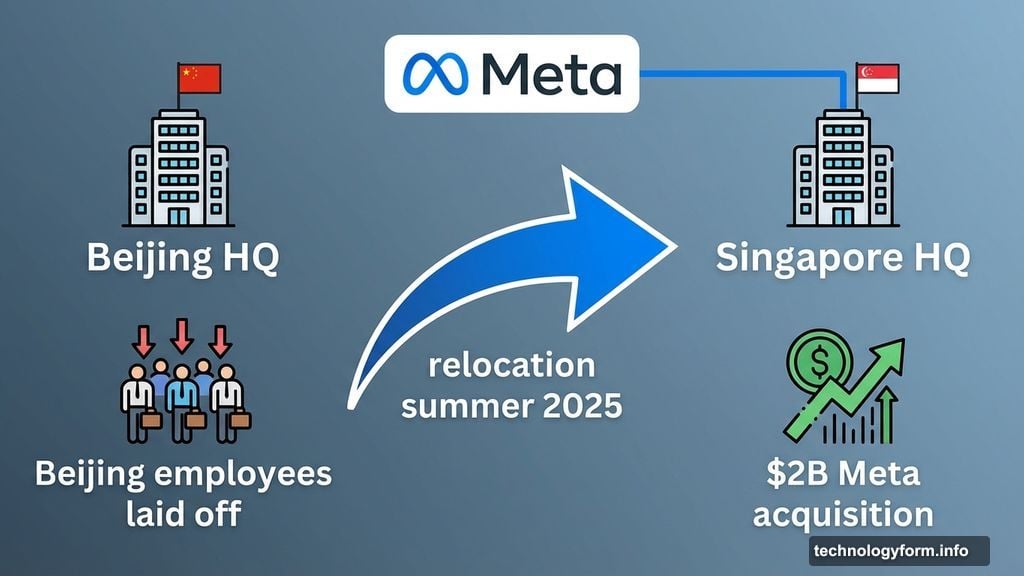
Manus started in China’s rapidly evolving AI ecosystem. However, it moved headquarters to Singapore this summer after laying off most Beijing employees.
Why the move? Global expansion requires distance from Chinese regulations and geopolitical tensions. Singapore offers a neutral base with strong tech infrastructure and international connections.
The timing matters too. Manus emerged shortly after DeepSeek, another Chinese AI startup, made waves. China’s AI scene is producing competitive alternatives to Western models faster than many expected.
Meta’s acquisition brings Chinese-developed AI technology directly into its ecosystem. That’s significant. It shows Western tech giants recognize China’s AI capabilities and want access to them, even as US-China tensions persist.
Plus, this deal sidesteps some regulatory hurdles. Instead of partnering with a Chinese company, Meta now owns a Singapore-based firm with Chinese origins. The distinction matters for compliance and political optics.
What Meta Gets From This Deal
Meta gains working AI agents that already have market traction. That’s more valuable than building from scratch.
The company has been investing heavily in AI across all its platforms. Instagram, Facebook, WhatsApp, and Reality Labs all need better automation. Manus’s technology could power smarter assistants, automated content tools, and business workflow automation across Meta’s ecosystem.
Consider the possibilities. Small businesses on Instagram could use Manus-powered agents to analyze sales data or build simple websites. WhatsApp Business could offer automated customer research. Facebook Marketplace could provide sellers with market analysis tools.
Moreover, Meta gets access to Manus’s multi-model approach. That’s useful. Instead of depending solely on Llama, Meta can integrate the best models for each specific task. Flexibility beats lock-in.
The Integration Question Nobody Answers
Here’s what remains unclear: How will Manus integrate into Meta’s existing products?
CEO Xiao Hong stated that joining Meta “allows us to build on a stronger, more sustainable foundation without changing how Manus works or how decisions are made.” That sounds reassuring. But acquisitions rarely leave the acquired company completely unchanged.
Meta typically integrates acquisitions deeply into its infrastructure. Instagram became part of Meta’s ad system. WhatsApp gained Meta’s security and scaling resources. Manus will likely follow a similar path.
The real question is autonomy. Will Manus continue operating independently, or will Meta absorb it into broader AI initiatives? The answer determines whether Manus maintains its startup agility or becomes just another Meta division.
Competition Heats Up in AI Agents
This acquisition intensifies the AI agent arms race. Every major tech company is now building or buying agent technology.
Google has its AI agents in Workspace. Microsoft integrated agents into Copilot. Anthropic positions Claude as an agentic AI. Now Meta owns Manus. The pattern is clear: conversational AI alone isn’t enough. Companies need AI that takes action.
The difference matters for users. Chatbots answer questions. Agents complete tasks. That shift from passive assistance to active automation represents the next phase of practical AI.
However, agent reliability remains a challenge. Autonomous AI makes mistakes. It misunderstands context. It sometimes produces incorrect outputs. The more complex the task, the higher the failure risk.
Meta’s betting that Manus has solved enough reliability problems to deploy agent technology at scale. We’ll see if that confidence is warranted.
The $2 Billion Question
Is Manus worth $2 billion? That depends on execution.
If Meta successfully integrates Manus agents across its platforms, the technology could drive significant value. Billions of users means even small efficiency gains create enormous impact. Automation tools that help businesses on Instagram or Facebook could generate substantial revenue.
But if integration struggles, or if Manus agents don’t live up to their promises, Meta overpaid. The company has a mixed track record with acquisitions. Instagram and WhatsApp succeeded brilliantly. Oculus and Meta Quest have been more challenging.
The real test comes in 12-18 months. Watch for Manus-powered features appearing in Meta products. If you start seeing AI agents handling tasks across Instagram, WhatsApp, and Facebook, the acquisition is working. If Manus quietly disappears into Meta’s infrastructure without visible impact, it failed.
For now, Meta made a big bet on AI agents built from China’s ecosystem. The outcome will reveal whether AI task automation is ready for mainstream deployment or still needs more development. Either way, Meta’s $2 billion says the company believes autonomous AI agents are the next critical frontier.