Pinterest Claims It Beats ChatGPT on Search Volume. But Revenue Still Tanked
Pinterest just posted awful earnings. So its CEO tried spinning a surprising angle.
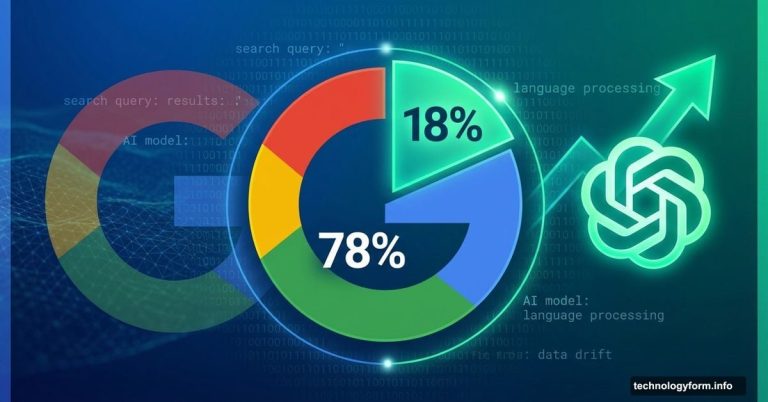
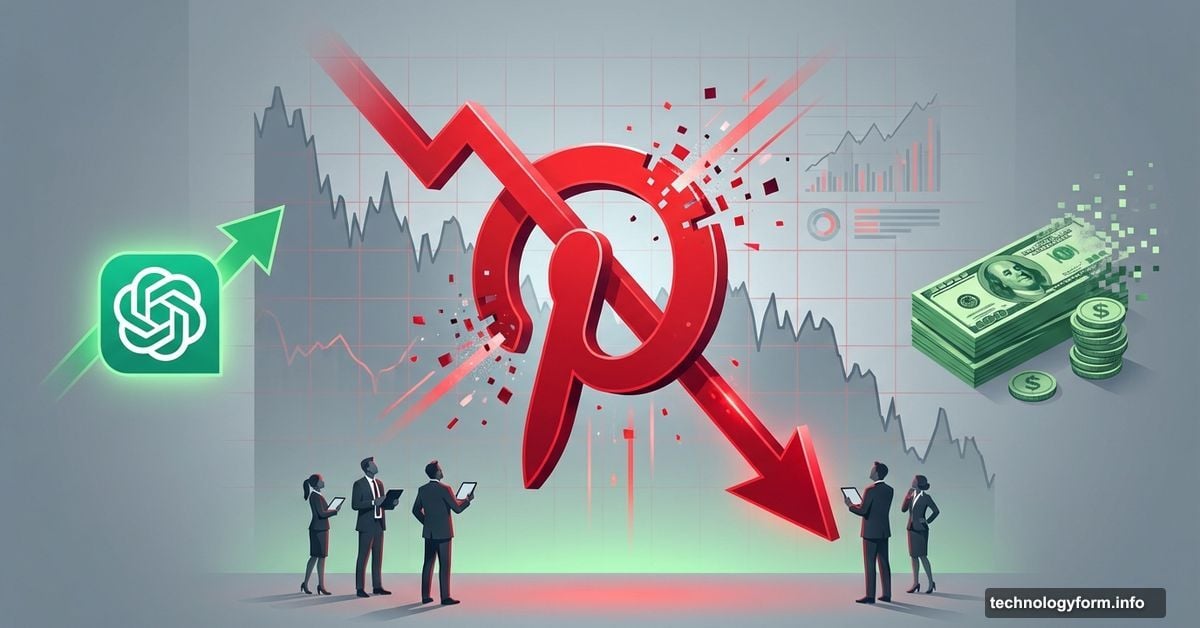
The company missed revenue projections, earnings per share targets, and gave weak guidance for next quarter. Shares dropped 20% in after-hours trading. But CEO Bill Ready wants you to know Pinterest handles more searches than ChatGPT.
That’s the narrative Pinterest pushed after disappointing Wall Street. Let’s examine why this comparison matters less than the company hopes.
The Numbers Tell a Tough Story
Pinterest reported $1.32 billion in fourth-quarter revenue. Wall Street expected $1.33 billion. Not a huge miss, but still a miss.
Earnings per share came in at 67 cents. Analysts projected 69 cents. Again, close but not good enough.
Worse still, Pinterest forecast first-quarter 2026 sales between $951 million and $971 million. The Street wanted $980 million. So the company expects continued weakness ahead.
Two factors drove the shortfall. First, large advertisers pulled back spending, especially in Europe. Second, a furniture tariff implemented in October hammered Pinterest’s home category. Plus, Pinterest warned these trends could worsen in the coming quarter.
Shares plunged 20% after hours. Investors clearly weren’t impressed.
Users Are Growing But Revenue Isn’t
Here’s the weird part. Pinterest actually beat user growth expectations.
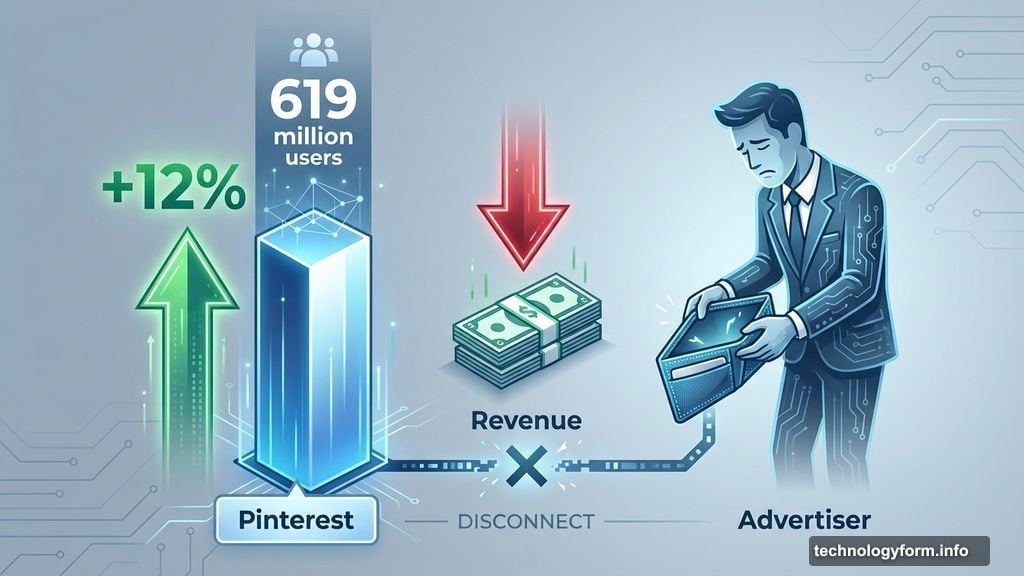
Monthly active users hit 619 million, up 12% year-over-year. Wall Street expected only 613 million users. So more people are using Pinterest than anticipated.
Yet the company still missed revenue targets. That disconnect reveals Pinterest’s fundamental problem. Having users doesn’t automatically generate ad dollars.
Moreover, Pinterest has struggled with this issue for years. People love browsing the platform for inspiration and ideas. But they don’t necessarily buy products through Pinterest. So advertisers remain skeptical about spending big on the platform.
The ChatGPT Comparison Feels Desperate
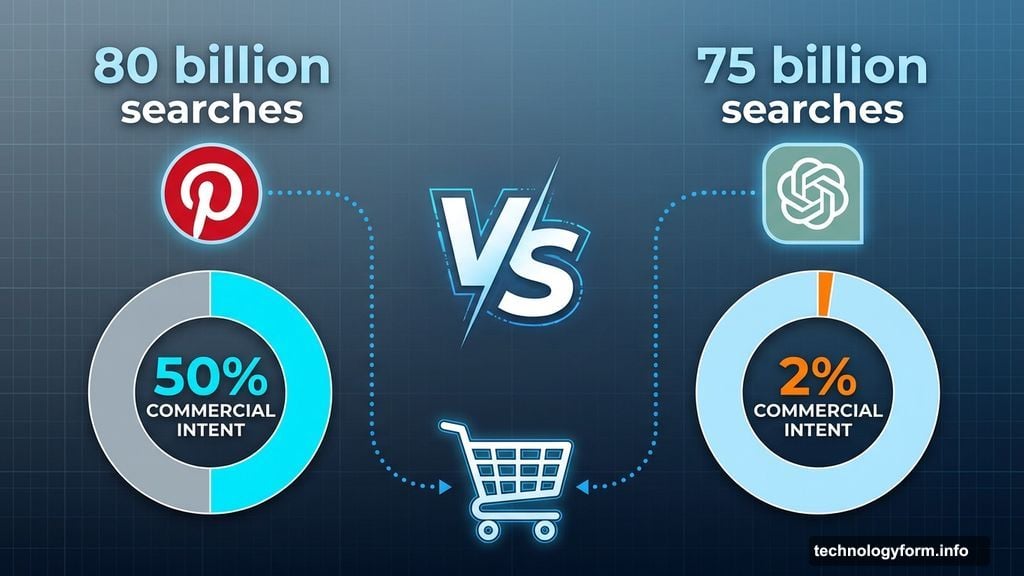
Ready claimed Pinterest sees 80 billion monthly searches compared to ChatGPT’s 75 billion. He also noted Pinterest generates 1.7 billion monthly clicks.
Furthermore, Ready emphasized that over half of Pinterest searches are commercial in nature. He estimated only 2% of ChatGPT searches have commercial intent.
That’s technically interesting. But it sidesteps the core issue. Pinterest can’t convert those commercial searches into consistent ad revenue growth.
Plus, comparing Pinterest to ChatGPT feels like strategic misdirection. ChatGPT isn’t primarily a shopping platform. It’s a general-purpose AI assistant. So of course most ChatGPT searches aren’t commercial.
Meanwhile, Pinterest was built specifically for product discovery and inspiration. If it can’t monetize commercial intent better than a chatbot designed for completely different purposes, that’s actually concerning.
The AI Shopping Challenge Gets Real
Pinterest faces a genuine threat from AI-powered shopping. Chatbots can now recommend products directly in conversation. That creates clearer purchase intent than browsing Pinterest boards.
Ready acknowledged this shift. He pointed to Pinterest’s visual search, discovery, and personalization features as differentiators. He claimed Pinterest helps users “complete commercial journeys without typing a single prompt.”
Additionally, Ready mentioned Pinterest’s partnership with Amazon improved checkout flows. He argued users aren’t yet comfortable letting AI make purchases autonomously. But he insisted Pinterest would be ready if that changes.
Here’s the problem with that logic. Pinterest is betting users prefer passive discovery over active search. Yet AI chatbots are getting better at visual recommendations too. Google’s Gemini and OpenAI’s GPT-4 can analyze images and suggest products.
So Pinterest’s visual advantage could shrink rapidly. And if AI agents do start making purchases on behalf of users, Pinterest might not be the platform they choose.
What Pinterest Really Needs
Pinterest needs to prove it can convert inspiration into transactions at scale. Looking at pretty pictures isn’t enough. Advertisers want clear ROI.
The company has made progress with its Amazon integration. Direct checkout matters. But Pinterest needs more partnerships and better conversion tracking to convince advertisers the platform drives sales.
Furthermore, Pinterest should lean harder into its unique strength. No other major platform focuses purely on positive, aspirational content. That’s valuable in an era of toxic social media. But Pinterest needs to translate that emotional connection into shopping behavior.
Finally, Pinterest must nail AI integration without losing what makes the platform special. Users come to Pinterest to explore possibilities, not get algorithmic recommendations shoved at them. The company needs to enhance discovery without making the experience feel pushy or commercial.
The Market Sees Through the Spin
Pinterest tried deflecting from poor earnings by claiming victory in search volume. The market wasn’t buying it.
Revenue matters more than search counts. Profit matters more than user growth. And guidance matters most of all. Pinterest whiffed on all three.
So comparing Pinterest to ChatGPT feels like changing the subject. It’s an interesting data point. But it doesn’t fix the fundamental challenge of monetizing user engagement.
Pinterest remains stuck in the same trap it’s faced for years. Lots of users. Lots of activity. Not enough revenue growth to justify the valuation. Until that changes, no amount of search volume comparisons will satisfy investors.