Adobe Acrobat? Forget It. These AI Agents Just Rebuilt Your Website While You Slept
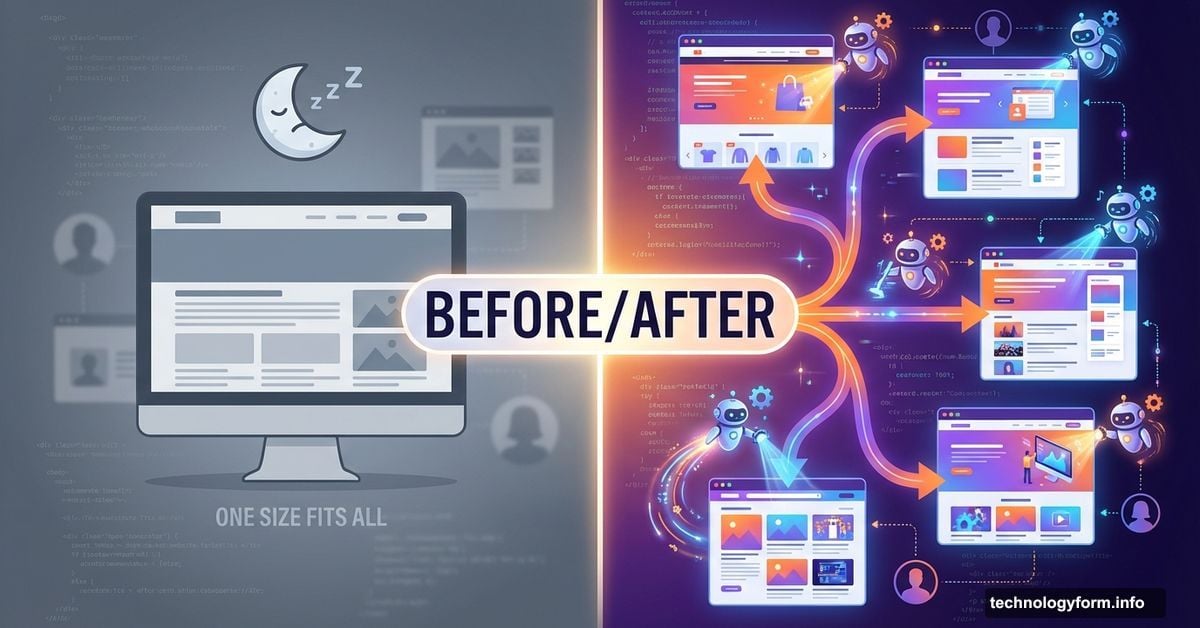
Your website still looks the same to everyone. Meanwhile, your ads already know if someone’s a first-time visitor or a returning customer ready to buy.
That disconnect costs real money. Fibr AI just raised $5.7 million from Accel to fix it using autonomous AI agents that personalize every page for every visitor. No agency. No engineering team. Just software that rewrites your site thousands of times per day.
The Problem: Your Ads Are Smart, Your Website Is Dumb
Modern advertising targets individuals with scary precision. You search for running shoes once. Then shoe ads follow you everywhere for weeks.
But click that ad? You land on the same generic homepage as everyone else. The retailer spent money targeting you specifically. Then they throw you into the same experience as someone who’s never heard of their brand.
Large companies traditionally filled this gap with personalization software, engineering teams, and marketing agencies. That model moves slowly. It’s expensive. Plus, most teams can only run a handful of website experiments each year.
Fibr AI argues that approach no longer works. Instead, they deploy autonomous AI agents that continuously test variations and optimize pages in real time.
Agents Replace Agencies
“We are the software, and the agency is the workforce of agents we are deploying,” CEO Ankur Goyal told TechCrunch.
Traditional personalization requires coordination between multiple teams. Marketing wants to test new copy. Engineering needs to implement changes. Agencies manage the process. Each experiment takes weeks.
Fibr AI’s agents skip all that. They connect to your advertising platforms, analytics tools, and customer data systems. Then they figure out what each visitor wants and adjust the page accordingly.
The system runs thousands of experiments in parallel. Most website teams manage maybe 20-30 tests per year. Fibr AI’s agents can run that many in a single day.
Banks and Healthcare Providers Are Already Onboard
Adoption started slowly. Founded in early 2023, Fibr AI had just one or two customers for most of their first two years.
That changed last year. Large U.S. companies, including banks and healthcare providers, started signing on. The startup now serves 12 enterprise customers.
“We are an infra afterthought layer,” Goyal explained. “Once it’s set up, nobody wants to think about it again.”
That positioning led to three- to five-year contracts with enterprises. Companies treat website infrastructure like plumbing. Set it up right once. Then forget about it.
For Accel partner Prayank Swaroop, those early enterprise wins validated the bet. “These are regulated, conservative industries,” he said. “When they start saying, ‘We need this, and we’re willing to pay for it,’ that’s when we feel confident doubling down.”
Accel led the $5.7 million seed round after initially investing $1.8 million in 2024. WillowTree Ventures and MVP Ventures also participated. Fortune 100 operators joined as angel investors.
How the AI Agents Actually Work
Fibr AI operates as a layer on top of your existing website. You don’t rebuild anything. The agents sit between your site and your visitors.
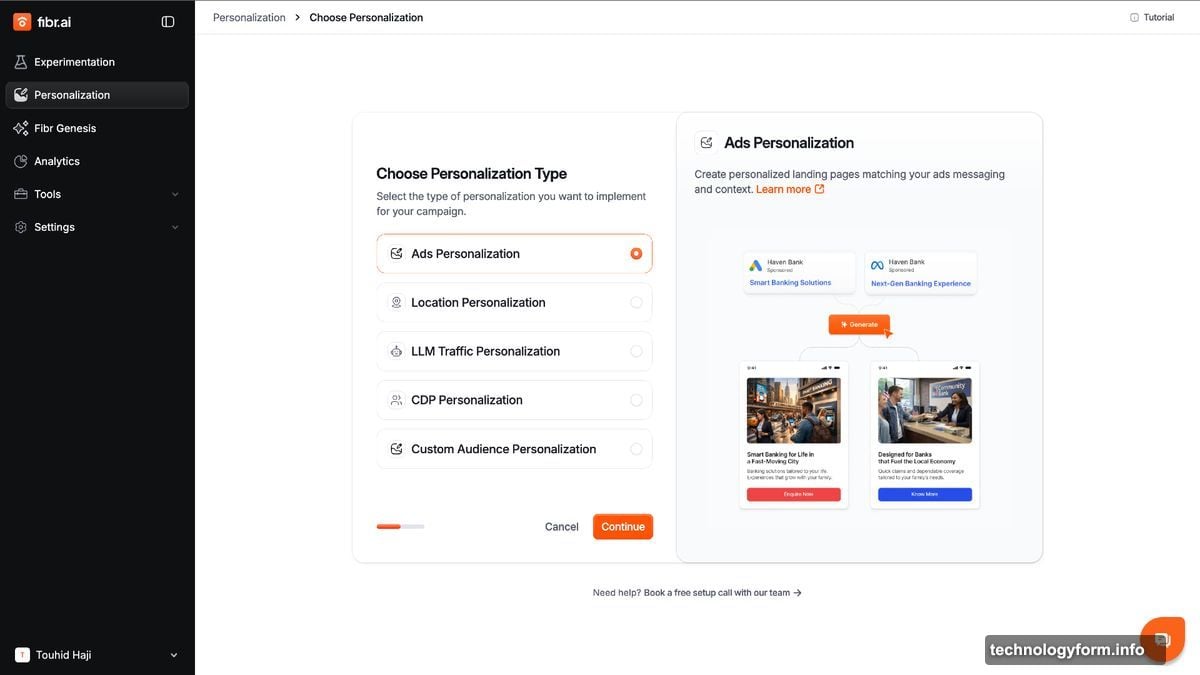
When someone clicks an ad, Fibr AI’s agents analyze where they came from, what ad they clicked, and what customer data exists about them. Then the agents assemble a customized version of that page.
The system treats each URL as a learning system rather than a fixed page. Copy changes. Images swap. Layouts adjust. Everything optimizes continuously based on what’s converting.
Instead of manually configured rules or sequential A/B tests, the platform runs massive numbers of micro-experiments simultaneously. As traffic flows in from different channels, the agents learn and update experiences automatically.
ChatGPT Changes Everything (Again)
Most of Fibr AI’s business today focuses on personalizing experiences for human visitors. But both the company and Accel see a bigger shift coming.
Users increasingly research products using ChatGPT and other AI chatbots before visiting websites. They ask questions. Compare options. Shortlist candidates. Then they land on a site with specific intent.
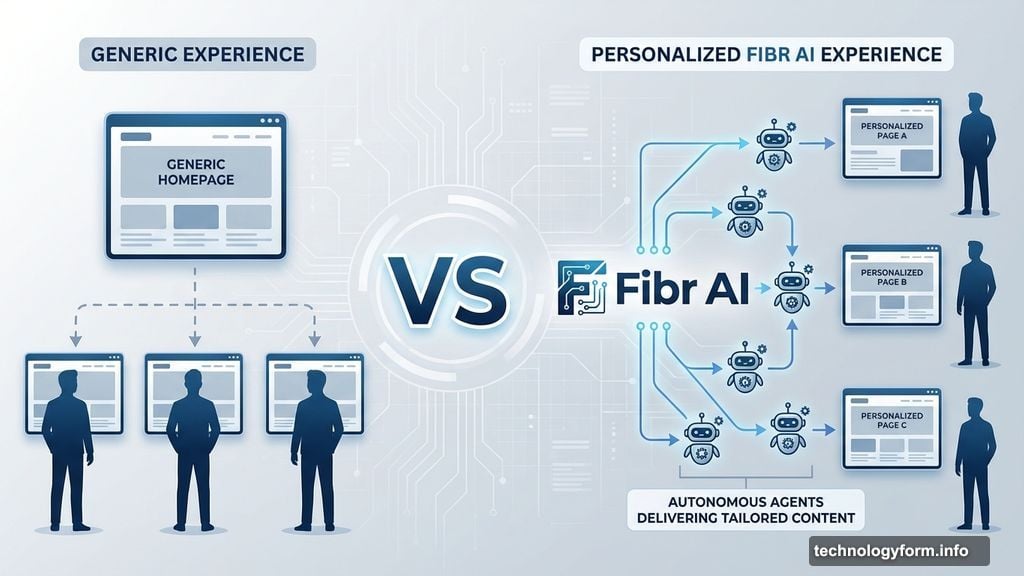
Websites that can adapt based on what an AI system already told the visitor could have a huge advantage. Fibr AI is positioning for that future.
“That part is still early,” Swaroop admitted, “but the companies building for today’s needs while being ready for that shift tomorrow are the ones we want to back.”
Adobe and Optimizely Should Worry
Fibr AI directly competes with incumbents like Adobe and Optimizely. Those platforms offer experimentation and personalization tools to large enterprises.
But both Goyal and Swaroop argue those platforms are constrained by their business models. They typically sell through marketing agencies and require engineering teams to configure and operate them.
That model makes it hard to move quickly or scale experimentation. Even when new features arrive, they often come years after demand has shifted.
“Incumbents have been slow in bringing out products,” Swaroop said.
Fibr AI’s agent-based approach eliminates those bottlenecks. No agency coordination. No engineering dependencies. Just autonomous systems that continuously optimize.
The Economics Make Sense
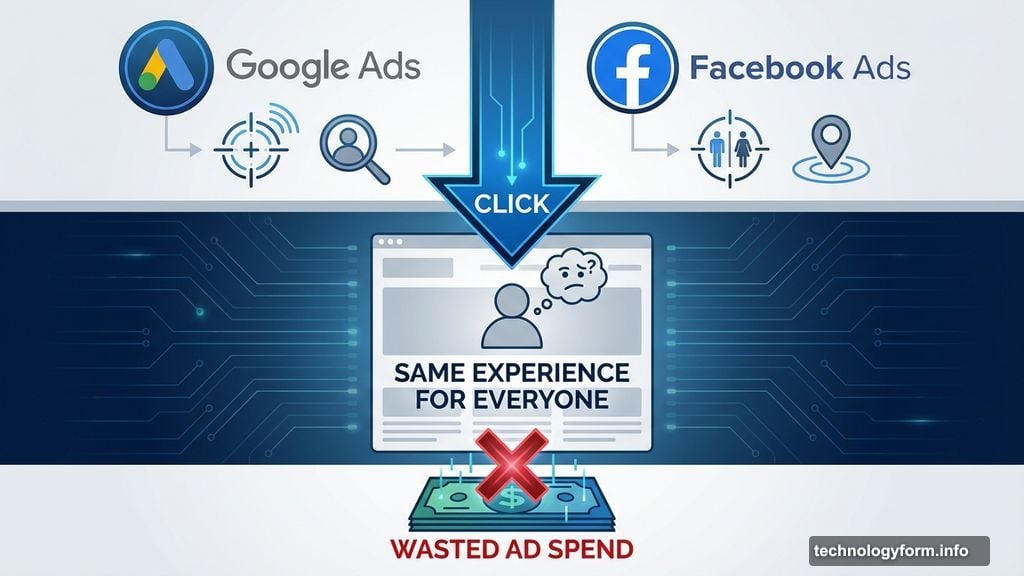
Traditional website personalization combines software licenses with agency retainers and engineering time. Costs tie to people rather than outcomes.
Enterprises increasingly evaluate Fibr AI based on cost per experiment and conversion impact. Not the number of tools or people involved.
For large companies running hundreds or thousands of experiments, that shift matters. Agencies charge by the hour. Engineers cost six figures. Fibr AI charges based on results.
What Comes Next
With the new funding, Fibr AI plans to expand its sales and customer-facing teams in the U.S. The San Francisco-headquartered startup maintains an office in Bengaluru with 17 of its roughly 23 employees based in India.
Goyal targets $5 million in annual recurring revenue by the end of this year. Plus, around 50 enterprise customers.
The startup’s long contract terms and infrastructure positioning suggest they’re building for durability rather than hype. Companies sign three- to five-year deals because they view Fibr AI as foundational infrastructure.
That’s smart positioning in a market saturated with AI startups promising revolutionary changes. Fibr AI isn’t selling transformation. They’re selling plumbing that happens to use AI agents.
Sometimes the boring infrastructure play wins. Especially when it actually works.