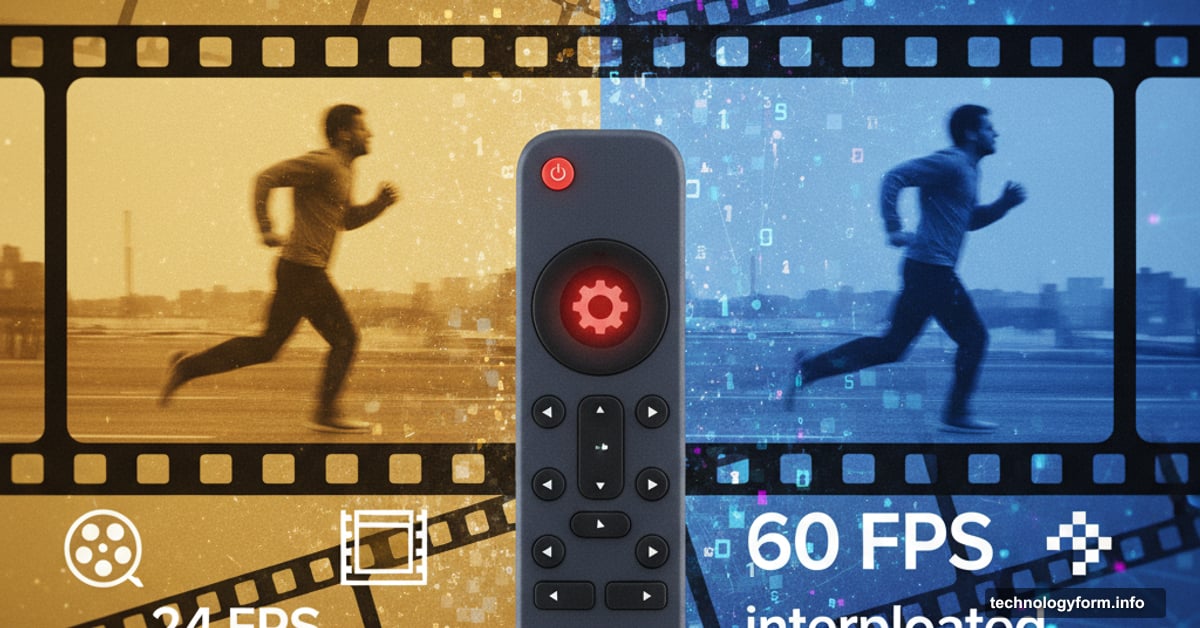
Motion Smoothing Gets a Hollywood Makeover. Will Anyone Care?
TV manufacturers keep trying to fix motion smoothing. The problem is that most people who hate it really hate it.
Samsung and Dolby just announced new HDR standards that promise to eliminate the soap opera effect. Both HDR10+ Advanced and Dolby Vision 2 include features that let content creators control exactly when and how motion interpolation happens. But these technologies face an uphill battle convincing skeptics that motion smoothing can ever look natural.
The Motion Smoothing Problem Nobody Asked to Solve
Motion smoothing analyzes video frames and inserts new ones between them. A 60Hz TV displaying a 24 frames-per-second film tries to create 36 additional frames to match its refresh rate. The TV guesses what those missing frames should look like.
Sometimes this works fine. Camera pans look smoother. Fast action becomes easier to follow. But often it creates the dreaded soap opera effect where films look like cheap TV productions shot on video cameras instead of film.
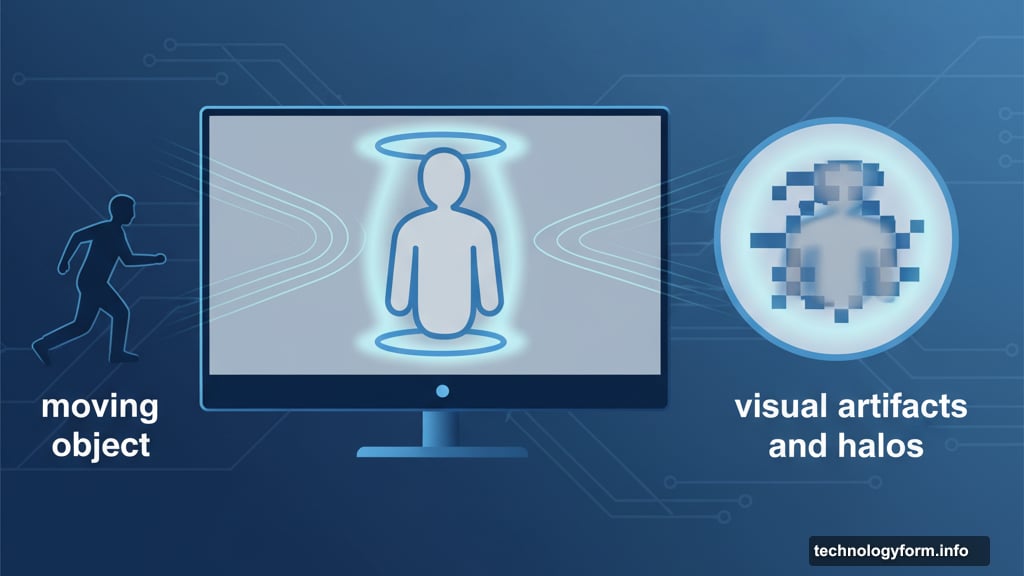
Plus, motion smoothing creates visual artifacts. Halos appear around moving objects when the TV can’t figure out how in-between frames should look. These artifacts range from barely noticeable to completely distracting.
Yet TV manufacturers keep shipping sets with motion smoothing enabled by default. Most viewers never change the setting. So millions of people watch movies the way directors absolutely did not intend.
Samsung’s Intelligent Approach
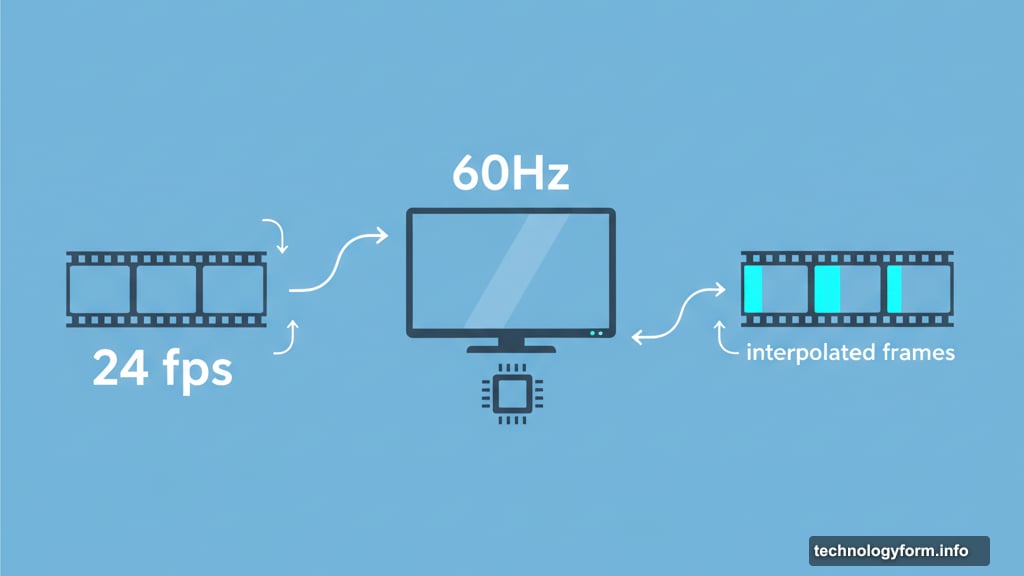
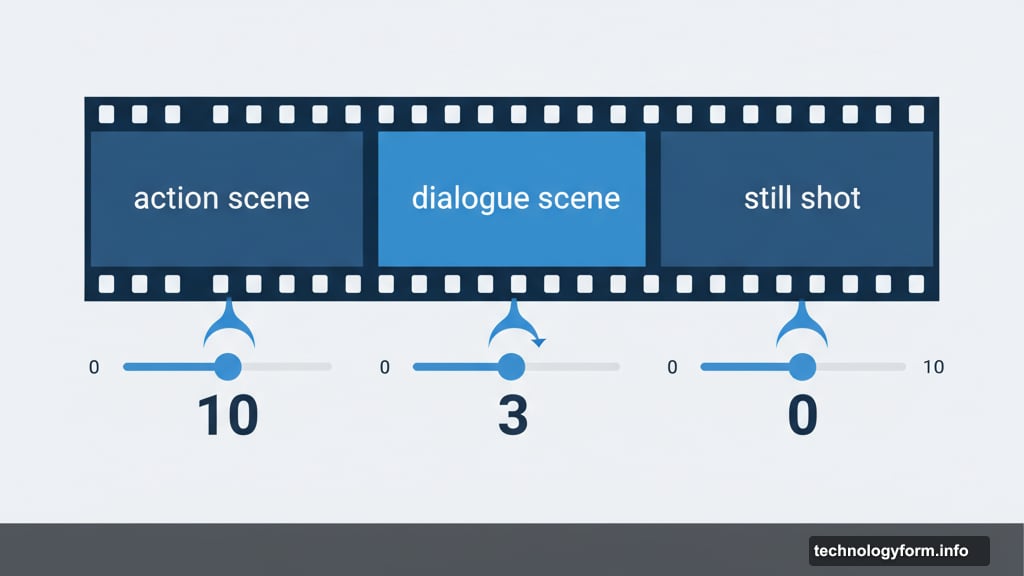
HDR10+ Advanced introduces Intelligent FRC, which stands for frame rate conversion. The feature lets content creators set different motion smoothing levels for each scene.
An action sequence might use stronger interpolation to smooth fast camera movements. Then a dialogue scene switches to minimal smoothing to preserve the film look. The system also adjusts based on room lighting, though Samsung hasn’t explained exactly how that works.
Samsung showed simulations to several tech publications. But simulations aren’t the same as real footage running on actual TVs. We won’t know how this looks until 2026 TVs ship with the technology.
Dolby Does Something Remarkably Similar
Dolby Vision 2 includes a feature called Authentic Motion that sounds nearly identical to Samsung’s approach. It offers 10 levels of motion smoothing that creators can adjust shot by shot.
TechRadar saw a demo using a scene from Paris Has Fallen. The motion smoothing level changed from 5 to 3 to 1 to 0 as the camera moved from tracking to tilting to settling to completely still. That granular control supposedly prevents the soap opera effect from appearing where it doesn’t belong.
But again, we only have demos and promises. No one outside these companies has tested the technology in real viewing conditions.
The Skepticism Problem
These standards assume motion smoothing can look good with the right implementation. Many film enthusiasts disagree fundamentally with that premise.
Famous directors like Christopher Nolan and Tom Cruise have spoken out against motion smoothing. They argue it destroys the cinematic look that filmmakers work hard to achieve. Giving creators control over interpolation levels doesn’t address the core complaint that interpolation looks unnatural no matter how carefully you apply it.
Neither standard mentions fixing visual artifacts. Creating frames between very different-looking frames remains difficult. Having creators set per-scene smoothing levels doesn’t solve the technical challenge of making those interpolated frames look real.
Adoption Challenges Ahead
HDR10+ launched in 2017 and supports 500 movies across 16 streaming services. Dolby Vision came out in 2014 and had 900 movie titles by 2020. Those numbers suggest slow adoption even for simpler HDR standards.
Adding per-scene motion smoothing controls means extra work for content creators. They’ll need to watch their content and decide which scenes benefit from interpolation and at what levels. That adds time and cost to the mastering process.
Samsung says HDR10+ Advanced will debut on 2026 TVs and work with Amazon Prime Video. Dolby Vision 2 doesn’t have a release date yet. So widespread availability remains years away at best.
Who Actually Benefits?
Motion smoothing might actually help some viewers. A minority of people, especially younger viewers who grew up with high refresh rate screens and gaming, find 24fps judder uncomfortable or even nauseating on large displays.
These viewers didn’t grow up going to movie theaters regularly. They haven’t acclimated to traditional film frame rates the way older generations did. For them, motion smoothing serves an accessibility function rather than ruining the artistic vision.
However, this group remains relatively small. Most viewers either don’t notice motion smoothing or actively dislike it when they do notice.
The Real Question
Can any amount of creator control make motion smoothing look natural to people who hate it? Probably not.
The soap opera effect isn’t just about applying too much smoothing or applying it at the wrong times. It’s about the fundamental appearance of interpolated frames. Those frames don’t come from the camera. A TV generated them algorithmically based on educated guesses.
Some viewers will always see that artificial quality no matter how carefully motion smoothing gets applied. Giving filmmakers a dimmer switch for motion interpolation doesn’t change the basic nature of the effect.
Both technologies might reduce some of the worst excesses of motion smoothing. But winning over critics who think interpolation should never happen seems unlikely. The best these standards can hope for is making motion smoothing less terrible for people who use it anyway.