Gamers Turned Against AI in 2025. Developers Still Can’t Agree What It’s For
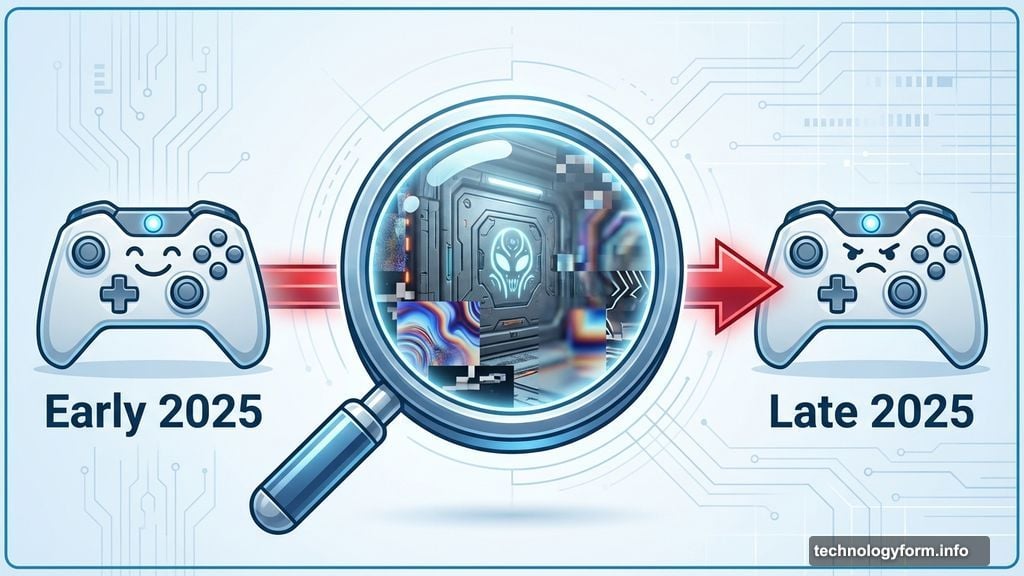
The backlash hit fast. One day, gamers were cautiously optimistic about AI tools in game development. The next, they were hunting for traces of machine-generated art like digital bloodhounds.
What changed? Awareness, mostly. Plus a string of uncomfortable revelations about which studios quietly used generative AI without telling anyone. By the end of 2025, the technology became a bogeyman—something players assume exists in every game until proven otherwise.
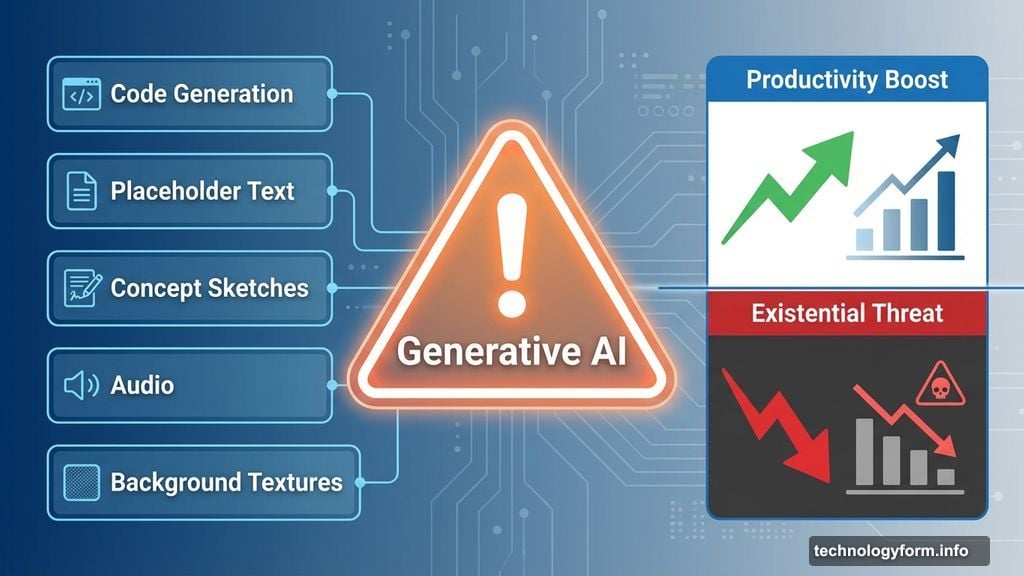
But here’s the thing. Inside the industry, developers remain deeply conflicted about what role AI should play. Some see it as a productivity boost. Others view it as an existential threat to artistic integrity and job security.
When AI Sneaks Into Games, Players Notice
March 2025 started with promise. At the Game Developers Conference in San Francisco, studios cautiously explored how generative AI might speed up workflows. Panels discussed using it for code generation, placeholder text, and rough concept sketches.
Then reality set in. By mid-year, multiple games launched with AI-generated content that studios hadn’t disclosed upfront. Players discovered text prompts left in final builds. Background textures that looked suspiciously machine-made. Audio that sounded just slightly off.
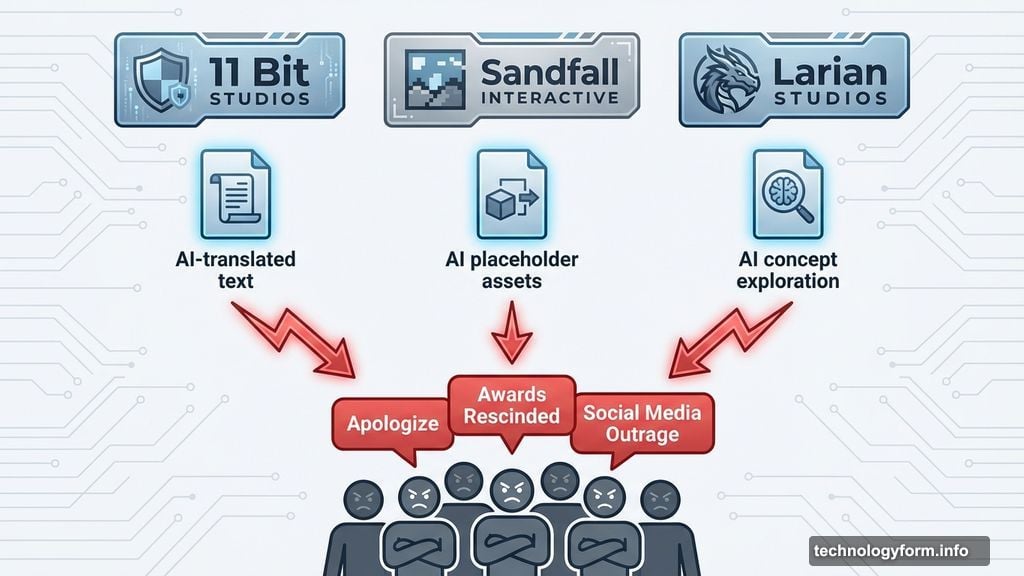
Take 11 Bit Studios. Their sci-fi game The Alters shipped with AI-translated text that the team planned to replace later. But players found out before the swap happened. The studio apologized in June, admitting they should have disclosed the temporary AI use.
Or Sandfall Interactive. Their RPG Clair Obscur: Expedition 33 launched with AI-generated placeholder assets that accidentally stayed in the final build. After the Indie Game Awards rescinded two awards for the game, Sandfall patched out the AI content within days.
These incidents set the tone. Opacity breeds suspicion. Studios that stay quiet during development face intense backlash when AI use comes to light later.
Larian’s Transparency Still Sparked Outrage
Even honesty doesn’t always help. When Baldur’s Gate 3 creator Larian Studios announced its next RPG, Divinity 3, founder Swen Vincke explained they were using generative AI for early concept exploration.
Not for final art. Not for shipped content. Just internal brainstorming before human artists create the actual visuals. Still, fans erupted. Vincke had to clarify on social media that no AI-generated content would appear in the finished game.
The reaction reveals something important. Many players don’t care if AI helps behind the scenes. They want zero AI involvement, period. The technology itself feels like contamination to them.
Why such hostility? Context matters. Throughout 2025, AI caused headaches everywhere else in gamers’ lives. It spread through productivity software, contributed to climate issues, generated misinformation, and even spiked PC RAM prices. Gaming became yet another battleground.
Developers See Mixed Potential
Inside studios, opinions vary wildly. At GDC, Microsoft executives Fatima Kardar and Sonali Yadav pitched Copilot as an in-game assistant. It could guide new players, offer hero suggestions in competitive games like Overwatch, or provide post-death tips.
Razer showcased an AI quality assurance tool that auto-generates bug reports. When testers encounter issues during playthroughs, the system logs details automatically. Razer claims it cuts QA time by 50 percent. They stressed the tool multiplies efficiency rather than replaces jobs.
Developers from Raven Software, Sledgehammer Games, and Activision Shanghai shared technical applications. Large language models helped them search through hundreds of thousands of assets in digital libraries. Or identify duplicate tickets in project management software like Jira.
Those uses sound practical. Mundane tasks that consume time without adding creative value. But even these applications carry risk.
One panel featured a cautionary tale. A 2K developer used generative AI to complete a three-day coding task in minutes. Then spent three days fixing errors in the output. The supposed shortcut became longer than doing it manually.
AI Training Data Remains a Massive Problem
The ethical concerns can’t be ignored. Most generative AI models trained on datasets that included copyrighted art, text, and code without creator consent. When studios use these tools, they’re potentially benefiting from stolen work.
Dr. Jakin Vela, executive director of the International Game Developers Association, noted the split perspective among members. Some developers are excited about incorporating AI into workflows. Artists, localization professionals, QA testers, and writers are terrified AI will replace them to cut costs.
Former EA engineer David “Rez” Graham hosted a panel on AI ethics. His warning was stark: normalizing generative AI in game development risks killing the art form itself. Since AI output is derivative rather than creative, overreliance threatens to strip games of their soul.
Graham’s concern isn’t about ethical tools. It’s about mandate. Managers with purely financial motives who don’t understand artistic workflows could force AI adoption from above. That would hurt games and the people who make them.
Plus, there’s no standard for disclosure. Companies aren’t obligated to reveal when or how they used AI during development. Without transparency rules, players can’t make informed choices about which games to support.
Contractors Face Bigger Threats Than AI
At a GDC roundtable for freelance developers, AI barely registered as a top concern. Contractors worried more about getting stiffed on payments, pressured into free labor through endless revisions, and surviving the worst employment period the industry has seen.
Over 25,000 game developers lost jobs in 2024 and 2025 combined. Studios closed. Projects got canceled mid-development. Meanwhile, companies cut diversity hiring efforts and leaned on contractors to avoid long-term employment commitments.
In that context, generative AI feels like just another threat in a long line of challenges. It might replace some work. But so might outsourcing, automation, or economic downturns. Freelancers face existential uncertainty every day regardless.
Video game workers launched United Videogame Workers at GDC—a new union aimed at industry-wide protections against layoffs and AI displacement. Their demands included broad employment safeguards and ethical AI use policies.
Whether the union gains enough traction to drive change remains unclear. But the fact it formed at all signals how precarious the situation has become.
Game Creators See AI as Overhyped
Not everyone buys the hype. Jonathan Blow, creator of The Witness and Braid, told me people predicted programmers wouldn’t be coding anymore by end of 2025. That prediction flopped spectacularly.
Blow acknowledged AI can get something on screen faster than traditional methods. But evolving that output into a playable, polished game still requires human skill. Past a certain point, AI can’t take you there yet. What it leaves behind is often a mess programmers don’t want to fix.
He also doesn’t believe AI will threaten jobs long-term. Instead, he thinks improved tools will help expand creativity when the technology matures. That’s an optimistic take compared to most voices in the debate.
Still, Blow’s upcoming game Order of the Sinking Star won’t use generative AI. Not because of ethical objections. Because current tools don’t help him make the game he envisions.
Players Can’t Trust Games Anymore
That’s the real damage. Before 2025, players assumed games were made entirely by human teams unless stated otherwise. Now they enter every new release with suspicion.
Is that background art AI-generated? Did the studio use machine translation for dialogue? Are these textures placeholder assets that accidentally shipped?
Even when studios post assurances that no AI was used, skepticism lingers. After The Escapist published—then corrected—allegations that Blue Prince used AI, publisher Raw Fury had to issue a public statement denying it. The kerfuffle showed how fragile trust has become.
Some might argue this vigilance is healthy. It holds studios accountable. But it also poisons the relationship between creators and players. Developers now work under constant suspicion regardless of their actual practices.
What 2026 Holds
The technology isn’t going away. Microsoft, Razer, Unity, and other major companies are investing heavily in generative AI tools for game development. Studios will keep experimenting with applications that might legitimately improve workflows.
But until the industry establishes clear standards around disclosure, ethical data sourcing, and labor protections, the tension won’t resolve. Players deserve to know when AI played a role in making their games. Developers deserve assurance that tools won’t simply replace them.
Meanwhile, blockbuster titles like Grand Theft Auto 6, Resident Evil: Requiem, and Tomb Raider: Legacy of Atlantis are coming in 2026. Players will approach each release wondering: How much of this is human-made?
That uncertainty represents the current state of gaming. AI is here. Its role remains contested. And trust between players and studios has fractured in ways that won’t heal quickly.
Choose carefully which studios you support. Demand transparency about AI use. And remember that games made entirely by human teams still exist—though you might have to look harder to find them.