Threads Wants to Be Your Morning Coffee App
Threads isn’t playing small anymore. Meta’s Twitter competitor just became Apple’s second-most-downloaded iOS app of 2025. Only ChatGPT beat it.
But numbers tell just part of the story. With 400 million monthly users and 150 million checking daily, Threads is fighting a different battle now. Not just to exist, but to become the app you can’t resist opening first thing in the morning.
Connor Hayes, who runs Threads, explained the strategy this week. His goal is simple: make Threads “the place on the internet to talk about what’s going on in the world.” Yet getting there means competing with everyone from X to Reddit to Discord.
Instagram Feeds Act as Threads Billboards
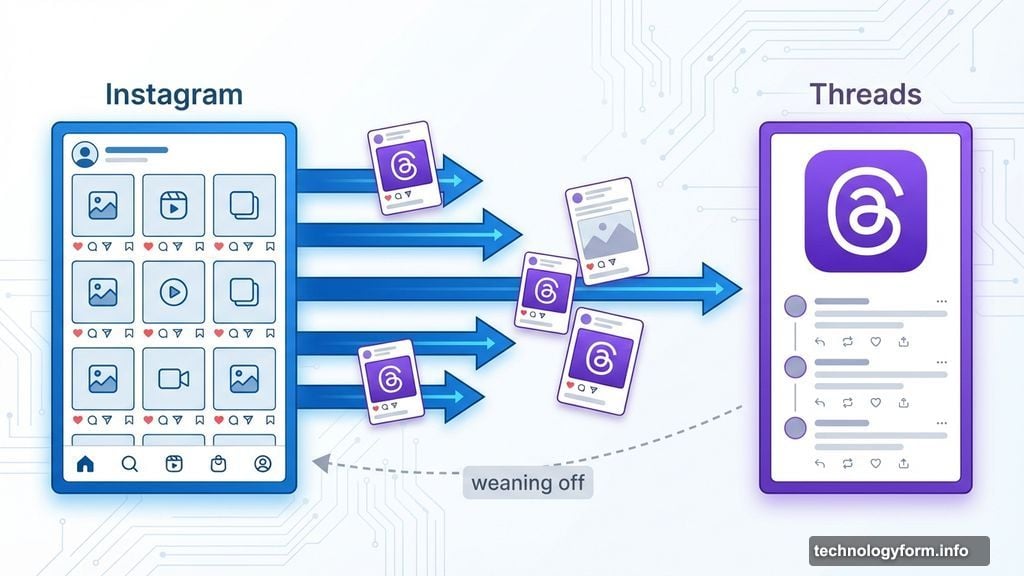
Most Threads growth still comes from Meta’s other platforms. Hayes admitted the company deliberately surfaces Threads content in your Instagram and Facebook feeds.
That’s the playbook. Show you interesting Threads posts in Instagram. Get you curious enough to download the app. Then slowly wean you off those nudges until you’re checking Threads on your own.
“We do a bunch of work to get people off of being dependent on those promotions,” Hayes said. The endgame? You wake up wanting to open Threads without any Instagram reminder.
So far, it’s working. Threads became a morning habit for millions this year. But turning casual browsers into daily users remains the core challenge.
Reddit and Discord Are the Real Competition
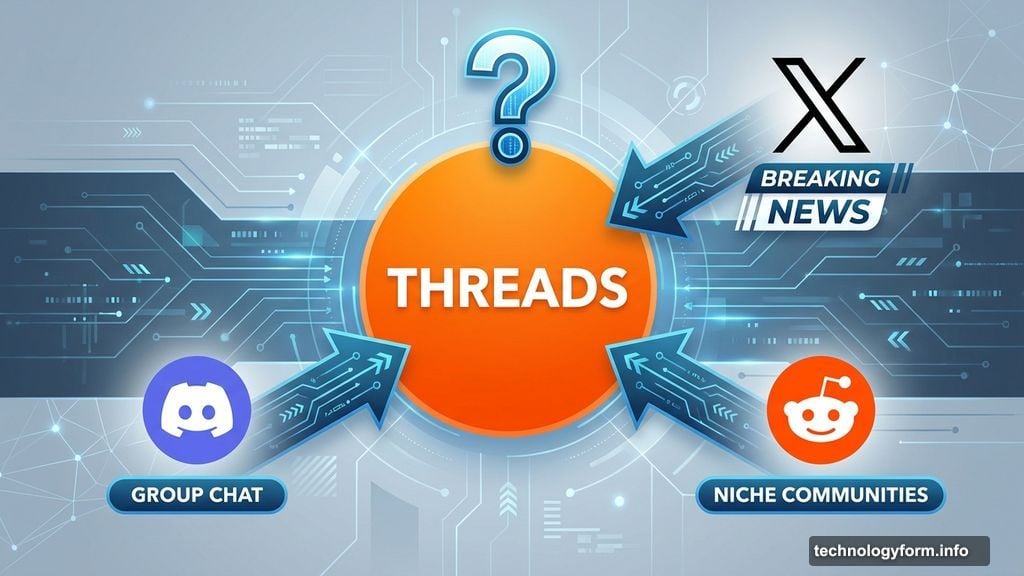
Hayes thinks about competitors differently than most people expect. Sure, X pioneered the format. But he’s watching Reddit and Discord just as closely.
“Reddit has a ton of activity that is analogous to what happened on Twitter in the early days,” he explained. Meanwhile, Discord hosts massive group chat communities that pull users away from public platforms.
The battle for real-time conversation isn’t just Threads versus X anymore. It’s Threads versus every platform where people gather to talk about what’s happening right now.
Plus, each competitor excels at something specific. X has breaking news and politics. Reddit dominates niche communities. Discord owns private group conversations. Threads needs to carve out its own identity in this crowded space.
Creators Get Traffic, Not Money
There’s no direct monetization on Threads yet. No tipping. No subscription paywalls. No ad revenue sharing like YouTube offers.
Instead, Hayes is pitching Threads as a traffic channel. Post on Threads. Drive your audience to platforms that actually pay you.
Podcast integration launched recently as the clearest example. Threads now renders show and episode links from Spotify beautifully. Creators can pin these to their profiles. Listeners click through to Spotify, where podcast monetization already exists.
Hayes said Threads is open to similar partnerships with Substack and Patreon. But there’s no plan to compete with those platforms by letting creators sell directly on Threads.
Some creators might find this frustrating. Others will appreciate the simplicity. Either way, Threads is betting that being a traffic driver adds enough value to keep creators active.
Ads Are Coming, But Gradually
Threads is testing ads in four countries, including the US. But Hayes emphasized the load stays deliberately light.
“We are ramping the ad load up steadily over the course of the next year,” he said. The catch? Only when there’s enough value on the consumer side to justify it.
That’s smart. Nothing kills a growing platform faster than aggressive ads before the content quality supports them. Meta learned this lesson multiple times with Facebook and Instagram.
So expect ads to increase slowly throughout 2025. The question is whether users will tolerate them after getting used to an ad-free experience.
Your Algorithm Takes Requests Now
Threads is testing “Dear Algo” in select countries. Users can request to see more or less of specific topics. Share your algorithm prompt with others. Watch your feed adjust for three days.
“After a heartbreaking loss of your sports team, you can be like, don’t show me NFL content for three days,” Hayes explained. “But you’ll be ready on day four to come back in.”
This works because content understanding improved dramatically. Large language models now recognize context. Threads doesn’t just know a post is about basketball. It knows it’s about the 1998 NBA Finals with Michael Jordan taking the final shot for the Bulls.
That precision enables surprisingly specific requests. Hayes said early testers asked for things like “show me more football content, but not Patrick Mahomes.”
Whether this feature launches widely depends on testing results. But it shows Meta is thinking creatively about algorithm control.
The Fediverse Experiment Hit Pause
Threads still supports federation with apps like Mastodon. But Hayes made clear it’s not a priority right now.
“It’s something that we’re supporting, it’s something that we’re maintaining,” he said. “But it’s not the thing that we’re talking about that’s gonna help the app break out.”
He explained the challenge honestly. Keeping divergent platforms compatible on the same protocol gets harder over time. Companies face constant tradeoffs between compatibility and iteration speed.
Meta chose to focus on making Threads work well independently first. The fediverse connection exists but isn’t driving product decisions.
That might disappoint open protocol advocates. But it’s pragmatic. Building a successful social app is hard enough without maintaining cross-platform compatibility simultaneously.
Fresh Content Wins Over Old Gems
Threads used to get mocked for surfacing days-old posts. Not anymore.
Now the algorithm prioritizes content from the last 24 hours. “If something is four or five days old, even if it’s really good, we probably won’t show that,” Hayes said.
This shift makes Threads feel more like a real-time conversation space instead of an endless content library. But it also means great posts disappear quickly if they don’t catch fire immediately.
News Isn’t Getting Special Treatment
Unlike X, Threads isn’t actively recruiting journalists and publishers. Hayes treats news like any other vertical.
“There are certain creators who are really good at this and know a lot about it,” he said. “There are consumers who are ravenous to consume the content.”
He insisted Threads isn’t downranking news content. But it’s also not a focus vertical right now. Sports, entertainment, and other topics get equal algorithmic consideration.
This neutral stance might worry news organizations hoping to replace X. Threads won’t actively push them away. But it won’t roll out the red carpet either.
The Morning Habit Challenge
Everything Threads is building points toward one goal: becoming a morning habit. That’s harder than it sounds.
Social apps compete with email, news apps, messaging, and everything else fighting for your first screen time. Winning that battle requires consistently delivering content valuable enough to prioritize.
Meta has resources and distribution most competitors lack. Instagram and Facebook give Threads a massive discovery advantage. But distribution only gets you downloads. Habit formation requires delivering daily value.
Threads is betting on vertical-by-vertical growth. Master sports conversations. Win entertainment discussions. Build critical mass in enough categories that most users find something compelling every day.
Whether that strategy works depends on execution. But after a strong 2025, Threads has momentum and time to figure it out.
The bigger question is whether any platform can truly replace Twitter’s unique role in real-time conversation. Or if that niche simply doesn’t exist anymore because the internet fragmented into specialized communities across multiple apps.
Threads is betting it can capture enough of that magic to matter. The next year will show if they’re right.