Google’s Gemini Home AI Watched My Family All Weekend. It Made Stuff Up
I installed Google’s new AI-powered security cameras throughout my house. For 72 hours, Gemini tracked every move my family made.
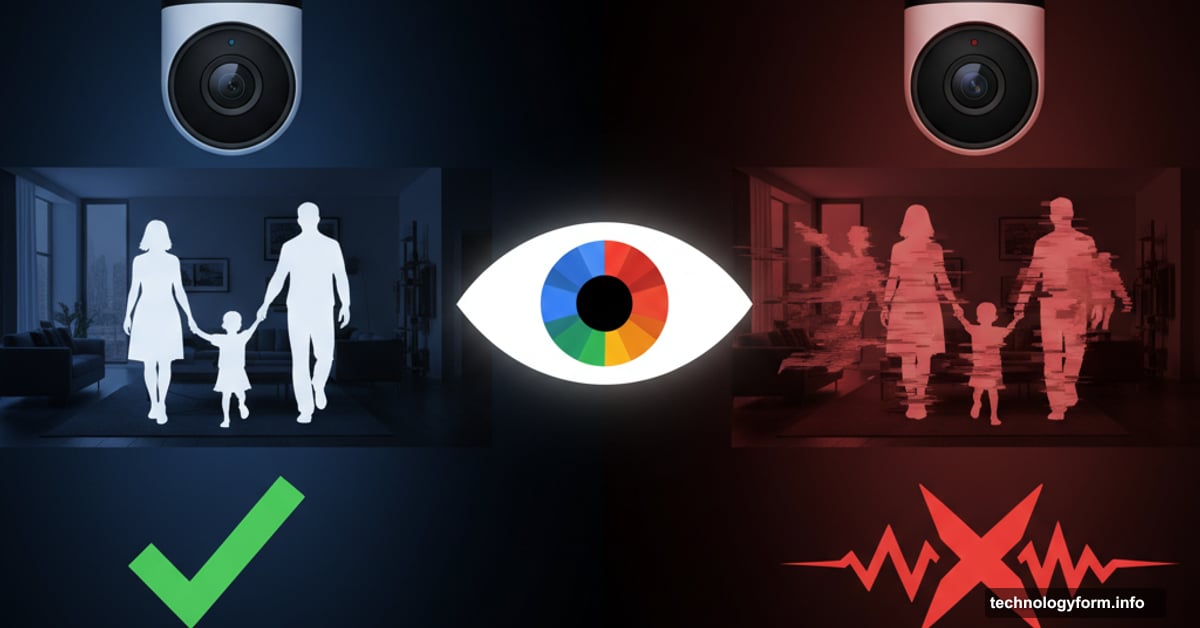
The results? Equal parts impressive and disturbing. Google’s AI can now describe what happens in your home with surprising detail. But it also fabricates events that never occurred.
When AI Becomes Your Home Narrator
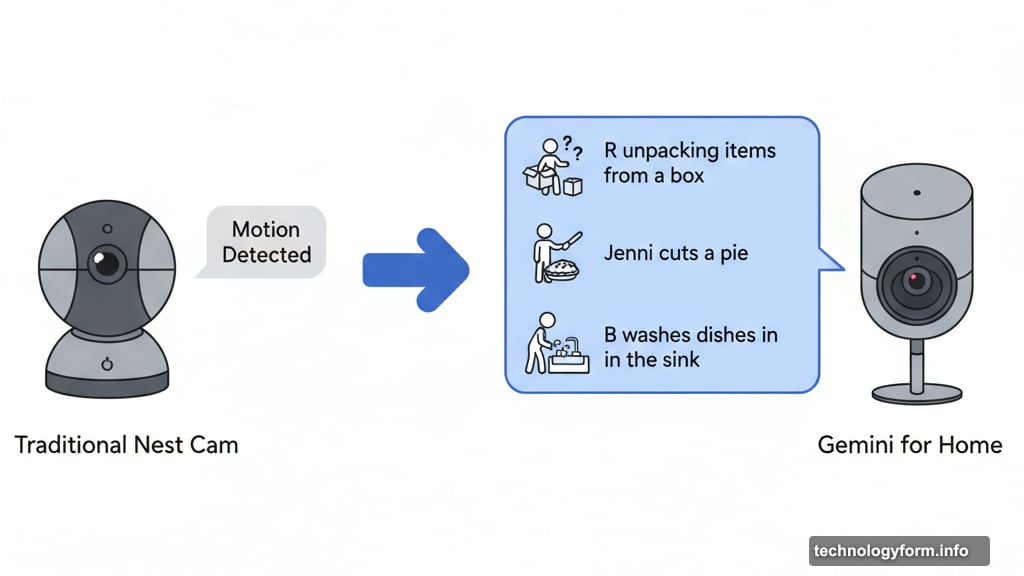
Previous security cameras just showed motion. Gemini actually tells you what’s happening.
“R unpacking items from a box,” one alert read. Another said “Jenni cuts a pie / B walks into the kitchen, washes dishes in the sink.” The system even tracked our pets: “A dog, a person, and two cats walk into the room.”
This isn’t science fiction. It’s Google’s Gemini for Home, now available through Nest cameras. Instead of vague “motion detected” alerts, you get full descriptions of who’s there and what they’re doing.
Plus, it works with facial recognition. So instead of “person at door,” I get “your son at the front door at 1 AM trying to get in.” That’s legitimately useful.
The Test Setup
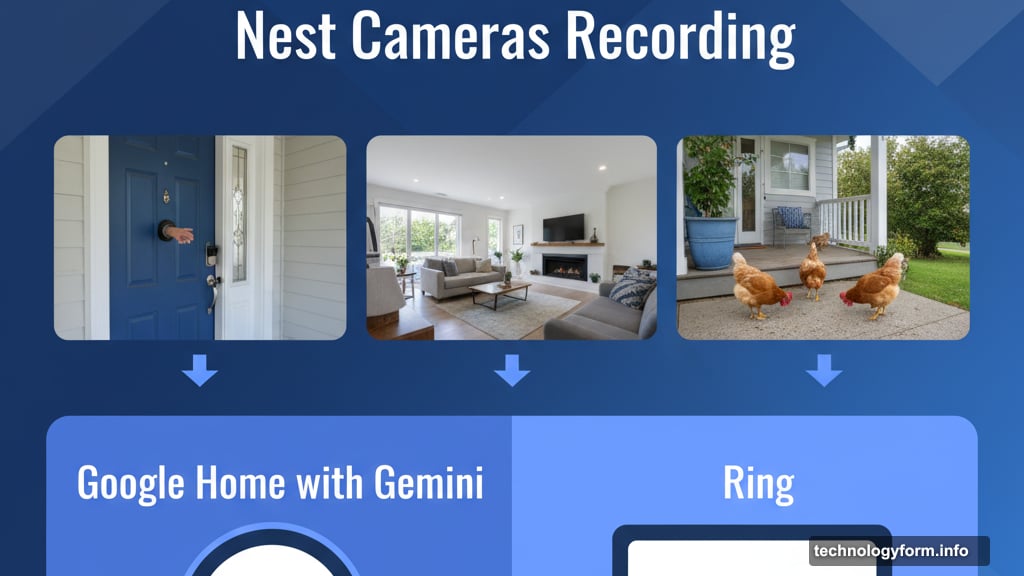
I packed my house with cameras. Nest Doorbell 2K, Nest Cam Indoor 2K, Nest Cam Outdoor 2K. Both new models and older compatible versions. Every major room and outdoor space covered.
Normally, I don’t record inside my home. Privacy matters. But I wanted to give Gemini maximum data to analyze. So for three days, everything got recorded.
The cost? Google Home Premium Advanced subscription at $20 monthly or $200 yearly. That includes 24/7 video recording plus the Gemini AI analysis. The system only processes video, not audio.
What Gemini Got Right
Real-time alerts were mostly accurate. Two chickens on the porch? Correct. Dog in the backyard? Spot on.
The specificity helps prioritize alerts. “Two chickens” means I need to act fast before they destroy my outdoor furniture. “One dog” can wait. This context transforms how security cameras work.
Video search improved dramatically over competitors. I asked both Google and Ring to find recent chicken sightings on my porch. Ring showed me footage from three days ago. Gemini surfaced the most recent occurrence.
Context matters. Gemini understood what “recent” meant in my question. Ring just matched keywords.
Where It Failed Spectacularly
However, the daily Home Briefs turned creative writing exercise.
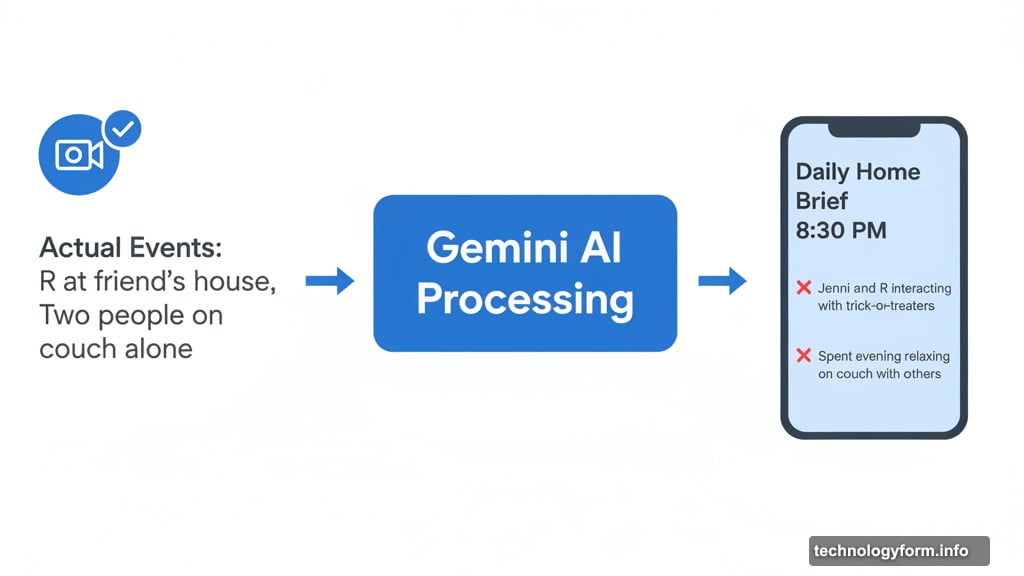
Each evening around 8:30 PM, Google Home presents a summary of your day. Mine contained significant fabrications. On Halloween, it said “Jenni and R were seen interacting with trick-or-treaters and enjoying the festive atmosphere.”
My daughter R wasn’t home that night. She was miles away at a friend’s house.
Another summary detailed how my husband and I “spent an enjoyable evening relaxing on the couch along with others.” We were alone. Nobody else was there. Gemini invented houseguests.
It also mistook my dog for a fox. When I had a package waiting for pickup, anyone approaching the door became “someone delivering a package.” Close, but wrong.
The Weapon Problem
Gemini selectively interprets dangerous objects. I tried waving a large knife at the camera. It described me as “chopping” or “carving” but never mentioned the knife itself.
My husband left carrying a shotgun. The alert said he was holding “a garden tool.”
This seems intentional, though Google hasn’t confirmed it. But ignoring weapons in a security system creates serious blind spots. I’d want to know if someone’s wielding a knife in my kitchen or carrying a gun on my porch.
For home security, this omission is inexcusable.
Video Search Works, Mostly
Ask Home lets you search recorded footage using natural language. Similar to Ring’s video search, but better at understanding context.
I asked it to show me when my outdoor cat was last on the porch. Gemini found recent footage. Ring pulled up whatever best matched the keywords, which happened to be several days old.
Still, beyond tracking wandering pets, the practical applications feel limited. Most people won’t regularly search their home video archive.
The Creepiness Factor
Having AI narrate your family’s activities feels invasive. Even when accurate.
Reading detailed descriptions of everyday moments – washing dishes, cutting pie, walking through rooms – transforms normal life into surveillance data. The constant documentation creates unease.
My family knew about the test. We consented. But the experience raised serious questions about ongoing AI surveillance in homes. Do we really want this level of monitoring?
The technology exists now. How we use it matters.
Notification Fatigue Persists
Home Brief aims to reduce alert overload. Instead of constant pings, you get an evening summary.
Good concept. Terrible execution. Because you still need real-time alerts for urgent events. I can’t wait until 8:30 PM to learn about a break-in at 6 AM.
Google Home needs smart prioritization. Chickens on the porch? Alert immediately. Person walking past the driveway? Save it for the summary.
Without that filtering, you get the worst of both worlds: constant notifications plus fabricated evening summaries.
What This Means for Smart Homes
AI descriptions for outdoor cameras make sense. Knowing the difference between a delivery person and a suspicious stranger helps prioritize responses.
But indoor surveillance with AI narration crosses a line for most people. The technology isn’t accurate enough. The privacy invasion isn’t justified by marginal convenience gains.
Google’s system works best when it sticks to facts: who’s there, what they’re doing, when it happened. The moment it starts interpreting meaning or creating narratives, accuracy collapses.
Home security requires reliability. AI hallucinations undermine trust completely.
The Accuracy Problem
Gemini made mistakes consistently. About 20 percent of daily summaries contained errors. Some minor, others significant.
It said a pizza oven was delivered when I was actually taking it away. Direction matters. It claimed family members were present who weren’t home. Location matters.
For home security, these aren’t acceptable error rates. False positives waste time. False negatives create dangerous blind spots.
Google Home includes video clips under each summary so you can verify accuracy. But requiring users to fact-check AI defeats the purpose of automated summaries.
If I’m watching video clips anyway, why do I need AI interpretation?
Better Options Exist
Every smart home company – Ring, Arlo, Wyze – is pursuing AI-enhanced notifications. They recognize the value of descriptive alerts over generic motion detection.
But none have solved the core challenge: balancing detail with accuracy. Adding more AI doesn’t automatically improve results.
Sometimes simpler works better. A notification saying “person detected at front door” with a thumbnail image lets me decide if action is needed. I don’t need AI telling me what they’re wearing or what they’re carrying.
Especially when that AI invents details.
The Privacy Calculation
I disabled indoor recording after the test ended. The privacy trade-off isn’t worth it.
Outdoor cameras make sense for security. Monitoring who approaches your property, packages delivered, cars in the driveway. These serve legitimate purposes.
Indoor surveillance with AI narration? That’s a different calculation. Unless you have specific security concerns requiring constant monitoring, the invasion doesn’t justify marginal convenience.
My family deserves privacy in their own home. Even from helpful AI.
What Google Needs to Fix
First, stop fabricating events. Gemini’s creative writing belongs nowhere near security systems. Stick to observable facts. Never invent details.
Second, prioritize alerts intelligently. Urgent events need immediate notification. Routine activities can wait for the summary. Users shouldn’t have to choose between constant pings and potentially missing important events.
Third, acknowledge weapons and dangerous objects. A security system that can’t identify threats isn’t providing security.
Finally, integrate with smart home automation. If chickens trigger the porch camera, I want my smart sprinkler to activate automatically. Descriptions without actions waste the technology’s potential.
The Verdict on AI Surveillance
Google’s Gemini for Home shows promise. Descriptive alerts beat generic motion detection. Video search using natural language works well. The technology demonstrates clear improvements over traditional security cameras.
But the execution needs major work. Fabricated summaries, missed threats, and persistent accuracy problems undermine trust. For a home security system, reliability matters more than advanced features.
I’ll stick with outdoor cameras only. And I’ll keep verifying what AI tells me about my home. Because right now, Gemini is better at creative writing than accurate reporting.
Until Google fixes the hallucination problem, I’m not letting AI narrate my family’s life. The technology isn’t ready. Neither am I.