Meta Just Joined the AI Shopping Race Against ChatGPT and Gemini
Mark Zuckerberg wants a piece of the AI shopping pie. And honestly, who can blame him?
Meta is quietly rolling out a new AI shopping assistant feature inside Meta AI, taking direct aim at OpenAI’s ChatGPT and Google’s Gemini in one of the fastest-growing corners of e-commerce. The rollout is limited for now, with only some US-based users able to see it. But the move signals something much bigger is coming.
So what does this mean for how we shop online? Quite a lot, actually.
A $28 Billion Market Nobody Wants to Miss
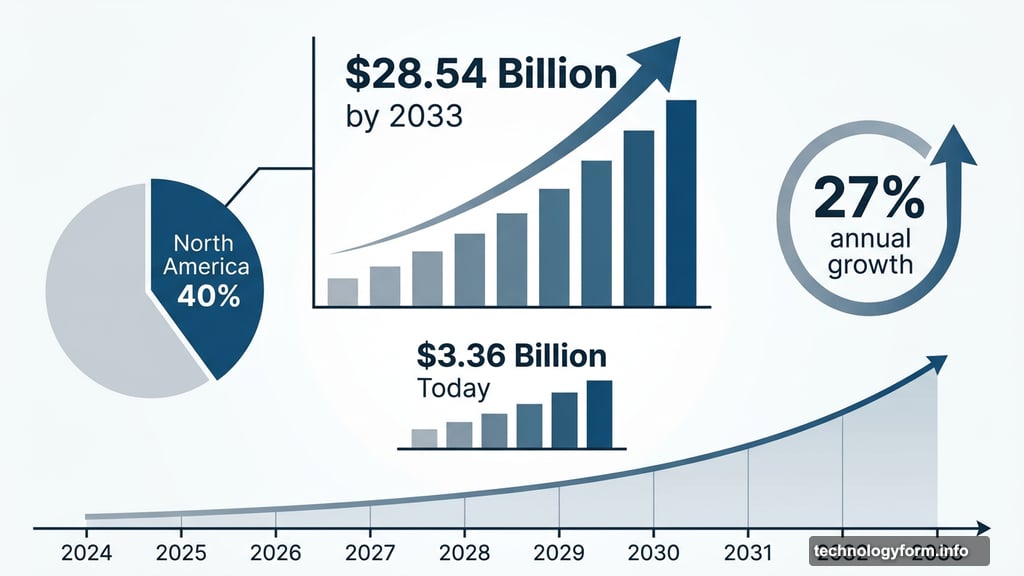
The numbers explain everything. According to Grand View Research, the AI shopping assistant market sits at $3.36 billion today. But by 2033, it’s projected to hit $28.54 billion, growing at nearly 27% per year.
North America alone controls 40% of that worldwide market right now. So it’s no surprise that every major tech player wants in.
ChatGPT already has a shopping research tool. Gemini does too. Amazon built Rufus and Interests. Even Klarna, Shopify, and eBay have their own versions. Meta joining the party isn’t shocking. It was only a matter of time.
How Meta’s AI Shopping Assistant Works
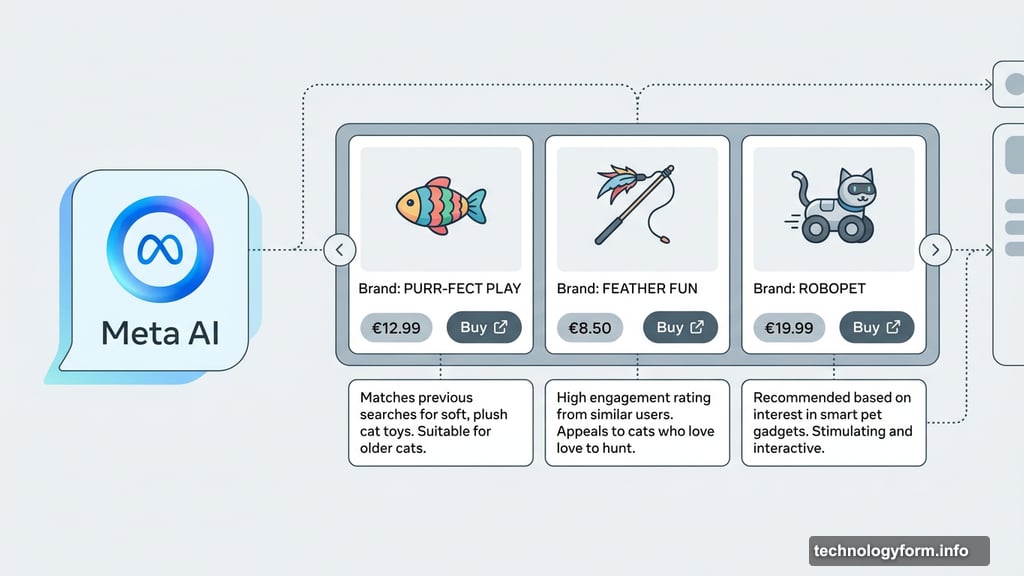
The feature lives inside the Meta AI chatbot. Ask it something like “what are the most popular cat toys?” and it returns a horizontal scrollable carousel of products. Each card shows the price, brand, and links to stores where you can buy it.
Plus, Meta’s tool adds something interesting. It gives you a short explanation of why it’s recommending each specific product. That extra context helps you understand the reasoning, not just the result.
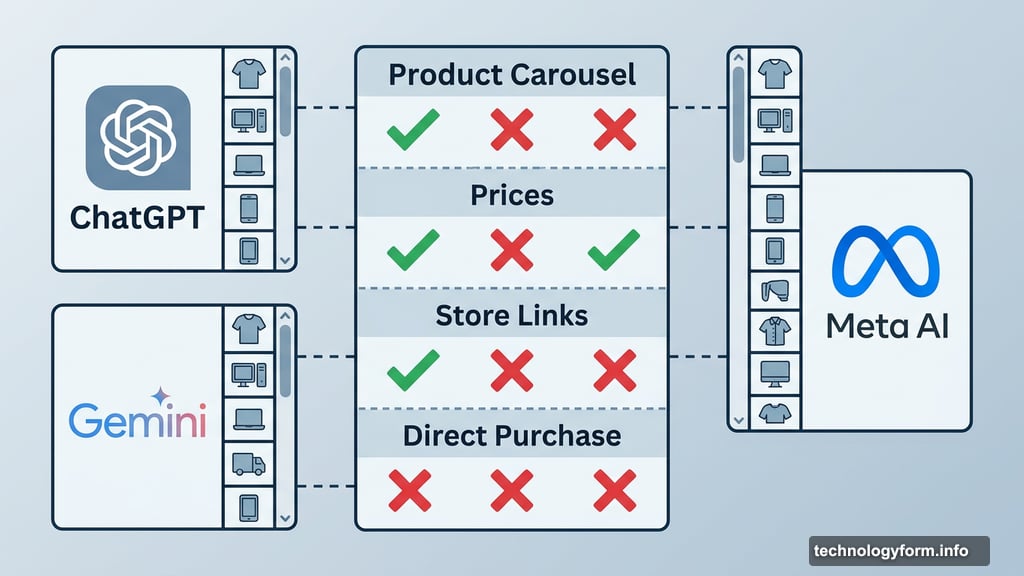
However, there’s one important limitation. You can’t buy anything directly through Meta AI. You’ll need to click through to the merchant’s external website to complete a purchase. Both ChatGPT and Gemini work the same way, so Meta isn’t behind on that front.
How It Stacks Up Against ChatGPT and Gemini
I tried asking ChatGPT and Gemini the same question Meta’s tool is designed to handle: “Please show me the best cat toys to buy.”
ChatGPT delivered a curated list of highly rated options in a scrollable carousel, with prices across different stores. Gemini matched that with product images, descriptions, prices, and store links. So all three tools essentially offer the same core experience.
Sucharita Kodali, Vice President and Principal Analyst at Forrester, isn’t particularly impressed. She told CNET that Meta’s test looks like “a copycat move” meant to ride the AI shopping hype wave.
“When you look at data that ChatGPT and Perplexity have shared, shopping use cases are still very limited,” Kodali said. “Nor is it clear what Meta would bring to merchants or consumers that is better than anything Instagram already does.”
That’s a fair point. Instagram already connects brands and shoppers in a powerful way. Meta’s challenge is making the AI version meaningfully better, not just similar.
Consumer Trust Is the Real Obstacle
Here’s where things get complicated. Building a great AI shopping tool and getting people to actually trust it are two very different problems.
Brad Jashinsky, Director Analyst at Gartner, told CNET that trust is the central issue. A recent Gartner survey found that nearly two-thirds of consumers believe GenAI-powered shopping tools will make biased recommendations. That’s a massive perception hurdle for any company in this space.
“Customer behavior takes a long time to change,” Jashinsky noted. “It wasn’t until 2023 that more e-commerce shopping was done on mobile devices versus desktop devices in the US. That was 16 years after the iPhone debuted.”
Think about that timeline. The iPhone launched in 2007. Mobile shopping dominance took until 2023. Agentic AI shopping could follow a similarly slow adoption curve, no matter how slick the technology gets.
Jashinsky also pointed out that more than half of customer experience leaders fear AI delivering inaccurate responses. That anxiety is slowing enterprise adoption too, not just consumer uptake.
The Bigger Shift Behind All of This
What Meta is really betting on is a fundamental change in how people discover products. Traditional online shopping started with a keyword search on Google or Amazon. You typed “cat toys,” got a list, filtered by price, read reviews, bought something.
AI shopping assistants flip that script. Instead of keyword matching, they handle natural language conversations. They factor in context, intent, and personalized preferences. You describe what you need in plain English and the AI figures out what to show you.
That shift is real and it’s accelerating. Whether Meta’s version adds enough value to pull users away from ChatGPT, Gemini, or Amazon’s tools is the genuinely open question right now.
Meta has enormous advantages in social data and user behavior insights from Facebook and Instagram. If the company figures out how to apply that knowledge to shopping recommendations, the “copycat” label might not stick for long. But the trust problem looms large regardless of whose logo is on the chatbot.
For now, it’s early days. Watch this space closely.