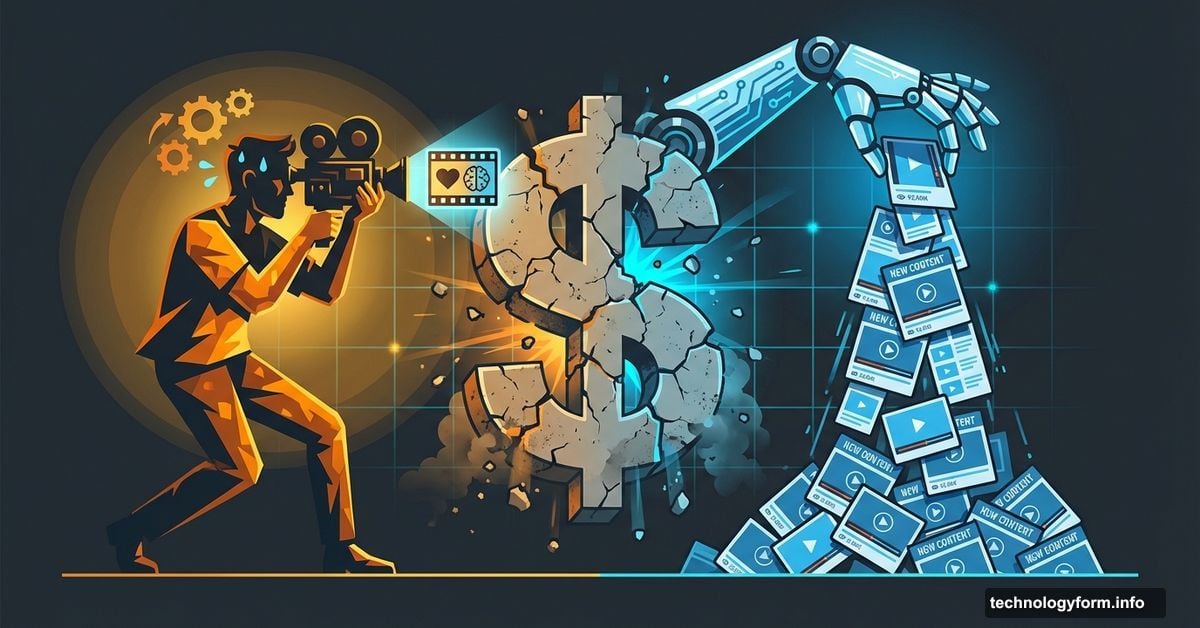
The Creator Economy Faces Its Toughest Test Yet. AI Slop Is Winning.
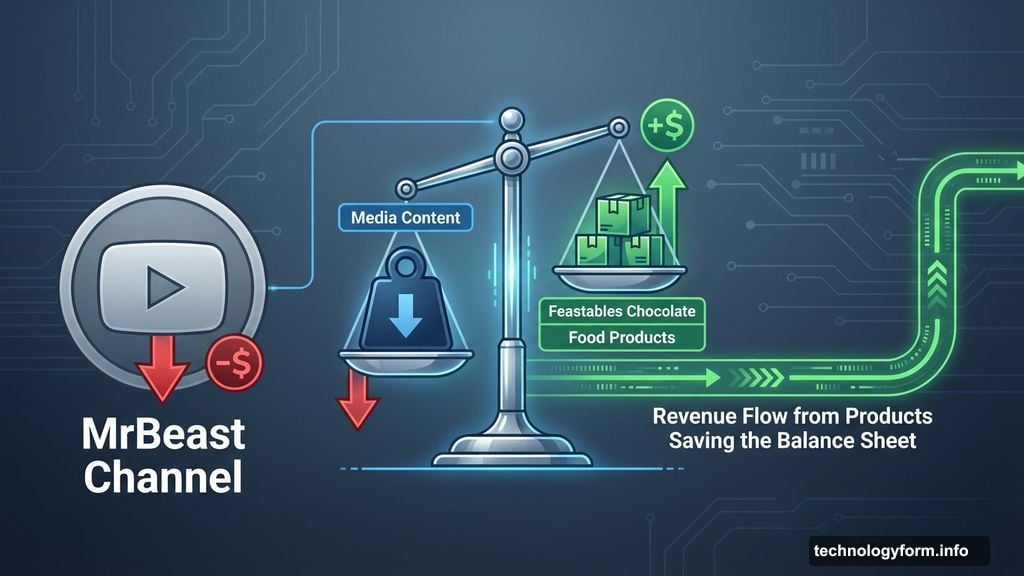
MrBeast’s media company lost money in 2024. Let that sink in for a second.
The most-watched YouTuber on the planet, with hundreds of millions of subscribers, couldn’t turn a profit from content alone. His chocolate and food products saved the balance sheet — pulling in hundreds of millions and actually turning a profit while the media side bled. If that doesn’t tell you something serious about where the creator economy is heading, nothing will.
And now, with AI video tools flooding the internet with synthetic content, things are about to get a whole lot messier.
Ad Revenue Alone Won’t Cut It Anymore
The ad-revenue-only model for creators is basically dead. That’s not a hot take. It’s math.

Top YouTubers figured this out years ago and quietly started building parallel businesses. MrBeast has chocolate. Others have clothing lines, energy drinks, apps, and courses. TechCrunch reporter Lauren looked at the biggest names on the platform and found the same pattern everywhere. Every major creator is diversifying hard, usually into e-commerce first, then whatever else fits their brand.
But here’s the uncomfortable question Kirsten Korosec raised on TechCrunch’s Equity podcast: what happens when everyone tries that same move? Not every creator can launch a product line. Not every niche audience buys physical goods. So does the pool of genuinely successful creators just keep shrinking?
That’s the real tension underneath all of this. The business model that worked five years ago is straining under its own weight.
Creators Are Now Celebrities. Sort Of.
There’s an interesting parallel happening between traditional celebrity culture and the creator world, and it’s worth paying attention to.
Rebecca Bellan made a sharp observation during the Equity podcast discussion. Younger audiences don’t know traditional Hollywood celebrities the way older generations did. They know TikTok and YouTube celebrities instead. And celebrities have always monetized their audiences through product lines — think Rachel Ray and her EVOO or any number of athlete endorsements.
So creators following that same path isn’t surprising. It’s inevitable.
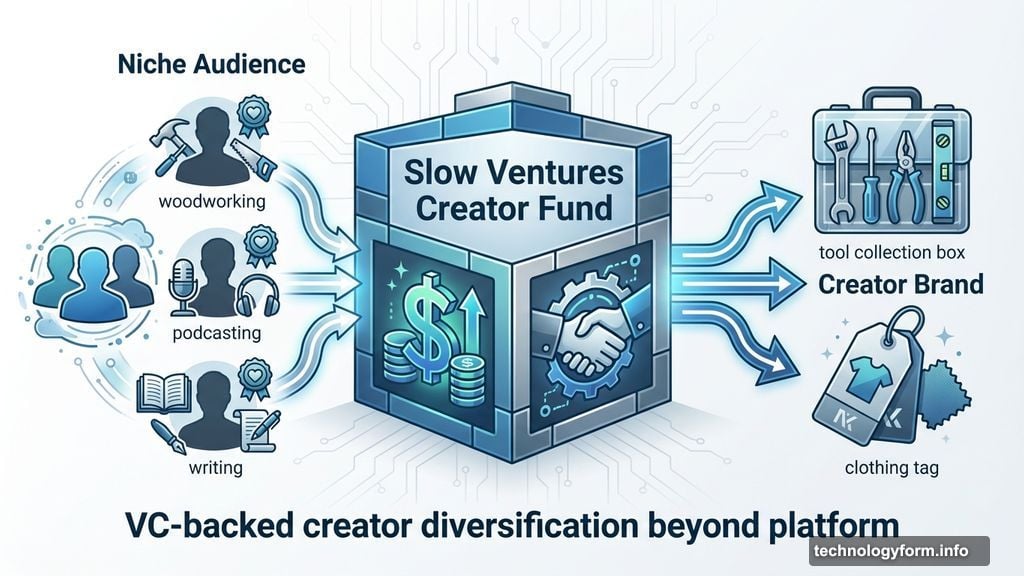
Venture capital is even moving in. Slow Ventures built a creator-focused fund that backs niche creators looking to build businesses around their audiences — someone with a devoted woodworking following launching a tool collection, for example. The idea is that a deeply loyal niche community can support a real product business even without massive subscriber counts.
For journalists, podcasters, and writers watching this happen, the parallel is uncomfortable but real. How do you build a brand that can diversify beyond the platform you live on? Nobody loves asking that question out loud, but the smart ones are already answering it.
ByteDance’s Seedance 2.0 Made Hollywood Nervous
Right around the same time as the MrBeast news, ByteDance quietly launched Seedance 2.0, their new AI video generation model. Initially it rolled out primarily to Chinese users, but videos started circulating fast. Including a viral clip of a fake Brad Pitt fighting a fake Tom Cruise.
Hollywood studios, Netflix included, responded quickly. A flood of cease-and-desist letters landed at ByteDance’s door almost immediately. The core complaint was obvious: Seedance was letting users generate videos using recognizable likenesses and intellectual property without any apparent guardrails or licensing agreements.
ByteDance went quiet for a few days. Then they issued an apology, acknowledging the model launched without adequate protections and promising to do better. Whether that actually happens is another question entirely.
But the incident crystallized something that creators, studios, and platforms are all grappling with right now. AI video tools have arrived, they’re powerful, and the rules around using them are nowhere close to settled.
AI Slop Is Real. Authenticity Might Be the Answer.
Here’s where it gets genuinely interesting for creators trying to figure out their future.
Rebecca Bellan framed the tension well. On one hand, AI video generation tools could flood the internet with low-effort, synthetic content — what Anthony Ha on the podcast called “slop,” and honestly that’s the right word for a lot of it. On the other hand, these tools genuinely democratize video production for people who couldn’t afford a crew, a camera operator, or post-production help. A small coffee brand making a quick ad. An independent filmmaker telling a story they could never have funded otherwise.
Both things can be true at once. More slop AND more democratized access. The question is whether audiences learn to filter, and whether platforms develop the tools to help them do it.
OpenAI’s Sora is an interesting data point here. It launched to enormous buzz, usage spiked, and then it plateaued. The experience of watching AI-generated video apparently feels hollow after a while. There’s something missing when you sense there’s no real human perspective behind what you’re watching.
That might actually be the lifeline for established creators. The authenticity angle — being undeniably, verifiably human — could become more valuable as synthetic content multiplies. Not digital twins of MrBeast wandering around doing sponsored content. But MrBeast himself, real and present, in a world increasingly full of convincing fakes.
For new creators, though, the math gets harder. Breaking through was already brutally competitive. Add a tsunami of AI-generated content competing for the same eyeballs, and cutting through becomes exponentially more difficult. The barrier to creating content is dropping to near zero. The barrier to being noticed is climbing in the opposite direction.
The creator economy isn’t dying. But it’s definitely changing shape fast, and the next few years will likely determine who survives the transition and who gets washed out by the wave.