AI Translators Failed My Family in Italy. Pointing Worked Better
Two standalone AI translators. Three translation apps. One chaotic Italian vacation. Turns out, gesturing wildly and asking strangers in broken English beats cutting-edge tech every time.
I packed serious translation firepower for my family trip through Italy and Switzerland. The Pocketalk and TimeKettle T1 translation devices promised seamless conversations in 130+ languages. Google Translate and Apple Translate offered real-time AI translations. ChatGPT could supposedly handle entire restaurant menus.
None of it mattered when my family split across a train platform in northern Italy.
The Train Station Nightmare
Picture this. You’re on a high-speed train barreling through Italy at 186mph. Your family suddenly panics about missing the Venice stop. Half of you bolt off the train at Padua instead.
Meanwhile, a Chinese grandmother frantically asks you questions in Mandarin. Your mother-in-law jabs the door button. It won’t open. Your father-in-law and sister-in-law stare through the window as the train pulls away.
This actually happened two weeks ago. And my expensive AI translation gadgets were completely useless.
Both devices had dead batteries. The train’s Wi-Fi kept cutting out. Plus, I hadn’t downloaded Chinese language packs because I only expected Italian and German. By the time I fumbled with apps and settings, my extroverted Southern mother-in-law had already marched up to someone and sorted everything out in English.
Translation Tech Needs Perfect Conditions
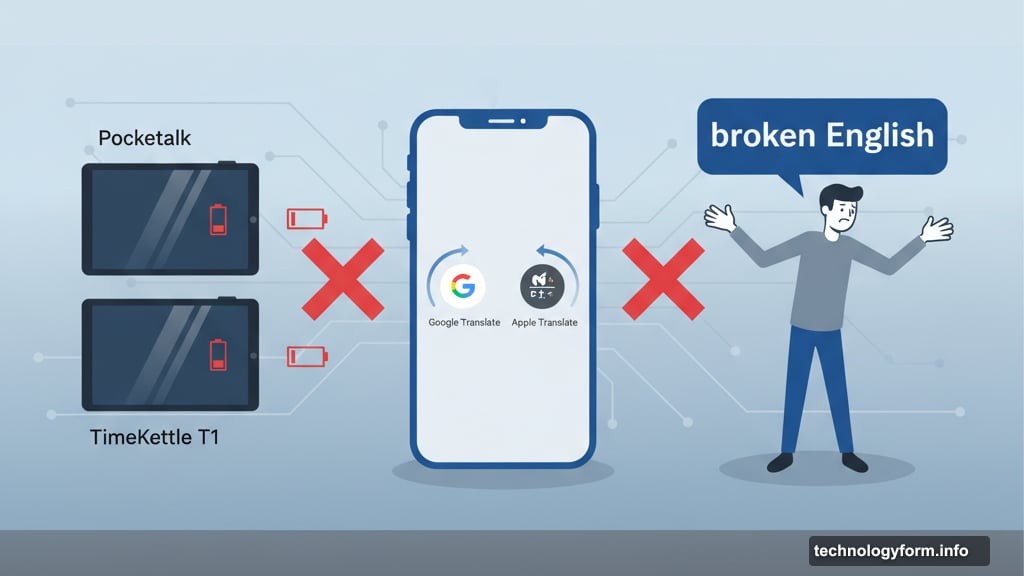
Here’s the problem with AI translators. They demand time, patience, and stable internet connections.
First, you need to predownload language pairs for offline use. Then you have to explain to confused locals what the device does and how it works. You also need them to be patient enough to wait while the AI processes their words. Most importantly, you can’t be stressed or rushed.
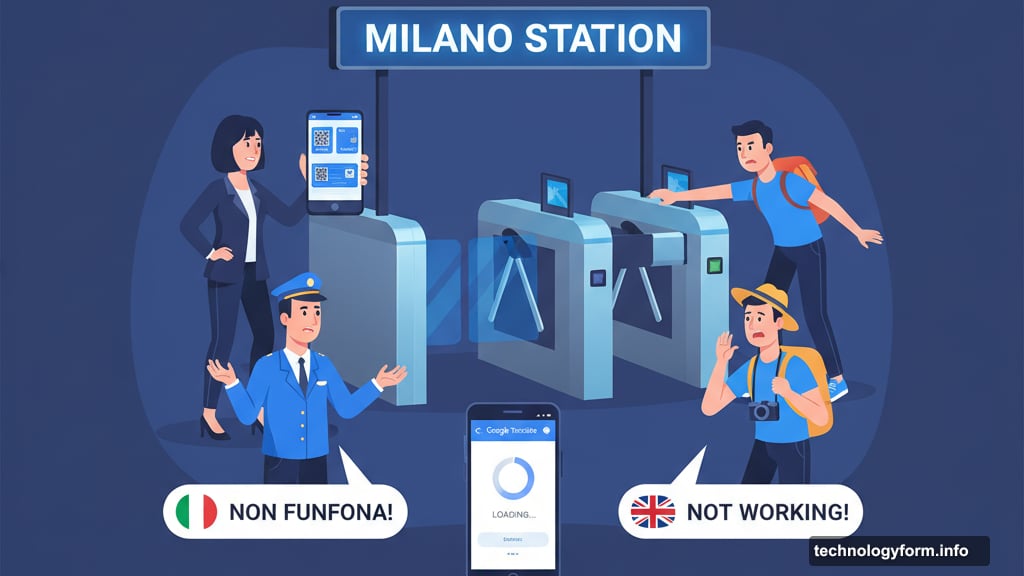
Real life rarely cooperates. In Milan, we nearly missed our train to Switzerland. My mother-in-law had all our tickets on her phone but walked through the turnstiles first. She frantically texted screenshots of three tickets but forgot the fourth. My spouse got stranded.
A station agent shouted in Italian. My mother-in-law yelled in English. I froze trying to decide which translation device would help. By the time I opened Google Translate, my spouse bellowed an expletive that transcended all language barriers. The Milanese commuters glared. The agent threw up his hands and waved us through.
So much for AI saving the day.
When Translation Tech Actually Helps
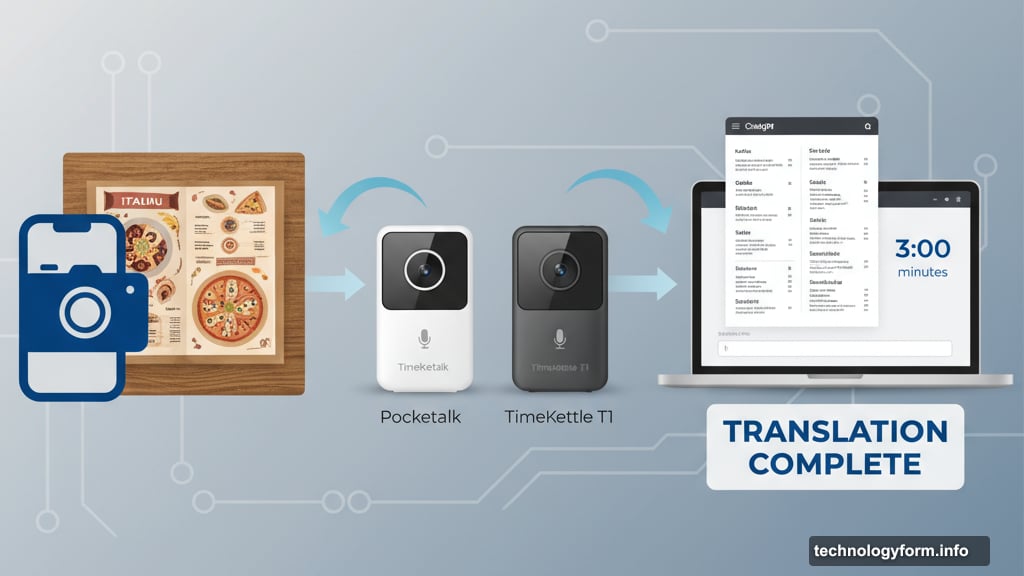
The Pocketalk and TimeKettle T1 occasionally proved useful. Both devices include cameras that translate text in photos. That worked well for reading Italian menu items.
However, photographing entire menus created cramped, unreadable translations. ChatGPT took three minutes to translate five pages of a Swiss cafe’s drink menu. It completely ignored all the coffee options and only translated alcoholic beverages. We went there for coffee.
Asking the waiter in broken English was faster and easier.
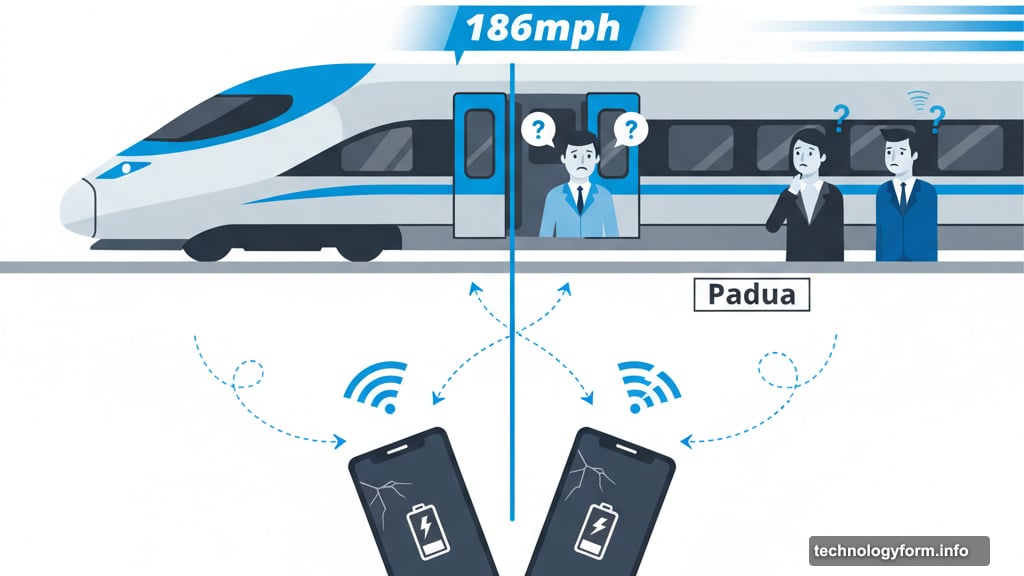
Both devices also work offline once you download language packs. That frees up your phone for other tasks like navigation or group chats. But they need charging every night. Forget once and you’re carrying expensive paperweights.
Google Translate and Apple Translate work similarly but drain your phone battery. They also require predownloading languages for offline functionality. The camera features are slightly worse than dedicated devices.
AI Translators Get Context Wrong
Translation accuracy remains hit-or-miss. My sister-in-law bought mineral water in Pompeii. She asked if “calcio” on the nutrition label meant calories.
Given the amount was listed in milligrams, I guessed calcium. Nevertheless, I tested my entire arsenal. Both Google Translate and Apple Translate defined “calcio” as “soccer” – technically correct but wildly wrong in context.
The Pocketalk’s camera function got it right. But by the time it finished processing, my mother-in-law had already asked our tour guide. AI was three minutes too slow.
For simple word lookups, these tools work fine. But nuanced translations require human judgment that AI still lacks.
The One Time AI Translation Helped
About 90 minutes before the train chaos, a Chinese grandmother poked my sister-in-law repeatedly. She assumed my sister-in-law was Italian and kept trying to communicate via a Chinese translation app.
This was the perfect scenario for my gadgets to shine. Except both translation devices were dead and needed to download Chinese language packs. The train’s Wi-Fi was spotty. Apple Translate also required downloading Chinese first.
Google Translate saved me. The grandmother whispered questions into her phone in Mandarin. I read the English translation. She was terrified of missing her Venice stop. Could she get off with us?
I spoke my reply into my phone. Same destination. I’ll let you know when to get off. Don’t worry.
The AI translation was decent enough. She shook my hand in relief. An hour later, she asked to borrow a battery pack. Her phone was dying. I handed her a USB-C cable but she looked confused.
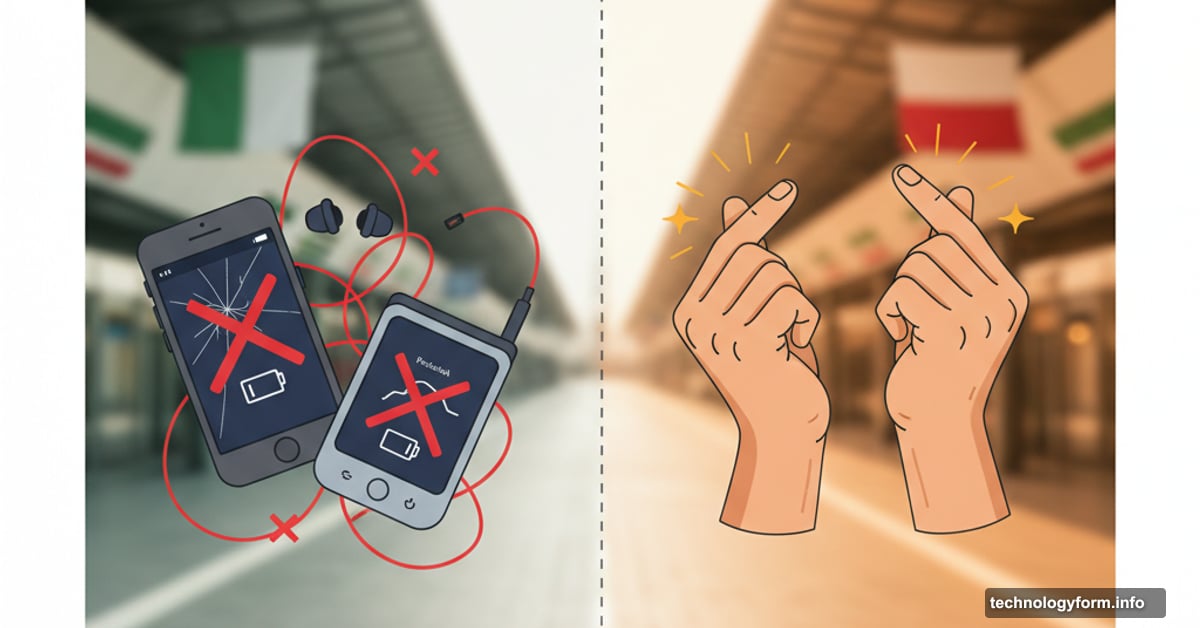
So I smiled, took her phone, plugged it in, pointed to the outlet, and gave her a thumbs up. She clasped my hand and smiled back. No translation needed for that.
What Actually Works When Traveling
An international high-speed data plan for your phone beats everything. It keeps Google Maps running, lets you message family, and enables real-time translation when you actually need it.
Translation gadgets make sense as emergency backups. I’d definitely carry them as a solo traveler, living abroad short-term, or dealing with hospitals or police stations. But for casual tourism? Your phone works fine.
The most useful travel skill remains old-fashioned communication. Point at things. Smile genuinely. Show photos. Use exaggerated hand gestures. Most Europeans speak enough English to help confused tourists anyway.
My fearless mother-in-law proved this repeatedly. She’d march up to strangers in her Southern drawl and get answers before I could unlock my phone. No AI required.
Even our train platform disaster got resolved through common sense and Google Maps. Venezia Santa Lucia was the last stop. No other passengers got up when my family did. Our train was delayed 20 minutes. I remembered my father-in-law saying “It’s 12:34!” right before the chaos – our original arrival time.
We were in Padua. Two stops and 25 minutes from Venice. I texted our stranded family that the next train arrived in 15 minutes. Crisis solved.
AI Can’t Replace Human Kindness
The Chinese grandmother looked terrified on that train. AI translation helped me understand her fear and offer reassurance. That mattered.
But no AI could explain why I helped her. She reminded me of my mom. If my mom were alone and afraid in Italy, I’d want strangers to help her too.
Before we parted on the Venice platform, I wanted to tell her I hoped her stay would be magical. Instead, I settled for an exaggerated wave and let her keep my USB-C cable. Some things don’t need translation.
Translation technology improves constantly. Maybe in five years, these devices will anticipate chaos and preemptively help. Maybe they’ll understand context perfectly and work offline flawlessly.
Until then, pack a charger, download language packs before you leave, and remember that pointing at things works surprisingly well. Plus, smiling costs nothing and translates everywhere.