AWS Outage Crushes Fortnite, Alexa, and Half the Internet
Amazon’s cloud infrastructure just went down hard. Millions of users suddenly couldn’t play games, shop online, or even turn on their lights with voice commands.
The outage hit AWS’s US-EAST-1 region around 3:11 AM ET on October 20th, 2025. But the damage spread far beyond one data center. Services crashed globally, affecting everything from chatbots to fast food apps.
This wasn’t a minor hiccup. Major platforms went dark for hours while Amazon scrambled to diagnose the problem.
What Actually Went Down
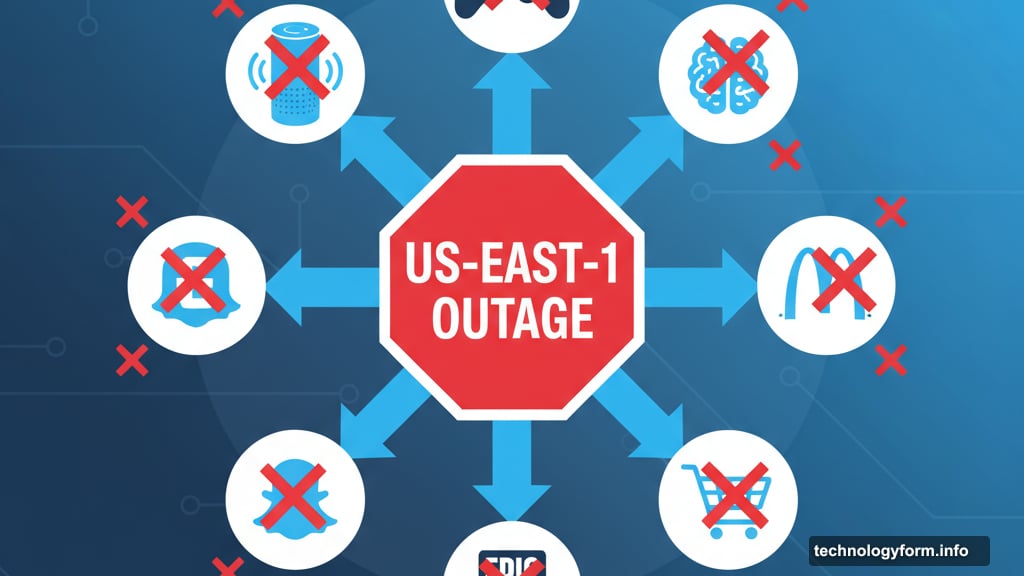
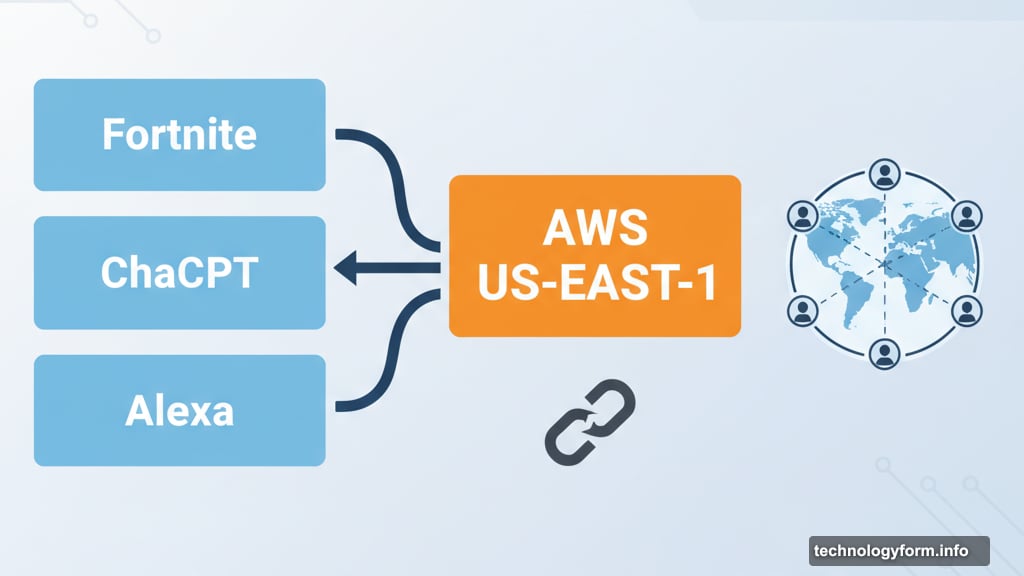
The casualty list reads like a who’s who of internet services. Fortnite players got booted mid-game. ChatGPT stopped responding. The Epic Games Store became unreachable.
Alexa smart assistants turned into expensive paperweights. Users reported that their voice assistant couldn’t answer questions or execute commands. Even pre-programmed routines like morning alarms failed to trigger.
Meanwhile, apps you might not expect were also casualties. McDonald’s customers couldn’t place mobile orders. Canva users lost access to their designs. Perplexity’s AI search engine went completely offline.
Snapchat users couldn’t send messages. Airtable projects became inaccessible. Amazon’s own retail platform struggled to load pages.
The AWS status dashboard lit up with warnings about “impacted” services across multiple regions. Although US-EAST-1 took the hardest hit, problems rippled outward to affect global operations.
Amazon’s Response Timeline
Amazon first acknowledged issues at 3:11 AM ET. But details came slowly.
At 3:51 AM, the company posted an update promising more information within 45 minutes. They were “actively engaged” in fixing the problem and investigating root causes.
By 5:27 AM, Amazon reported “significant signs of recovery.” Most requests were succeeding again. However, a backlog of queued requests still needed processing.
Finally, at 6:35 AM, Amazon announced that “most AWS Service operations are succeeding normally now.” They continued working toward full resolution.

Notice what’s missing from that timeline? Any explanation of what actually caused the outage.
Why This Keeps Happening
This marks at least the fourth major AWS outage since 2020. Previous disruptions in 2020, 2021, and 2023 created similar chaos across the internet.
The pattern reveals a fundamental problem with modern internet infrastructure. Too many services depend on too few cloud providers. When AWS sneezes, half the internet catches a cold.
Plus, the US-EAST-1 region hosts a disproportionate share of critical services. Companies choose this region for its reliability and performance. But that concentration creates a single point of failure.
Perplexity CEO Aravind Srinivas captured the frustration perfectly on X: “Perplexity is down right now. The root cause is an AWS issue. We’re working on resolving it.”
Translation? Even if your team does everything right, you’re still vulnerable to problems you can’t control.
The Hidden Cost of Cloud Dependency
These outages expose an uncomfortable truth about cloud computing. Companies sacrifice control for convenience.
Running your own servers sounds expensive and complicated. Using AWS seems smarter. Until it doesn’t work and you can’t do anything except wait for Amazon to fix it.
Consider the ripple effects beyond frustrated users. Businesses lost sales during the outage. Gamers lost progress. Remote workers couldn’t access files. Smart home devices became dumb.
McDonald’s couldn’t process mobile orders. How many customers went to competitors instead? That’s revenue Amazon’s cloud failure cost them.
Yet most companies will stick with AWS anyway. The alternative requires massive infrastructure investments and specialized expertise most organizations lack.
What You Can Actually Do About It
Individual users have limited options. When AWS goes down, you mostly just wait and hope for quick recovery.
Companies, however, need better backup plans. Relying solely on one cloud provider is risky. Multi-cloud strategies spread that risk across providers.
But multi-cloud setups cost more and add complexity. You’re essentially paying for redundancy you hope to never use. That’s a tough sell to budget-conscious executives.
Some companies now maintain hybrid infrastructure. Critical services run on multiple clouds or mix cloud with on-premises servers. More expensive, yes. But insurance against total failure.
For regular users, the lesson is simpler. Don’t assume the cloud is invincible. Keep local backups of important files. Have offline entertainment options. Maybe keep a regular alarm clock handy.
The Real Problem Amazon Won’t Fix
Amazon has every incentive to prevent outages. Downtime damages their reputation and costs them money.
Yet these disruptions keep happening. Why? Because perfect reliability is impossible at this scale. AWS handles millions of requests every second across countless services. Something will eventually break.
Amazon could diversify US-EAST-1’s workload across more regions. But customers choose that region specifically. Forcing them elsewhere would hurt performance and complicate configurations.
The company could invest more in redundancy and failover systems. But those systems add costs that get passed to customers. Plus, even backup systems can fail.
Here’s what really bugs me about these outages. Amazon knows their infrastructure powers huge chunks of the internet. Yet they consistently fail to communicate clearly during crises.
Four hours into the October outage, users still had no explanation for what went wrong. Generic status updates about “working to mitigate” don’t help anyone plan their response.
Companies depending on AWS deserve better transparency. Users deserve honest timelines, not optimistic reassurances that problems are “mostly resolved” while services remain broken.
Until AWS faces real competition or regulation, expect more of the same. Occasional outages. Vague explanations. Slow recovery. Rinse and repeat.