Google Veo 3 Just Beat OpenAI Sora. But We All Lost
Two AI video giants battled for supremacy. The winner creates deepfakes so realistic, even experts can’t spot them.
That’s not hyperbole. After weeks testing OpenAI’s Sora 2 and Google’s Veo 3, I watched both tools generate frighteningly convincing clips in under five minutes. The experience left me unsettled in ways previous AI testing never did.
Both services excel at their core mission: transforming text prompts into realistic video with synchronized audio. One edges ahead technically. But the real story isn’t which model wins. It’s what their existence means for truth online.
What Makes These Different From Earlier AI Video
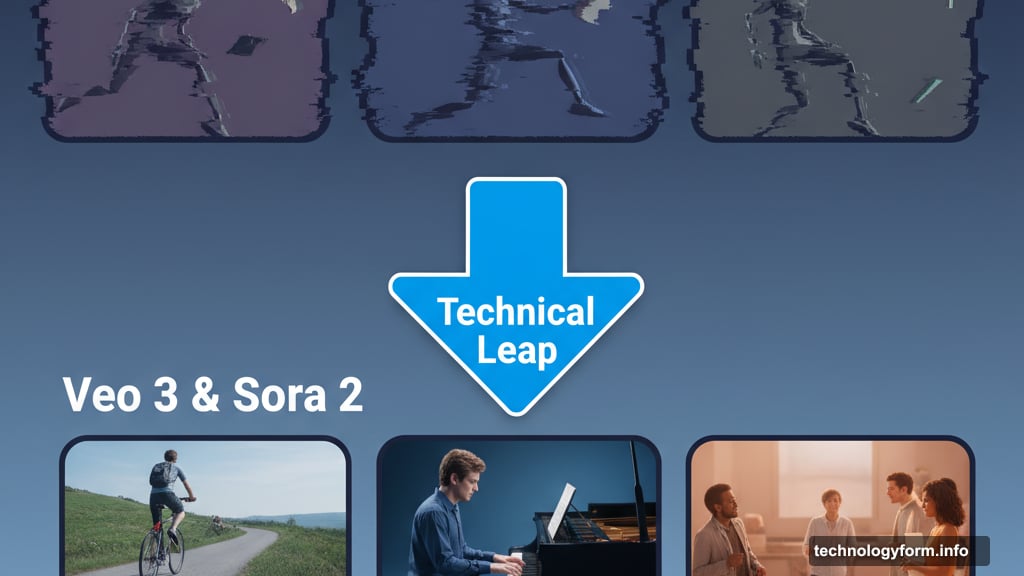
Previous AI video tools created obvious fakes. Characters morphed mid-scene. Physics broke down. Audio felt disconnected from visuals.
Not anymore. Veo 3 introduced synchronized audio first, setting a new standard. Sora 2 followed with longer clips and smarter sound design. Both now generate footage that passes casual inspection.
The technical leap happened fast. Just months ago, AI video struggled with basic human movement. Now these tools render complex scenes with multiple characters, accurate physics, and appropriate background noise.
So the bar for “AI slop” just rose dramatically. What used to look fake now looks real enough to fool most viewers.
How Sora and Veo Stack Up Feature by Feature
Video length and quality:
Sora creates 10-15 second clips at 1080p (25 seconds for Pro users). You choose portrait or landscape orientation before generating. Veo locks you into 8-second landscape videos at 720p, though developers can adjust specs in other Google tools.
Prompt adherence:
Both follow instructions well. But Veo handles text better. When I asked each to create “Katelyn’s Café” signage, Veo even added the accent mark I forgot. Sora butchered my name completely.
Speed:
Veo generates clips one to two minutes faster. Both average two to five minutes total. Not instant, but fast enough to flood social media quickly.
Audio quality:
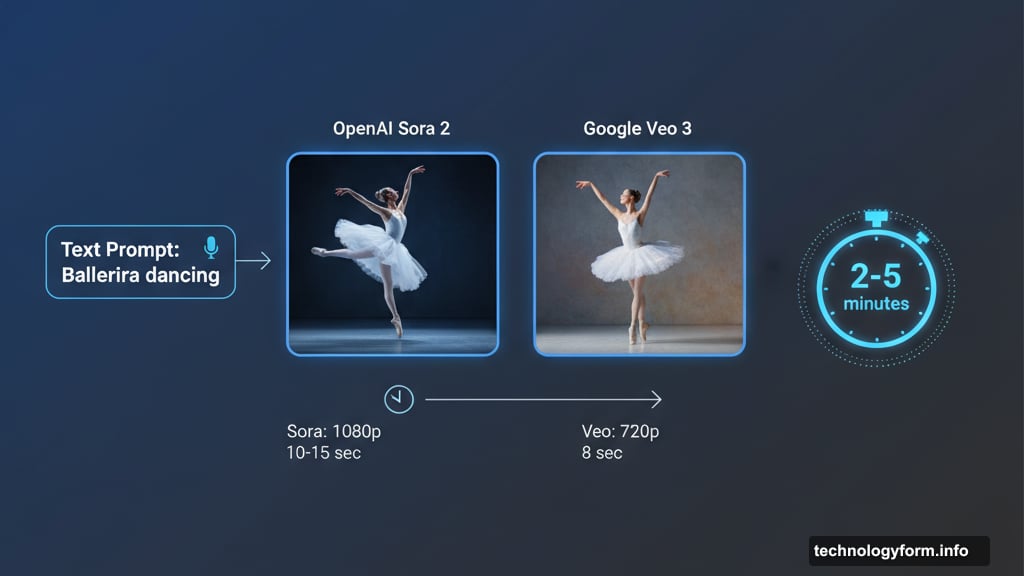
Sora takes this category. It adds appropriate music and environmental sounds without being asked. My ballerina video got classical music. My coffee shop scene included customer conversation in the background. Veo’s audio works fine but feels more generic.
Physics and Motion Tests Reveal the Winner
I tested both with challenging scenarios: ballerinas dancing, aliens in dance battles, animated objects. The goal? See if they respect basic physics.
Sora’s ballerina glided across the floor naturally. Veo’s alien maintained consistent anatomy throughout its routine. Neither perfect, but both impressive.
However, Sora’s motion flows more smoothly. Characters move naturally between positions. Objects behave as they should. Veo occasionally produces slightly jerkier movements, though the difference is subtle.
Both hallucinate sometimes. Sora generated a floating donut that seemed slightly unhinged. Veo’s animated donut felt tamer and cuter. Your preference depends on what you need.
The Pricing Reality Nobody Mentions
Sora is free right now. You just need an invite code. But OpenAI hasn’t promised this lasts forever. Eventually, they’ll likely charge.
Veo costs $20 monthly minimum through Google’s AI Pro plan. Generation limits kick in fast too. I hit my cap after just five videos, locking me out for four hours.
Plus, neither offers good editing after generation. Sora’s “edit video” button just lets you rewrite prompts and regenerate. Veo’s follow-up requests rarely work.
So the free option sounds great until OpenAI starts charging. Then both cost the same $20 monthly, with different generation limits and features.
The Deepfake Problem Nobody Can Solve
Here’s where testing got uncomfortable. Both tools make creating convincing deepfakes trivially easy.
Sora’s social media app lets you use anyone’s likeness in videos. OpenAI added guardrails after Bryan Cranston and other celebrities complained. Those protections aren’t enough. Racist deepfakes of Martin Luther King Jr. flooded the app before OpenAI temporarily blocked his likeness.
Veo faces similar struggles. Google’s AI image models already caused controversy. Veo 3 inherited those content moderation challenges.
Both companies claim they’re working on better safeguards. Both struggle to actually implement them effectively. Meanwhile, the tools get more powerful and accessible every month.
The technical achievement is impressive. The societal implications are terrifying.
Which One Should You Actually Use
For most people? Whichever one you already pay for.
If you have ChatGPT Plus, use Sora. If you use Gemini, stick with Veo. Both deliver solid results for typical projects.
But if you’re choosing between them specifically, Sora edges ahead technically. Its motion flows more smoothly. Its audio fits scenes better. Its hallucinations happen less frequently.
Sora’s bouncing watermark also feels more honest than Veo’s static corner logo. Small detail, but it matters when these tools can so easily create misleading content.
Veo works better for professional workflows, especially through Google’s Flow video editing tool. It also generates slightly faster. Those perks matter if you’re producing content at scale.
The Uncomfortable Truth About AI Video
I’ve reviewed AI tools since they launched. This comparison felt different.
Not because the technology impressed me. It did, but I expected that. What unsettled me was how quickly and easily both services generate footage I couldn’t distinguish from reality without watermarks.
We crossed a line somewhere. AI video stopped being a novelty and became a genuine threat to shared truth. Both companies know this. Both keep pushing forward anyway.
The technical winner is Sora. But celebrating that victory feels hollow when both tools make reality harder to verify every day they exist.
Choose your AI video generator carefully. Use watermarks religiously. Question everything you see online now.
Because in this weird new reality we’ve created, even the winning AI is part of our collective loss.