Microsoft Just Killed the Old Outlook. Your Email Client Is About to Get Weird
Microsoft just threw a bomb into Outlook’s future. The company reorganized its entire email team under new leadership with one goal: rebuild Outlook from scratch for AI.
Not add AI features. Not bolt on some chatbot. Completely reimagine how email works.
This matters because Outlook runs business communications for millions of companies worldwide. Plus, Microsoft’s track record with major Outlook overhauls hasn’t exactly been smooth lately. So buckle up.
The Body Double Vision Nobody Asked For
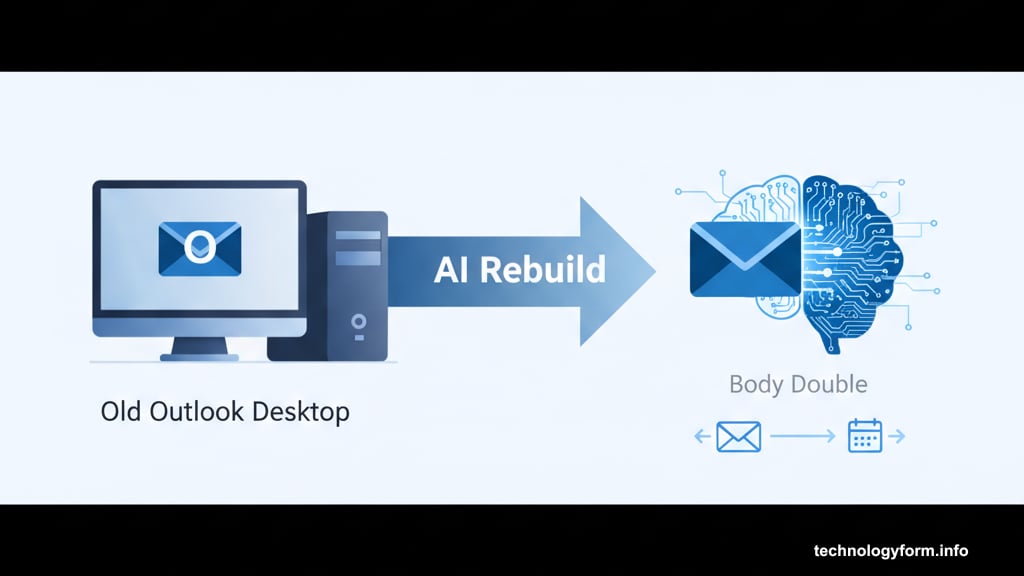
Gaurav Sareen, Microsoft’s new corporate vice president leading this charge, laid out his vision in an internal memo. He wants Outlook to become your “body double” at work.
What does that even mean? According to Sareen, Outlook should read your messages, draft replies, and organize your entire schedule. The email client transforms from a tool into a partner that acts on your behalf.
But here’s the catch. Microsoft already has Copilot doing exactly this across Office apps. So why rebuild Outlook separately? The answer seems to be that bolting AI onto existing software isn’t enough anymore. Microsoft wants AI baked into Outlook’s DNA from day one.
That’s a massive gamble. Outlook users just finished adjusting to the web-based “One Outlook” redesign that replaced desktop apps. Now Microsoft wants to upend everything again before that transition even finished properly.
Speed Over Stability
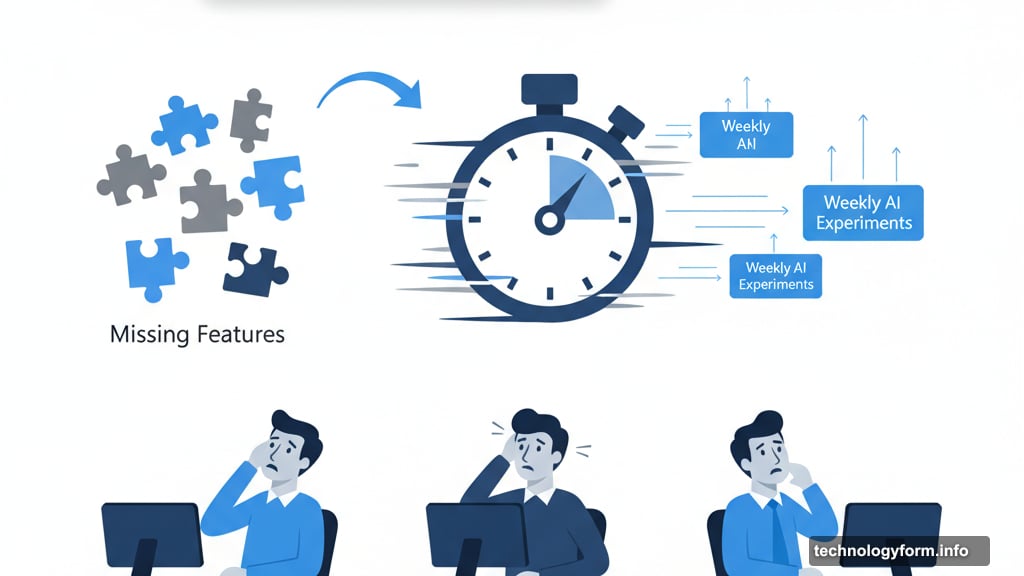
The new Outlook leadership isn’t messing around with timelines either. Sareen expects weekly feature experiments instead of quarterly ones. Prototyping should happen in days, not months.
That’s a dramatic shift. Microsoft previously spent years carefully developing Outlook features. Now they want rapid-fire AI experiments shipped to millions of business users.
Moreover, Sareen told his team that AI won’t just be in the product. It will define the culture, helping them “move at the speed this moment demands.” Translation: ship fast, iterate faster, and hope nothing breaks too badly.
Remember when Microsoft struggled for years to make One Outlook work properly? That careful approach still resulted in complaints about missing features and performance issues. So this aggressive timeline feels risky at best.
The One Outlook Mess Isn’t Even Fixed Yet
Speaking of One Outlook, Microsoft started that overhaul a few years ago. The goal was to replace separate Windows, Mac, and web versions with a single web-based client.
How’s that going? Not great, actually. Microsoft still hasn’t brought One Outlook up to the standard of the desktop apps it’s replacing. Power users complain about missing features. Performance remains inconsistent. The transition drags on.
Yet Microsoft is already planning the next massive transformation before finishing the current one. That’s either bold or reckless, depending on your perspective.
Plus, business executives rely on Outlook calendars every single day. Their assistants book meetings in Outlook. Their workflows depend on Outlook rules and folders working exactly as expected. Messing with that foundation could backfire spectacularly.
The Reorg That Never Stops
This Outlook shake-up connects to Microsoft’s broader AI reorganization. Ryan Roslansky, LinkedIn’s CEO, took over as head of Office earlier this year in another AI-focused reorg. Sareen now reports to Roslansky, who leads Office, Outlook, and the Microsoft 365 Copilot app teams.
Everything at Microsoft reorganizes around AI these days. Teams shift. Leaders change. Priorities flip overnight. All in service of Microsoft’s bet that AI defines the future of productivity software.
But talk to Microsoft employees off the record and you’ll hear doubts. Plenty of them question whether these constant AI pivots actually help customers. Some wonder if Microsoft is chasing trends instead of solving real problems.
Sareen acknowledged this skepticism in his memo. He challenged his team to find “courage” and “let go of old ways of working.” He urged them to “step forward when the easier path is to wait.”
That language suggests resistance within the Outlook team itself. Not everyone believes rebuilding Outlook for AI makes sense right now.
The AI Native Race
Sareen predicts that next year, every product will claim to be “AI native.” Some teams will just slap AI onto existing products and make buzzword-compliant claims. Other teams will actually rebuild from scratch.
He’s betting his leadership that Outlook becomes the real deal, not the buzzword version. That’s a public commitment that could backfire if the AI overhaul flops.
Moreover, Microsoft faces competition from startup email clients already built around AI. Superhuman added AI features years ago. Hey redesigned email workflows from scratch. Shortwave rebuilt Gmail with AI at its core.
So Microsoft isn’t first to this party. But it has the advantage of 400 million Outlook users locked into corporate email systems. The question is whether those captive users will tolerate another disruptive transformation.
What Could Possibly Go Wrong
Let’s talk about the risks. Outlook handles sensitive business communications, legal correspondence, and confidential negotiations. AI reading and drafting those messages creates new security and privacy concerns.
What happens when Outlook’s AI body double misinterprets an email and sends the wrong reply? Who’s responsible when AI scheduling conflicts with actual human intentions? How do companies audit AI-generated communications for compliance?
Microsoft hasn’t publicly addressed these questions yet. But they’re coming, especially once businesses realize their email client is making autonomous decisions.
Furthermore, Microsoft’s recent track record with major updates isn’t reassuring. The company rushed out buggy Windows 11 updates that broke recovery tools. It launched Surface handhelds that feel half-baked. It pushed Copilot features that users largely ignore.
Now it wants to rebuild Outlook faster than ever, with AI experiments shipping weekly. That combination of speed and complexity could produce spectacular failures.
The Real Competition
Microsoft keeps talking about Outlook competing with other email clients. But the actual competition might be different tools entirely.
Slack already replaced email for many workplace conversations. Discord handles community communications. Notion and Asana organize projects without email. Calendar apps from Calendly to Fantastical offer better scheduling than Outlook.
So maybe email itself is the problem, not Outlook specifically. Rebuilding Outlook with AI won’t help if people increasingly avoid email altogether. Microsoft might be optimizing the wrong thing.
That said, business email isn’t disappearing anytime soon. Legal contracts, formal communications, and external correspondence still happen via email. Outlook dominates that space, giving Microsoft a strong position to defend.
What Happens Next
Microsoft will likely show off new Outlook AI features at its Ignite conference next month. Expect demos of AI reading emails, drafting responses, and managing calendars automatically. Sareen and Roslansky will pitch this as the future of productivity.
Then comes the hard part: actually shipping stable AI features that business users trust. Microsoft has months, not years, to prove this overhaul works. Corporate IT departments won’t tolerate another half-finished Outlook remake.
Meanwhile, competitors watch carefully. Google could respond with AI-powered Gmail features. Startups might capture users frustrated with Microsoft’s constant changes. The email wars are heating up again, but with AI as the new battleground.
The stakes are enormous. Outlook generates billions in revenue through Microsoft 365 subscriptions. Losing market share to AI-native competitors would hurt Microsoft’s most profitable business. So Sareen’s team is under intense pressure to deliver.
Microsoft bet the company on AI. Now it’s betting Outlook’s future on the same technology. We’ll know within a year whether that gamble pays off or becomes another cautionary tale about moving too fast.
Choose your email client wisely. The AI transformation is coming whether you want it or not. Just remember that “body double” sounds helpful until it starts making decisions you didn’t authorize.