Adobe Just Put Photoshop Inside ChatGPT. Here’s What That Means
Adobe doesn’t do small moves. So when they drop their flagship apps into OpenAI’s chatbot, something big just shifted in how we’ll edit images and documents.
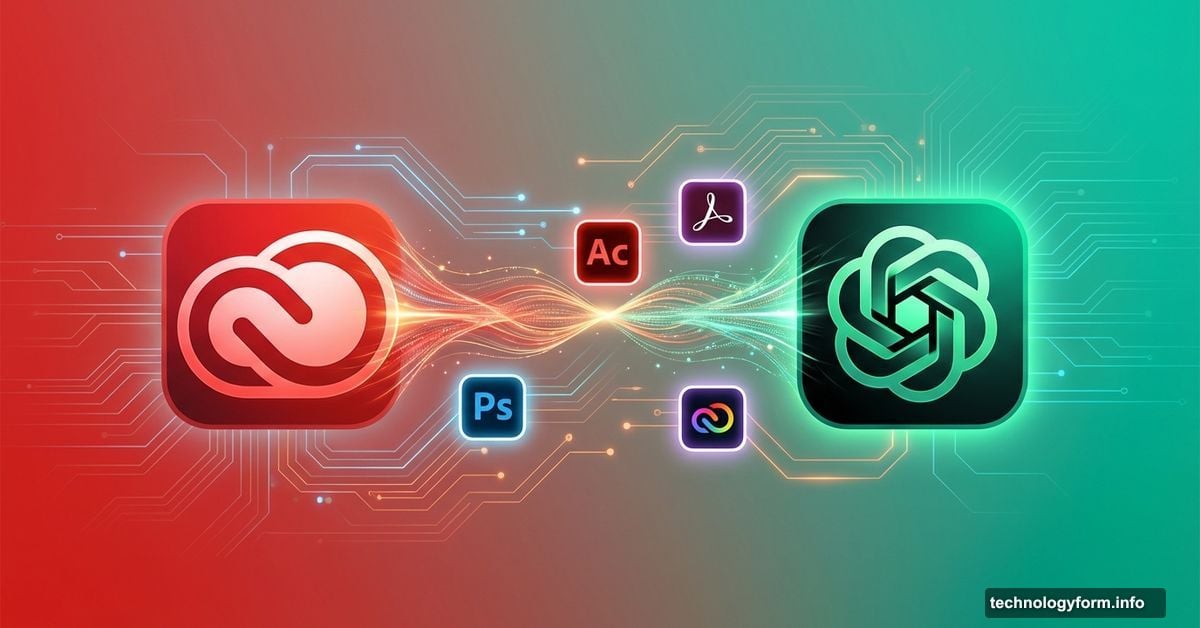
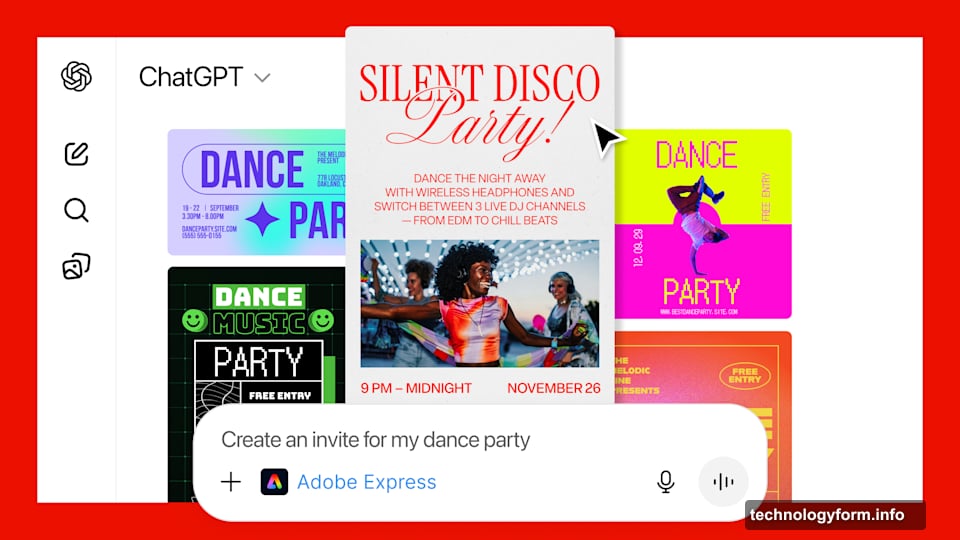
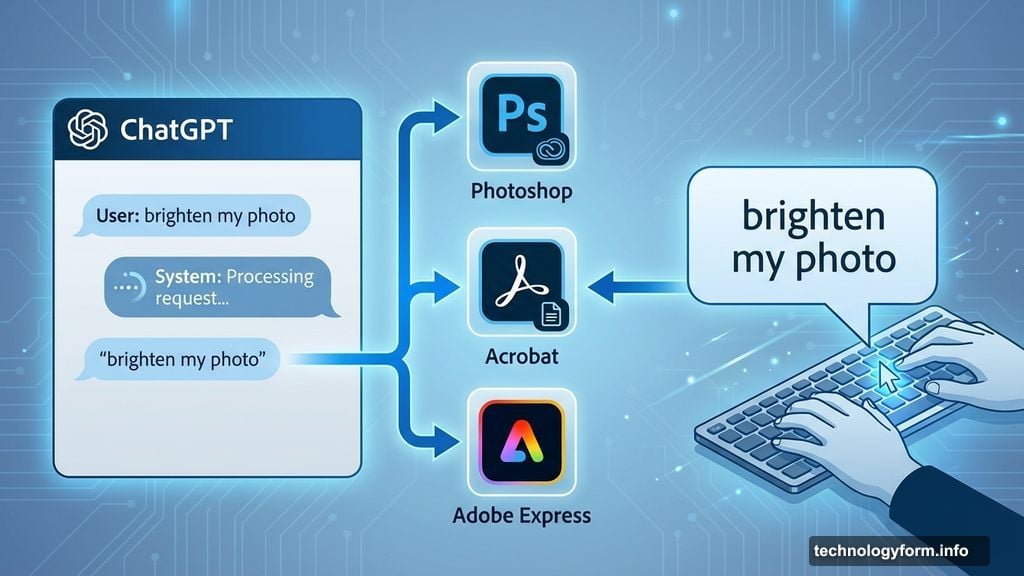
Starting today, Photoshop, Acrobat and Adobe Express work directly inside ChatGPT. No separate windows. No app switching. Just natural language requests that tap into professional-grade tools. Plus, this changes the game for anyone who’s ever felt overwhelmed by Adobe’s notoriously complex interfaces.
Let’s break down what actually works and what this partnership means for creative workflows.
Three Adobe Apps Now Live in ChatGPT
You can access all three apps through OpenAI’s website right now. The setup process differs slightly depending on which tool you need.
For Acrobat and Adobe Express, you’ll sign into your Adobe account before generating PDFs or illustrations. Photoshop works a bit differently. It integrates more deeply with ChatGPT’s interface.
Using the apps feels surprisingly natural. Either mention the app name in your prompt or select it from ChatGPT’s plus menu. Then describe what you want in plain English. The chatbot handles the technical translation.
Photoshop Gets the Smart Interface Treatment
Here’s where things get interesting. ChatGPT doesn’t just open Photoshop and dump you into the full interface. Instead, it shows only the controls relevant to your request.
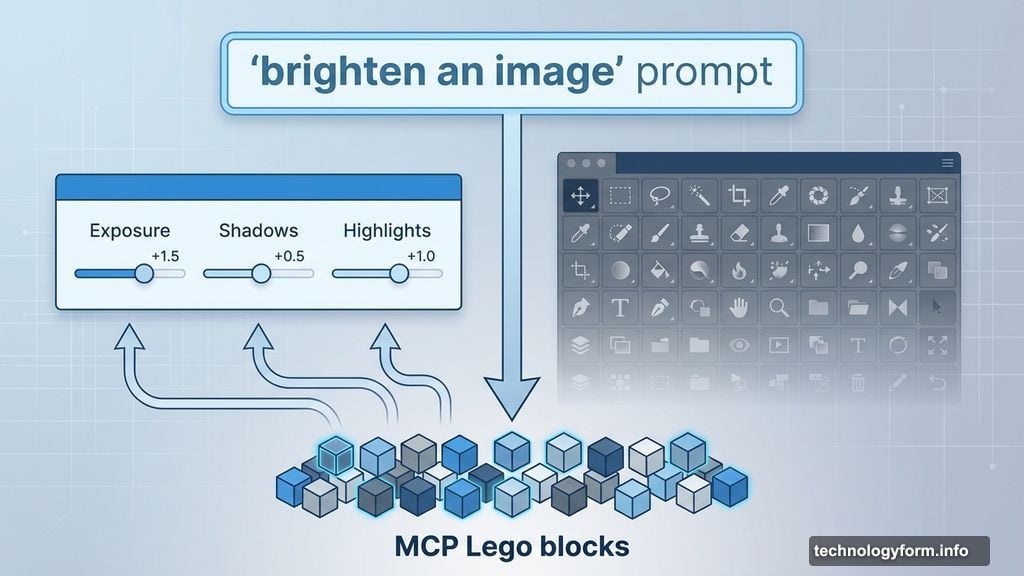
Ask to brighten an image? You’ll see sliders for exposure, shadows and highlights. Want to add effects? The interface shifts to show dithering and tri-tone options. That’s it. No hunting through menus or figuring out which of 47 different tools does what you need.
Adobe built this using MCP servers. These create what Aubrey Cattell, Adobe’s vice-president of developer platform, calls “Lego blocks” of functionality. ChatGPT picks which blocks to present based on your natural language request.
“We build the Lego blocks, which are the MCP tools, and we create detailed instructions, and then ChatGPT figures out what it wants to do,” Cattell explained. Sometimes the routing works perfectly. Sometimes it doesn’t. But the system keeps learning from user patterns.
Adobe Complexity Meets AI Simplification
Adobe software has always packed incredible power. It’s also packed overwhelming complexity. Even seasoned designers admit they use maybe 20% of what Photoshop can do.
That’s where this ChatGPT integration shines. You don’t need to know where Adobe hid the feature you want. Just describe the result you’re after. The AI figures out which tools to surface.
Of course, power users might prefer the full web versions of these apps. Good news. They’re just one click away when you need more granular control. But for quick edits and common tasks? The simplified interface handles them fast.
The Operating System Play Behind This Move
For OpenAI, this represents their biggest partnership win yet. They’re actively reshaping ChatGPT from a chatbot into an operating system for daily workflows.
Think about it. Over 800 million people use ChatGPT. Now they can access professional creative tools without leaving the conversation. That’s massive leverage for OpenAI’s platform ambitions.
But here’s the weird part. OpenAI already offers image generation through DALL-E. They’re literally competing with Adobe’s core business. So why would Adobe partner with them?
Why Adobe Isn’t Worried About the Competition
Cattell sees natural synergy instead of threat. “A couple weeks back, OpenAI dropped Apps SDK as a new paradigm for accessing ChatGPT,” he noted. “We saw there was a natural fit in the work we were doing with our applications.”
Adobe views ChatGPT as an operating system they can leverage. Instead of building their own AI interface from scratch, they’re plugging into OpenAI’s existing massive user base. Smart distribution strategy.
Plus, Adobe maintains a crucial advantage. Their full apps still offer more power, precision and control than what fits inside a ChatGPT conversation. Think of the integration as an on-ramp, not a replacement.
What This Means for Creative Workflows
The practical implications hit different user groups differently. Casual users gain access to professional tools without the learning curve. That’s huge for small business owners who need quick graphics or document editing.
Professional creators get a faster way to handle routine tasks. Need to quickly adjust exposure on 20 photos? Describe what you want once and let the AI apply it consistently. Save the detailed work for the full Photoshop interface.
But there’s a darker side worth mentioning. As AI makes professional tools more accessible, it also commodifies creative work. When anyone can generate decent graphics through ChatGPT, what happens to entry-level designer jobs?
The Interface Evolution Nobody Expected
What Adobe built here represents something bigger than a feature integration. It’s a new interface paradigm. Instead of learning where software companies hide features, you describe what you want. The AI handles the translation.
This could reshape how we think about professional software entirely. Why memorize menu structures when natural language works? Why spend hours learning keyboard shortcuts when you can just ask?
Of course, there’s a limit. Complex creative work still requires hands-on control. You can’t art direct by committee with an AI middleman. But for the 80% of tasks that follow predictable patterns? This approach might actually work better.
More Adobe Apps Coming Soon
Cattell promised continued exploration of what Adobe can offer inside ChatGPT. But he emphasized their standalone apps remain the destination for users wanting maximum capability.
That positioning makes sense. Give people an easy entry point through ChatGPT. Then upsell them to full Creative Cloud subscriptions when they bump against the limitations. Classic freemium strategy adapted for the AI era.
The question is whether OpenAI plays along with that strategy long-term. As their own capabilities improve, they might decide they don’t need Adobe’s “Lego blocks” anymore. That tension will be interesting to watch.
This partnership marks a major shift in creative software distribution. Adobe acknowledged they can’t own the entire user experience anymore. Instead, they’re becoming a capability layer inside someone else’s platform. That’s a big change for a company that’s always controlled its own destiny.
Whether this benefits creators or just shifts power from one tech giant to another remains to be seen. But one thing’s certain. The way we interact with professional creative tools just changed fundamentally.