UK Politicians Eye VPN Crackdown After Age Check Law Backfires
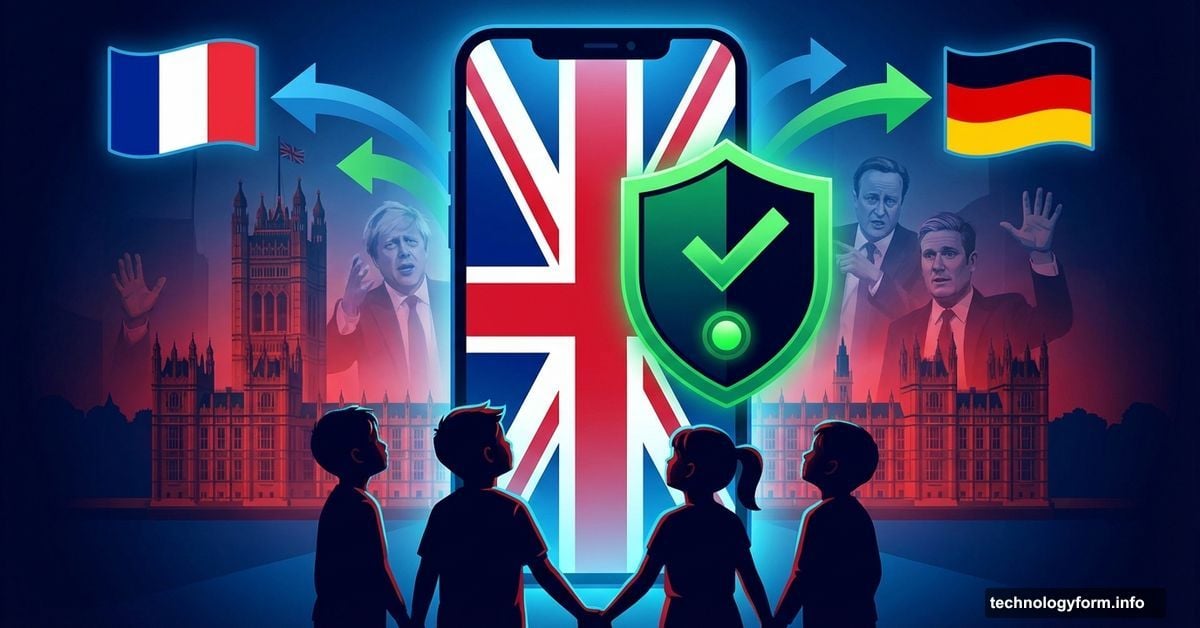
The UK’s flagship child safety law just hit a wall. Kids bypassed age restrictions using the one tool lawmakers didn’t account for: VPNs.
Now officials are scrambling. Some want age gates on VPNs themselves. Others hint at bans. But every expert agrees—blocking VPNs is way harder than it sounds.
Age Checks Drove Brits to VPNs Overnight
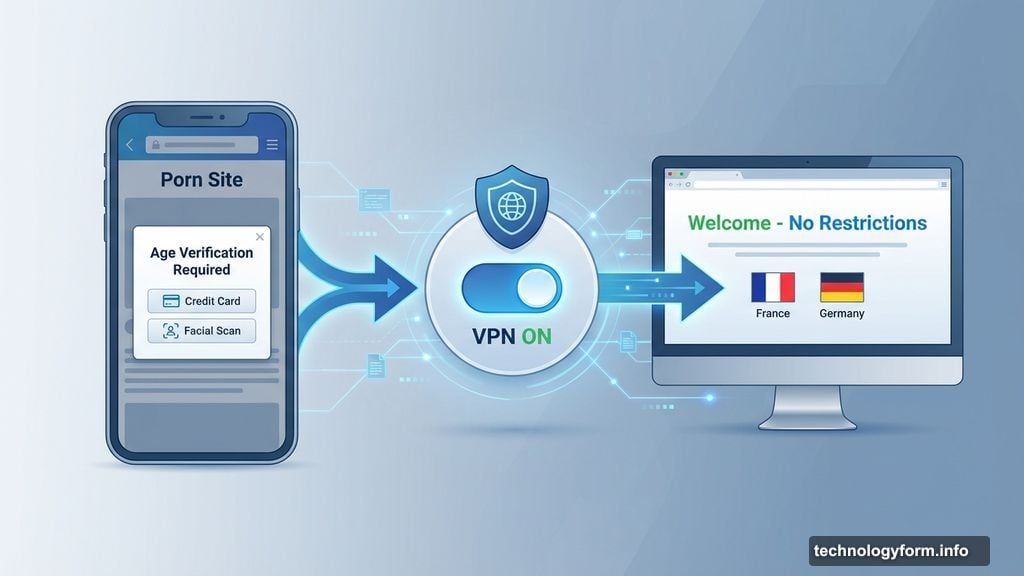
The Online Safety Act took effect in July 2025. It forced porn sites and platforms like Bluesky to verify users’ ages through credit card checks or facial scans. The goal was simple: keep kids away from harmful content.
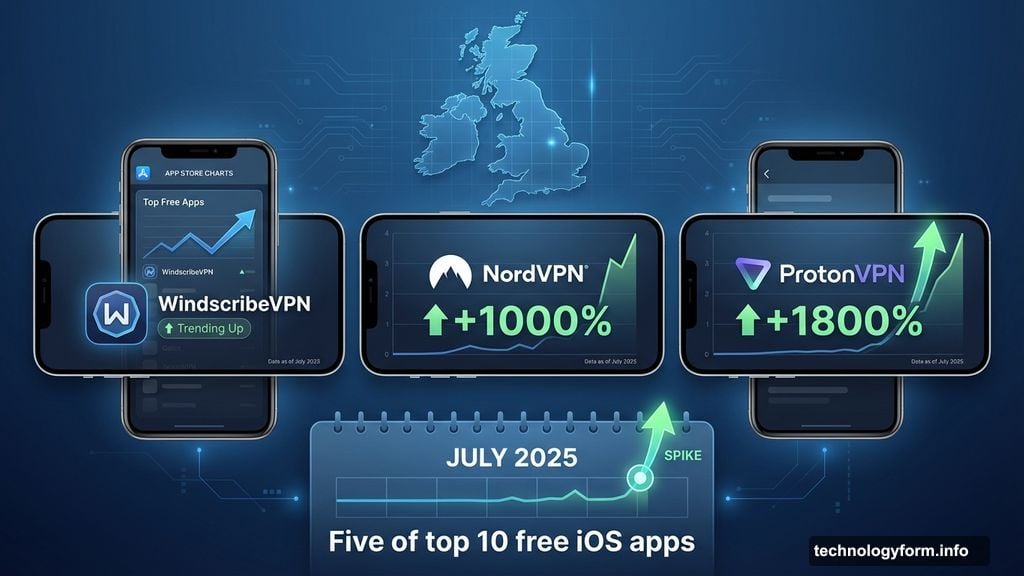
Instead, millions downloaded VPNs. Five of the top 10 free iOS apps became VPNs within days. WindscribeVPN saw user spikes. NordVPN reported 1,000 percent more purchases that weekend. ProtonVPN hit an even crazier 1,800 percent increase in UK signups.
Why? VPNs let users spoof foreign IP addresses. Set your location to France or Germany, and British age checks never appear. The law became optional with one app install.
Even video game Death Stranding’s photo mode briefly worked as a workaround. But VPNs won because they’re dead simple and widely available.
“Nothing Is Off the Table”
UK officials noticed. Rachel de Souza, the government-appointed Children’s Commissioner, called VPNs “absolutely a loophole that needs closing.” Her office published a report demanding age restrictions on VPN software itself.
Members of the House of Lords questioned why VPNs weren’t considered when drafting the law. One proposed amendment to the Children’s Wellbeing and Schools Bill would require VPN providers to implement the same age checks people use them to avoid.
Labour MP Sarah Champion predicted this problem back in 2022, before her party even held power. She warned VPNs would “undermine the effectiveness” of age restrictions and pushed for solutions.
Ofcom, the UK’s media regulator, is now “monitoring VPN use.” They won’t say exactly how. An anonymous spokesperson confirmed they use “a leading third-party provider” and collect only aggregated data, not individual user information. Anonymous data often isn’t truly anonymous though.
Baroness Lloyd of Effra, a government minister, insists “there are no current plans to ban the use of VPNs.” Then she added the kicker: “nothing is off the table.”
Blocking VPNs Would Be Nearly Impossible
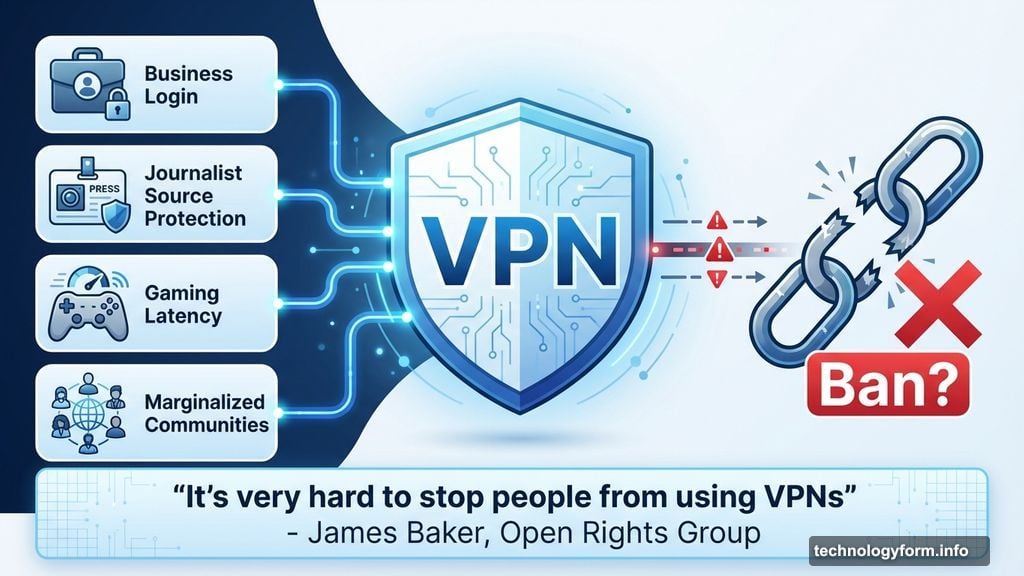
A full VPN ban faces serious obstacles. Businesses use VPNs for secure employee logins. Journalists protect sources with them. Marginalized communities rely on private communication. Even gamers use VPNs to reduce latency.
Ryan Polk, director of policy at the Internet Society, says VPNs “serve many purposes” beyond dodging age checks. Banning them would hurt legitimate users far more than it would stop determined kids.
Plus, it wouldn’t actually work. “It’s very hard to stop people from using VPNs,” says James Baker from the Open Rights Group. Laura Tyrylyte from Nord Security agrees: “Blocking VPN usage is technically complex and largely ineffective.”
Some suggest requiring websites to block all VPN traffic. Netflix and other streaming services already do this. But that creates impossible choices. Websites can’t tell if a VPN user is originally from the UK or somewhere else. So they’d either have to abandon the UK market entirely or block all VPN users globally.
Age-Gating VPNs Seems Most Likely
That leaves one realistic option: requiring age checks for VPN downloads. The Online Safety Act already prohibits platforms from promoting VPNs to children as workarounds. Extending that to VPN providers themselves wouldn’t be too much of a stretch legally.
This approach has downsides though. Both Tyrylyte and Baker warn it would push kids toward sketchier alternatives. Free VPNs often have terrible privacy practices. Some just sell your data to the highest bidder.
Baker points out that paid VPNs like Nord already require credit cards, so underage users are probably flocking to free options anyway. “They are likely just selling your personal data,” he says. Meanwhile, some kids might turn to direct file-sharing via USB sticks, which introduces new security risks.
Beyond VPNs, kids could start using Tor or other privacy tools that are even harder to restrict. The government would be playing whack-a-mole indefinitely.
The Global VPN Panic Begins
The UK wasn’t alone in implementing age restrictions. Australia banned social media for under-16s. Various US states passed internet age limits. The EU is trialing its own restrictions. Wherever these laws appear, VPNs become the obvious workaround.
In Michigan, Republicans proposed ISP-level VPN bans. Wisconsin lawmakers are debating requirements for adult sites to block all VPN traffic. These proposals face the same technical problems the UK does, but that hasn’t stopped politicians from pushing them.
Ofcom is still researching how many British children actually use VPNs versus adults who just don’t want to hand over biometric data to log into Discord. That research will take time. Until then, expect more hand-wringing and half-baked proposals.
The irony is thick. The UK passed sweeping online safety legislation without accounting for the most basic circumvention method. Now officials face an impossible choice: live with the loophole, restrict VPNs and hurt legitimate users, or watch kids move to even less traceable privacy tools.
There’s no clean solution. Every option creates new problems. But politicians feel pressure to do something, anything, even if experts say it won’t work.
So the VPN panic continues. Lawmakers worldwide will grapple with this same dilemma as age restriction laws spread. Meanwhile, tech-savvy kids will always stay one step ahead.