Google Just Killed Free AI Image Creation. Nano Banana Pro Gets Strict Limits
Google’s newest AI toy broke the internet. Now the company’s slamming the brakes on free users.
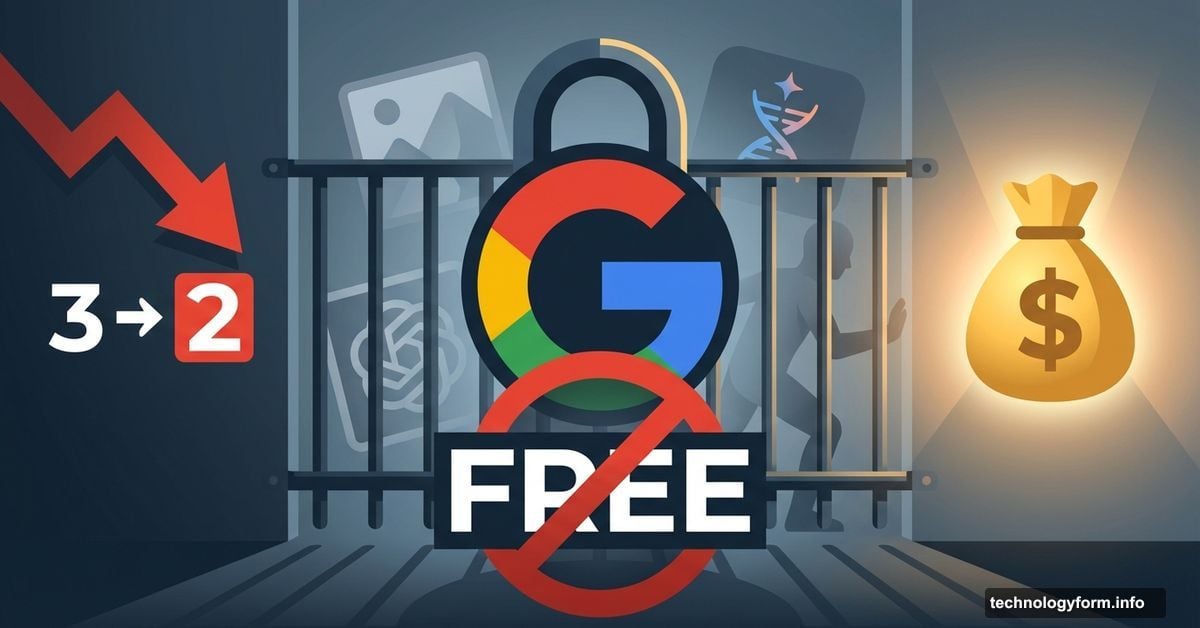
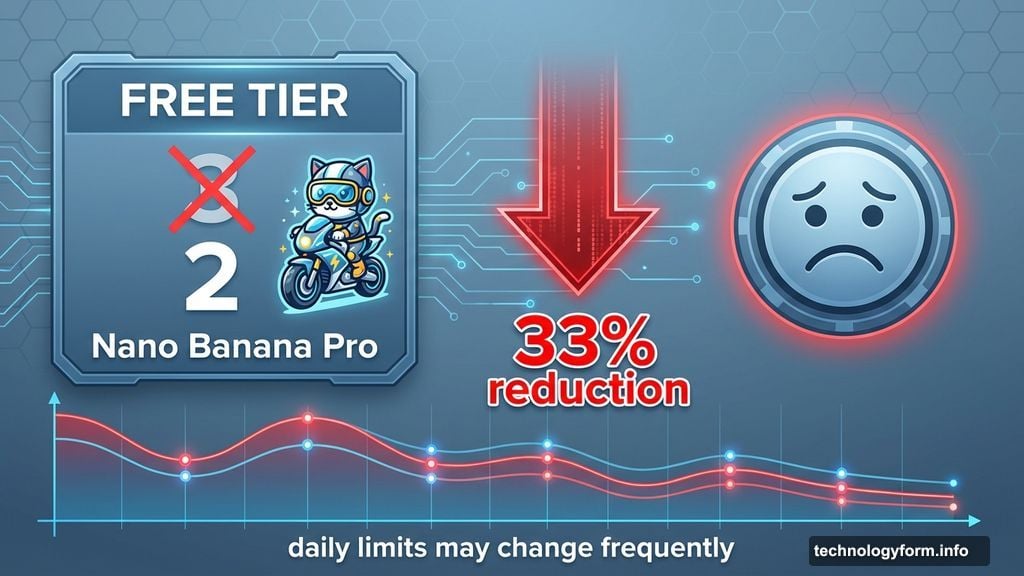
The tech giant quietly slashed free access to Nano Banana Pro image generation this week. Free users dropped from three images daily to just two. Plus, access to Gemini 3 Pro got hit with vague “basic access” limits that seem to change by the hour.
Translation? High demand crashed Google’s party, and free users are paying the price.
Nano Banana Pro Hits a Wall
Google’s Nano Banana Pro launched as the fun alternative to serious AI models. Want to create ridiculous images of cats riding motorcycles? That’s what this model does best.
But popularity became a problem fast. According to a support document spotted by 9to5Google, image generation demand exceeded expectations. So Google responded by cutting free daily generations from three to two.
That’s a 33% reduction in creative freedom. Moreover, the company warns limits “may change frequently and will reset daily.” In other words, expect more cuts without warning.
Free users already dealt with restrictions on other models. Now even the playful image generator joins the list of rationed features. It’s getting harder to justify staying on the free tier.
Gemini 3 Pro Joins the Restricted List
The cuts didn’t stop at image generation. Gemini 3 Pro got similar treatment just days after its November 18 launch.
Google initially promised five free prompts daily for Gemini 3 Pro. That matched the allocation for Gemini 2.5 Pro. Both models offered reasonable free access for casual users testing advanced AI capabilities.
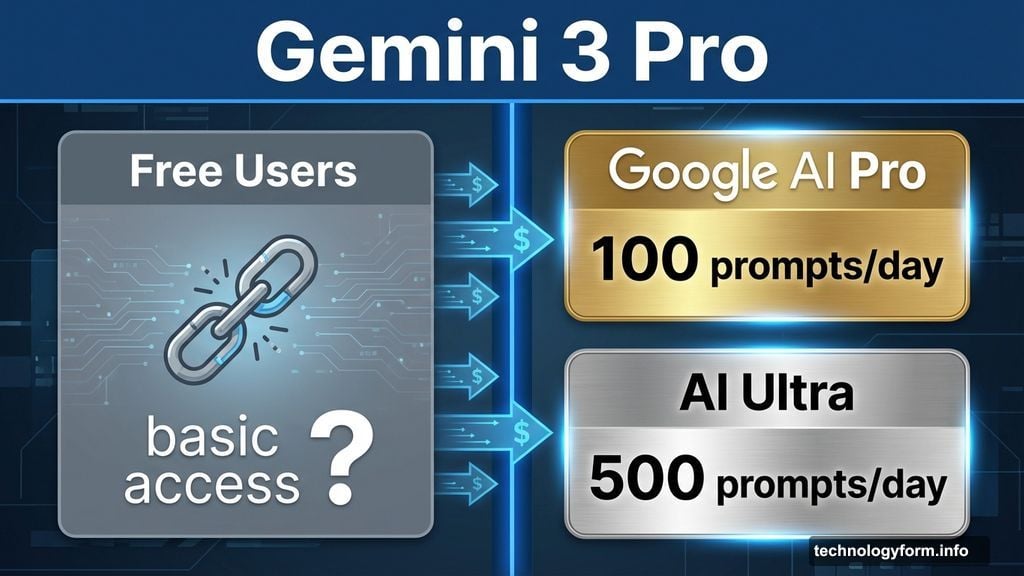
Now? The support page lists “basic access” with daily limits that “may change frequently.” No specific numbers. No guarantees. Just vague restrictions that could tighten at any moment.
This shift happened remarkably fast. Gemini 3 Pro barely existed for a week before Google started pulling back free access. That suggests demand caught the company completely off guard.
Paying Users Stay Protected
Here’s the divide Google created. Free users face shrinking limits and uncertainty. Paid subscribers get stability.
Google AI Pro subscribers still receive 100 prompts daily across models. AI Ultra subscribers maintain their 500 prompt allowance. Neither tier saw reductions despite the same high demand affecting free users.
So Google’s message reads clearly. Want reliable access to new AI features? Pay up. Otherwise, expect limits to drop whenever usage spikes.
This creates a two-tier system where free users become second-class citizens during popular launches. It’s effective marketing for Google’s paid plans. But it frustrates users who helped test and promote these models through free access.
The OpenAI Playbook Strikes Again
Google isn’t writing a new script here. OpenAI pulled similar moves with ChatGPT’s image generation last year.
When DALL-E integration proved wildly popular, OpenAI delayed rolling it out to free users. The company cited infrastructure constraints and needed time to scale capacity. Sound familiar?
The difference? OpenAI eventually brought image generation to free tier users once systems stabilized. Google might follow the same path. But right now, the company offers no timeline for restoring previous limits.
Industry observers see a pattern forming. Companies launch flashy AI features with generous free access. Usage explodes. Restrictions follow immediately. It’s becoming the standard playbook for managing AI product launches.
What This Means for Free Users
Free access to cutting-edge AI keeps shrinking. That’s the reality emerging across the industry.
Google, OpenAI, Anthropic and others initially competed on free tier generosity. Now they’re racing to restrict it. Each company faces massive infrastructure costs for these models. Free users don’t cover those expenses.
So expect more limits, not fewer. Today it’s two images instead of three. Tomorrow it might be one. Or zero during peak hours. Companies will protect paying customers first, always.
For creators and developers testing AI capabilities, this creates real problems. You can’t build projects or learn systems with two daily attempts. That’s barely enough to understand what a model does well or poorly.
The message from Google and competitors is clear. Serious AI usage requires serious payment. Free tiers exist mainly as marketing tools now, not viable long-term options.
Free AI had a good run. But the party’s ending faster than anyone expected. Google’s cuts to Nano Banana Pro and Gemini 3 Pro won’t be the last restrictions we see this year.