Google Just Added AI Music Creation to Gemini, and It’s Surprisingly Capable
Making a song used to mean years of practice, expensive studio time, or at least a decent grasp of music theory. Now, apparently, it just takes a text prompt and a few seconds.
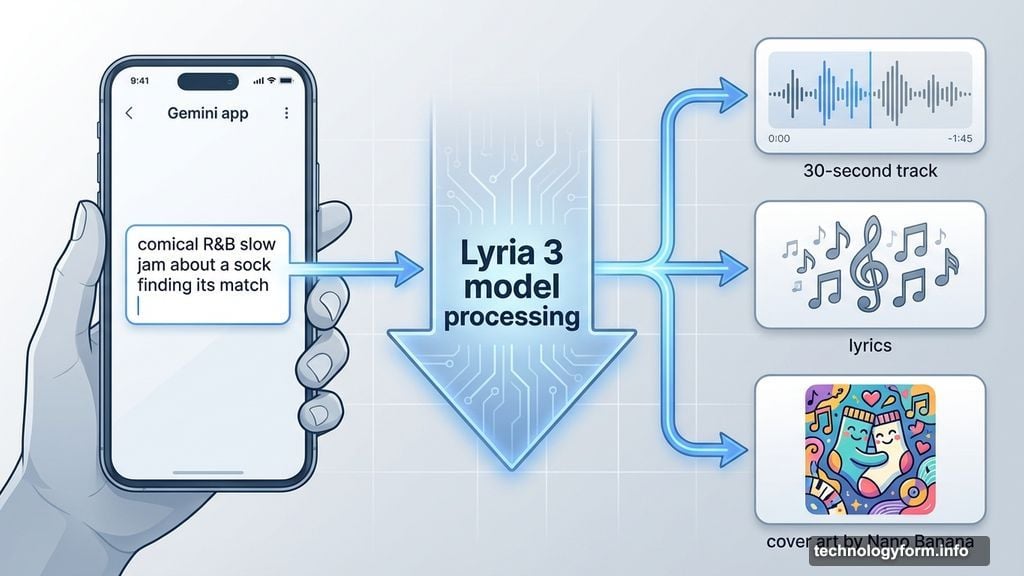
Google announced this week that it’s bringing music generation directly into the Gemini app, powered by DeepMind’s Lyria 3 model. The feature is still in beta, but it’s already available to Gemini users aged 18 and older across the globe. So if you’ve ever wanted to describe a song and actually hear it, that moment has arrived.
What Lyria 3 Can Actually Do
The concept is simple. You type a description of the song you want, and Gemini generates a 30-second track complete with lyrics and cover art. Google’s own example is wonderfully ridiculous: ask for a “comical R&B slow jam about a sock finding its match,” and the app will produce exactly that, cover art included, courtesy of Nano Banana.
But the feature goes beyond text prompts. You can also upload a photo or a video, and Lyria 3 will generate a song that matches the mood of whatever you’ve shared. Drop in a sunset photo, get something contemplative and warm. Share a birthday party clip, get something celebratory. It’s a clever touch that makes the tool feel genuinely useful rather than just a novelty.
Google says Lyria 3 is a meaningful step up from its previous music generation models. The tracks are more realistic, more complex, and give users real control over elements like vocal style, tempo, and genre. That level of control matters a lot. Earlier AI music tools often felt like vending machines where you couldn’t quite predict what came out. This sounds considerably more hands-on.
YouTube Creators Get a Global Upgrade
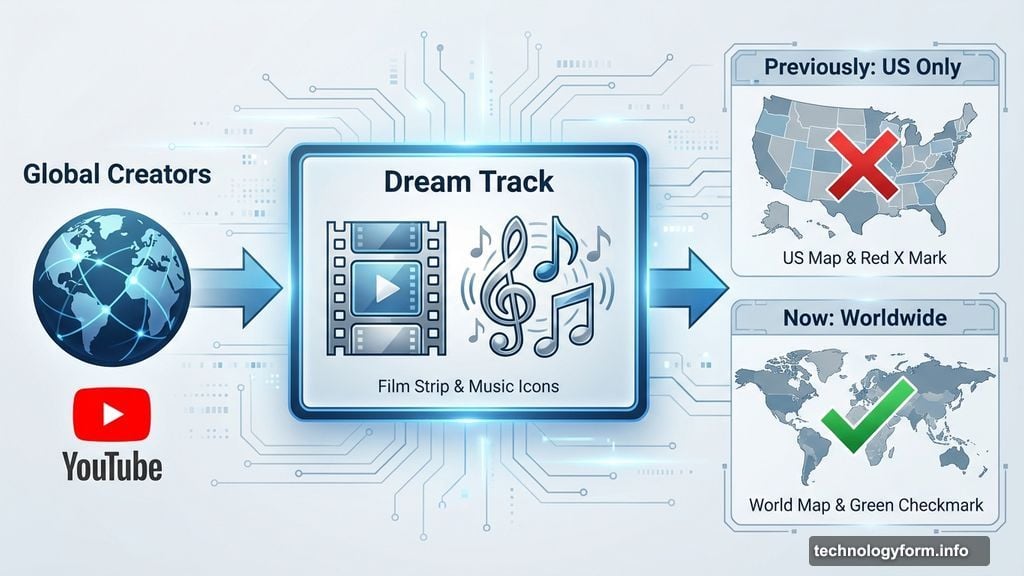
Alongside the Gemini rollout, Google is expanding Dream Track, its AI music generation feature for YouTube creators, to users worldwide. Previously, Dream Track was only available to creators in the United States. That changes now.
Dream Track lets YouTube creators produce AI-generated background music and original tracks for their videos. Expanding it globally is a meaningful move, especially for independent creators who can’t afford original music licensing or studio production. For many of them, this could genuinely change how they produce content.
The Artist Style Question
Here’s where things get interesting, and a little complicated.
You can reference a specific artist’s name in your prompt. But Gemini won’t actually mimic that artist directly. Instead, it uses the name as broad creative inspiration, generating something that shares a similar style or mood. Think “sounds influenced by” rather than “sounds like.”
Google’s blog post explains their position clearly: “Music generation with Lyria 3 is designed for original expression, not for mimicking existing artists. If your prompt names a specific artist, Gemini will take this as broad creative inspiration and create a track that shares a similar style or mood. We also have filters in place to check outputs against existing content.”
That’s a reasonable line to draw, at least on paper. Whether it holds up in practice, and whether it fully satisfies artists whose distinctive styles can be reverse-engineered through repeated prompting, is a much harder question.
SynthID Watermarks Keep AI Music Labeled
Every track created through Lyria 3 will carry a SynthID watermark, Google’s system for marking AI-generated content. The company is also adding a detection tool inside Gemini itself. Users can upload any track and ask Gemini whether it was AI-generated.
This transparency push matters. Platforms like Deezer have already built tools to flag AI music specifically to combat fraudulent streaming, where bots inflate play counts on AI tracks to generate royalty payments. Having watermarks baked in at the generation stage is a smarter, more proactive approach than trying to detect AI music after the fact.
A Messy Industry Moment
None of this exists in a vacuum. The AI music space is genuinely contentious right now.
On one side, YouTube and Spotify are embracing AI music and signing licensing deals with major labels to create frameworks for monetizing it. On the other, AI companies face active lawsuits from the music industry over whether training data was used with proper consent. It’s a legal and ethical battleground that’s nowhere near resolved.
Google is clearly trying to thread the needle. The artist style restrictions, the SynthID watermarks, the content filters, the attribution to DeepMind’s research team: all of it suggests a company that’s aware of the legal minefield and trying to navigate it carefully. Whether that’s enough to satisfy artists and labels remains to be seen.
Music generation in Gemini currently supports English, German, Spanish, French, Hindi, Japanese, Korean, and Portuguese. That broad language support from day one suggests Google is treating this as a serious long-term product, not an experimental side project.
The technology itself is impressive. The harder conversations about who benefits, who gets protected, and who gets left out are still very much ongoing.