Mastodon’s Founder Just Quit CEO Role. His Reason? Brutal Honesty
Eugen Rochko built Mastodon from nothing. Now he’s walking away from running it.
The move surprised nobody who watched his nonprofit transition announcement ten months ago. But his reasoning hits different. Rochko didn’t sugarcoat why he’s stepping down. He straight-up admitted he lacks the personality for the job.
That’s rare in tech. Most founders cling to power until boards force them out. Instead, Rochko chose transparency over ego.
The Stress Finally Won
Running a decentralized social network turned out harder than Rochko expected. Much harder.
In his departure blog post, he didn’t hide behind corporate speak. He admitted the role stressed him out constantly. Moreover, he recognized his personality wasn’t right for leading a major social platform.
Plus, he wanted to avoid becoming another egotistical founder who destroys what they built. Silicon Valley is littered with those cautionary tales. So Rochko stepped aside before that could happen.
Think about it. How many tech CEOs admit their limitations publicly? Not many. Most pretend everything’s fine while their companies burn. Rochko did the opposite.
Who’s Taking Over
Felix Hlatky stepped into the executive director role immediately. He’s been with Mastodon since March 2020, so he knows the platform inside out.
Hlatky’s priorities are clear and practical. First, expand the team beyond its current size. Second, nail down long-term financial stability. Third, make running Mastodon servers easier and safer for everyone.
Those goals matter because Mastodon’s decentralized structure depends on server operators. If running a server stays too complex or risky, the network can’t grow. So Hlatky’s focus makes sense.
Meanwhile, Rochko transitions to an advisory role. He’ll still contribute ideas and guidance. But the daily stress and decision-making falls on someone else now.
The Money Situation Changed Everything
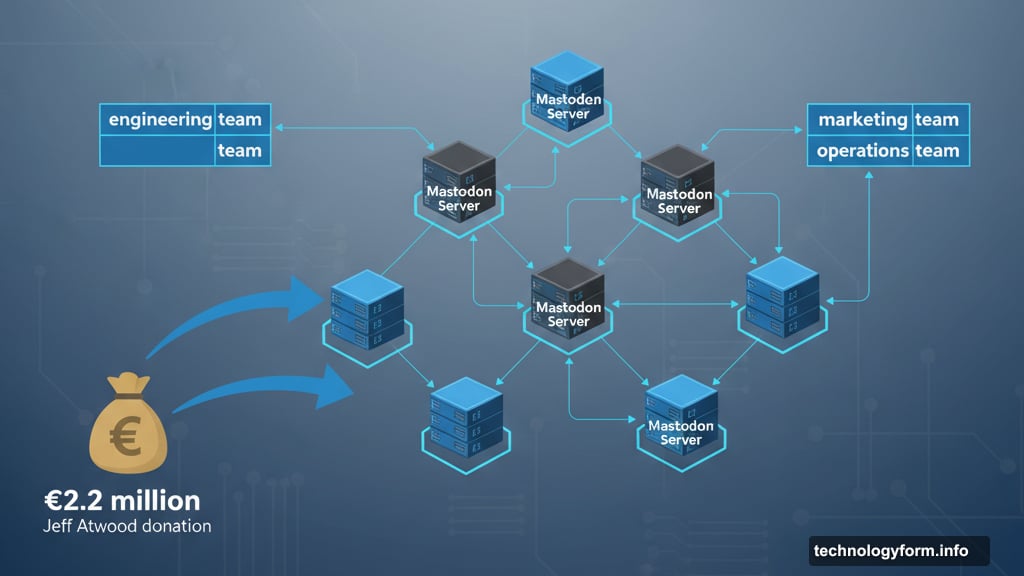
Mastodon secured serious funding recently. Jeff Atwood, who co-founded Stack Exchange, donated €2.2 million ($2.5 million) along with his family.
That cash injection enabled real expansion. The organization hired new people across engineering, marketing, operations and product teams. Previously, the team was tiny and stretched too thin.
But here’s the interesting part. Rochko himself received €1 million ($1.2 million) as one-time compensation. The organization acknowledged he took below-market salary for ten years while building Mastodon.
That payment matters. It shows the nonprofit values his work fairly, even as he steps back from daily operations. Plus, it gives Rochko financial security to pursue advisory work without scrambling for income.
The Nonprofit Shuffle Continues
Mastodon currently operates as a US nonprofit. But that’s temporary. The organization aims to establish permanent nonprofit status in Belgium as an AISBL.
Why Belgium? European nonprofit structures often provide more stability for international organizations. Plus, Belgium sits at the heart of the EU, which makes sense for a platform focused on privacy and user rights.
Interestingly, Mastodon lost its German nonprofit status last year. The organization hasn’t explained why publicly. But the shift suggests complex challenges around maintaining nonprofit status across different countries.
So the Belgian move represents a fresh start with better long-term prospects. At least, that’s the plan.
What This Means for Mastodon Users
Should you care about this leadership change? Probably not much day-to-day.
Mastodon’s decentralized nature means no single person controls the network. Your server operator matters more than who runs the nonprofit. So Rochko’s departure won’t suddenly change how you use the platform.
However, Hlatky’s focus on making servers easier to run could improve your experience indirectly. Better tools for server operators mean more stable servers, faster updates and fewer technical headaches.
Plus, the expanded team should accelerate feature development. Mastodon lagged behind competitors in some areas because the team stayed small. Now they can move faster on improvements users actually want.
The Bigger Picture
Rochko’s departure illustrates something important about decentralized social networks. They require different leadership than traditional platforms.
Facebook, Twitter (or X, whatever), Instagram—these platforms concentrate power in one company. The CEO’s personality shapes everything. So narcissistic founders can dominate indefinitely.
But Mastodon works differently. The network exists across thousands of independent servers. No single leader can control it all. So the nonprofit’s role is coordinating standards and tools, not commanding the entire network.
Rochko understood that distinction. He realized his personality fit building the initial platform better than managing the mature organization. So he made space for someone suited to the next phase.
That takes real self-awareness. It also shows Mastodon’s governance might actually work as intended.
Rochko could have stayed CEO forever. Nobody would’ve forced him out. Instead, he chose what’s best for the network over his ego. That decision might matter more than any feature he ever built.