Facebook Groups Just Got Reddit-Style Usernames. Privacy Finally Wins
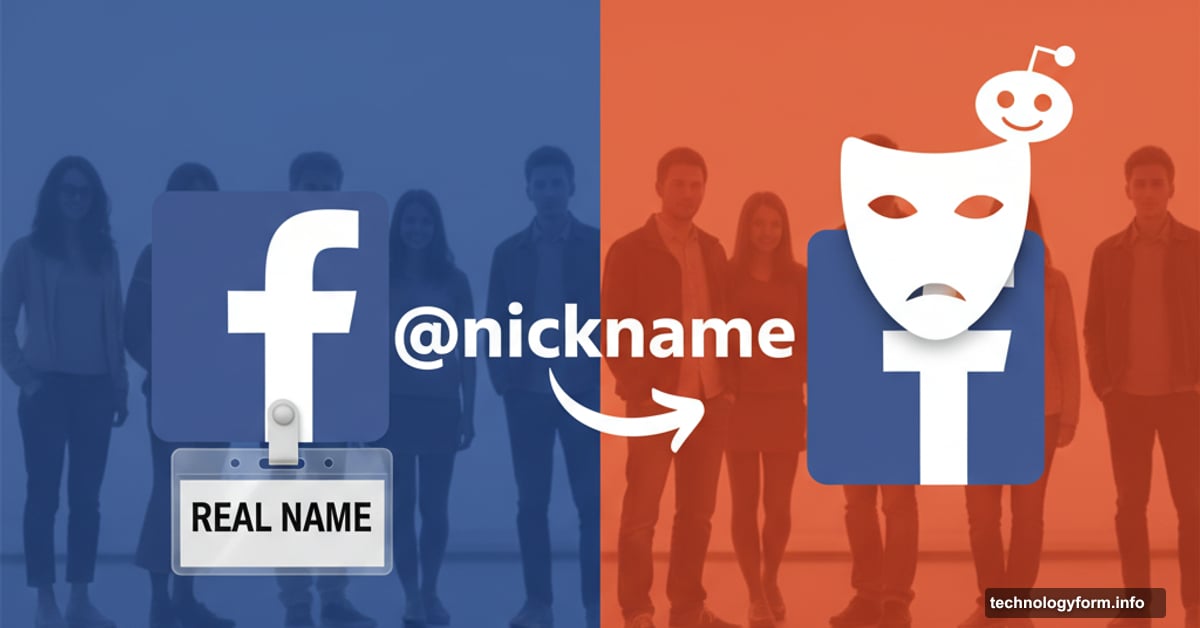
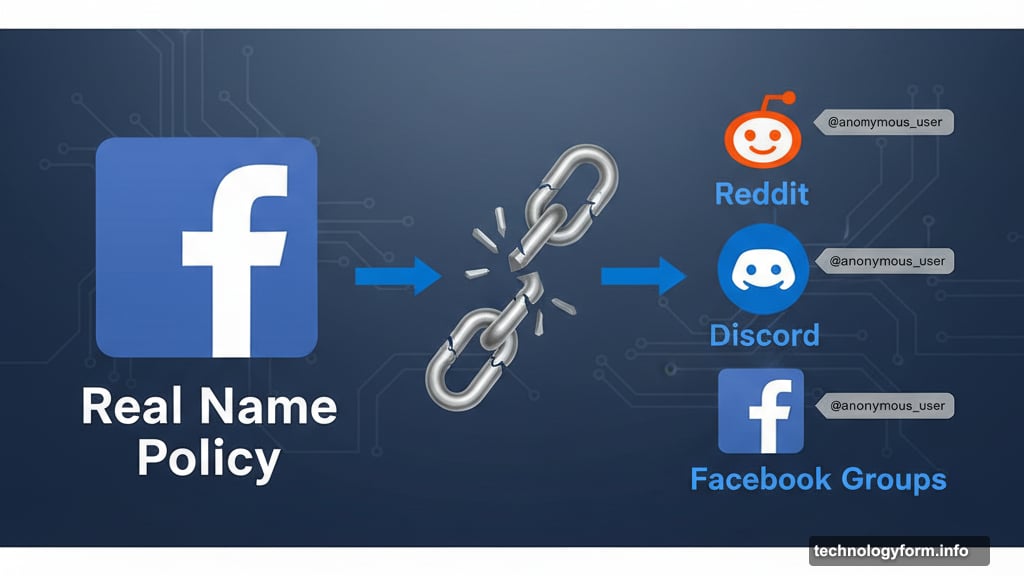
Facebook just broke its own cardinal rule. The platform that forced everyone to use real names now lets you hide behind a username.
This changes everything about how people interact in Facebook Groups. But the timing feels calculated. Let’s explore what’s really happening here.
Facebook’s Real Name Policy Dies Quietly
Facebook spent 15 years insisting you show up as yourself. Real name. Real identity. That policy shaped the entire platform.
Now they’re backtracking. The new nickname feature lets you post in Facebook Groups under any username you choose. You can still participate in discussions, build relationships, and maintain a presence. But your real identity stays hidden from other members.
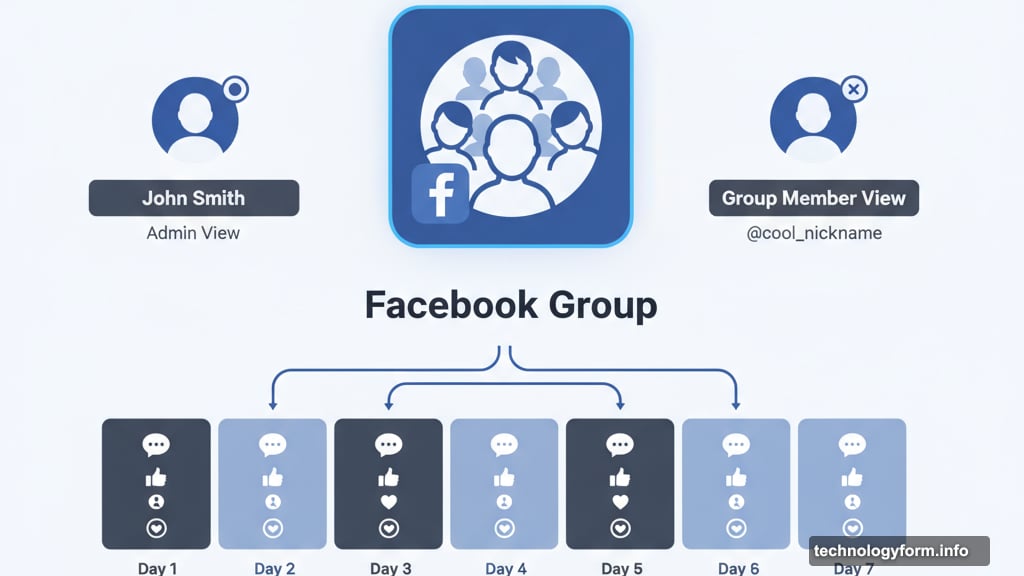
However, there’s a catch. Group admins still see your real identity. So does Facebook’s monitoring system. Plus, other members can view your complete posting history under that nickname. They’ll also see seven days of your comments and reactions.
So it’s not truly anonymous. Think of it more like Reddit with training wheels.
Why This Matters Now
Facebook Groups evolved beyond friends and family years ago. Millions of people now join groups filled with strangers. Support groups. Hobby communities. Political discussions. Professional networks.
But using your real name in these spaces creates problems. People hesitate to ask sensitive questions. They avoid controversial topics. They self-censor to protect their reputation or employment.
Anonymous posting already exists in Facebook Groups. But that feature strips away all identity. You can’t build relationships or establish credibility. Each anonymous post feels disconnected from the last.
Nicknames solve that problem. You maintain consistent identity within a group while protecting your privacy. Other members recognize you. They follow your contributions. Yet your real-world identity stays protected.
Reddit Comparison Reveals the Strategy
This feature basically copies Reddit’s approach. On Reddit, everyone posts under usernames. You build reputation through consistent participation. Your posting history tells a story.
Discord works similarly. Servers let you set custom nicknames. Your Discord username provides continuity across servers, but each community sees you differently.
Facebook now offers the same flexibility. Except they’re late to the party by about 15 years.
The company clearly sees Reddit eating their lunch. Reddit communities thrive because pseudonymity encourages authentic discussion. Facebook Groups stayed constrained by real-name requirements. So Meta finally adapted.
How the Feature Actually Works
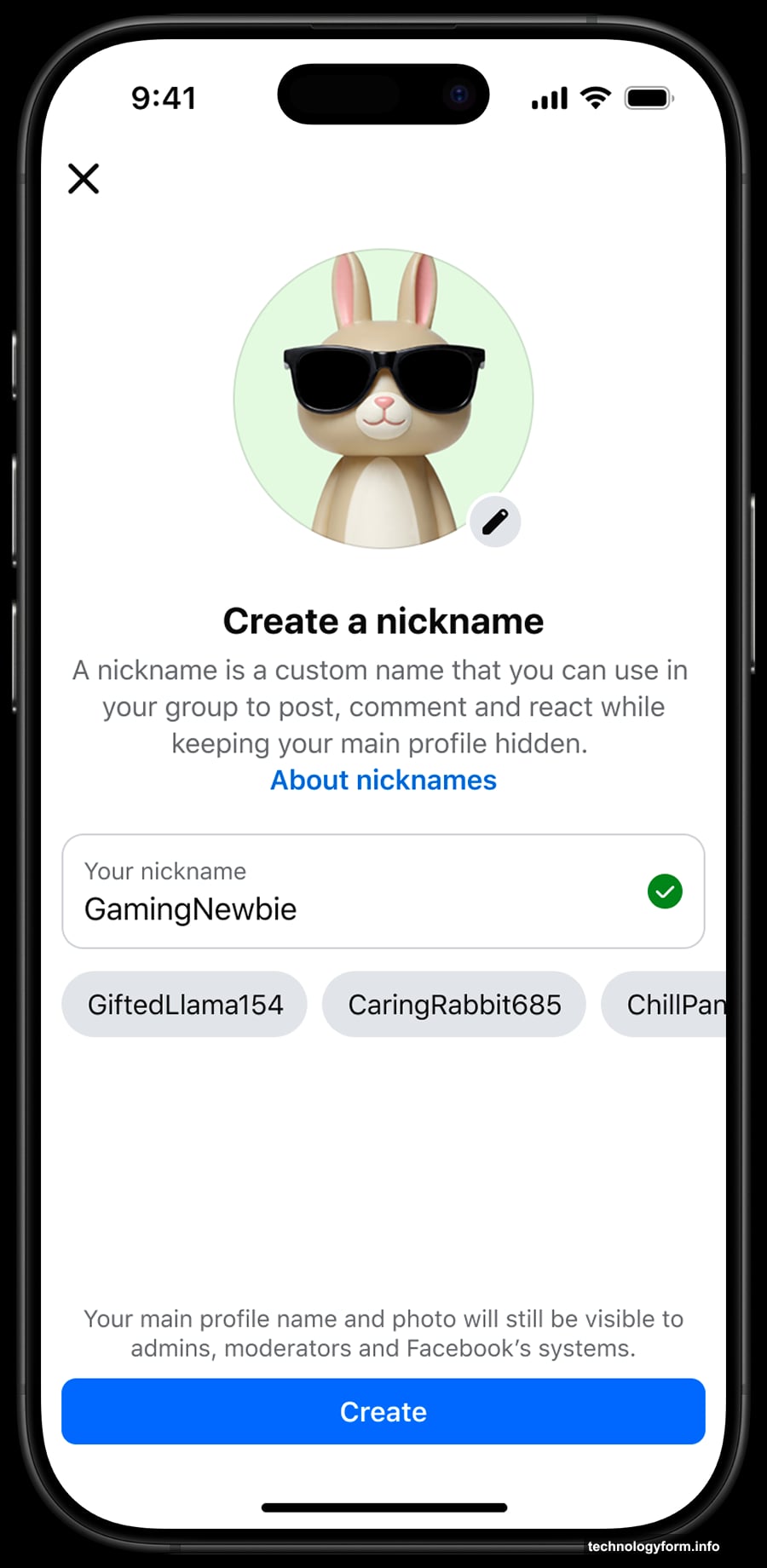
Setting up a nickname takes seconds. When creating a post in a group, you’ll see the option next to “Post anonymously.” Tap it and Facebook suggests a nickname plus profile picture.
Don’t like their suggestion? Change it. Pick any username that complies with Community Standards and isn’t already taken in that group. Choose from available profile pictures and background colors.
Once set, that nickname applies to all your posts, comments, and reactions in that specific group. Other groups can have different nicknames. Your main Facebook profile stays completely separate.
But restrictions exist. You can only change your nickname once every two days. When you change it, the new name applies retroactively to all past posts and comments in that group. So you can’t escape your posting history by switching names.
Also, some features won’t work with nicknames. Live Video is blocked. You can’t share content. Private messaging is disabled. Facebook wants you using nicknames for public discussion only.
The Privacy Trade-Off
Facebook positions this as a privacy win. Users gain protection while maintaining presence in communities.
But let’s be real about limitations. Group admins see your real identity. Facebook’s systems see everything. If you violate policies, your real account faces consequences.
Moreover, your posting history under each nickname stays visible to everyone in the group. Want to delete embarrassing old posts? Tough luck. Changing nicknames doesn’t hide them.
And if someone really wants to identify you, your posting patterns probably give it away. Writing style. Interests. References to location or profession. Determined users can connect dots.
So this feature provides social privacy, not true anonymity. Other group members can’t easily find your real Facebook profile. But motivated individuals with time could still figure it out.
Group Admins Control Everything
Here’s the most important detail. This feature requires admin approval in each group.
Admins must explicitly enable nicknames. Groups can choose to keep requiring real names if they prefer. Many probably will, especially professional groups or local community pages.
This makes sense for Facebook. They’re not forcing any group to change. They’re offering an option that admins control.
But it also means adoption will be uneven. Some groups embrace nicknames immediately. Others never enable it. Users can’t assume this feature works everywhere.
Plus, admins maintain full visibility into real identities. They can ban users by their real accounts, not just nicknames. This protects groups from abuse while offering members privacy from each other.
What This Means for Competition
Facebook needed this feature years ago. Reddit’s growth accelerated partly because people wanted spaces for honest discussion without career consequences.
Discord captured younger users who prefer pseudonymous communities. Even Twitter (now X) lets people post under handles that don’t reflect real identities.
Facebook stuck with real names because it fit their original mission. Connect people who already know each other. Build on existing relationships.
But Facebook Groups expanded that mission. Now the platform hosts communities of strangers with shared interests. Real name requirements hindered these communities’ growth.
Meta finally acknowledged that reality. Better late than never.
However, catching up won’t be easy. Reddit built its culture over 18 years. Communities developed norms around pseudonymity. Moderation evolved to handle anonymous users. Trust systems emerged organically.
Facebook Groups now offer similar technical features. But culture takes time to shift. Users associate Facebook with real identities. Changing that perception requires more than one feature update.
The Rollout Strategy
Facebook is testing waters carefully. The feature launches globally but requires admin opt-in. This lets Meta gauge adoption without forcing changes on reluctant communities.
Smart move. If every group suddenly allowed nicknames, chaos would follow. Communities built around real identities would struggle with the transition. Users would feel betrayed by sudden policy changes.
Instead, Facebook lets each community decide. Groups that need privacy features can enable nicknames. Those that value real identities can skip it.
Meta can then study which groups adopt the feature. What types of communities embrace nicknames? How does it affect engagement and safety? Does it reduce harassment or enable new abuse patterns?
This data will inform future decisions about expanding or limiting the feature.
Potential Problems Ahead
Nicknames solve some problems but create others. Moderation gets harder when users hide behind multiple identities across different groups.
Bad actors could use nicknames to harass members without risking their main accounts. Sure, admins see real identities. But that’s reactive, not preventive.
Plus, reputation systems break down. On Reddit, your account karma matters. People check your history to judge credibility. Facebook Groups now split that history across multiple nicknames.
What if someone acts perfectly normal in three groups but trolls in a fourth? Their other nicknames look clean. Nobody knows they’re the same person.
Facebook’s systems might catch this. Admins might share information. But individual group members can’t see the full picture.
Also, authenticity suffers. When everyone posts under nicknames, how do you know who to trust? Real names provided social proof. Nicknames remove that signal.
These challenges aren’t insurmountable. Reddit manages them. Discord handles it. But Facebook’s user base and group structure differ significantly. Solutions that work elsewhere might not translate perfectly.
Privacy Theater or Real Progress?
So does this feature actually protect privacy or just perform privacy theater?
The answer depends on your threat model. If you want to prevent coworkers from easily finding your Facebook Groups activity, nicknames help. They create separation between your professional identity and online communities.
But if you’re concerned about determined individuals, corporate surveillance, or government monitoring, nicknames offer minimal protection. Facebook still knows who you are. They still track your activity. Admins still see your real name.
And your posting patterns probably reveal more than you realize. Sophisticated analysis could connect your nickname to your real identity through writing style, interests, and references.
Still, this represents genuine progress for Facebook. The platform finally acknowledges that real name requirements don’t work for every context. Some communities need privacy. Some discussions require protection.
Offering that flexibility while maintaining accountability through admin visibility strikes a reasonable balance.
What Users Should Do
If you participate in Facebook Groups where privacy matters, explore this feature. It won’t appear everywhere immediately, but check your groups.
Mental health support groups make perfect candidates. So do communities around sensitive topics like addiction recovery, relationship issues, or career transitions.
Hobby groups might not need it. Local community pages probably won’t enable it. Professional networking groups will likely stick with real names.
But for communities where privacy adds value, nicknames could boost engagement. People might share more honestly. Discussions could get more authentic. Marginalized members might feel safer participating.
Just remember the limitations. Nicknames provide privacy from other members, not from Facebook or group admins. Don’t assume complete anonymity.
And think carefully before choosing a nickname. You can change it, but only every two days. Plus, the new name applies retroactively to your posting history. Pick something you’re comfortable using long-term.
The Bigger Picture
This feature represents more than technical changes. It signals Facebook’s acknowledgment that their real name policy hindered growth in key areas.
For years, Meta defended real names as essential to platform safety. They argued anonymity enabled abuse and harassment. Real identities created accountability.
Those arguments held merit. But they ignored costs. Real name requirements also silenced vulnerable users. They prevented honest discussion of sensitive topics. They limited Facebook’s ability to compete with platforms offering privacy.
Now Meta is course-correcting. Not abandoning real names entirely, but offering flexibility where it makes sense.
This pragmatic approach might work. Let communities decide what they need. Provide tools for both real identities and nicknames. Trust admins to make appropriate choices.
Whether it succeeds depends on execution. Will enough groups enable nicknames? Will users trust the privacy protections? Will moderation tools handle new challenges?
We won’t know for months. But Facebook finally joined the pseudonymity party, even if they arrived fashionably late.